Yes, hearing aids are the main treatment for sensorineural hearing loss, the permanent kind caused by inner-ear or nerve damage. Here is what they can and cannot do for SNHL, which style suits each degree of loss, the features that matter most, and when a cochlear implant or a doctor comes first.
Quick answer
Yes. Hearing aids are the standard treatment for mild to severe sensorineural hearing loss (SNHL), the permanent type caused by inner-ear or nerve damage. They amplify the pitches you have lost and keep loud sounds comfortable, but cannot restore the clarity a damaged cochlea has lost. Receiver-in-canal aids suit most mild to moderate losses, severe loss needs a power aid, and profound loss may need a cochlear implant.
Key takeaways
- SNHL is damage to the cochlea's hair cells or the hearing nerve, and it is usually permanent.
- Sudden hearing loss is the exception: see an ENT doctor the same day, because early treatment can restore hearing.
- Hearing aids make soft sounds audible and reduce listening effort; speech in noise improves but does not become normal.
- Mild to moderate SNHL usually suits a receiver-in-canal aid, severe loss a power receiver or BTE, and profound loss an implant assessment.
- Your speech discrimination score and a real-ear-measured fitting predict benefit better than the brand.
Yes. Hearing aids are the main treatment for sensorineural hearing loss (SNHL), the permanent type caused by damage to the inner ear's hair cells or the hearing nerve. They cannot repair that damage, but a well-fitted aid amplifies exactly the pitches you have lost, so speech becomes louder and, for most people, much easier to follow. How well they work depends on the degree of loss, how clear speech still is to you, and how carefully the aid is fitted.
This guide covers what SNHL is, what hearing aids can realistically do for it, which style suits each degree of loss, the features worth paying for, and the situations where a doctor or a cochlear implant should come first.
What is sensorineural hearing loss?
Sound travels through the outer and middle ear to the cochlea, where tiny hair cells turn it into nerve signals. Sensorineural loss means the problem sits there, in the cochlea or the nerve, rather than in the ear canal or middle ear.
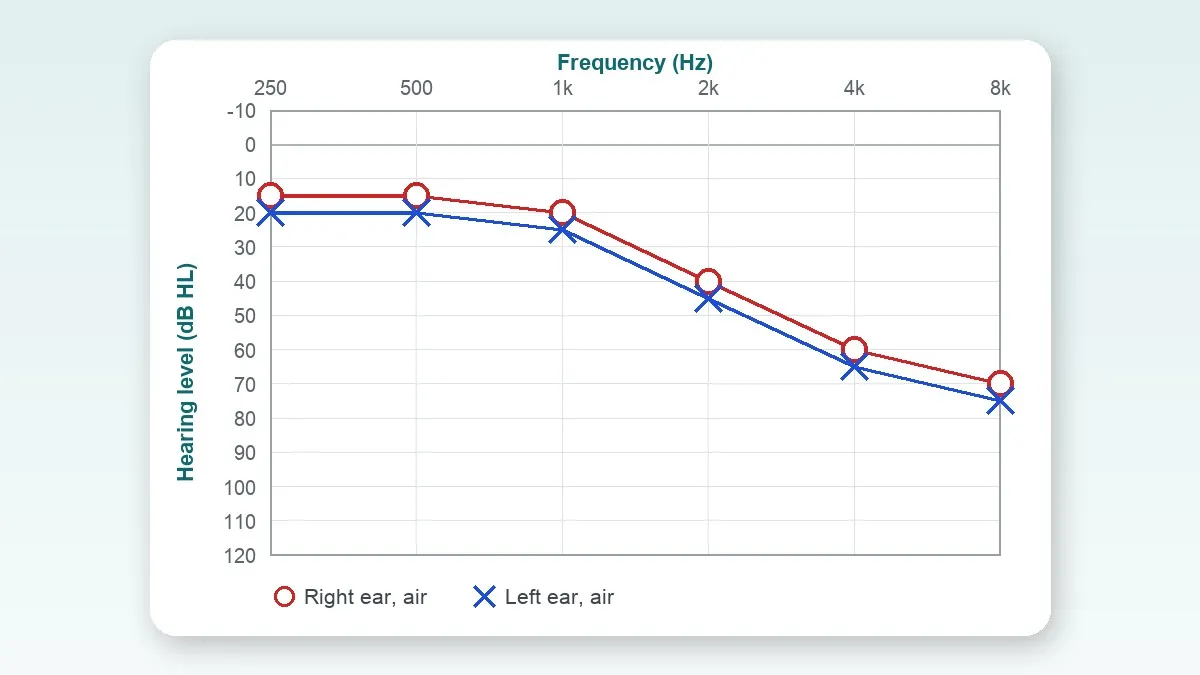
It is the most common type of permanent hearing loss in adults. Common causes include ageing, long-term noise exposure, genetics, some medicines and certain illnesses. On an audiogram, the air-conduction and bone-conduction marks sit together with no gap between them; our guide to reading your PTA graph shows what that looks like.
SNHL is usually permanent. The exception that matters is sudden hearing loss: a drop in hearing over hours or a few days is a medical emergency, and early treatment by an ENT doctor can sometimes restore hearing. See sudden hearing loss: a medical emergency and see a doctor the same day.
Do hearing aids work for sensorineural hearing loss?
For mild to severe SNHL, hearing aids are the standard, proven treatment. What they do well:
- Make soft sounds audible again, especially the high-pitched consonants (s, f, th, sh) that SNHL usually takes first.
- Shape the amplification to your audiogram, giving more help at the pitches you have lost and less where your hearing is still good.
- Keep loud sounds comfortable, because SNHL often narrows the range between "too soft" and "too loud".
- Reduce listening effort, which is why many people feel less tired at the end of the day once they wear aids consistently.
What they cannot do is restore the clarity a damaged cochlea has lost. Many people with SNHL say they can hear speech but not understand it, especially in noise. Hearing aids help that a great deal, but they do not make hearing normal. Your speech discrimination score, measured in a speech audiometry test, is the best guide to how much benefit to expect.
Which hearing aid suits your degree of SNHL?
| Degree of loss | dB HL | Styles that usually suit | What to know |
|---|---|---|---|
| Mild | 26–40 | Receiver-in-canal (RIC) or small custom aids | Worth it if everyday conversation is affected; an open fit keeps your own voice natural |
| Moderate | 41–55 | RIC or custom in-the-ear | Aids are almost always recommended, in both ears if both are affected |
| Moderately severe to severe | 56–90 | RIC with a power receiver, or behind-the-ear (BTE) | Needs more power and a closer fit; custom moulds help prevent whistling |
| Profound | 91 and above | Super-power BTE | If aids give little speech understanding, ask about a cochlear implant assessment |
Our degrees of hearing loss chart explains the dB bands. Read more about the main styles in our guides to receiver-in-canal aids and behind-the-ear aids, and about stronger devices in hearing aids for severe and profound loss.
Features that matter most for SNHL
Enough channels and good noise handling
Because SNHL makes noisy places hardest, directional microphones and noise reduction are where higher technology levels earn their price. Our hearing aid price guide explains what each level adds.
Frequency lowering for steep high-frequency loss
When the highest pitches are too damaged to amplify usefully, some aids move those sounds down to a range you can still hear. Brands use different names for it, such as Phonak's SoundRecover. It takes some getting used to, and your audiologist decides whether it helps you. See high-frequency hearing loss.
Tinnitus support
Ringing often comes with SNHL. Many aids include a built-in sound generator alongside amplification; see hearing aids for tinnitus.
Real-ear measurement at the fitting
The fitting matters as much as the device. Real-ear measurement checks, inside your own ear, that the aid delivers the amplification your audiogram calls for. Ask whether your clinic does it; see real-ear measurement.
SNHL in one ear
If one ear has severe or profound SNHL and the other is normal or near normal, a conventional aid may not help the poor ear. A CROS system picks up sound on the deaf side and sends it to the good ear. See single-sided deafness, CROS and BiCROS. Hearing loss in one ear should always be checked by an ENT doctor first.
How SNHL differs from conductive hearing loss
Conductive loss is a blockage or problem in the ear canal or middle ear, such as wax, fluid, a perforation or otosclerosis. Unlike SNHL, it can often be treated medically or surgically, so an ENT review comes first. When it cannot be fixed, standard hearing aids usually work well because the inner ear is healthy, and bone-conduction or bone-anchored devices are an option for some people; see bone-anchored and bone conduction hearing aids. A mixed loss has both parts. Our guide to the types of hearing loss explains the difference.
When a cochlear implant is the better path
If your SNHL is severe to profound and well-fitted hearing aids still leave you understanding little speech, a cochlear implant may help more, because it bypasses the damaged hair cells. Adults are usually assessed by an ENT and implant team after a proper hearing-aid trial. See hearing aid vs cochlear implant.
Getting used to hearing aids with SNHL
- Wear them all waking hours from the start. The brain adapts faster with consistent use.
- Expect everyday sounds to seem loud or sharp at first; most people settle within a few weeks.
- Plan two or three fine-tuning visits in the first months; adjustments are normal, not a sign of a bad aid.
- Retest every year or two, because SNHL can change and your aid's settings should follow it.
Our guide to how long it takes to adjust walks through the first weeks.
Cost and next steps
The price depends on the technology level and style, not on the type of hearing loss. On the 2026 manufacturer price lists, genuine aids start at ₹10,990 per ear MRP (Signia Fast P), with ReSound from ₹20,995 and Phonak from ₹33,000; premium aids cost several lakh. Prudent sells 30–50% below MRP, hearing aids are GST-exempt, and 0% EMI is available.
The first step is a proper diagnosis. Prudent's RCI-registered audiologists do a free 45-minute hearing test, including speech testing, at our clinics in Pune, Delhi and Bengaluru and on home visits, and tell you honestly whether aids will help. A hearing aid manages sensorineural hearing loss; it does not cure it.
Continue reading
Frequently asked questions
Do hearing aids work for sensorineural hearing loss?
Yes. For mild to severe SNHL, hearing aids are the standard treatment. They amplify the pitches you have lost and keep loud sounds comfortable. They cannot restore the clarity a damaged cochlea has lost, so speech in noise improves but does not become normal.
Can sensorineural hearing loss be cured?
Usually not; it is permanent. The exception is sudden hearing loss, which is an emergency: early ENT treatment can sometimes restore hearing, so see a doctor the same day.
Which hearing aid is best for sensorineural hearing loss?
There is no single best model. Mild to moderate SNHL usually suits a receiver-in-canal aid; severe loss needs a power receiver or a behind-the-ear aid; profound loss needs a super-power BTE or a cochlear implant assessment. The right choice follows your audiogram and speech scores.
Can hearing aids make sensorineural hearing loss worse?
Correctly fitted hearing aids do not. The output is set to your audiogram and checked with real-ear measurement, which keeps amplification within safe, comfortable limits.
What is the difference between sensorineural and conductive hearing loss?
Sensorineural loss comes from the inner ear or nerve and is usually permanent. Conductive loss comes from the ear canal or middle ear and can often be treated medically or surgically, so an ENT review comes first.
Sources & further reading
We cross-checked this article against the following authoritative sources. Guidance and figures reflect the most recent public guidance available at the time of last review (October 2026). Clinical review by the Prudent Hearing clinical team.
- Hearing Aids (National Institute on Deafness and Other Communication Disorders (NIDCD, NIH))
- Hearing loss (NHS UK)
- Sudden Deafness (NIDCD (NIH))
- Deafness and hearing loss (World Health Organization (WHO))
Free consultation
Ready to hear the difference?
Book a free 45-minute hearing test at any Prudent Hearing clinic: no obligation, honest advice, expert audiologists.