A bone conduction hearing aid carries sound as vibration through the skull to a working inner ear, skipping a blocked or damaged ear canal or middle ear. Here is who it suits, how softband and surgical BAHA devices differ, what "bone conduction" means on a hearing test, and where Prudent fits in.
A bone conduction hearing aid sends sound to your inner ear as a gentle vibration through the bone of your skull, bypassing the outer and middle ear completely.
That makes it the right tool when the trouble sits in the ear canal or middle ear rather than the inner ear itself: conductive or mixed hearing loss, single-sided deafness, an ear that discharges or gets infected too often to wear an in-ear device, or an ear canal that is missing or too narrow to use. These devices come in two broad forms.
Non-surgical ones sit on a soft headband, a spectacle arm or a small adhesive pad and can be worn straight away. Bone-anchored (BAHA) devices clip onto a tiny implant that an ENT surgeon places in the bone behind the ear. If a device worn behind rather than inside the ear is a new idea, it can help to start with what a hearing aid is. Whichever route fits, the sensible first step is a proper hearing test that shows exactly where and how much hearing is being lost.
A bone-anchored hearing aid (BAHA) is the surgical form of this: a small implant in the bone behind the ear lets the sound processor pass vibrations straight into the skull. Non-surgical options that press against the bone from outside also exist. Both are explained below, along with who each one suits.
How bone conduction hearing works
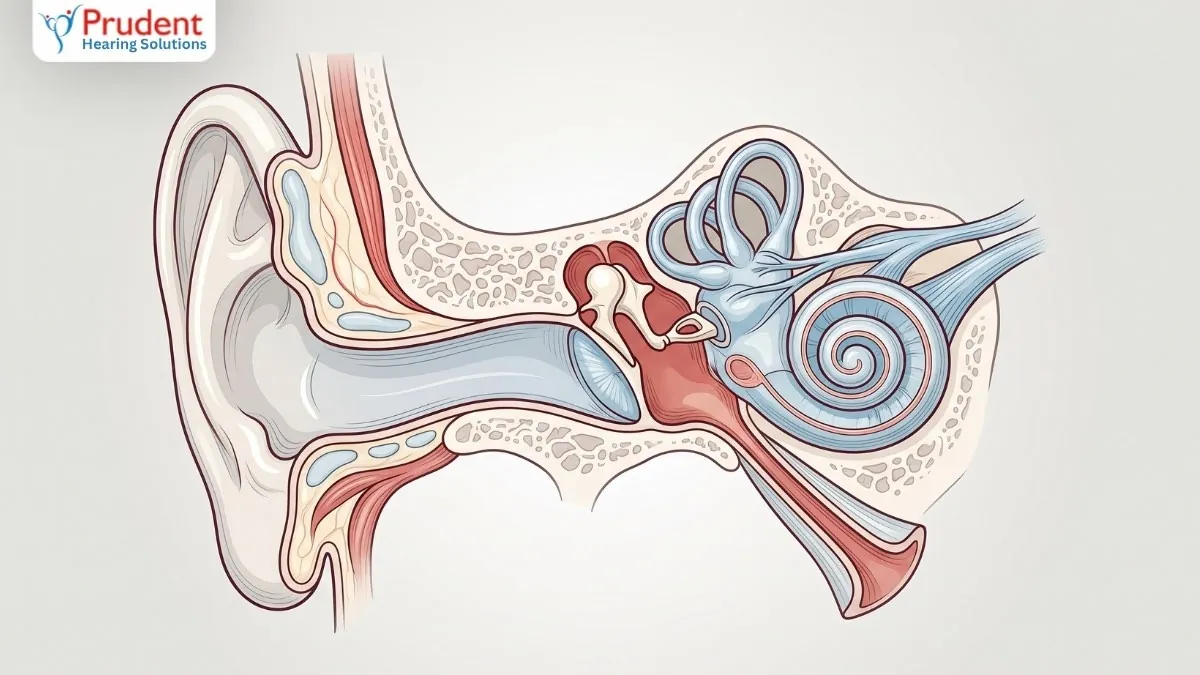
Sound normally reaches your inner ear along two paths. Most of it travels by air conduction: down the ear canal, vibrating the eardrum and the small middle-ear bones, which pass it on to the cochlea. But sound also travels by bone conduction, as vibration carried through the skull straight to that same inner ear. A bone conduction device works entirely on the second path.
A small processor picks up sound and turns it into vibration (the same job of turning sound into a usable signal that any hearing aid does, just delivered differently), and that vibration is fed into the skull bone, which carries it to the cochlea while skipping the blocked or damaged outer and middle ear. Because it relies on the inner ear to convert vibration into nerve signals, this approach works best when your inner ear and hearing nerve are in reasonable shape, which is why measuring them first matters.
Who a bone conduction device can help
Bone conduction suits people whose hearing loss is mainly a mechanical problem in the outer or middle ear, or who cannot comfortably wear anything inside the ear. Whether it is the right idea depends on the kind of loss you have, so it helps to understand the different types and causes of hearing loss first. Common situations where it fits include:
- Conductive hearing loss, where sound is blocked on its way in, from long-standing middle-ear problems, otosclerosis, or a middle ear that no longer passes vibration well, while the inner ear still works.
- Mixed hearing loss that has a conductive part a standard in-ear aid struggles to overcome.
- A chronically discharging or frequently infected ear, where sealing the canal with an in-ear device would trap moisture and make matters worse.
- A missing, malformed or very narrow (atretic) ear canal, often present from birth, that leaves no room for a conventional aid.
- Single-sided deafness, where sound arriving on the deaf side is routed through the skull to the working inner ear on the other side.
"Bone conduction" on a hearing test means something different
The phrase causes some confusion, because it turns up in two places. On a hearing test, bone conduction is a way of measuring your inner ear directly: a small vibrator is placed on the bone behind your ear, and the softest vibrations you can hear are recorded. Comparing that with air conduction, sound played through headphones, shows whether a blockage is sitting in the outer or middle ear.
A gap between the two, called an air-bone gap, is the tell-tale sign of a conductive loss. An older tuning-fork version of this check is sometimes called the absolute bone conduction test. So bone conduction the measurement helps decide whether bone conduction the device makes sense, and both readings show up on your audiogram.
The two types of bone conduction devices
Non-surgical: softband, spectacle and adhesive devices
These hold the sound processor against the skull without any implant. A soft elastic headband is the most common, and there are versions that clip to the arm of spectacles or stick to a small adhesive pad behind the ear. Nothing is placed under the skin, so they can be worn the same day and removed at night.
They are the standard choice for babies and young children who are too small for surgery, since early hearing matters enormously for speech, as our guide to hearing loss in children explains. They are also the easiest way to trial the sound of bone conduction before committing to an implant. Prudent can assess your hearing and fit these non-surgical options directly.
Surgical: bone-anchored (BAHA) devices
A bone-anchored device uses a small titanium fixture that an ENT surgeon places in the bone behind the ear in a minor procedure. Once the site has healed, the sound processor clips onto the fixture, or connects to it through the skin by magnet, and the vibration travels straight into the bone.
Many people find the sound firmer and clearer than a softband because there is no skin cushioning it. The surgery itself is an ENT matter and is not something an audiology clinic performs. Our role at Prudent is the part around it: the hearing test that shows whether you are a candidate, coordinating with your ENT surgeon, and tuning and maintaining the processor afterwards so it keeps working well.
Bone conduction or CROS for single-sided deafness?
Single-sided deafness, good hearing in one ear and little or none in the other, can be helped two different ways, and they are easy to mix up. A bone conduction device on the deaf side sends sound through the skull to the working inner ear on the opposite side. A CROS aid does something similar but by radio rather than bone: a microphone on the deaf side wirelessly streams sound to a receiver worn on the good ear.
Neither restores hearing in the dead ear; both stop you missing speech that arrives on your weaker side. Which one feels more natural varies from person to person, so it is worth comparing them properly. Our guide to single-sided deafness and CROS/BiCROS aids walks through the trade-offs, and a trial with a softband is an easy way to hear the difference for yourself.
When to see a doctor or ENT first
A hearing device is the last step, not the first. Prudent Hearing Solutions is an audiology clinic: we test hearing and fit hearing solutions, but we do not treat infections, prescribe medicines or perform surgery. Several of the situations that lead people toward bone conduction need a doctor or ENT's attention before any device is fitted. See a doctor or an ENT specialist promptly if you have:
- An ear that is actively discharging, painful or repeatedly infected, which needs medical assessment and treatment first rather than a device fitted over it.
- A sudden drop in hearing in one ear over hours or days, which needs urgent medical attention and can sometimes be reversed if it is treated quickly.
- A child born with a missing, small or malformed ear, who should be seen early by an ENT and a paediatric audiology team together.
- Ongoing pain, dizziness or a foul-smelling discharge, which point to a problem that a doctor needs to look into.
Cost, EMI and getting started
Price depends on the route. A non-surgical softband device is the lower-cost way in and needs no procedure, which is one reason it suits children and first-time trials. A bone-anchored BAHA involves the implant surgery, handled and billed through your ENT, plus the sound processor itself.
Once any medical treatment is under way with your doctor, Prudent handles the hearing side, and to keep the device manageable we offer 0% EMI so you can spread the cost. The initial 45-minute hearing test that tells you whether bone conduction is even the right path is free. You can browse our range of hearing aids or find your nearest clinic on the locations page.
"Bone conduction does not repair the ear and it does not cure hearing loss. It reroutes sound around the blockage so a working inner ear can finally hear it, which is why the first job is always to find out, precisely, where your hearing is being lost."
If a blocked, discharging or missing ear canal has kept you from using an ordinary hearing aid, bone conduction may be the option that finally fits. Start with a hearing test to map your loss, sort out any medical treatment with your doctor or ENT, and then let us help you compare a softband trial, a CROS aid or a bone-anchored device. Book a free hearing test at our Pune, Delhi or Bengaluru clinics and we will take it from there.
Continue reading
Frequently asked questions
What is a bone conduction hearing aid and how does it work?
It is a device that turns sound into gentle vibration and feeds it into the bone of your skull, which carries it directly to the inner ear. By doing this it bypasses the outer and middle ear, so it helps when sound is being blocked there rather than in the inner ear. Because it depends on the inner ear to turn vibration into nerve signals, it works best when your inner ear and hearing nerve are still in reasonable shape, which a hearing test can confirm.
Does a BAHA or bone-anchored hearing aid always need surgery?
No. There are non-surgical bone conduction devices worn on a soft headband, clipped to spectacles or stuck to an adhesive pad, which can be worn the same day with nothing implanted. Only the bone-anchored (BAHA) type needs a minor ENT procedure to place a small fixture in the bone. Prudent fits and tunes the non-surgical options directly and coordinates with your ENT surgeon if you go the surgical route.
Who needs a bone conduction hearing aid instead of a normal one?
It is mainly for conductive or mixed hearing loss, where the inner ear works but sound is blocked on its way in, and for people who cannot wear an in-ear device: a chronically discharging or infected ear, or a missing, malformed or very narrow ear canal. It is also used for single-sided deafness. A hearing test that shows an air-bone gap on your audiogram is what tells us whether bone conduction is the right fit.
What is the difference between a bone conduction aid and a CROS aid for single-sided deafness?
Both help when one ear hears well and the other does not, but they route sound differently. A bone conduction device sends sound from the deaf side through the skull to the working inner ear. A CROS aid uses a wireless microphone on the deaf side that streams sound by radio to a receiver on the good ear. Neither brings back hearing in the dead ear; both stop you missing speech from your weaker side, and a softband trial is an easy way to compare them.
What does "bone conduction" mean in a hearing test, and what is the absolute bone conduction test?
On a hearing test, bone conduction is a way of measuring your inner ear directly by placing a small vibrator on the bone behind your ear and recording the softest vibrations you can hear. Comparing it with air conduction shows whether a blockage sits in the outer or middle ear, seen as an air-bone gap on the audiogram. The absolute bone conduction test is an older tuning-fork version of the same idea. It is a measurement, and is separate from the bone conduction device itself.
How much does a bone conduction or BAHA hearing aid cost in India?
It depends on the route. A non-surgical softband device is the lower-cost option and needs no procedure, which is why it suits children and first trials. A bone-anchored BAHA adds the cost of the implant surgery, billed through your ENT, plus the sound processor. Prudent offers 0% EMI to spread the device cost, and the initial 45-minute hearing test that decides whether bone conduction is right is free.
Free consultation
Ready to hear the difference?
Book a free 45-minute hearing test at any Prudent Hearing clinic: no obligation, honest advice, expert audiologists.