How do hearing aids work? A calm, plain guide to the microphone, processor and receiver inside every device, and what a hearing aid can realistically do.
If you or someone you love has just been told a hearing aid might help, it is natural to want to understand what you are actually putting in your ear. A small device, worn all day, doing something you cannot see. That uncertainty can feel bigger than the hearing loss itself.
The good news is that a modern hearing aid is not mysterious. It follows a clear chain of steps, each one designed to make speech easier to follow. Once you can picture that chain, the whole thing feels a lot less daunting.
Let us walk through it together, calmly and in plain terms.
What a hearing aid actually does
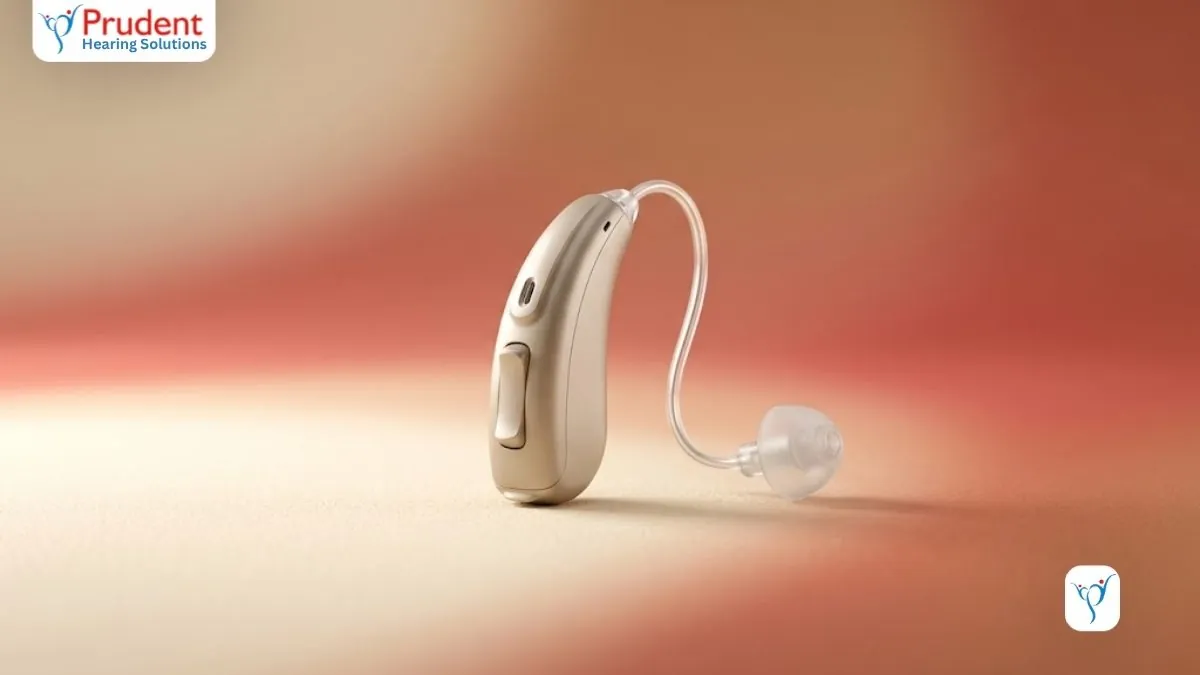
At its heart, a hearing aid is a tiny, very clever sound system that sits in or behind your ear. It listens to the world around you, works out which parts of that sound matter most for you, and then delivers a clearer, better-tuned version of it to your ear.
That last part matters. A hearing aid does not simply make everything louder. If it did, a noisy restaurant would become unbearable and speech would still be hard to follow. Instead, it shapes sound, boosting the frequencies you struggle with while keeping others in check.
So when people ask what hearing aids do, the honest answer is this: they help you make sense of sound again by amplifying and clarifying it in a way that is matched to your specific hearing.
How a hearing aid works, step by step
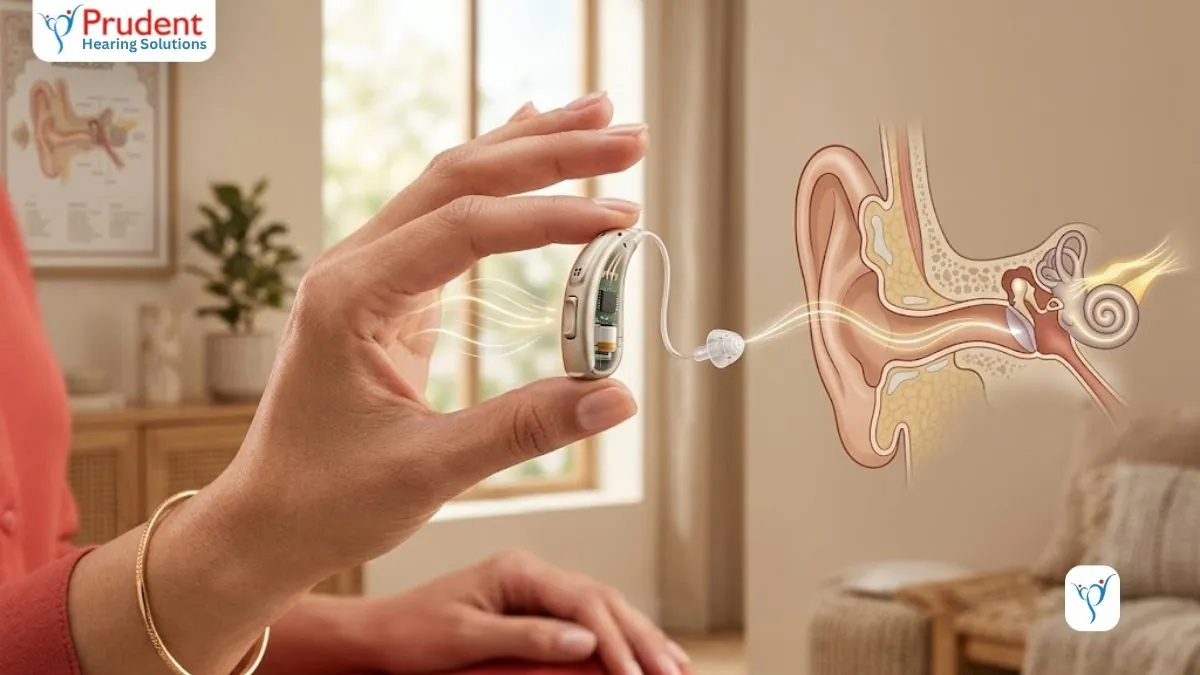
Here is the hearing aid, how it works, broken into the three main parts that do the real job. Almost every device, whatever the style or brand, follows this same path.
The microphone picks up sound. One or more tiny microphones sit on the outside of the device and capture the sounds around you: voices, traffic, a kettle, birdsong. At this stage the sound is still just raw noise arriving from every direction.
The processor decides what to do with it. This is the brain of the device, a small computer chip. It takes the sound from the microphone and analyses it many times a second. It works out which parts are likely to be speech, which are background noise, and how much to raise the volumes that match your hearing loss. Your audiologist programmes this chip using the results of your hearing test, so the adjustments are made for your ears, not a generic setting.
The receiver delivers the sound to your ear. Once the processor has done its work, the cleaned-up, amplified signal is passed to a small speaker, called a receiver. This sits in or near your ear canal and sends the finished sound inward, where your ear and brain take over.
So the chain is simple to remember: microphone to processor to receiver. Sound comes in, gets shaped for you, and goes out clearer than it arrived. All of this happens in a fraction of a second, continuously, for as long as you wear the device.
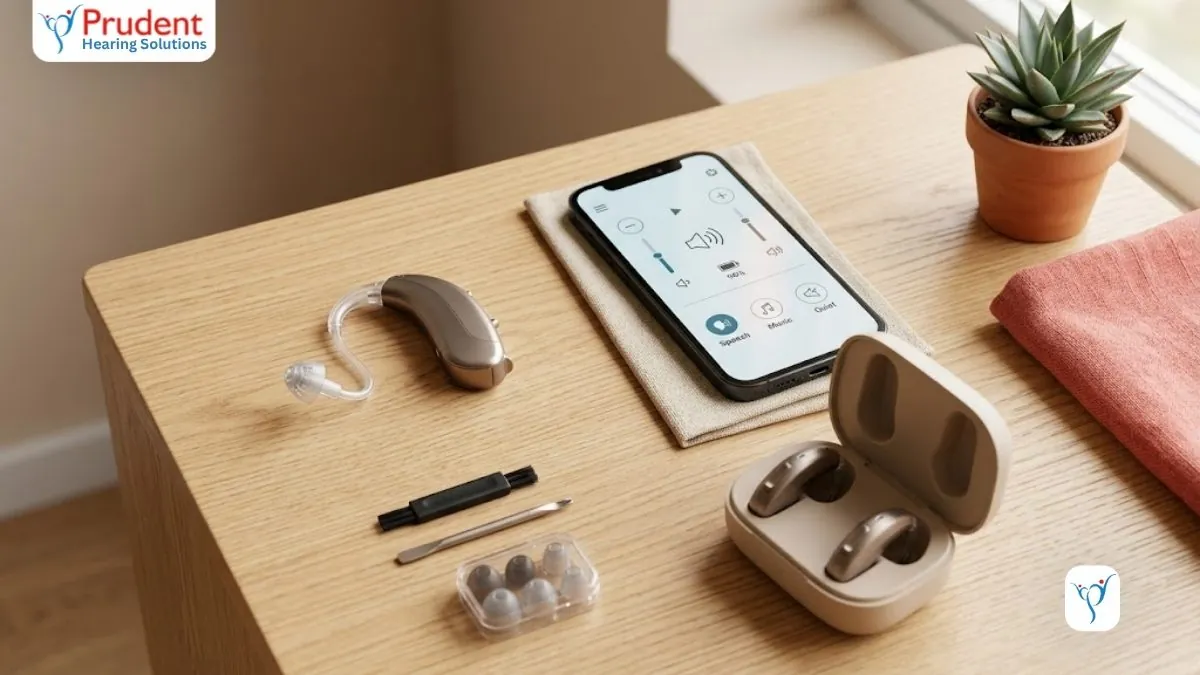
Powering the whole thing is a small battery, either replaceable or rechargeable, which is why daily charging or battery changes become part of the routine.
Digital vs analog hearing aids
Analog hearing aids simply made every sound louder, like a small amplifier, and are now largely obsolete. A digital hearing aid converts sound into a signal its chip can process, so it amplifies only the pitches you have lost, reduces background noise, cancels whistling and adjusts as your surroundings change.
Virtually every hearing aid fitted in India today is digital, from entry-level models to premium ones, and each is programmed to your audiogram. What separates a basic digital aid from a premium one is how well it handles noise and speech, which our hearing aid price guide explains by technology level.
The common styles, briefly
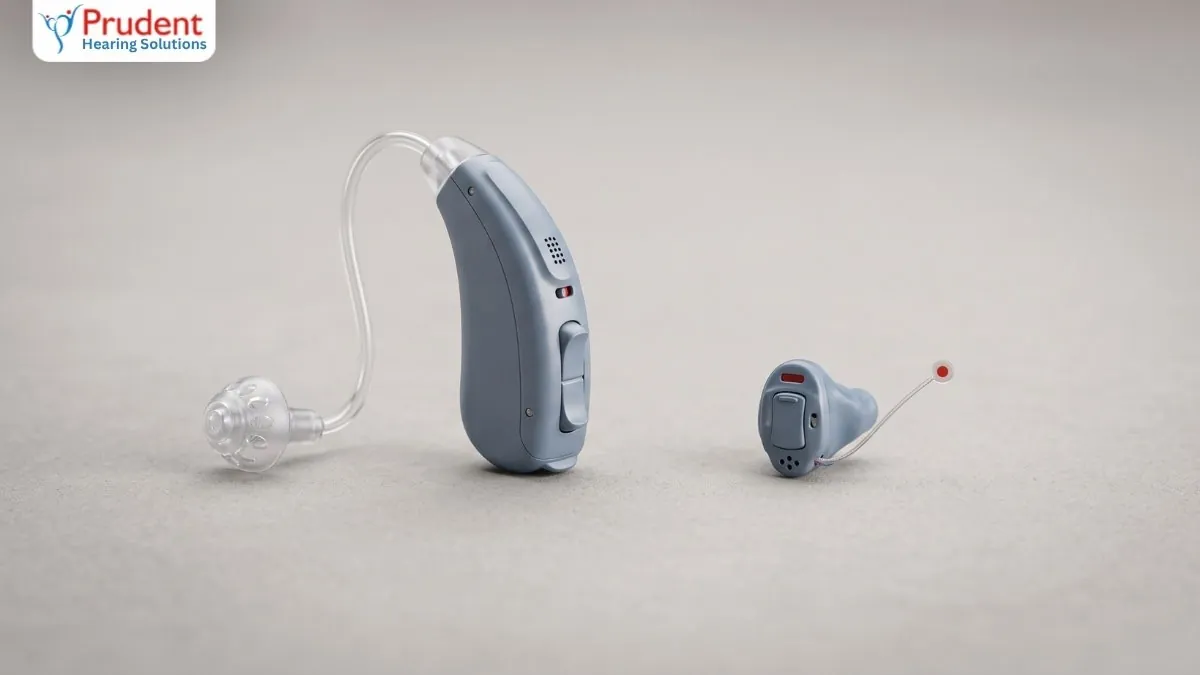
You may have seen different shapes and wondered whether they work differently inside. They do not. The microphone, processor and receiver chain is the same. What changes is where the parts sit and how visible the device is.
Behind-the-ear devices rest behind your ear with a thin tube or wire carrying sound into the canal. Receiver-in-canal devices are similar but place the receiver itself down in the ear. In-the-ear and in-the-canal styles are custom-moulded to sit within your ear, making them less visible.
The right style depends on your hearing loss, the shape of your ear, your dexterity and your comfort. That is a conversation to have during a proper assessment rather than a decision to agonise over now. You can book a hearing test when you feel ready, and an audiologist will guide you through the options.
An important, honest point: hearing aids help, they do not restore normal hearing
This is worth saying plainly, because it protects you from disappointment later. A hearing aid amplifies and clarifies sound. It does not repair the ear or bring hearing back to how it was before any loss.
What it can do is give you real, meaningful help: making conversations easier to follow, letting you catch the television at a comfortable volume, and reducing the tiredness that comes from straining to listen all day. For most people with age-related or noise-related hearing loss, that difference is significant.
If your hearing loss is more severe, or a hearing aid does not give you enough benefit, there are other paths worth understanding, such as a hearing aid vs cochlear implant comparison. Your audiologist will tell you honestly where you stand. Managing expectations is part of good care, not a sign that something has gone wrong.
Can a hearing aid help with tinnitus?
Yes, often, if the tinnitus comes with hearing loss. Hearing aids can ease it because bringing back everyday sound often makes the internal noise less noticeable.
Some devices also include gentle sound features designed specifically for this. You can read more about using a hearing aid for tinnitus(tinnitus hub) and about broader approaches on our tinnitus management service. A hearing aid does not cure tinnitus, but for the right person it can genuinely reduce how intrusive it feels.
When to see a professional promptly
Most hearing loss develops slowly, and there is no need to panic. But some signs deserve prompt attention rather than a wait-and-see approach. Please arrange to be seen quickly if you notice any of these:
- A sudden drop in hearing, especially in one ear, over hours or a few days.
- Tinnitus in only one ear, or a pulsing sound that keeps time with your heartbeat.
- Pain, pressure or discharge from the ear.
- Dizziness or a spinning sensation alongside a change in hearing.
These are not usually signs of anything dangerous, but they should be checked without delay, because acting early sometimes matters. A hearing aid is never the answer to a sudden change on its own; the cause needs to be looked at first.
The one step that makes all of this real
Understanding how a hearing aid works is a good start, but a device only helps when it is matched to your ears. The processor inside is only as good as the hearing test used to programme it. That is why a professional assessment, rather than a guess or a self-diagnosis, is the foundation of everything.
An assessment is straightforward and comfortable. An audiologist checks your ears, measures your hearing across different pitches, and talks through what the results mean for you. From there, if a hearing aid is suitable, it can be fitted and fine-tuned to your everyday life.
If you have questions or want to visit in person, you are welcome to reach out through our our clinics in Pune, Delhi and Bengaluru. Taking that first step is often the hardest part, and it is a very normal thing to feel unsure about.
You do not have to work all of this out alone. The device has a clear job, the process is well understood, and there are qualified people whose role is simply to help you hear more of the life around you.
Continue reading
Frequently asked questions
How does a hearing aid work?
A tiny microphone picks up sound, a digital processor cleans and shapes it to match your hearing loss, and a small speaker delivers the adjusted sound into your ear. This happens continuously and automatically as your surroundings change.
What are the main parts of a hearing aid?
Every hearing aid has a microphone, a digital processor, a receiver or speaker, a battery or rechargeable cell, and controls or app connectivity. The processor is the part tuned to your specific hearing.
Do hearing aids restore normal hearing?
No. They amplify and clarify sound so you can follow conversation again, but they do not repair the ear or bring hearing back to normal. Setting that expectation early makes people much happier with the result.
Can hearing aids help with tinnitus?
Often yes, when tinnitus comes with hearing loss. Amplifying real sound can make the ringing less noticeable, and many aids add a masking program that helps further.
How do I know which hearing aid is right for me?
A hearing test measures your loss and, together with your lifestyle, points to the right style and power. Choosing without that assessment is guesswork.
What is the difference between digital and analog hearing aids?
Analog hearing aids simply make all sound louder, like a small amplifier, and are now largely obsolete. Digital hearing aids convert sound to a signal a chip can process, so they amplify only the pitches you have lost, suppress background noise, cancel whistling and adjust automatically as your surroundings change. Virtually every hearing aid fitted in India today, including entry-level models from about Rs 11,000 per ear, is digital and is programmed to your audiogram.
Free consultation
Ready to hear the difference?
Book a free 45-minute hearing test at any Prudent Hearing clinic: no obligation, honest advice, expert audiologists.