Educational information, not medical advice. This article is written to help you understand common ear and hearing issues. It is not a substitute for professional diagnosis or treatment. If your symptoms are severe, sudden, or persistent, please consult a qualified doctor or audiologist. For urgent symptoms (sudden hearing loss, bleeding from the ear, severe pain with dizziness, or a head injury), seek medical care the same day.
Can a hearing aid for tinnitus help quieten the ringing? An audiologist explains how it manages tinnitus, the masking feature, and when to seek review.
If you have a ringing, buzzing or hissing in your ears that no one else can hear, you have probably wondered whether a hearing aid could help. It is a fair question, and the honest answer is: often yes, but not in the way many people expect.
A hearing aid does not switch tinnitus off like a tap. What it can do, for many people, is make the sound far less noticeable and far less bothersome through the day. That difference matters more than it sounds.
This page is our main guide to using a hearing aid for tinnitus. Take your time with it, and if anything here reflects your own experience, our tinnitus management service explains how we work with you in more detail.
Can hearing aids help tinnitus?
For a lot of people, yes. Here is the part that surprises them: tinnitus and hearing loss very often travel together.
When your hearing dips, your brain receives less sound from the outside world. It tends to turn up its own internal "gain" to compensate, and that extra activity can be experienced as ringing or buzzing. So the tinnitus you hear may be closely tied to sounds you are no longer picking up clearly.
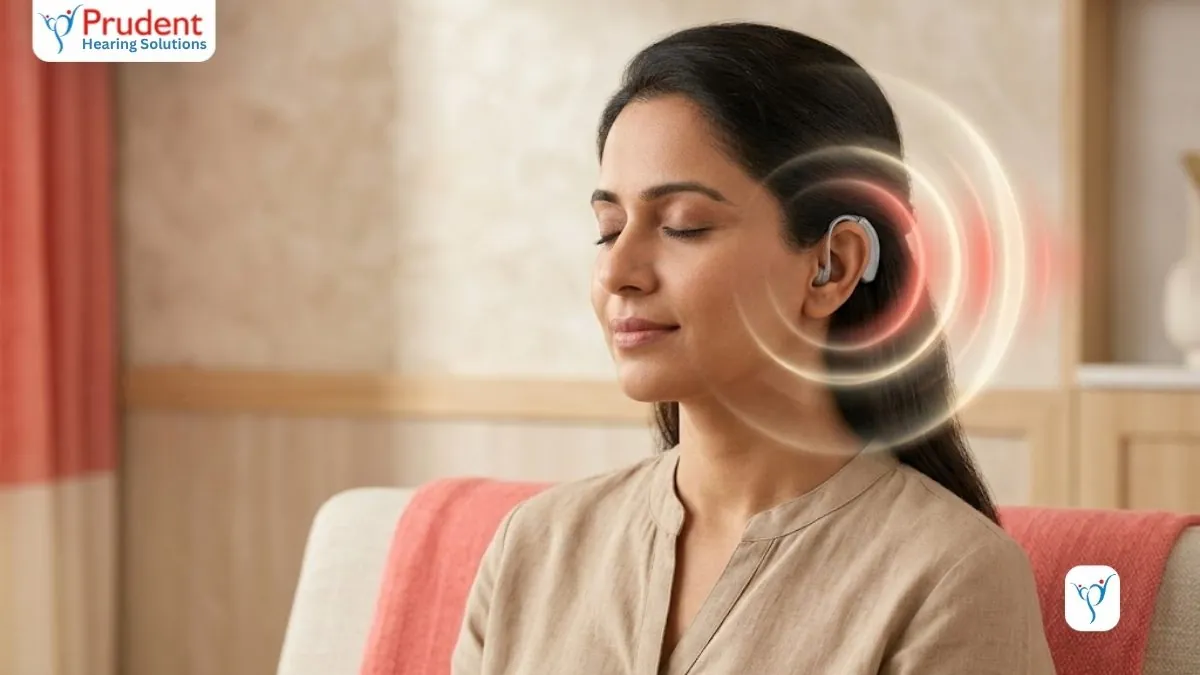
A hearing aid brings those real, everyday sounds back into range. As your brain starts receiving richer input again, the internal noise usually has less room to dominate. Many people describe it as the tinnitus fading into the background rather than disappearing.
This is why the benefit is strongest when tinnitus comes *with* hearing loss. If your hearing is genuinely normal and the tinnitus is the only issue, a hearing aid may do very little, and we would look at other approaches with you instead.
Do hearing aids stop tinnitus completely?
This is where we want to be very straight with you. A hearing aid does not cure tinnitus, and no honest audiologist will promise that it will.
What it can do is help you manage it. Two things tend to happen when a well-fitted aid is working for you:
- The ringing becomes less noticeable, because real sound is filling the quiet spaces where tinnitus used to stand out.
- The ringing becomes less distressing, because you are no longer straining to hear and no longer fixed on the internal sound all day.
For some people the tinnitus quietens a great deal. For others the change is gentler but still meaningful. Very few would say the sound has gone entirely. Going in with realistic hopes tends to make the whole experience better, because you are not measuring success against a cure that was never on offer.
How the tinnitus masking feature works
Many modern hearing aids include more than amplification. A common addition is a tinnitus masking feature, sometimes called a sound therapy or sound generator program.
Instead of only turning up outside sound, this feature can play a soft, steady background sound through the aid itself. That might be a gentle broadband "shhh", ocean-like noise, or a subtle tone your audiologist sets to your comfort.
The idea is not to drown out the tinnitus with something louder. It is to give your brain a soft, neutral sound to rest on, so the ringing has less of your attention. Over time, many people find they notice the tinnitus less even when the masking program is switched off.
The masking sound is tuned to you, not chosen from a menu. What soothes one person can irritate another, which is a large part of why professional fitting makes such a difference.
Will a hearing aid make my tinnitus worse?
This is one of the most common worries we hear, and it is worth answering plainly.
A properly fitted hearing aid does not worsen tinnitus. For most people it does the opposite, because it reduces the listening strain that can make tinnitus feel louder.
A poorly fitted or over-amplified aid is a different matter. If a device is pushing too much volume, or is set up without a proper hearing test behind it, it can feel uncomfortable and leave your ears fatigued. That discomfort is a fitting problem, not a reason to avoid hearing aids altogether.
This is the real risk with buying a device online or over a counter without support. There is no one measuring your hearing, shaping the settings to your ears, or adjusting things when your experience changes. A qualified audiologist fits to your specific loss and reviews how you are getting on, which is exactly what keeps a hearing aid comfortable.
When to see a professional promptly
Most tinnitus is not an emergency. But some patterns need a prompt professional review rather than a self-bought device, and it is important you know them.
Please arrange to be seen quickly if your tinnitus is:
- Sudden, especially if it appears together with a sudden drop in hearing.
- In one ear only, rather than both.
- Pulsatile, meaning it beats in time with your heartbeat.
Also seek review promptly if there is ear pain, discharge, or dizziness alongside the tinnitus.
These features do not mean something is definitely wrong, but they are worth checking properly and without delay. A hearing aid is not the right first step here. A proper assessment is. If any of this sounds like you, please treat it as a reason to book a hearing test soon.
Is a hearing aid the right choice for you?
The only way to know is to have your hearing measured. That single step answers most of the questions this page raises.
An assessment tells us whether hearing loss is part of your tinnitus, how much and at which pitches, and whether a hearing aid, a masking program, or a broader management plan fits your situation best. Without that picture, any advice is guesswork, and you deserve better than guesswork for something that affects you every day.
At Prudent Hearing Solutions, a typical path looks like this. We listen to your history and how the tinnitus affects your sleep, work and mood. We test your hearing carefully. Then we talk through what would genuinely help, whether that is a fitted hearing aid with a tinnitus program, sound therapy, or a combination approach we adjust over time.
If a device is right for you, we set it up to your ears and stay involved, because tinnitus care is rarely a single visit. Our tinnitus management service walks through this support in more detail.
You do not have to keep living around the ringing on your own. If it is wearing you down, the most useful thing you can do is have your hearing checked by someone qualified. You can book a hearing test with us, or reach any of our our clinics in Pune, Delhi and Bengaluru to ask a question first.
Continue reading
Frequently asked questions
Can hearing aids help tinnitus?
For many people, yes, especially when tinnitus comes with hearing loss. Amplifying real everyday sound gives your brain more to listen to, so the ringing often fades into the background. Hearing aids manage tinnitus rather than cure it, and they help least when your hearing is genuinely normal.
Do hearing aids stop tinnitus completely?
No. A hearing aid does not cure or switch off tinnitus. What a well-fitted aid can do is make the sound far less noticeable and less distressing through the day, which for most people is the change that matters most.
What is the tinnitus masking feature on a hearing aid?
Many modern aids include a sound-therapy or masking program that plays a soft, steady background sound, tuned to your comfort. It gives your brain a neutral sound to rest on so the ringing holds less of your attention.
Can a hearing aid make my tinnitus worse?
A properly fitted aid does not worsen tinnitus and usually eases it by reducing listening strain. A poorly fitted or over-amplified device can feel uncomfortable, which is exactly why a professional fitting after a hearing test matters.
When should tinnitus be checked promptly?
Arrange a prompt review if your tinnitus is sudden, in one ear only, or pulsatile (beating in time with your heartbeat), or if it comes with ear pain, discharge or dizziness. These patterns need proper assessment, not a self-bought device.
Free consultation
Ready to hear the difference?
Book a free 45-minute hearing test at any Prudent Hearing clinic: no obligation, honest advice, expert audiologists.