Educational information, not medical advice. This article is written to help you understand common ear and hearing issues. It is not a substitute for professional diagnosis or treatment. If your symptoms are severe, sudden, or persistent, please consult a qualified doctor or audiologist. For urgent symptoms (sudden hearing loss, bleeding from the ear, severe pain with dizziness, or a head injury), seek medical care the same day.
There is no universal cure for tinnitus, but it can very often be managed until it stops bothering you. An honest, evidence-based guide to hearing aids, sound therapy, TRT and CBT for tinnitus, plus the red flags that need a doctor.
Quick answer
There is no single cure that works for everyone, but tinnitus can very often be managed so it stops bothering you. The evidence-based options are treating any hearing loss with well-fitted hearing aids, sound therapy and maskers, tinnitus retraining therapy, and CBT for the distress. No tablet or supplement is proven to cure it. Start with a hearing test to find the cause.
Key takeaways
- No tablet, supplement or single procedure cures tinnitus for everyone, but most people can reach a point where it no longer bothers them.
- If you also have hearing loss, well-fitted hearing aids ease tinnitus for a lot of people, roughly 60 to 70 percent in surveys, because the brain gets the missing sound back.
- Sound therapy, tinnitus retraining therapy (TRT) and CBT for tinnitus are the best-supported ways to lower distress and help the brain tune the sound out.
- Tinnitus stands out more in silence, so gentle background sound, better sleep, and less caffeine and loud-noise exposure all help.
- See a doctor promptly for tinnitus that is one-sided, pulsatile, sudden, or comes with hearing loss or dizziness.
- Start with a hearing test, because the right treatment depends on the cause.
Tinnitus is the ringing, buzzing or hissing you hear when there is no outside sound. If it is keeping you awake or pulling at your attention all day, the honest picture is mixed. No tablet or single procedure switches it off for everyone. But most people can reach a point where tinnitus fades into the background and stops bothering them, and that is a realistic goal. This post is about the treatments that get you there. For what causes the sound and the myths around it, see our separate guide.
Is there a cure for tinnitus?
No treatment reliably cures tinnitus for everyone, and you should be wary of anyone who promises otherwise. What works is management: making the sound seem quieter, making you notice it less often, and taking the upset out of it. For many people that adds up to tinnitus they can ignore for most of the day. The brain is central here.
Tinnitus is largely produced by the hearing system and the brain's reaction to it, so the useful treatments work on that reaction, not on the ear alone. Give the brain the right sound and the right information and it learns to filter the signal out, the way you stop noticing a fan or a clock. This takes weeks to months, not days, and it works far better when you treat the cause underneath instead of chasing the noise.
Treat any hearing loss first
If you have hearing loss along with your tinnitus, treating the loss is the most effective single step. Around 60 to 70 percent of people who have both report that hearing aids ease their tinnitus, and the reason is straightforward. When the ear stops sending certain frequencies to the brain, the brain turns up its own gain to compensate, and that extra activity is often heard as ringing. Put the missing sound back with a properly programmed aid and the brain has less reason to generate it.
Everyday sound also covers the tinnitus so it stands out less. Most people with tinnitus have some measurable loss, often a mild high-frequency dip they never noticed, which is why a hearing test comes first and why the common signs you need a hearing test are worth knowing. Aids do little if your hearing is normal, but for the large group with both, they treat two problems at once.
Hearing aids with a built-in tinnitus sound generator
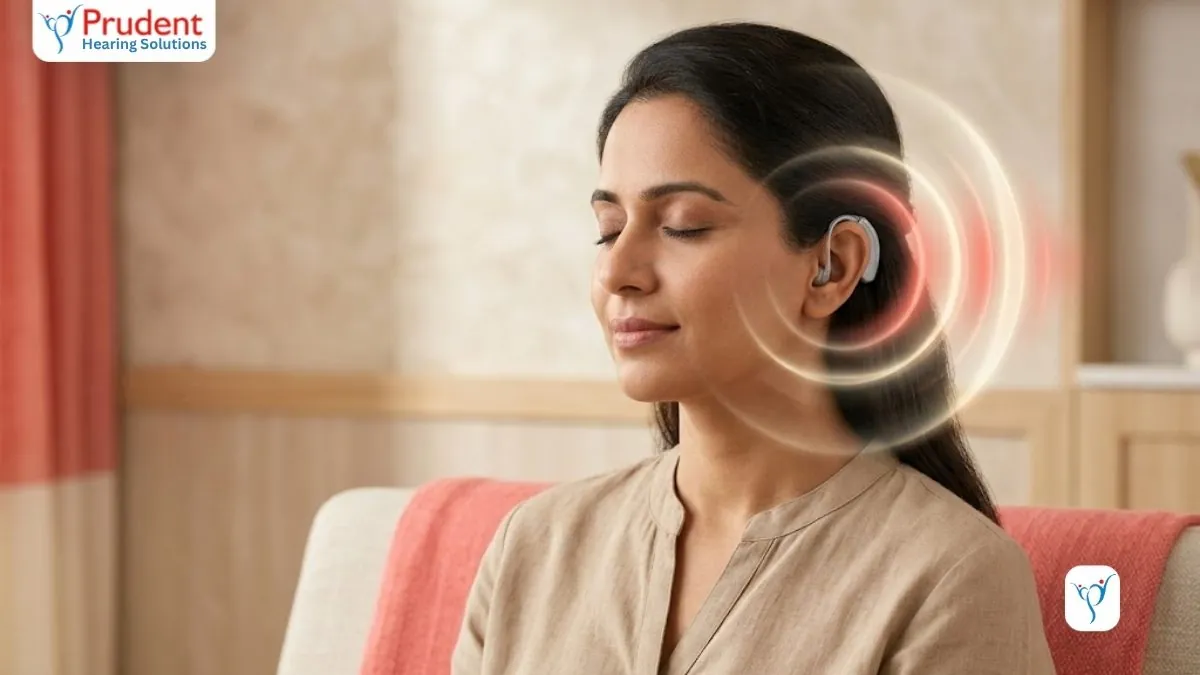
Many modern hearing aids include a tinnitus sound generator, a soft built-in noise you can adjust and blend with everyday sound. That gives you two tools in one device: amplification for the hearing loss and a gentle masking sound for the tinnitus, both controlled from a phone app. Your audiologist sets the level so it eases the ringing without covering speech, and you change it through the day as you need. It suits people whose tinnitus is worst in quiet moments.
This is not a separate, premium category. Genuine digital aids start from around Rs 11,000 per ear, mid-range Bluetooth and rechargeable models run Rs 35,000 to 70,000 per ear, and premium aids Rs 1,20,000 to 2,00,000 per ear, with the tinnitus feature built into many of them rather than charged for on top. A proper fitting matters more than the price, so it helps to know what to expect at a hearing aid fitting.
Tinnitus sound therapy and maskers
Tinnitus sound therapy means adding gentle background sound so the tinnitus is no longer the only thing you hear. In silence, tinnitus stands out more, because a quiet room leaves the brain nothing else to listen to. Soft, steady sound lowers that contrast.
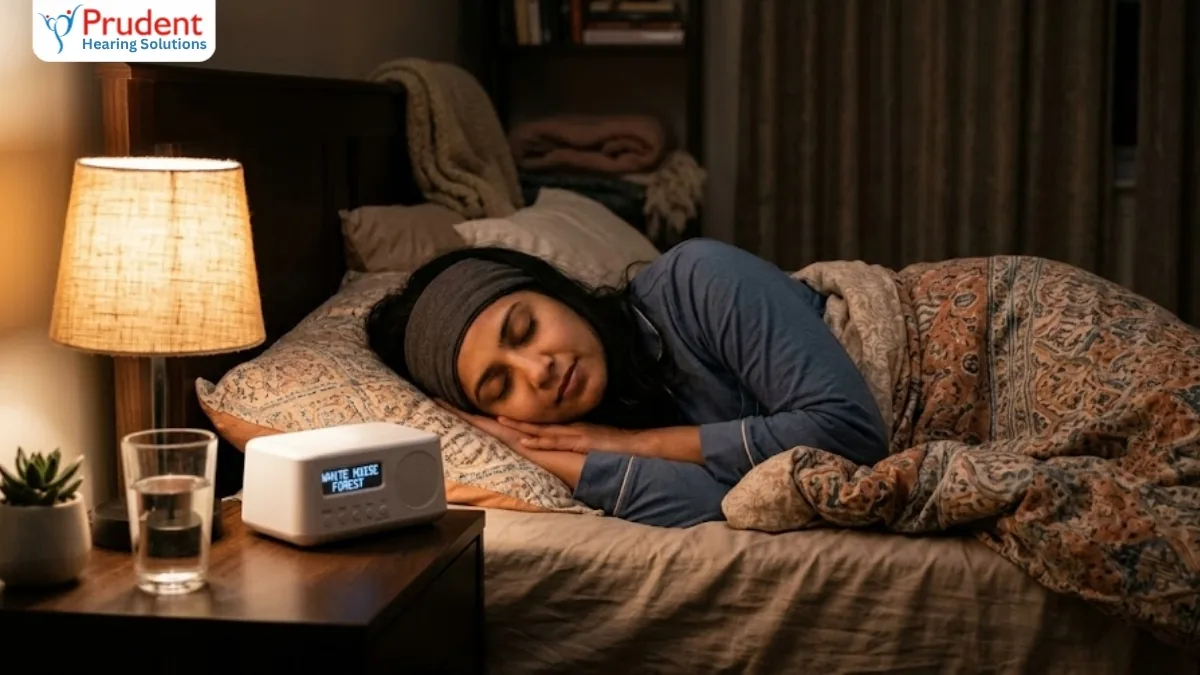
Keep it at or just below the level of your tinnitus, sitting alongside the ringing rather than trying to drown it out. Used at bedtime, this alone helps many people fall asleep, which breaks the tiredness that makes tinnitus feel louder. You do not need special equipment to start.
- A table or ceiling fan, or an air conditioner running low
- A bedside sound machine, or a free white-noise or nature-sound app
- Soft music or the radio at low volume while you work or settle to sleep
- A wearable sound generator or a masking hearing aid for steady, all-day relief
Tinnitus retraining therapy (TRT)
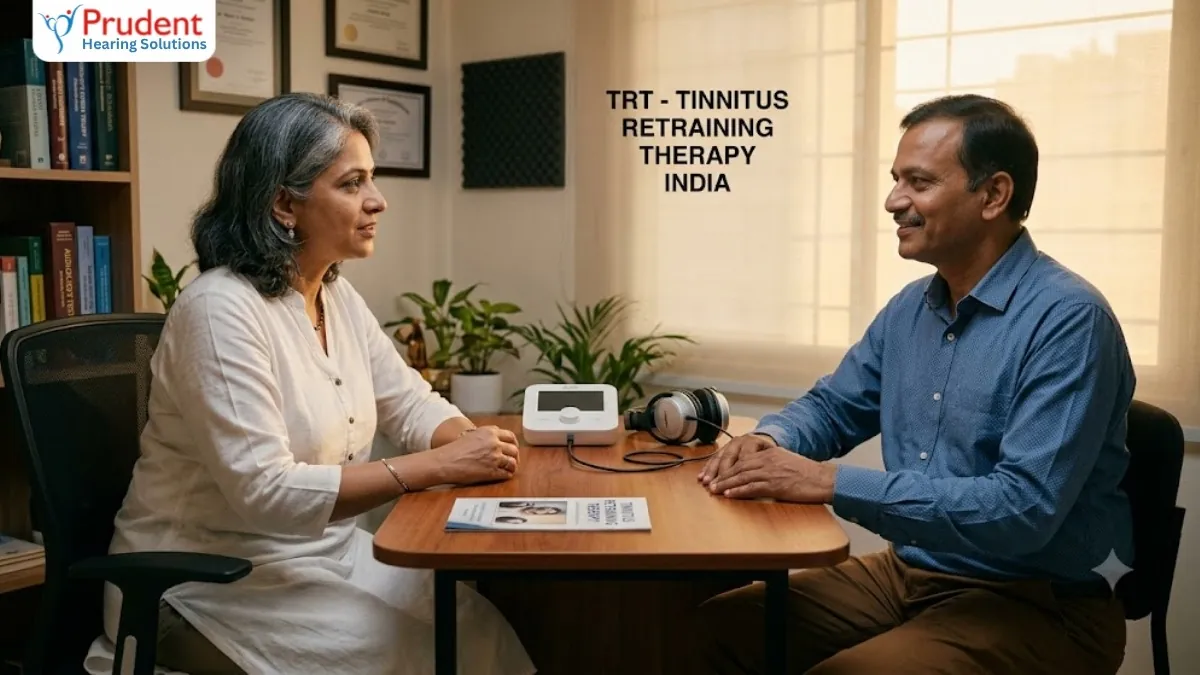
Tinnitus retraining therapy combines sound therapy with structured counselling to help the brain reclassify tinnitus as an unimportant signal it can ignore. It rests on habituation: you already tune out plenty of constant sounds, and the brain can learn to do the same with tinnitus. The sound part uses low-level noise, often through wearable generators or hearing aids, worn for several hours a day.
The counselling part explains what tinnitus is and why it is not a threat, which calms the alarm response that keeps you fixed on it. TRT is a programme, not a quick fix, usually running over 12 to 24 months with regular reviews. It does not suit everyone and the evidence on the exact protocol is mixed, but pairing sound with education has good support and shapes most modern tinnitus care.
CBT for tinnitus
Cognitive behavioural therapy for tinnitus is the best-evidenced psychological treatment for the distress tinnitus causes. It does not aim to make the sound quieter. It changes your reaction to it, breaking the loop where the ringing triggers anxiety, the anxiety sharpens your focus on the ringing, and broken sleep makes both worse. A trained therapist helps you notice and reframe the worst-case thoughts, such as this will never stop or I will never sleep again, cut back on avoidance, and rebuild normal routines.
Across good-quality trials, CBT reliably lowers tinnitus-related distress and improves quality of life even when the tinnitus itself is unchanged. Reach for it when tinnitus is driving low mood, anxiety or insomnia. It can be one to one, in a group, or through a structured online programme, and it works alongside sound therapy and hearing aids rather than replacing them.
Sleep, stress and everyday triggers
Tinnitus almost always feels louder when you are tired, stressed or run down, so the daily habits that steady those things genuinely help. None of this is a cure, but it changes how much the sound bothers you day to day.
- Protect sleep with a steady bedtime, a cool dark room, and low background sound to settle into
- Manage stress in whatever way suits you: exercise, breathing, prayer, time outdoors
- Trial cutting caffeine and alcohol for two weeks, then judge the difference for yourself
- Guard your ears from loud noise, and wear plugs at concerts, weddings and around power tools, since noise-induced hearing loss can worsen both the tinnitus and the loss beneath it
No tablet or supplement cures tinnitus
Be honest with yourself about pills. No tablet, herbal remedy or supplement is proven to cure tinnitus, whatever the label or the advertisement claims. Ginkgo, zinc, magnesium and the various tinnitus formulas sold online have not shown a reliable effect in careful trials. If a specific deficiency or medical problem is found, correcting it can help, but that is treating the underlying issue, not the tinnitus.
Medicines do have a place for the anxiety or sleeplessness that comes with severe tinnitus, prescribed and reviewed by a doctor, but they ease the distress, not the sound. Money spent on unproven supplements usually means less spent on the things that actually work.
Red flags: when to see a doctor
Most tinnitus is not dangerous, but some patterns need a medical check rather than sound therapy. Sudden hearing loss with tinnitus is treated as an emergency, because prompt treatment can sometimes recover the hearing, so do not wait it out. See a doctor or audiologist promptly if your tinnitus is any of the following.
- In one ear only, or clearly worse on one side
- Pulsatile, meaning it beats in time with your heartbeat
- Sudden in onset, especially with new hearing loss in that ear
- Along with dizziness, vertigo or balance problems
What to do next
Start with a hearing test to find out what is driving your tinnitus, because the right treatment depends on the cause. Our RCI-registered audiologists give a free 45-minute test at our clinics in Pune, Delhi and Bengaluru. If hearing aids turn out to help, you can try them in the clinic before you buy. We also offer counselling-based sound therapy, Tinnitus Retraining Therapy (TRT) and auditory therapy for adults. To book, call +91 9429690093.
Continue reading
Frequently asked questions
How can I stop tinnitus?
You usually cannot switch tinnitus off completely, but you can get it to stop bothering you. The most effective steps are treating any hearing loss with well-fitted hearing aids, using gentle background sound so the ringing stands out less, and, where distress is high, CBT for tinnitus. Better sleep and less caffeine and loud-noise exposure help too. Start with a hearing test so treatment matches the cause.
Do hearing aids help tinnitus?
Yes, for people who have hearing loss as well. Around 60 to 70 percent of this group report that hearing aids ease their tinnitus, because the aids give the brain back the sound it was missing and everyday noise covers the ringing. Many aids also include a built-in tinnitus sound generator for extra relief. Aids do little if your hearing is normal, which is why testing comes first.
What is tinnitus retraining therapy?
Tinnitus retraining therapy, or TRT, combines low-level sound therapy with structured counselling to help the brain treat tinnitus as an unimportant signal and tune it out, a process called habituation. The sound is usually delivered through wearable generators or hearing aids worn for several hours a day, alongside sessions explaining why tinnitus is not a threat. It is a programme run over many months, not a quick fix.
Is there a tablet or supplement that cures tinnitus?
No. No tablet, herbal remedy or supplement is proven to cure tinnitus, including ginkgo, zinc and the tinnitus formulas sold online. If a specific deficiency or medical problem is found, correcting it may help, but that treats the cause, not the tinnitus. Doctors sometimes prescribe medicine for the anxiety or sleep problems that come with severe tinnitus, but that eases the distress rather than the sound.
When is tinnitus a reason to see a doctor?
See a doctor or audiologist promptly if the tinnitus is in one ear only or clearly worse on one side, beats in time with your heartbeat, starts suddenly with new hearing loss, or comes with dizziness or balance problems. Sudden hearing loss with tinnitus is treated as an emergency.
Sources & further reading
We cross-checked this article against the following authoritative sources. Guidance and figures reflect the most recent public guidance available at the time of last review (July 2026). Clinical review by the Prudent Hearing clinical team.
- Tinnitus (NIDCD (NIH))
- Deafness and hearing loss (World Health Organization (WHO))
Free consultation
Ready to hear the difference?
Book a free 45-minute hearing test at any Prudent Hearing clinic: no obligation, honest advice, expert audiologists.