Nervous about your first hearing aids? You can try them in the clinic before you buy. Here is every step, from the free hearing test to the fitting and the weeks it takes to adjust.
Quick answer
Yes. At Prudent Hearing Solutions you can try hearing aids in the clinic before paying anything. It starts with a free 45-minute hearing test and a printed audiogram, then an honest recommendation. You hear the difference for yourself and only buy if they help. The fitting uses real-ear measurement, and your brain takes about two to six weeks to fully adjust.
Key takeaways
- You can try hearing aids in the clinic before you buy.
- The free hearing test takes about 45 minutes and includes a case history, otoscopy, pure-tone and speech-in-noise testing, and a printed audiogram.
- A good fitting uses real-ear measurement to check the aids deliver your prescription in your ear, rather than only on a screen.
- Sound is clearer at once, but the brain needs about two to six weeks to re-learn quiet sounds and filter noise.
- The fit and the follow-up visits matter more than the brand on the box.
- Genuine digital hearing aids start at around Rs 11,000 per ear; devices sold for a few thousand rupees are usually just amplifiers, not hearing aids.
Getting your first pair of hearing aids feels like a big decision, and it should. You are spending real money on something you will wear every day. The good news is you do not have to decide blind. You can try the aids in the clinic first and hear the difference for yourself before you pay. This guide walks through every step, from the first test to the day the aids settle in. If you have already noticed the signs you need a hearing test, here is what happens next.
Can I try hearing aids before buying?
Yes. You can try hearing aids in the clinic before you buy anything. We call it an in-clinic trial. We program a pair to your test results and let you wear them in the clinic, so you hear the difference for yourself rather than judging from a spec sheet. There is no pressure to buy on the day, no deposit is taken, and no obligation to keep something that is not working for you.
What the free 45-minute hearing test includes
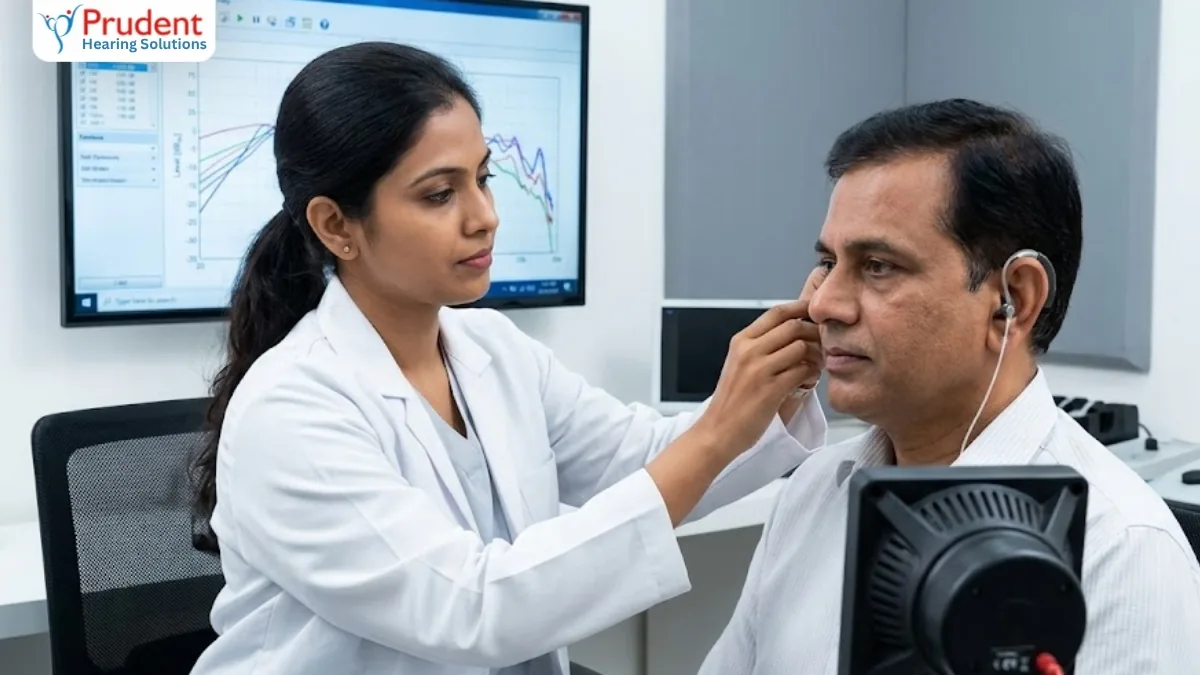
The free hearing test takes about 45 minutes and it is a proper clinical check, not a five-minute beep test. First we talk. Then we look inside your ears, test your hearing across the pitches, check how well you follow speech in noise, and print a chart of the result. You leave with that chart in hand, whether or not you buy anything. Here is what each part does.
What we check, step by step
- Case history: a short conversation about your hearing, your work, your health and the situations that bother you.
- Otoscopy: we look into the ear canal to check for wax, signs of infection or a damaged eardrum before the hearing test.
- Pure-tone audiometry: you press a button for the softest beeps you can hear across the pitches, in each ear.
- Speech-in-noise testing: we check how well you catch words over background chatter, the real-world complaint most people have.
- A printed audiogram: your results on one page, so you can see which sounds you are missing.
That printed chart is yours to keep. If you want to know what the lines and numbers mean, our guide to understanding your audiogram explains it in plain language. Bring a family member if you can. A second set of ears helps, and hearing loss affects the people around you too.
The honest recommendation after your test
After the test we give you a straight recommendation based on two things: your audiogram and your daily life. A retired person who wants to follow conversation at home has different needs from someone on sales calls all day, so we match the aid to that, not to the price tag. For reference, genuine digital hearing aids start at around Rs 11,000 per ear, with rechargeable and Bluetooth models costing more, and premium aids more still.
Anything sold for a few thousand rupees is usually a plain amplifier, not a real hearing aid, and it makes everything louder without making speech clearer. If a mid-range aid does the same job as a premium one for your loss, we will say so. Our hearing aid price guide for India lays out the ranges in detail.
The in-clinic trial, before you buy
The in-clinic trial is the part first-timers value most. We set the aids to your prescription, show you how to put them in, charge them and adjust the volume, then let you listen with them in the clinic. We play speech and everyday sounds so you can judge how they help, and fine-tune the settings based on what you notice. Because this happens before any payment, you are testing with nothing at stake. If the aids are not right, there is no obligation to buy.
The fitting and real-ear measurement
Once you decide to go ahead, we do a proper fitting, and this is where real-ear measurement matters. Two people with the same audiogram can have very differently shaped ear canals, so the sound reaching the eardrum is never exactly what the aid claims to deliver. In real-ear measurement, or REM, we place a thin soft tube beside the aid in your ear and measure the actual sound level at your eardrum while the aid runs.
Then we tune the aid until it hits your prescribed targets in your ear, not on a screen. Without REM, a fitting is largely a guess, and it is a big reason two clinics can fit the same brand and give very different results. Ask whether your fitting includes real-ear measurement. At our clinics it does.
Do hearing aids work immediately?
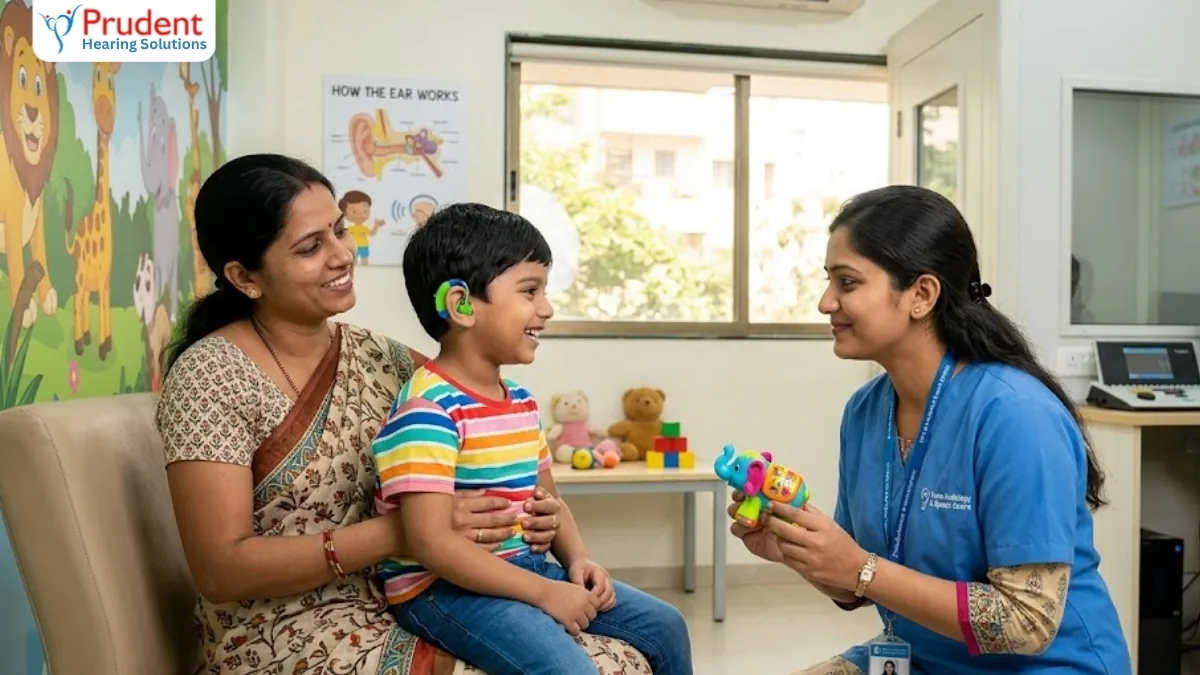
Partly. The moment we switch them on, sound is clearer and louder, and most people notice speech straight away. But your brain has spent years without those softer, higher sounds, and it needs time to adjust. For the first two to six weeks, everyday noises can feel loud, sharp or tinny, and your own voice may sound odd.
The clatter of plates, a fan, the car indicator, sounds you had stopped hearing, all come back at once, and the brain has to learn to push them into the background again. This is normal and it settles. It is not a fault in the aid and it is not a sign you chose wrong. Wear the aids daily so your brain gets the practice. People who wear them only now and then take much longer to adjust.
Follow-up tuning in the first weeks
A fitting is a starting point, not the finish. In the first few weeks we see you again to fine-tune the settings based on how the aids feel in your life. Too sharp on the high sounds? We soften them. Struggling on the phone?
We adjust that program. These follow-up visits are where a good fitting is made, and they are included, not extra. Come back with specifics: the room where it echoed, the restaurant where you lost the conversation. The more precisely you tell us, the better we can set it.
What if the aids don't suit you?
Then you walk away, and because the trial comes before payment, you are not out any money. That is the point of trying first. Sometimes a style does not sit well, sometimes an aid does not suit your loss, sometimes the timing is not right. Any of those is a fine reason to stop.
One thing worth saying plainly: the brand on the box matters far less than the fit and the follow-up. A mid-range aid, fitted with real-ear measurement and tuned over a few visits, will beat a premium aid fitted carelessly. Choose the clinic that measures and follows up, then pick the brand.
"The brand gets the attention, but the fit and the follow-up decide whether you actually hear better. Try before you pay, and judge the aid for yourself in the clinic, not from a spec sheet."
What to do next
If any of this sounds like you, book a free 45-minute hearing test and take it from there. There is no obligation to buy, and you leave with your audiogram either way. We are RCI-registered and have six clinics: Pune (Viman Nagar), Mumbai (Malabar Hill), Navi Mumbai (Seawoods), Delhi (Rohini and Green Park) and Bengaluru (Jayanagar).
Call us on +91 9429690093 to fix a time, or find the clinic nearest you and walk in. Get the test done, see your results, try the aids in the clinic, and decide with the facts in front of you.
Continue reading
Frequently asked questions
Can I really try hearing aids before buying?
Yes. We program a pair to your test results and let you try them in the clinic before any payment, so you hear the difference for yourself. If they help, you buy them; if not, there is no obligation.
What happens at the hearing test?
The free test takes about 45 minutes. We take a case history, look inside your ears, test your hearing across the pitches with pure-tone audiometry, check how well you follow speech in noise, and print your audiogram. You keep that chart whether or not you buy anything. It is a full clinical check, not a quick beep test.
Do hearing aids work straight away?
Partly. Sound is clearer and louder the moment we switch them on, and most people notice speech at once. But your brain needs about two to six weeks to re-learn softer sounds and filter background noise. Early on, everyday sounds can feel loud or tinny. This is normal and settles, especially if you wear the aids daily.
What is real-ear measurement and why does it matter?
Real-ear measurement, or REM, checks the actual sound level reaching your eardrum while the aid runs, using a thin soft tube in your ear. Every ear canal is shaped differently, so the aid rarely delivers exactly what its screen claims. We tune the aid to your prescribed targets in your ear. Without REM, a fitting is largely a guess.
What if the hearing aids don't suit me during the trial?
You simply stop. The trial comes before any payment, so you are not out any money if a style does not sit well, the aid does not suit your loss or the timing is wrong. There is no deposit and no obligation to buy.
Sources & further reading
We cross-checked this article against the following authoritative sources. Guidance and figures reflect the most recent public guidance available at the time of last review (July 2026). Clinical review by the Prudent Hearing clinical team.
- Hearing Aids (National Institute on Deafness and Other Communication Disorders (NIDCD, NIH))
- Practice guidance: Real-Ear Measurement (British Society of Audiology (BSA))
Free consultation
Ready to hear the difference?
Book a free 45-minute hearing test at any Prudent Hearing clinic: no obligation, honest advice, expert audiologists.