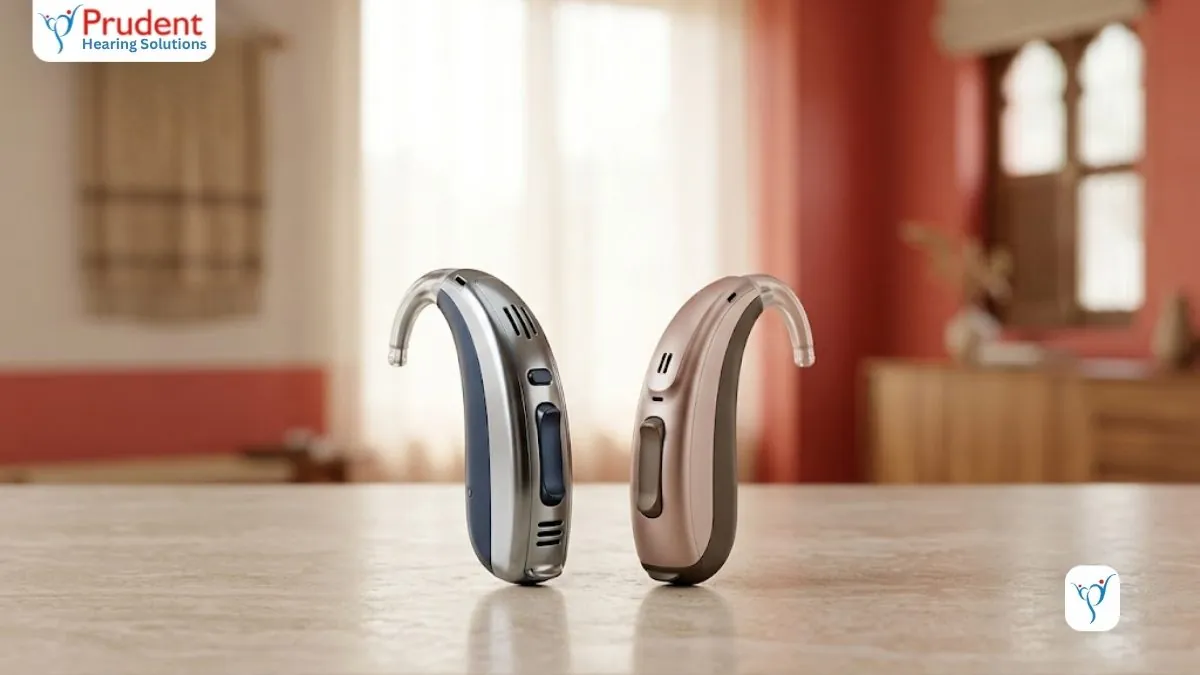
Signia vs Phonak in India, compared with real 2026 MRP figures. Signia starts lower (Rs 10,990 vs Rs 33,000 per ear) and lists 170 models to Phonak's 40. Phonak leads on universal Bluetooth and power for severe-to-profound loss. Neither wins outright. Your audiogram, phone, power needs and budget decide.
Neither brand wins outright, and anyone who tells you otherwise is selling something. Signia's entry model starts at Rs 10,990 MRP per ear against Phonak's Rs 33,000, and the 2026 Indian price list carries 170 Signia hearing aids versus 40 from Phonak. Phonak's Naida family covers severe-to-profound loss, and its Bluetooth pairs with almost any phone including Android.
Both are long-established brands with decades of clinical evidence. Which one suits you depends on your audiogram, your phone, your power needs and your budget, not on which name sounds more premium. Each brand's full range is on our Signia and Phonak pages.
The short version, before the details
- Signia: lower entry price (Rs 10,990 MRP per ear), more models to choose from, a wide lineup of slim and invisible styles, and Own Voice Processing so your own voice sounds like you.
- Phonak: universal Bluetooth that pairs with almost any phone including Android, and the Naida family for severe-to-profound loss.
- Both: GST-exempt in India, both sold at Prudent with up to 30-50% off MRP, both fitted the same way: test first, then match the aid to the loss.
Hearing aids manage hearing loss. They don't cure it. No brand changes that, so the comparison is about which one manages your loss better in your daily life.
Price: Signia starts lower
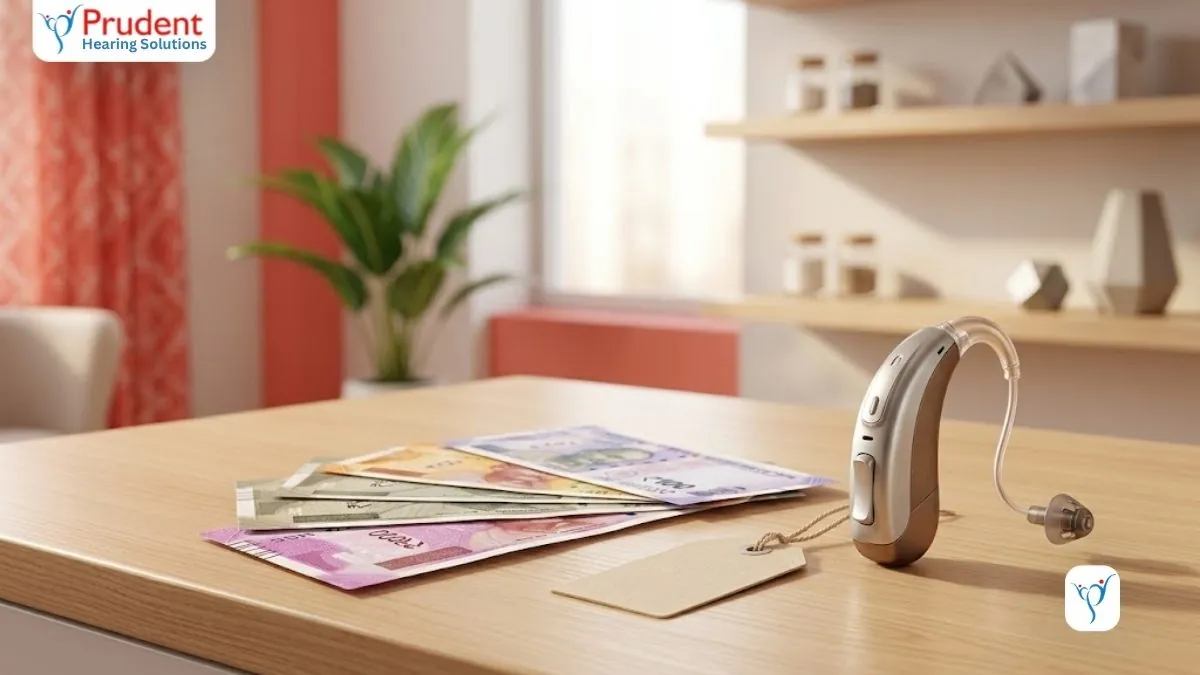
These are 2026 MRP figures: the manufacturer's list price, per ear, for a single unit. A pair (a Kit) is two units and costs accordingly. Prudent gives up to 30-50% off MRP, so what you actually pay is lower and is confirmed at your appointment after the test.
Signia
- Fast P (BTE, 4 channels): Rs 10,990 MRP per ear
- Run (BTE / ITC-CIC, 8 channels): Rs 18,990 MRP per ear
- Prompt (BTE / ITC-CIC, 8 channels): Rs 20,990 MRP per ear
- Intuis 3 (RIC/BTE, 12 channels): Rs 26,990 MRP per ear
Phonak
- Terra (RIC 312 / BTE, 8 fine-tuning channels): Rs 33,000 MRP per ear
- Terra+ (10 channels): Rs 42,000 MRP per ear
- Virto P30-312 (ITC, 12 channels): Rs 55,000 MRP per ear
The gap at the bottom is the headline: Rs 10,990 against Rs 33,000 is roughly Rs 22,000 per ear before any discount. Like for like on 8 channels, the Signia Run (Rs 18,990) or Prompt (Rs 20,990) against the Phonak Terra (Rs 33,000) is still a gap of Rs 12,000 to Rs 14,000.
If budget is your binding constraint, Signia gives you a starting point Phonak doesn't have. Every model and price sits at the full Signia price list and the full Phonak price list, with the full multi-brand breakdown at our full hearing aid price list. Our hearing aid price guide for 2026 explains what drives the numbers up and down.
Choice: 170 models against 40
Signia's 2026 India list runs to 170 hearing aids. Phonak's runs to 40. A wider list means more chances to land on something that fits your exact loss, your ear shape, your dexterity and your budget at the same time, instead of compromising on one to satisfy another.
When someone comes in with a moderate loss, a Rs 40,000 ceiling and a strong preference for something nobody can see, Signia usually has two or three candidates and Phonak might have one. That's not Phonak being worse. It's a smaller catalogue doing fewer jobs, well.
The flip side: more choice can paralyse people. That's what the fitting appointment is for. You don't need to read 170 rows. You need an audiologist to narrow it to three. Our guide on how to choose the right hearing aid walks through the narrowing logic if you want to do some of it yourself first.
Discretion: Signia's strongest territory
If "I don't want anyone to know" is near the top of your list, Signia is where most people end up. Three families do the work:
- Styletto: the slim, angular design that reads as a wireless earbud rather than a hearing aid.
- Silk: an instant-fit, in-canal aid you can walk out with the same day, no ear impression needed.
- Insio: custom in-the-ear aids built from a mould of your canal.
Phonak's answer is the Virto family: custom in-the-ear aids, and good ones. The Virto P30-312 at Rs 55,000 MRP per ear is a solid ITC. But Signia fields more shapes, sizes and price points in the discreet category. If invisibility is the deciding factor, read our guide to CIC and IIC hearing aids before you commit. The smallest aids trade away battery life and power, and that trade-off catches people out.
Bluetooth: Phonak's clearest advantage
Phonak built its wireless around a Bluetooth Classic connection that pairs with almost anything with a Bluetooth radio: Android phones, older iPhones, laptops, tablets. You don't need a specific handset generation. You don't need an intermediary streamer around your neck. Calls come straight to both ears.
This matters in India, where most of our patients are on Android. Signia's newer platforms do stream to Android, but Phonak's approach has been universal for longer and tends to be more forgiving with older or less common phones. If you carry a five-year-old Android and you want calls in your ears without fuss, Phonak is the safer bet.
Bring your actual phone to the appointment. Not the model number, but the phone. We pair it on the spot. That single step settles the Bluetooth question faster than any spec sheet, and it's covered in more depth in our Bluetooth hearing aids guide.
Power: Phonak Naida for severe-to-profound loss
When hearing loss crosses into the severe or profound range, most hearing aids run out of headroom. They can't deliver enough gain without feedback, distortion, or both. Phonak's Naida family exists for exactly this: an ultra-power BTE built to push hard and stay clean doing it.
Signia has power BTEs too, and they're capable, but Naida has a long-standing reputation among audiologists in the profound-loss category. If your audiogram sits in that range, Phonak deserves a serious look, and our BTE guide explains why the behind-the-ear form factor is usually non-negotiable at those levels.
To be clear: if your loss is mild or moderate, this section is irrelevant to you. You don't need Naida-class power, and paying for it would be waste. Most people reading this are in the mild-to-moderate range.
Own voice: Signia's distinctive strength
A complaint we hear constantly from first-time users: "I sound like I'm talking inside a barrel." Your own voice reaches your ears differently from everyone else's: partly through the air, partly through your skull. Amplify it the same way you amplify external speech and it comes out wrong. Some people find it so off-putting they stop wearing the aids.
Signia's Own Voice Processing tackles this directly. The aid learns to recognise your voice specifically and processes it on a separate track from everything else, so you sound like yourself while the world around you still gets amplified properly. It's the reason some patients pick Signia after trying both.
Phonak manages own-voice through its general sound processing and venting choices, which works well for plenty of people, but it isn't a dedicated named feature the way it is at Signia. If you're a teacher, a lawyer, someone who talks for a living, or someone who's tried aids before and hated hearing yourself, mention it at the appointment. It changes the recommendation.
Where the two are basically the same
- Rechargeable batteries: both offer them across the range. The choice between rechargeable and disposable is about your hands and your habits, not your brand. Our comparison covers it.
- Noise reduction and directional mics: both are strong. The premium tiers of each brand handle restaurants and crowds well; the entry tiers of each handle them less well. Tier matters more than brand.
- GST: hearing aids are GST-exempt in India regardless of brand. Accessories are not.
- Build quality and service: both are long-established manufacturers with proper service networks in India.
- Discount: Prudent gives up to 30-50% off MRP on both. Neither is the "discount brand".
For the other brands beyond these two, our rundown of 10 hearing aid brands in India puts them in context, and Signia versus other brands goes wider on that side.
So which one should you buy?
Lean Signia if
- Your budget is tight: Rs 10,990 MRP per ear (Fast P) is a real starting point and Phonak has nothing near it.
- Discretion is your priority: Styletto, Silk and Insio give you options Phonak's catalogue can't match.
- You've worn aids before and hated hearing your own voice.
- You want the widest shortlist at your price point.
Lean Phonak if
- Your loss is severe or profound: the Naida family is built for it.
- You're on Android, or an older phone, and Bluetooth calls matter to you.
- You want a shorter, simpler list to choose from.
It genuinely doesn't matter much if
- Your loss is mild-to-moderate, your budget is mid-range, and you're on a recent iPhone. Both brands have something good for you, and the choice comes down to what sounds better in your ears on the day.
"The patients who regret their purchase are almost never the ones who picked the wrong brand. They're the ones who picked a hearing aid without an audiogram: a device that didn't match a loss nobody had measured. Get tested first. The brand question answers itself afterwards."
What to do next
Book a free hearing test at any Prudent clinic. You'll walk out with an audiogram, which turns this comparison from a spec-sheet debate into a short list of two or three specific models with real prices.
Bring your phone. Bring a family member. A second set of ears helps when you're comparing sound quality. And bring your budget honestly. If paying at once is the obstacle, EMI options spread it out, and some patients qualify under government schemes.
Browse the full range at the hearing aids we fit or reach us through get in touch. Prudent Hearing Solutions
Continue reading
Frequently asked questions
Are Signia hearing aids better than Phonak?
Neither is better overall. They lead in different areas. Signia's entry model is lower priced (Rs 10,990 MRP per ear vs Phonak's Rs 33,000), it lists more models (170 vs 40 hearing aids on the 2026 India lists), it has discreet styles like Styletto and Silk, and it has Own Voice Processing so your own voice sounds natural.
Phonak has universal Bluetooth that pairs with almost any phone including Android, and the Naida family for severe-to-profound loss. Your audiogram, your phone, your power needs and your budget decide it, which is why the free hearing test comes first. MRP is the manufacturer's list price; Prudent gives up to 30-50% off it.
Which is cheaper in India, Signia or Phonak?
Signia, at the entry level. Signia's cheapest aid, the Fast P (BTE, 4 channels), is Rs 10,990 MRP per ear. Like for like on 8 channels, Signia's Prompt (BTE / ITC-CIC) is Rs 20,990 MRP per ear against Phonak's Terra (RIC 312 / BTE, 8 fine-tuning channels) at Rs 33,000 MRP per ear, roughly Rs 12,000 less per ear before discount.
Signia's Intuis 3 (12 channels) at Rs 26,990 MRP per ear still undercuts the Terra. These are per-ear figures; a Kit is a pair and costs accordingly. MRP is the manufacturer's list price; Prudent gives up to 30-50% off it, so what you actually pay is lower and is confirmed at your appointment. Full lists are at /pricing/signia and /pricing/phonak.
Does Phonak work with Android phones better than Signia?
Generally yes. Phonak built its wireless around a Bluetooth Classic connection that pairs with almost any device with a Bluetooth radio (Android, older iPhones, laptops, tablets) without needing a specific handset generation or an intermediary streamer. Signia's newer platforms do stream to Android too, but Phonak's approach has been universal for longer and tends to be more forgiving with older or less common phones. Bring your actual phone to the appointment and we'll pair it on the spot; that settles the question faster than any spec sheet.
Which brand is better for severe or profound hearing loss?
Phonak, in most cases. The Naida family is purpose-built for the severe-to-profound range and has a long-standing reputation among audiologists in that category. Signia has capable power BTEs as well, so this isn't a closed question, but Naida is the usual reference point at those levels.
This only applies if your audiogram actually sits in that range; if your loss is mild or moderate, you don't need that much power and paying for it would be waste. Hearing aids manage hearing loss, they don't cure it, so matching power to your measured loss is what matters. Current Naida pricing is on /pricing/phonak.
How many Signia and Phonak models are available in India in 2026?
The 2026 manufacturer price list carries 170 Signia hearing aids and 40 Phonak hearing aids. That difference is why Signia usually gives you more candidates at any given budget and style preference: more chances to match your exact loss, ear shape, dexterity and price ceiling at the same time. Phonak's smaller catalogue is focused rather than deficient. You don't need to read all 170 rows; an audiologist narrows it to two or three after your test. Live lists with every model and price are at /pricing/signia and /pricing/phonak.
What is Signia's Own Voice Processing and does Phonak have it?
Your own voice reaches your ears partly through the air and partly through your skull, so amplifying it the same way as external speech makes people say they sound like they're talking inside a barrel. Signia's Own Voice Processing learns to recognise your voice specifically and processes it on a separate track from everything else, so you sound like yourself while the world still gets amplified.
Phonak handles own-voice through its general sound processing and venting choices, which works well for many people, but it isn't a dedicated named feature. If you talk for a living, or tried aids before and hated hearing yourself, mention it, because it changes the recommendation.
Free consultation
Ready to hear the difference?
Book a free 45-minute hearing test at any Prudent Hearing clinic: no obligation, honest advice, expert audiologists.