Choosing a hearing aid in India is a decision you can get right if you take it in order. Start with your audiogram, match it to your daily life, buy the tier you actually need, and insist on real-ear measurement and an in-clinic trial before you pay. Here is the audiologist's decision guide, minus the sales pressure.
Quick answer
Start with your audiogram, not a brand. The type and degree of your hearing loss decide which styles are even possible, then your daily listening life decides how much noise processing you need. Buy the tier that fits your life, insist on real-ear measurement, and try the aids in the clinic before you pay. A well-fitted mid-range aid beats a badly fitted premium one.
Key takeaways
- Your audiogram, not the brand, narrows the choice: mild to moderate loss opens up most styles, while severe or profound loss needs a powerful behind-the-ear aid.
- Smaller aids are more discreet but hold smaller batteries, pack fewer features, and are harder to handle.
- Pay for features your life actually uses, such as directional mics, Bluetooth and rechargeability, and skip AI labels and fitness add-ons.
- Genuine hearing aids start around Rs 11,000 per ear; anything under about Rs 10,000 is usually just an amplifier.
- The fitting decides everything: insist on real-ear measurement and an in-clinic trial before you pay.
Most people start shopping for a hearing aid at the wrong end. They read brand reviews, watch a video about the smallest device on the market, then walk in asking for it by name. The device is the last decision, not the first.
What narrows your choice is your own hearing, your ears, and how you spend your day. This guide from the audiology team at Prudent Hearing Solutions walks through that decision step by step, so you buy the aid that fits your loss and your life without paying for features you will never switch on.
Start with your audiogram, not a brand
Your audiogram decides more than any brand claim. It shows the type of loss, whether sensorineural, conductive or mixed, and the degree, from mild to profound. Those two facts rule out most of the catalogue before you compare a single model. Mild to moderate loss opens up almost every style, including the tiny in-canal aids. Severe or profound loss needs a powerful behind-the-ear aid with a firm-fitting mould, because a discreet in-canal device cannot deliver that power cleanly.
Whether one ear or both are affected matters too. Two aids usually give better clarity in noise and a truer sense of where sound comes from, but if only one ear has a usable loss, one aid may be the honest answer. Read your test before you shop. Our guide to understanding your audiogram explains the graph line by line.
Choose a style: behind-the-ear or custom-fit?
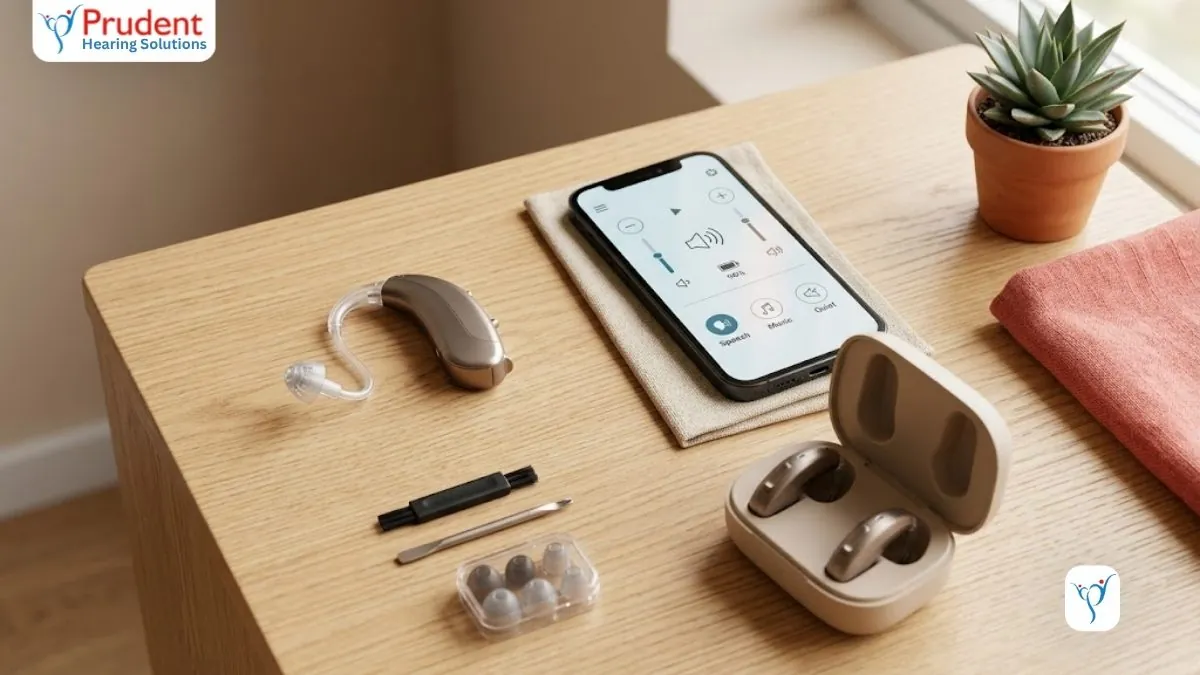
Style is a trade-off between how visible the aid is and how much power and easy handling you get. Behind-the-ear (BTE) and receiver-in-canal (RIC) aids sit behind the ear with a thin wire or tube into the canal. Custom aids are moulded to your ear and sit inside it. Smaller is more discreet, but it holds a smaller battery, packs fewer features, and is fiddlier to handle. Bigger is easier to manage and more powerful.
Behind-the-ear (BTE) and RIC aids
- Suit every degree of loss, from mild to profound.
- Have room for rechargeable batteries and direct Bluetooth streaming.
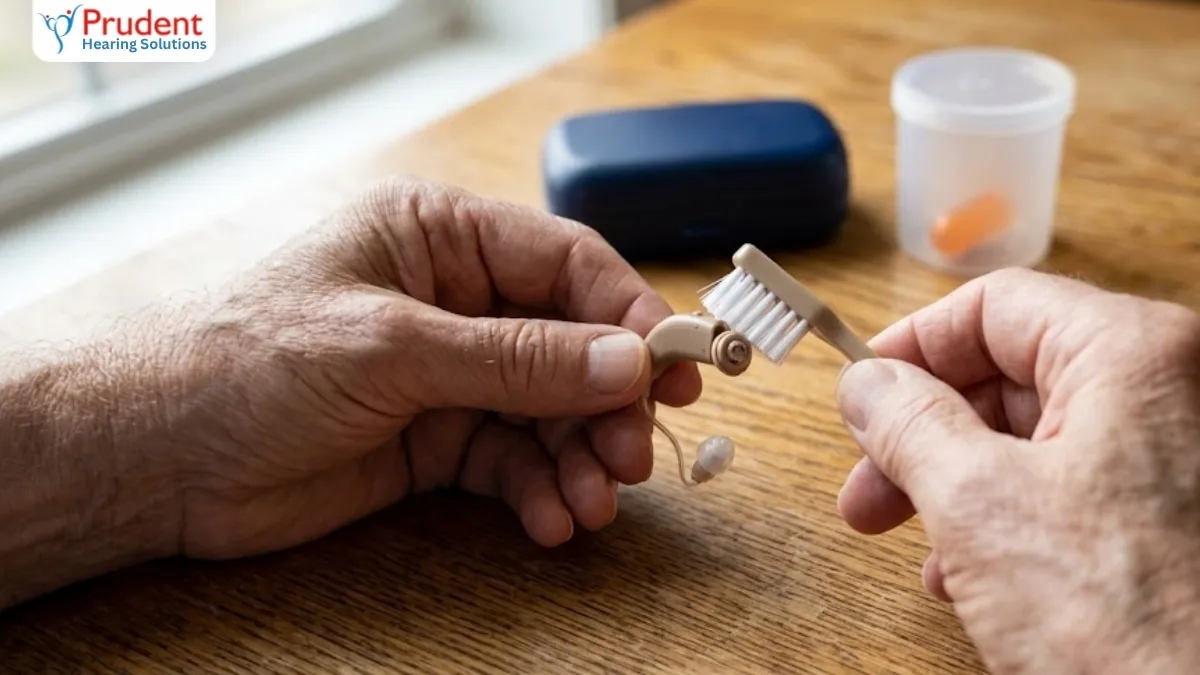
- Easier to insert, clean and adjust, which is kinder to older or arthritic hands.
- The visible part on a modern RIC is small, but it is not invisible.
Custom in-the-ear aids (ITE, CIC, IIC)
- Best for mild to moderate loss where discretion is the priority.
- The smallest style, the IIC, sits deep in the canal and is close to invisible.
- Smaller shells often drop rechargeability and direct streaming.
- Need a roomy enough canal and steady fingers to insert and clean.
- If a device no one can see is your goal, read our honest guide to invisible, CIC and IIC hearing aids first, because the smallest styles suit fewer ears than people expect.
Match the aid to your daily listening life
How much noise processing you need depends on where you actually struggle to hear. A retired person who is mostly at home in quiet rooms needs far less than an executive in daily meetings and noisy restaurants. Be honest about your week. If most of your listening is one-to-one at home, an entry or mid-range aid handles it well and you can keep the money.
If you eat out often, sit in large meetings, or spend hours on the phone, that is where stronger directional microphones and better noise reduction earn their price. Phone-heavy work is its own case, because direct Bluetooth streaming into both ears makes calls much clearer. Write down the three situations where you most want to hear better. Those three settings, not the brochure, decide how much technology you should buy.
Which features matter, and which to skip
Worth paying for
- Directional microphones, which focus on the person in front and cut side noise. The single biggest help in restaurants.
- Good noise reduction, matched to how noisy your life really is.
- Direct Bluetooth streaming if you take a lot of calls or watch a lot of video.
- Rechargeability if you dislike changing tiny batteries or have poor dexterity.
- Enough channels and a proper multi-programme setup to match your specific loss.
You can usually skip the rest. 'AI' and 'deep neural network' labels sound impressive, but a demo cannot prove they help your ears. Dozens of listening programmes go unused because you will never manually switch between them. Motion tracking, step counts and fall detection are pleasant extras, not hearing. So is the newest cosmetic colour or a premium tier bought only for its badge. None of these help you follow speech in a noisy room.
Budget and tiers in rupees
A genuine digital hearing aid starts at roughly Rs 11,000 per ear. Mid-range Bluetooth and rechargeable models run about Rs 35,000 to Rs 70,000 per ear, and premium aids sit around Rs 1,20,000 to Rs 2,00,000 per ear. Anything under about Rs 10,000 is usually a plain sound amplifier, not a fitted hearing aid, and one that over-amplifies can even harm your hearing. Here is the part most sellers skip.
A well-fitted mid-range aid, tuned to your audiogram and verified in your ear, will outperform a premium aid that was sold across a counter and never properly set. You are buying a fitting, not only a device. Spend on the tier your listening life needs, then spend on the person who fits it. Our hearing aid price guide for India breaks the tiers down further.
Rechargeable or disposable batteries?
Both work well, so the choice is really about your hands and your habits. Rechargeable aids sit in a case overnight and give a full day of use, which suits anyone who finds tiny batteries fiddly.
Disposable zinc-air cells cost little, are easy to carry as spares, and let you swap in seconds if you forget to charge, though you change them every few days to a couple of weeks. The smallest invisible styles are usually disposable only. We walk through the real pros and cons in our guide to rechargeable versus battery hearing aids.
"The badge on the hearing aid matters far less than the person programming it. A mid-range aid, fitted with real-ear measurement and adjusted over an in-clinic trial, beats a premium aid that was handed over and never verified."
The real decider: the audiologist and the fitting
The best predictor of whether you will be happy is not the brand. It is whether the aid is measured and verified in your own ear. Insist on real-ear measurement, where a thin probe checks that the aid actually delivers the right sound at your eardrum, not just the target on a screen.
Ask the fitter whether they do it; a good clinic says yes without hesitating. Then insist on a trial before you pay. At Prudent Hearing Solutions we give an in-clinic trial before any payment, so you hear the aid for yourself first. If a seller wants full payment before you have even heard the aid for yourself, walk away.
What to do next
Start with the test, not the shop. A proper hearing test tells you the type and degree of your loss, which is the one thing that turns a wall of brands into two or three sensible options. Our free hearing test takes about 45 minutes and is done by RCI-registered audiologists at our clinics in Pune (Viman Nagar), Delhi (Rohini and Green Park) and Bengaluru (Jayanagar).
Bring a family member if you can, because a second pair of ears helps during the trial. Call +91 9429690093 to book, ask whatever you like, and try the aids in the clinic before you decide. No payment until you have.
Continue reading
Frequently asked questions
Do I need hearing aids in both ears?
If both ears have a hearing loss, two aids are almost always better than one. Your brain uses both ears to place sound and to pull speech out of noise, so a single aid leaves that job half done. Two aids give more natural, balanced hearing and less listening effort. If only one ear is affected, one aid is enough. Your audiologist will tell you which applies once they have your audiogram.
Do hearing aids need a prescription in India?
You do not need a doctor's prescription to buy a hearing aid in India, but do not skip the hearing test. An audiogram shows your exact loss at each pitch, which decides the type of aid and how it is programmed. Buying blind is guesswork, and an over-loud or badly tuned aid can be uncomfortable or even harmful. The test at Prudent Hearing is free, so there is no reason to go without one.
Which hearing aid is best for my hearing loss?
The one matched to your audiogram, not the most advertised model. Mild to moderate loss suits almost any style, including tiny in-canal aids. Severe or profound loss needs a powerful behind-the-ear aid with a firm mould. Get a hearing test first; the type and degree of loss narrow a wall of brands down to two or three sensible options you can actually compare.
How much should a good hearing aid cost in India?
Genuine digital hearing aids start around Rs 11,000 per ear. Mid-range Bluetooth and rechargeable models run about Rs 35,000 to Rs 70,000 per ear, and premium aids Rs 1,20,000 to Rs 2,00,000 per ear. Anything under about Rs 10,000 is usually a plain amplifier, not a fitted hearing aid, and one that over-amplifies can even harm your hearing.
Are expensive hearing aids always better?
No. A well-fitted mid-range aid, tuned to your audiogram and verified in your ear, will outperform a premium aid that was sold across a counter and never properly set. You are buying a fitting as much as a device. Spend on the tier your listening life needs, then spend on the audiologist who fits it.
What hearing aid features actually matter?
Directional microphones help most in noise. Good noise reduction, direct Bluetooth streaming for phone-heavy days, and rechargeability if you dislike tiny batteries are all worth paying for. You can usually skip AI marketing labels, dozens of listening programmes, and fitness or fall-detection add-ons. Match the technology to the three settings where you most want to hear.
Should I try a hearing aid before buying?
Yes, always. Hearing aids sound different in a quiet fitting room than in your kitchen, car, or a noisy lunch. Insist on real-ear measurement and a trial before paying. At Prudent Hearing Solutions we give an in-clinic trial before any payment, so you hear the aid for yourself first.
Sources & further reading
We cross-checked this article against the following authoritative sources. Guidance and figures reflect the most recent public guidance available at the time of last review (July 2026). Clinical review by the Prudent Hearing clinical team.
- Hearing Aids (National Institute on Deafness and Other Communication Disorders (NIDCD, NIH))
- Deafness and hearing loss (World Health Organization (WHO))
- Practice guidance: Real-Ear Measurement (British Society of Audiology (BSA))
Free consultation
Ready to hear the difference?
Book a free 45-minute hearing test at any Prudent Hearing clinic: no obligation, honest advice, expert audiologists.