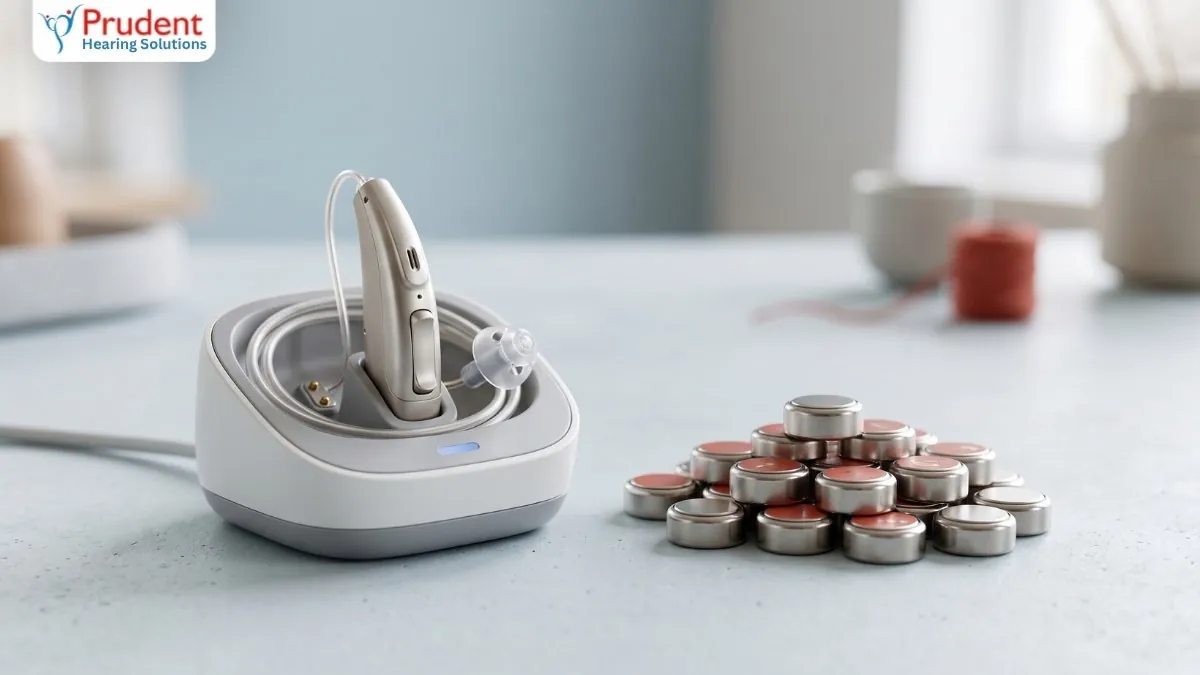
A no-nonsense comparison of runtime, cost, convenience and reliability across today's top rechargeable and disposable-battery models.
Quick answer
For most users in 2026, rechargeable lithium-ion hearing aids are the better choice: 18–30 hours per charge, no fiddly zinc-air batteries every 3–7 days, lower long-term running cost, and better Bluetooth streaming reliability. Disposable-battery aids still make sense for frequent travellers to areas with unreliable power, or for users who want maximum flexibility and lower upfront cost.
Key takeaways
- Rechargeable Li-ion aids typically run 18–24 hours per charge; heavy streaming drops that to 16–20 hours.
- Zinc-air disposable batteries cost ₹2,000–₹4,000 per pair per year in India.
- Rechargeable cells last 4–5 years and are replaced at a service visit.
- Modern chargers hold a reserve charge, safe for households with occasional power cuts.
- Fit, real-ear verification and follow-up matter more than the power source.
Almost every premium hearing aid in 2026 is offered in both a rechargeable version and a disposable-battery version. The right choice depends less on the tech and more on your lifestyle. Here's what actually matters.
Rechargeable: the modern default
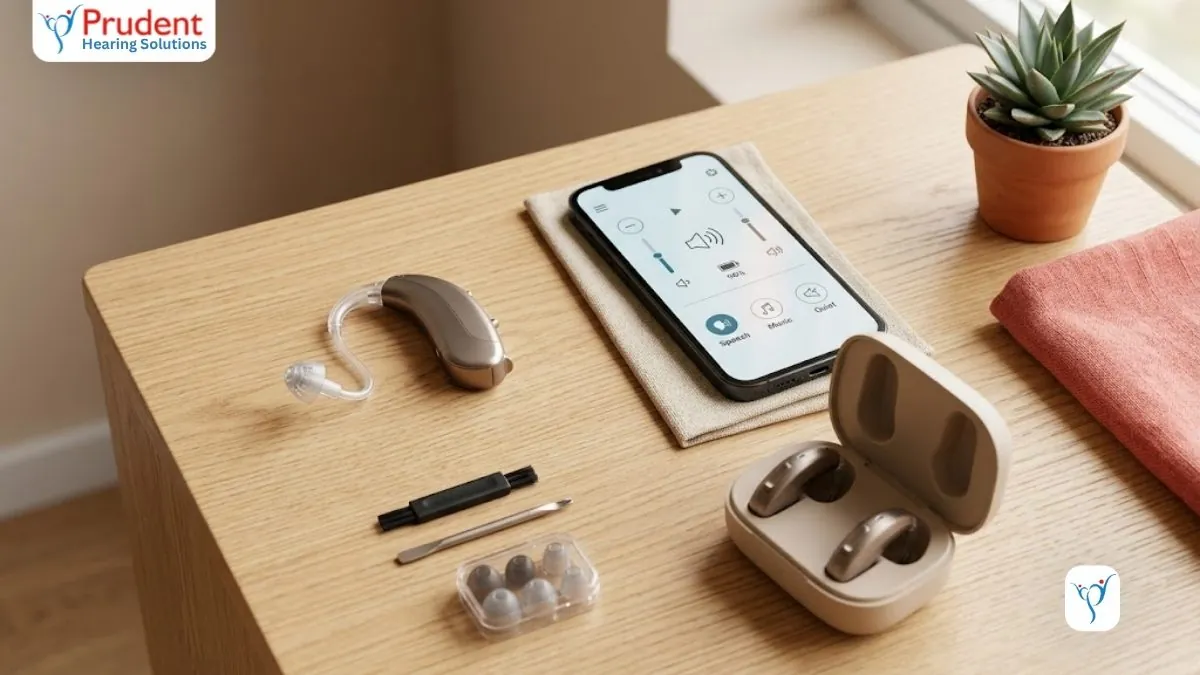
Lithium-ion rechargeable hearing aids deliver 18–30 hours of use per charge, including 4–7 hours of Bluetooth streaming. You drop them in a case at night: no fiddly battery doors, no waste.
Rechargeable models we fit include the Signia Pure Charge&Go 2IX and the premium BCT 7IX, plus Unitron's rechargeable Moxi range from the entry S1 up to the S9.
Best for
- Anyone with dexterity or vision challenges
- Regular smartphone or TV streamers (Bluetooth drains fast)
- Users who want the least daily maintenance
Disposable batteries: still relevant
Zinc-air size 312 or 13 cells last 5–10 days in most modern aids. They're cheap, sold everywhere in India, and you're never stranded by a dead charger during travel.
Best for
- Frequent international travellers
- People in areas with unreliable power
- Users who prefer a lower upfront cost
Cost over 5 years
A pair of rechargeable premium aids typically saves ₹8,000–₹15,000 in battery costs over five years, but batteries eventually degrade and may need replacement (₹6,000–₹12,000 per pair). Net difference is usually a wash, so pick on convenience, not cost.
Our recommendation
"For 8 out of 10 patients we fit at Prudent Hearing, rechargeable is the better choice, simply because it's used correctly every day. The best hearing aid is the one you actually wear."
Continue reading
Frequently asked questions
Are rechargeable hearing aids better than battery hearing aids?
For most users in 2026, yes: rechargeable lithium-ion aids give 18–30 hours per charge, avoid fiddly battery swaps every few days, and lower long-term running cost. Disposable zinc-air batteries still make sense if you travel to areas with unreliable power or want maximum flexibility.
How long do rechargeable hearing aid batteries last?
A full lithium-ion charge lasts 18–24 hours of typical use, or 16–20 hours with heavy Bluetooth streaming. The battery cell itself lasts around 4–5 years before capacity drops noticeably; most manufacturers replace it as part of a service visit.
What is the running cost of disposable hearing aid batteries in India?
A pair of zinc-air batteries costs ₹20–₹40 in India. At one change every 5–7 days per aid, expect ₹2,000–₹4,000 per year per pair of hearing aids, plus the inconvenience of always carrying spares.
Can I use rechargeable hearing aids if the power often cuts?
Yes. A fully charged pair lasts a full day, and most modern chargers hold a reserve charge that can top up your aids even when unplugged. Frequent travellers to low-power areas may still prefer disposable-battery models as a backup.
Who should choose disposable-battery hearing aids?
Frequent international travellers, people in areas with unreliable power and anyone who wants a lower upfront cost. Zinc-air size 312 or 13 cells last about 5 to 10 days in most modern aids and are sold everywhere in India, so a dead charger never leaves you stranded.
Sources & further reading
We cross-checked this article against the following authoritative sources. Guidance and figures reflect the most recent public guidance available at the time of last review (July 2026). Clinical review by the Prudent Hearing clinical team.
- Hearing Aids (National Institute on Deafness and Other Communication Disorders (NIDCD, NIH))
- Practice guidance: Real-Ear Measurement (British Society of Audiology (BSA))
Free consultation
Ready to hear the difference?
Book a free 45-minute hearing test at any Prudent Hearing clinic: no obligation, honest advice, expert audiologists.