What actually matters when choosing hearing aids for a 65+ parent: dexterity, simplicity, connectivity and honest pricing.
Quick answer
For elderly parents in India the best hearing aids are rechargeable behind-the-ear (BTE) or receiver-in-canal (RIC) models from Phonak, Signia, Oticon or ReSound. They are easy to insert with limited dexterity, easy to clean, robust in humid conditions, and skip fiddly disposable batteries. Budget ₹60,000–₹1,50,000 per pair for a well-fitted mid to premium option, ideally with an in-clinic trial before payment.
Key takeaways
- Rechargeable BTE/RIC is the most practical style for elderly users.
- Bigger controls and thin tubes are easier to insert and maintain than tiny in-canal aids.
- Ask for an in-clinic trial before paying in full.
- Real-ear measurement (REM) verification meaningfully improves speech clarity.
- Start with a specific problem (TV volume, phone calls, grandchildren) for early wins.
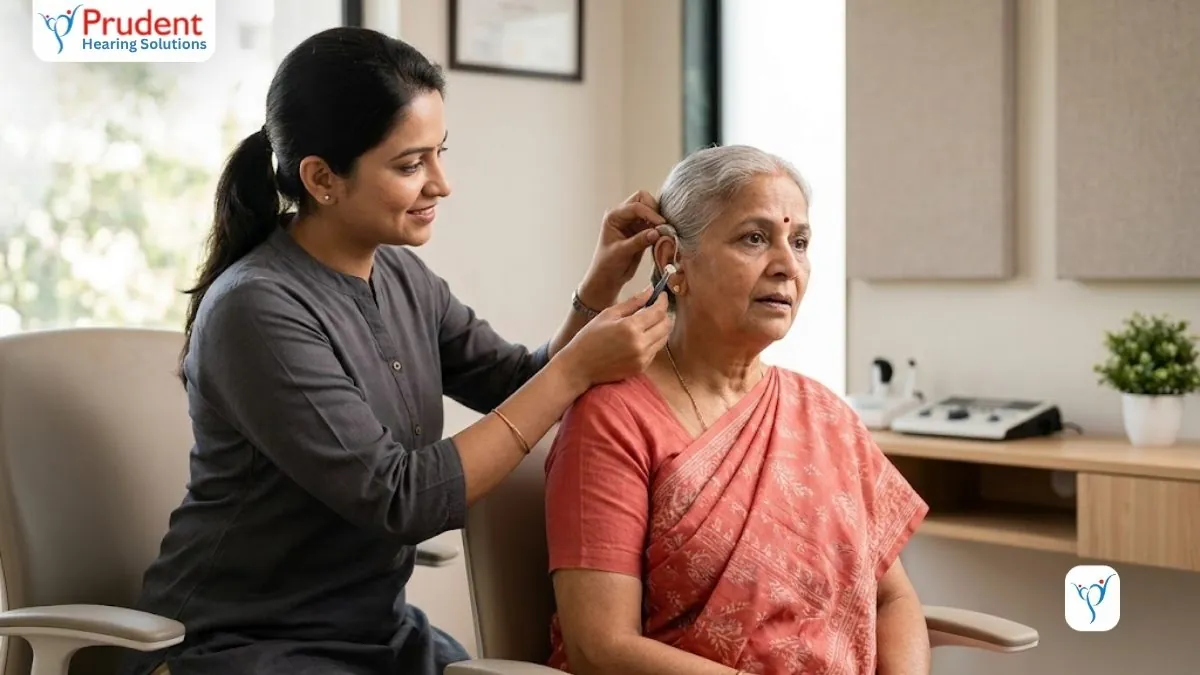
Buying hearing aids for a parent is different from buying for yourself. Vision, dexterity, and comfort with technology all matter as much as sound quality.
Priority 1: rechargeable, not disposable
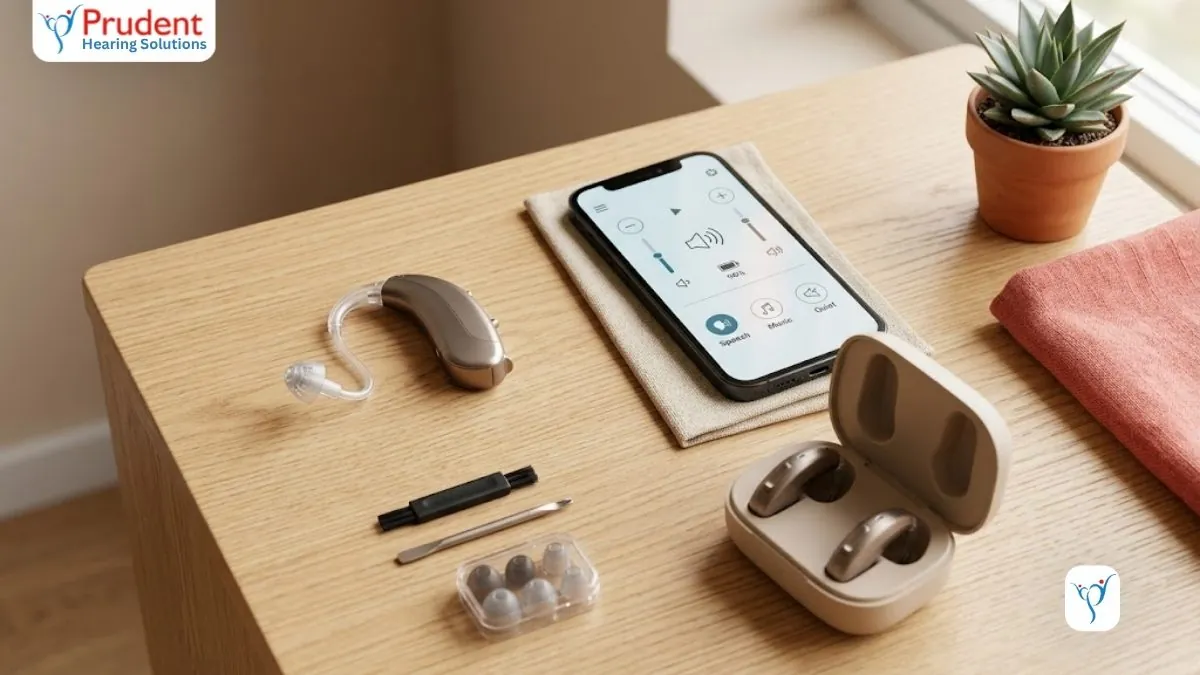
Fumbling with tiny 312 batteries every 5 days is the single biggest reason elderly patients stop wearing aids. Modern rechargeable models solve this: drop them in the case at night, they’re ready by morning.
Priority 2: RIC or BTE form factor
Receiver-in-Canal (RIC) and Behind-the-Ear (BTE) styles are easier to insert, easier to see, and easier to clean than tiny in-the-ear models. Don't let vanity override practicality.
Priority 3: TV connector accessory
A ₹8,000–₹12,000 TV streamer sends the TV audio directly into both hearing aids at a comfortable volume. No more household arguments about TV volume. This one accessory changes daily life.
Priority 4: honest brand choice
- Signia Motion Charge&Go: best for first-time wearers with dexterity issues
- Phonak Audeo Lumity: best if there's regular video calling with grandkids
- ReSound Nexia: best if the parent uses an iPhone
What to budget
In 2026, a proper pair of mid-range rechargeable aids in India costs ₹1.2–₹2.5 lakh. Anything under ₹40,000 for a pair is usually amplifier-grade: loud but not clear.
The three-appointment rule
Don't buy on the first visit. A proper hearing-aid journey is: (1) full audiological test, (2) in-clinic trial of 1–2 brands, (3) final fitting with adjustments. Any clinic that pressures you to buy on day one, just walk away.
"The best hearing aid is the one your parent actually wears every day. Simplicity beats specs."
Continue reading
Frequently asked questions
What are the best hearing aids for elderly parents in India?
For most elderly users the best choice is a rechargeable behind-the-ear (BTE) or receiver-in-canal (RIC) aid from Phonak, Signia, Oticon or ReSound. These are the easiest to handle, offer strong speech-in-noise performance, work with a smartphone if wanted, and skip fiddly disposable batteries. Budget between ₹60,000 and ₹1,50,000 per pair for a well-fitted mid to premium option.
Are behind-the-ear hearing aids better for the elderly than in-the-ear ones?
Usually yes. Behind-the-ear and RIC styles have bigger controls, are easier to insert with less dexterity, are simpler to clean, and are more robust in humid Indian conditions. Tiny in-the-ear and completely-in-canal aids are cosmetically appealing but harder to handle and repair.
Should elderly users choose rechargeable hearing aids?
For most, yes. Rechargeable lithium-ion aids remove the daily struggle of swapping tiny zinc-air batteries. Drop the aids into the charger at night, pick them up in the morning, and get a full day of use.
How can I convince an elderly parent to try hearing aids?
Start with a free hearing test so they see the objective results, ask the audiologist to offer an in-clinic trial so there is no commitment, and focus on a specific problem they already complain about: TV volume, phone calls or missing grandchildren's voices. Immediate wins in those areas usually win them over.
Sources & further reading
We cross-checked this article against the following authoritative sources. Guidance and figures reflect the most recent public guidance available at the time of last review (July 2026). Clinical review by the Prudent Hearing clinical team.
- Hearing Aids (National Institute on Deafness and Other Communication Disorders (NIDCD, NIH))
- Deafness and hearing loss (World Health Organization (WHO))
Free consultation
Ready to hear the difference?
Book a free 45-minute hearing test at any Prudent Hearing clinic: no obligation, honest advice, expert audiologists.