A quick note: Prudent Hearing Solutions is an RCI-registered hearing-aid clinic for people with hearing loss. We run hearing tests and fit medical hearing aids. We do not sell AirPods, TWS or consumer earbuds. If you are looking to buy earbuds, you are in the wrong place, but if you are struggling to hear, we can genuinely help.
How BTE and Bluetooth hearing aids work, who they suit, what batteries they use, and honest pros and cons before you spend a rupee.
Quick answer
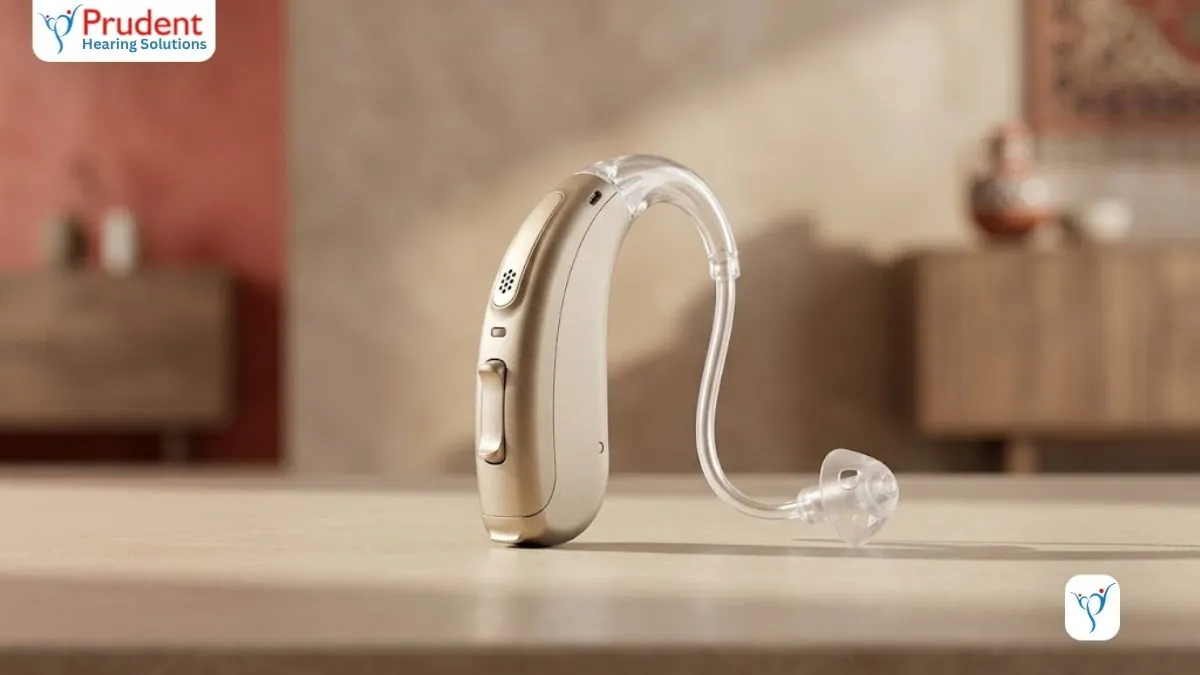
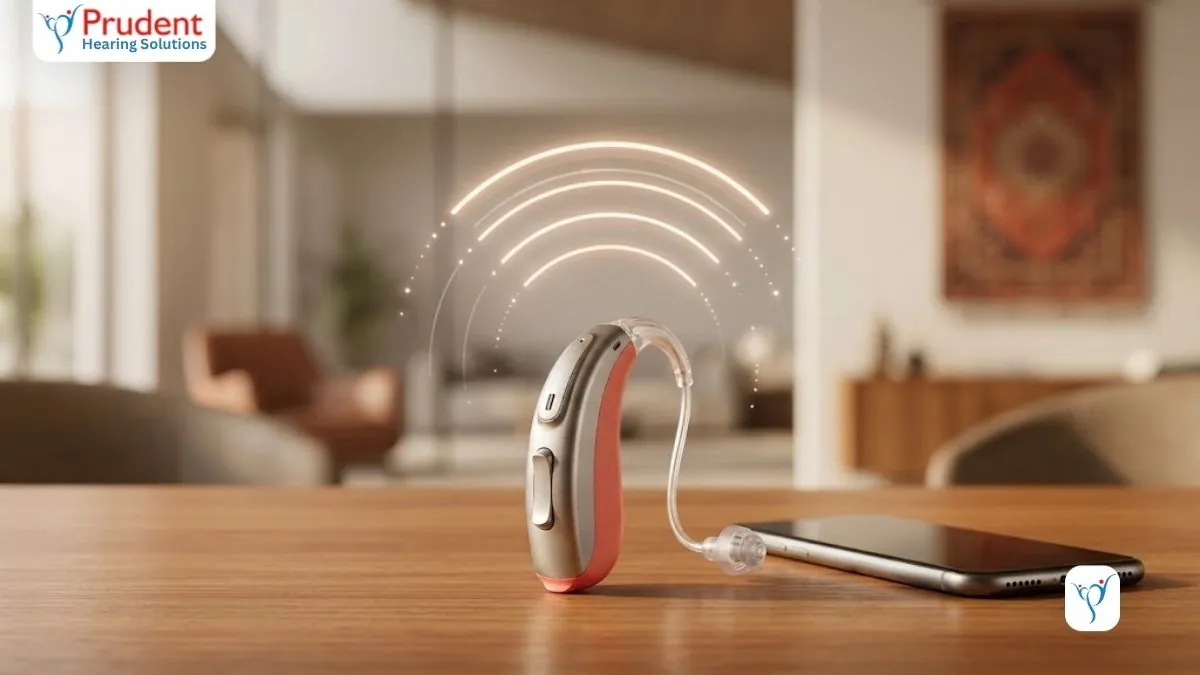
A behind-the-ear (BTE) hearing aid sits on top of the ear and sends sound through a thin tube or wire into the ear canal. BTE and its close cousin RIC are the most reliable, easiest-to-handle styles and suit mild to profound loss. Bluetooth adds direct phone-call streaming, TV audio and remote-mic support. Phonak uses universal Bluetooth Classic (any phone), other brands use Made-for-iPhone and Bluetooth LE Audio.
Key takeaways
- BTE and RIC are the most durable, easiest-to-maintain hearing aid styles.
- Rechargeable Li-ion aids run 18–30 hours per charge.
- Phonak = universal Bluetooth; Signia/Oticon/ReSound/Widex/Starkey = MFi + LE Audio.
- Zinc-air battery life: size 10 lasts 3–5 days; size 675 lasts 10–14 days.
- BTE/RIC is generally preferred over tiny in-canal aids for elderly users.
Behind-the-ear (BTE) hearing aids sit on top of the ear with a thin tube or wire delivering sound into the canal. They are the most reliable, most powerful and easiest-to-maintain style ever made, which is why over half of all hearing aids fitted in India in 2026 are BTE or the closely related RIC.
Who a behind-the-ear aid suits best
- Anyone with moderate to profound hearing loss (they have room for a bigger receiver)
- Elderly users: bigger buttons, easier to insert and clean
- Anyone who sweats a lot (electronics sit outside the humid ear canal)
- First-time users who want a low-fuss experience
What Bluetooth actually gives you
- Phone calls streamed into both ears (hands-free)
- TV audio at your preferred volume, and nobody else in the room is affected
- Music, podcasts and video calls straight from your smartphone
- App control: adjust volume and programs discreetly from your phone
- Some models double as wireless earbuds
Hearing aid batteries: what you'll actually use
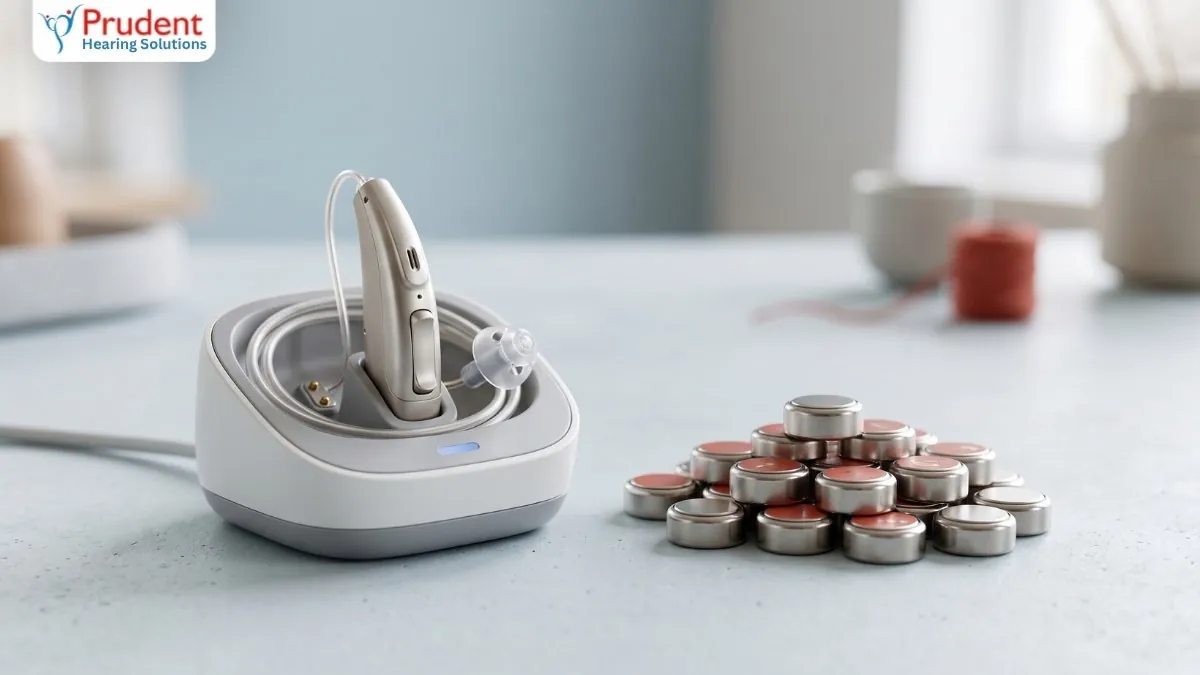
- Rechargeable lithium-ion: 18–30 hours per charge, standard on new models
- Size 10 (yellow): for tiny CIC/IIC aids, lasts 3–5 days
- Size 312 (brown): the most common disposable size, 5–7 days
- Size 13 (orange): bigger BTE aids, 7–10 days
- Size 675 (blue): power BTEs and cochlear implants, 10–14 days
Bluetooth ≠ auto-connect to every device
Phonak uses universal Bluetooth Classic and connects to almost anything. Most other brands use Made-for-iPhone (MFi) and Bluetooth LE Audio, which streams natively to iPhones and newer Android phones but may need a small clip-on accessory for older Androids. Ask before you buy.
Common concerns from families of elderly users
'Will Mum manage the app?' She doesn't have to. Modern aids auto-adjust; the app is optional. 'Will Dad remember to charge them?' The charger has a big LED that stays on all night; if he forgets, spare batteries or a power-bank case cover you.
Trial a BTE or RIC with Bluetooth at any Prudent Hearing clinic, in the clinic, with no obligation to buy.
Continue reading
Frequently asked questions
Do hearing aids help in noisy restaurants and offices?
Yes, though noise is where the technology tier shows. Directional microphones focus on the person in front of you while trimming sound from the sides and behind, and modern noise reduction lowers steady background hum. Premium aids handle a loud restaurant better than entry-level ones. No aid removes noise completely, so wearing two aids and, in the hardest rooms, clipping a remote microphone on the speaker gives the clearest speech.
What is a behind-the-ear (BTE) hearing aid?
A behind-the-ear hearing aid sits on top of the ear with a thin tube or wire delivering sound into the ear canal. BTE and its close cousin RIC (receiver-in-canal) are the most reliable and easiest-to-maintain styles, suitable for mild to profound hearing loss.
Do Bluetooth hearing aids connect to any phone?
Phonak uses universal Bluetooth Classic and connects to almost any phone, tablet or TV. Signia, ReSound, Oticon, Widex and Starkey use Made-for-iPhone and Bluetooth LE Audio, which streams natively to iPhones and newer Android phones but may need a small clip-on accessory for older Androids.
How long do hearing aid batteries last?
Modern rechargeable lithium-ion aids run 18–30 hours per charge. Disposable zinc-air batteries last 3–5 days (size 10), 5–7 days (size 312), 7–10 days (size 13) or 10–14 days (size 675) depending on the aid style and streaming use.
Are behind-the-ear hearing aids good for old age?
Yes. BTE and RIC are the best styles for elderly users because the bigger controls are easier to see and handle, they are easier to insert and clean, and rechargeable versions remove the need to swap tiny batteries every few days.
Sources & further reading
We cross-checked this article against the following authoritative sources. Guidance and figures reflect the most recent public guidance available at the time of last review (July 2026). Clinical review by the Prudent Hearing clinical team.
- Hearing Aids (National Institute on Deafness and Other Communication Disorders (NIDCD, NIH))
Free consultation
Ready to hear the difference?
Book a free 45-minute hearing test at any Prudent Hearing clinic: no obligation, honest advice, expert audiologists.