A plain, honest guide to RIC (receiver-in-canal) hearing aids in India: how the design works, why it is the most popular modern style, its real trade-offs, how it compares to BTE and CIC, brand options, and price bands.
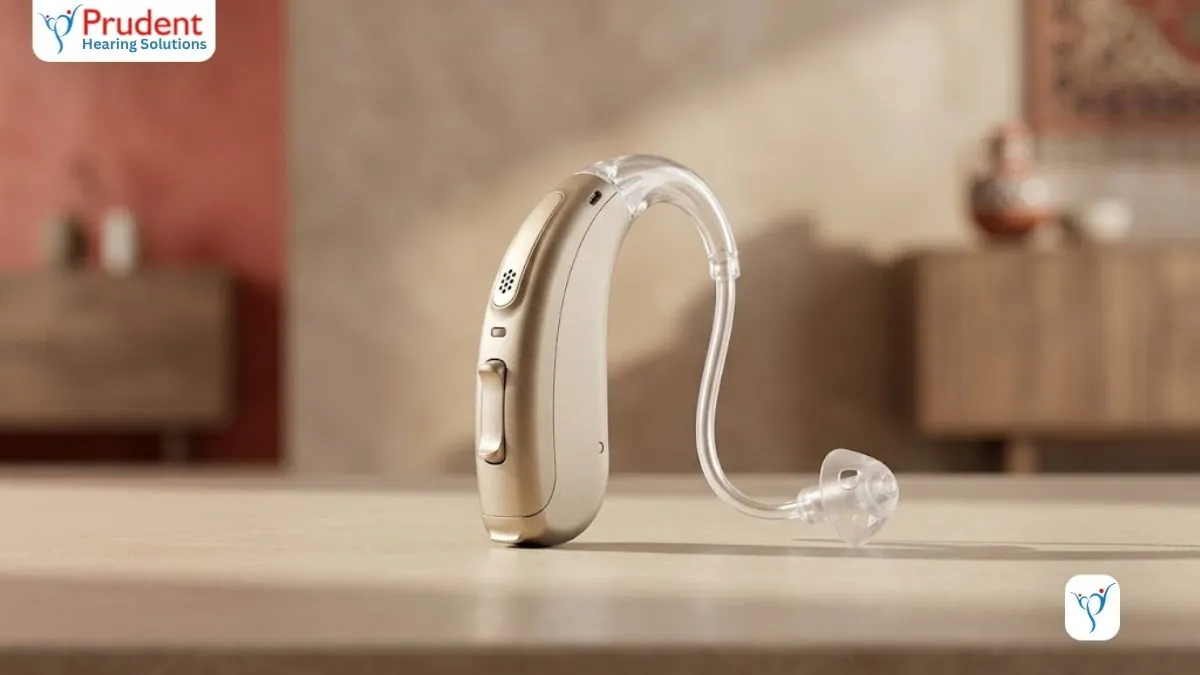
A RIC hearing aid is a receiver-in-canal device: the speaker (called the receiver) sits in your ear canal and connects by a thin wire to a small body that rests behind your ear. It is one of the most popular modern hearing-aid styles because it is discreet, sounds natural, and suits many people with mild-to-severe hearing loss. You may also see it written as RITE (receiver-in-the-ear); it is the same design. Prudent Hearing Solutions fits and services RIC models from the major brands.
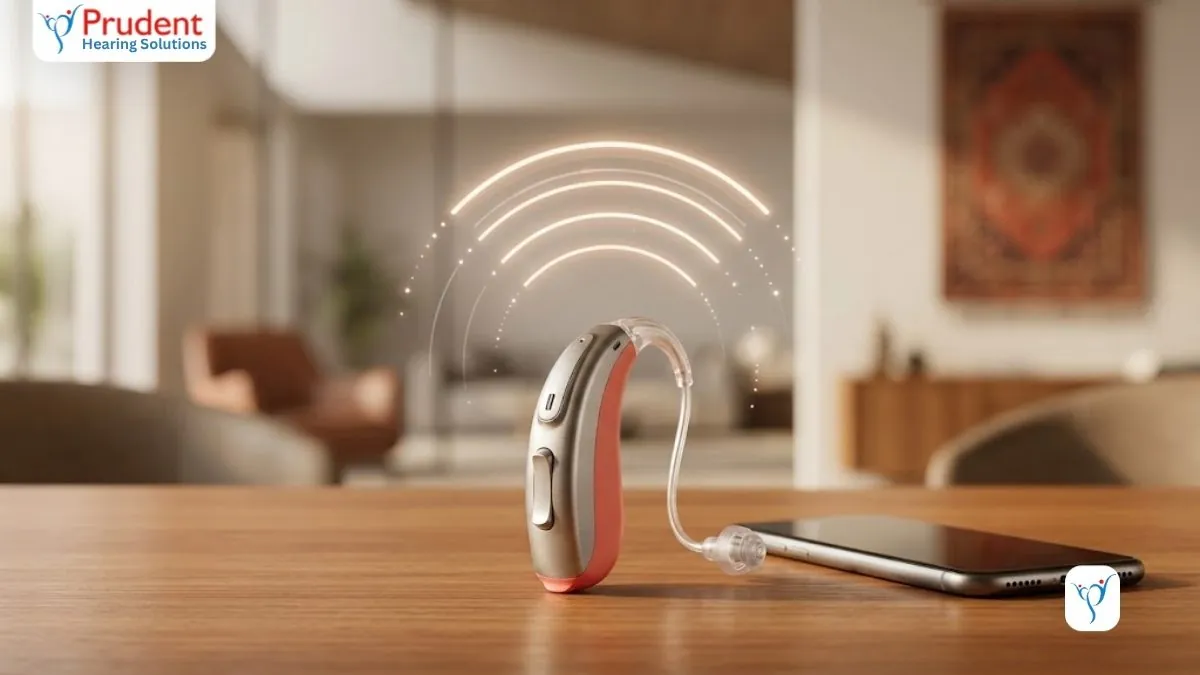
One thing to be clear about first: a RIC hearing aid manages hearing loss, it does not cure or reverse it. What it does is make speech easier to follow, keep listening more comfortable in noise, and, on most current models, stream calls and TV audio to your ears. This guide explains how the RIC design works, why it is so widely chosen, its honest trade-offs, how it compares to BTE and in-canal styles, and what to expect on price in India.
What is a RIC (receiver-in-canal) hearing aid?
In a RIC, the electronics (the microphones, chip and battery) sit in a small casing behind your ear. The receiver, which is the tiny speaker, is moved out of that casing and placed inside your ear canal, held there by a soft dome or a custom-moulded tip. A thin wire runs over the top of your ear to link the two.
Because the wire is much slimmer than the tube used on older behind-the-ear aids, a RIC is hard to spot from the side. Almost every RIC sold today is a digital hearing aid, meaning it processes sound with a computer chip rather than simple amplification, so it can separate speech from background noise and be fine-tuned to your hearing test results.
Why RIC is one of the most popular styles
- The thin connecting wire is discreet, so the aid is less noticeable than a traditional tube-and-earmould device.
- Sound can feel natural because the receiver sits close to your eardrum, which helps keep the audio clean and can reduce the blocked-up feeling.
- It often uses an open fit, so your own voice and everyday sounds still come through fairly naturally rather than feeling boomy.
- It covers a wide range of hearing loss, from mild through to severe, by changing the strength of the receiver.
- The receiver is usually a click-in part, so if it gets clogged or fails it can often be swapped or replaced quickly instead of sending the whole aid away.
- Many rechargeable flagship models from the big brands are built as RICs, so newer technology often appears in this style first.
That flexibility is a big part of the appeal. The same body can often take a stronger receiver as hearing changes over time, and most families come in rechargeable versions. If you are weighing batteries against charging, our rechargeable vs battery hearing aids guide walks through the trade-offs for users in India.
The trade-offs to weigh before you buy
- The receiver sits in a warm, sometimes waxy canal, so it can pick up wax and moisture and will need regular cleaning and the occasional wax-guard change.
- The soft dome or tip takes a little finger dexterity to place correctly, which can be fiddly for some older users at first.
- It is discreet but not fully invisible: the body behind the ear is still there, unlike a deep-fitting CIC or IIC that hides inside the canal.
- Very small rechargeable RICs have limited battery capacity compared with larger behind-the-ear bodies, though a full charge is generally intended to last a typical day; actual runtime varies with streaming and settings.
None of these are deal-breakers for most people, and cleaning tends to become a quick habit. But if being completely out of sight matters most to you, it is worth reading our guide to invisible CIC and IIC hearing aids before you decide, because those styles trade some power and battery life for that near-total concealment.
RIC vs BTE vs in-canal styles
RIC vs BTE
A standard behind-the-ear (BTE) aid also sits behind the ear, but the sound travels down a thicker tube into a custom earmould, and the receiver stays inside the body. That generally makes BTE more powerful and sturdier (the electronics are kept away from ear wax), so it is often the better choice for profound hearing loss or for people who struggle with tiny parts.
A RIC is usually slimmer, more discreet and comfortable for milder losses. Our behind-the-ear and Bluetooth hearing aids guide covers the BTE family in detail, and if you want a size-and-style overview, the BTE vs CIC comparison lays the options side by side.
RIC vs CIC and custom in-the-ear
CIC (completely-in-canal) and other in-the-ear aids put everything inside a custom shell that sits in your ear, with nothing behind it. They win on concealment, but the small shell leaves less room for a large battery, powerful streaming and directional microphones, and the whole aid is exposed to canal wax.
A RIC keeps the more delicate electronics behind the ear and only puts the harder-wearing receiver in the canal, which is a large part of why it balances discretion, power and features well. You can compare the shapes on our hearing aid types page.
RIC models from the major brands in India
Every major manufacturer builds RIC devices, and it is usually their headline range. At Prudent we fit and service the major brands, so you are not tied to one. The right pick depends on your hearing test, your ears and how you plan to use the aid.
- Signia Pure: Signia's RIC line, known for slim rechargeable bodies and own-voice processing.
- Phonak Audeo: a widely fitted RIC range with Bluetooth that pairs to many phones.
- Oticon Real and Oticon Intent: RIC models built around a more open approach to handling the full sound scene.
- ReSound: RIC devices with a natural sense of space and app-based streaming.
- Widex: RIC options that many users pick for a soft, natural sound character, plus tinnitus support.
RIC hearing aid price in India
RIC prices in India depend far more on the technology level inside the aid than on the RIC shape itself, and they vary by brand, model and offer. As broad per-ear guidance, an entry-level RIC is the most affordable modern choice, mid-range models add better noise handling and streaming, and premium flagships with the latest chips and rechargeability sit at the top.
Because prices shift with new launches and offers, we quote the current price for the specific model you trial rather than list a fixed figure here, and Prudent offers 0% EMI to spread the cost. For a fuller breakdown across styles and tiers, see our hearing aid price in India guide.
How to find the right RIC at Prudent
"The best hearing aid is the one you actually wear all day, which is why we let you hear the difference before you decide."
Start with a free hearing test at one of our clinics. Your audiologist checks your hearing, explains your results, and lets you trial a suitable RIC before you buy so you can judge it for yourself in the clinic. Every purchase includes free lifetime programming, so we keep the aid tuned as your hearing changes, and 0% EMI is available if you want to spread the cost. Call +91 9429690093 or book a hearing test online, and browse current options on our hearing aids page.
Continue reading
Frequently asked questions
Is a RIC hearing aid better than a BTE?
Neither is universally better; they suit different needs. A RIC is usually slimmer, more discreet and comfortable for mild-to-severe loss, while a BTE is generally more powerful and sturdy and is often the safer choice for profound loss or if handling small parts is difficult. Your hearing test and a trial at the clinic will show which fits you best.
Are RIC hearing aids good for severe hearing loss?
Often yes, within limits. By fitting a stronger (high-power) receiver, a RIC can cover many severe losses. For profound loss that needs maximum output, a power BTE with a custom earmould is usually the better option. Your audiologist confirms what your hearing level needs.
Can RIC hearing aids get damaged by ear wax?
The receiver sits in the canal, so it can pick up wax and moisture, but it is protected by a small wax guard that you replace periodically. Regular cleaning and a wax-guard change help keep it working. If a receiver does get clogged or fail, it is usually a click-in part that can be swapped quickly.
Are RIC hearing aids visible?
They are discreet but not fully invisible. The connecting wire is very thin and hard to notice, but the small body still rests behind your ear. If total concealment is your priority, a completely-in-canal (CIC) or invisible (IIC) custom aid hides inside the ear, though it trades away some power and battery life.
Is a digital hearing aid the same as a RIC?
Not exactly. Digital describes how the aid processes sound (with a computer chip), while RIC describes its physical shape. Virtually all modern hearing aids, RIC included, are digital, so the term digital hearing aid today mostly just means a current device rather than a special category.
How much does a RIC hearing aid cost in India?
It depends mainly on the technology level rather than the RIC shape, and it varies by brand, model and offer. Entry-level RICs are the most affordable modern option, mid-range models cost more for better noise handling and streaming, and premium rechargeable flagships sit at the top. Prudent quotes the current price for the model you trial and offers 0% EMI.
Free consultation
Ready to hear the difference?
Book a free 45-minute hearing test at any Prudent Hearing clinic: no obligation, honest advice, expert audiologists.