In-the-ear (ITE) hearing aids are custom aids that sit in the bowl of your outer ear, built from an impression so they fit only you. This audiologist's guide covers full-shell ITE, half-shell and in-the-canal ITC aids, who they suit, how they compare to invisible CIC and behind-the-ear styles, the custom process, and real per-ear prices in India.
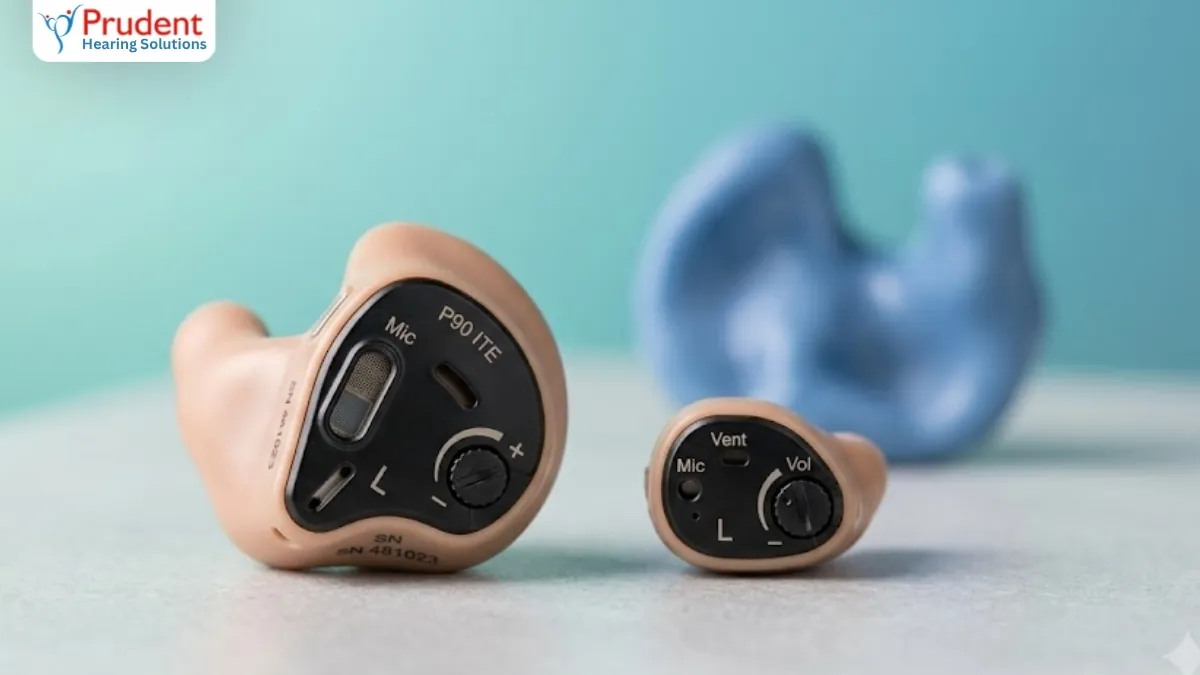
In-the-ear (ITE) hearing aids are custom devices that sit inside the bowl of your outer ear rather than behind it. Every one is built from an impression of your own ear, so it fits only you. The full-shell ITE fills the outer ear bowl, while the smaller in-the-canal (ITC) aid sits in the canal opening and fills only a small part of the bowl, so it shows less.
They suit people who want something discreet but easy to handle, from mild to moderately severe hearing loss, and they sit comfortably between the tiny invisible aids and the behind-the-ear styles. Because they are custom, you cannot buy them off a shelf; an audiologist takes an ear impression first so the fit and sound are matched to you. Remember that any hearing aid manages hearing loss, it does not cure it.
What are in-the-ear (ITE) and in-the-canal (ITC) hearing aids?
ITE and ITC aids are a single family of custom hearing aids where all the electronics, the microphone, amplifier, receiver and battery, live inside one moulded shell that sits in your outer ear. There is no separate body behind the ear and no wire or tube running into the canal.
That is the main thing that sets them apart from receiver-in-canal (RIC) and behind-the-ear (BTE) aids, which keep a small body behind the ear. Within the custom family, the shell can be built larger or smaller depending on your hearing loss, your ear shape and how visible you are willing to be. You can see where each style sits on our hearing aid types overview.
Full-shell ITE and in-the-canal ITC: what is the difference?
The sizes suit different priorities. A full-shell ITE fills the whole bowl of the outer ear, so it has room for a larger battery, stronger amplification and two microphones for better direction in noise. Between the full-shell and the smallest custom aids sits the half-shell ITE, an intermediate size that fills the lower half of the bowl.
A true in-the-canal (ITC) aid is smaller still: it sits in the canal opening and fills only a small part of the bowl, so it is less visible and lighter, with slightly less power and battery life. All of them are far easier to pick up, insert and clean than the tiny completely-in-canal styles.
- Full-shell ITE: the largest custom style, fills the outer ear bowl, most power and battery life, easiest to handle, room for dual microphones and often Bluetooth.
- Half-shell ITE: an intermediate size that fills the lower half of the bowl, a touch more discreet than the full-shell, still easy to handle.
- In-the-canal (ITC): smaller again, sitting in the canal opening and filling only a small part of the bowl, more discreet, with slightly less power and shorter battery life.
- All are built from an ear impression, so comfort and fit are matched to your own ear.
Who do in-the-ear hearing aids suit?
ITE and ITC aids are often the sensible choice when the smallest invisible aids are too fiddly and a behind-the-ear body is not wanted. They are a common recommendation for older users and anyone with reduced dexterity, because there are no minute parts to manage.
- People with arthritis, tremor or low vision who find tiny in-canal aids hard to handle. See our guide to the best hearing aids for senior citizens.
- Mild to moderately severe hearing loss, where a full-shell ITE can deliver the power needed.
- Anyone who wears glasses or a mask all day and does not want a body crowding the space behind the ear.
- People who hold a phone to the ear often, since the microphone sits in the ear where the handset naturally rests.
- Ears with a canal too small or curved for a comfortable in-canal fit, but a healthy outer bowl.
How do ITE and ITC compare to invisible CIC and IIC aids?
The tiniest custom aids, completely-in-canal (CIC) and invisible-in-canal (IIC), sit deep inside the canal and are close to unseen, but they buy that discretion by giving up battery life, power, features and easy handling.
ITE and ITC aids are visible if someone looks closely, yet they stay discreet in normal conversation, and in return you get a bigger battery, more room for Bluetooth and directional microphones, and a device you can actually feel and manage. If near-total invisibility is your single priority, read our honest guide to invisible, CIC and IIC hearing aids before you decide, then weigh it against a full-shell ITE for handling and battery life.
ITE vs BTE: how do in-the-ear and behind-the-ear aids compare?
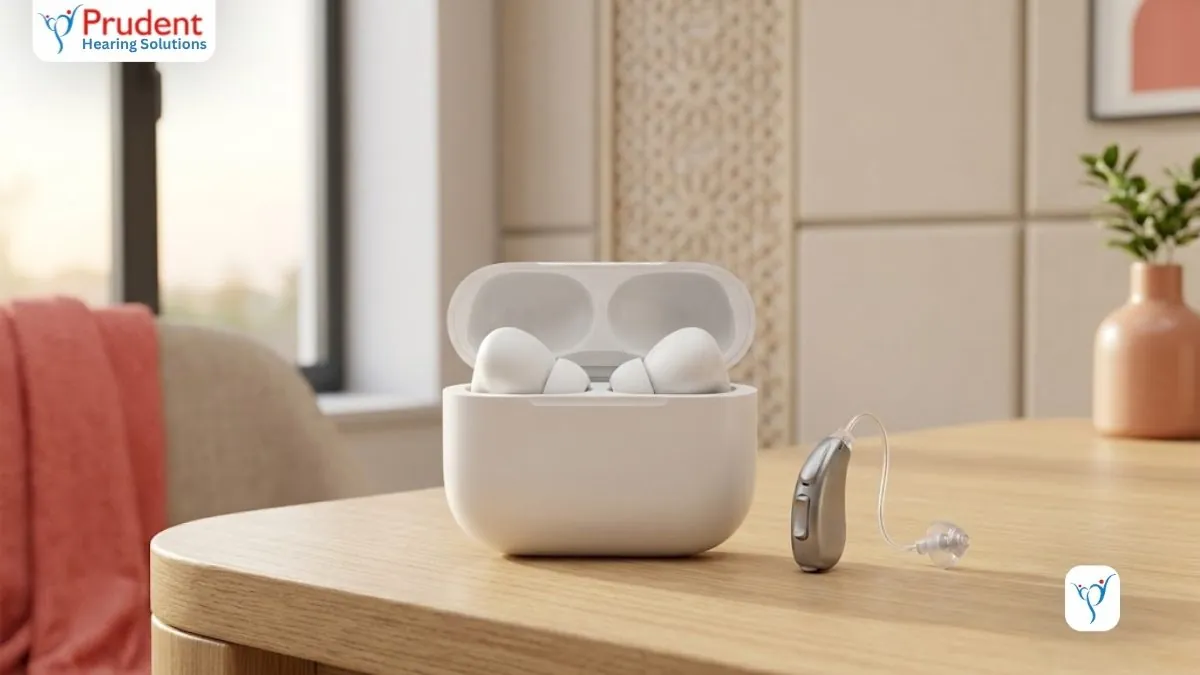
Behind-the-ear styles keep the electronics in a small body behind the ear. A BTE hearing aid is generally the most powerful and sturdy option, so it is often the better call for severe or profound loss, and it keeps the electronics away from ear wax. A RIC hearing aid is slim and discreet and is the single most-fitted style in our clinics.
Compared with these, an ITE or ITC leaves nothing behind the ear, which many glasses and mask wearers prefer, but it fills the ear, which can make your own voice sound boomy at first, and it sits closer to wax and moisture. Our BTE vs CIC comparison lays the size and style range out side by side.
How are custom ITE hearing aids made?
Because ITE and ITC aids are moulded to your ear, the process starts with your ears, never with a device picked online. It usually takes about two visits.
- A free 45-minute hearing test and an ear examination by an RCI-registered audiologist.
- A soft ear impression, a putty mould of your ear, taken in a few minutes per ear. Our guide to ear moulds versus domes explains how impressions work.
- The impression goes to the manufacturer, who hand-builds the custom shell; delivery usually takes about 1 to 2 weeks.
- A fitting appointment to program the aid to your audiogram and check comfort and feedback.
- Follow-up tuning over the first few weeks as your brain adapts to the new sound.
We offer an in-clinic trial and demo so you can hear the difference before you buy, and we fit all major brands, so the recommendation is based on your ears rather than one company's catalogue.
What are the battery and Bluetooth trade-offs of ITE aids?
A full-shell ITE usually takes a size 13 battery, which lasts longest, while an ITC leans on a size 312. Rechargeable ITE and ITC models now exist, though the smallest custom styles are still battery-only, so if a nightly dock matters to you, weigh up our guide to rechargeable versus battery hearing aids.
There is more room in these shells than in a CIC, so direct Bluetooth streaming and dual microphones are easier to include. The trade-offs to know are occlusion, your own voice sounding plugged until you adjust, and, in India's humidity, more wax and moisture reaching the electronics, so a daily wipe and a nightly dry-box matter.
"In our clinics the commonest reason a custom in-the-ear aid comes back is wax or moisture blocking the receiver, not a fault in the aid. A two-minute daily wipe and a nightly dry-box prevent most of it."
How much do ITE and ITC hearing aids cost in India?
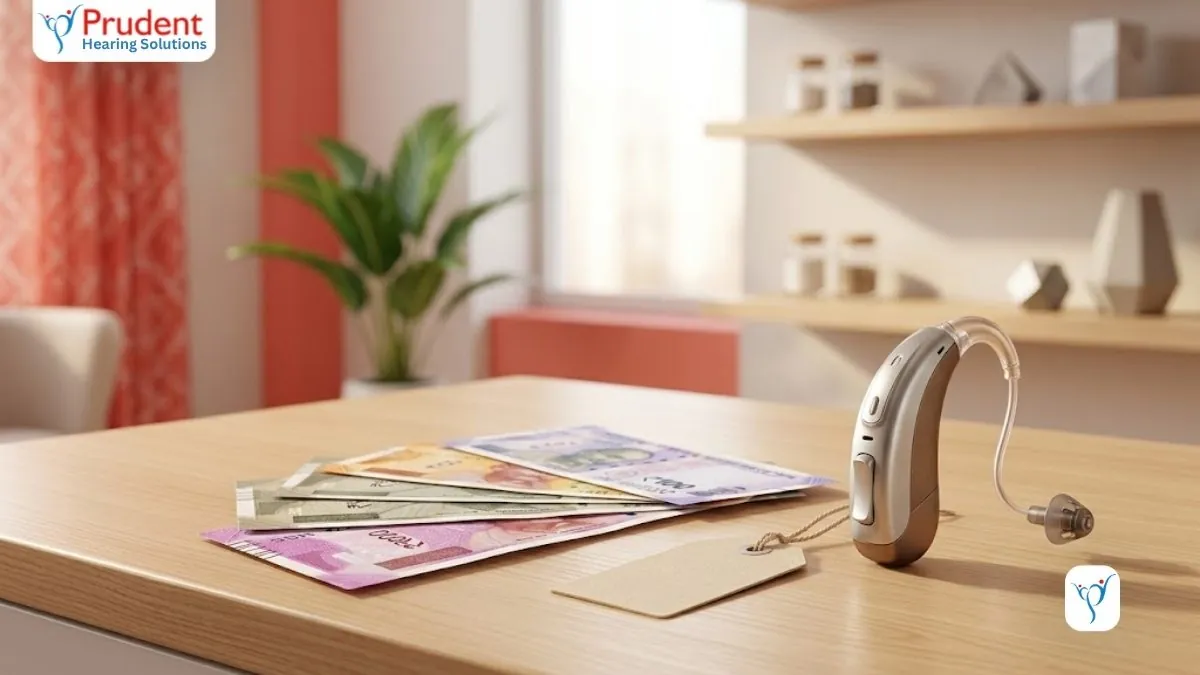
Custom in-the-ear aids are priced by the technology inside, not just the shell, and hearing aids are GST-exempt in India, with discounts of up to 30 to 50 percent off MRP at our clinics. The bands below are per ear and indicative; most people hear better with two aids, so double them for a pair, and check our pricing page for exact current figures.
- Entry digital: about Rs 11,000 to 35,000 per ear. Fewer channels, best in quiet rooms.
- Mid-range: about Rs 35,000 to 70,000 per ear. Better noise handling for most lifestyles.
- Premium: about Rs 70,000 to 1,20,000 per ear. Strong noise reduction and more natural sound.
- Ultra-premium AI: about Rs 1,20,000 to 2,00,000 per ear. Top noise processing and connectivity.
How to choose the right style for you
There is no single best in-the-ear hearing aid; the right choice follows five things: your audiogram, your dexterity, your ear anatomy, your lifestyle and your budget. A full-shell ITE wins on handling and battery, an ITC on discretion, a CIC or IIC on near-invisibility, and a BTE or RIC on power and connectivity. If you are unsure where to start, our step-by-step walkthrough on how to choose the right hearing aid takes it one decision at a time.
What to do next
If a device that sits in the ear and is easy to handle appeals to you, the honest next step is to have your ears checked so the style follows your hearing, not the mirror. Book a free hearing test at Prudent Hearing Solutions in Pune, Delhi or Bengaluru, or call +91 9429690093, Monday to Saturday, 10am to 7pm.
We will test your hearing, examine your ear canal, take an impression if a custom aid suits you, and let you compare an ITE against a discreet RIC in an in-clinic trial before you spend a single rupee. Home visits are available if getting to a clinic is difficult. Whatever you choose, remember hearing aids manage hearing loss, they do not cure it, and the right fit makes all the difference. Prudent Hearing Solutions
Continue reading
Frequently asked questions
What is the difference between ITE and ITC hearing aids?
Both are custom aids built from an impression of your ear. A full-shell in-the-ear (ITE) aid fills the whole bowl of the outer ear, giving more power, a larger battery and room for dual microphones. A half-shell ITE is an intermediate size that fills the lower half of the bowl.
A true in-the-canal (ITC) aid is smaller: it sits in the canal opening and fills only a small part of the bowl, so it is more discreet and lighter, with a little less power and battery life. All are easy to handle.
Are in-the-ear hearing aids good for severe hearing loss?
A full-shell ITE can handle mild to moderately severe loss, because there is room for a stronger receiver and dual microphones. For severe to profound loss, a behind-the-ear (BTE) aid is usually the better choice, since it delivers more clean power and keeps the electronics away from ear wax. At Prudent Hearing Solutions your audiogram decides which style has the power your ears actually need.
Do ITE hearing aids have Bluetooth and rechargeable batteries?
Many do. There is more room in an in-the-ear or in-the-canal shell than in a tiny CIC, so direct Bluetooth streaming and dual microphones are easier to include, and rechargeable ITE and ITC models now exist. The very smallest custom styles are still usually battery-only and cannot stream directly. If a nightly charging dock or phone streaming matters to you, tell your audiologist so the right model is chosen.
Are custom in-the-ear aids better than behind-the-ear ones?
Neither is automatically better; they suit different ears. In-the-ear aids leave nothing behind the ear, which glasses and mask wearers often prefer, and they are easy to handle. Behind-the-ear styles offer more power for severe loss, easier rechargeability and less occlusion, since they do not fill the ear. Your audiogram, dexterity, ear shape, lifestyle and budget decide. An in-clinic trial lets you compare both before buying.
How long does it take to get custom ITE hearing aids?
Usually about two visits over one to two weeks. The first visit is a free hearing test, an ear examination and a soft ear impression, which takes a few minutes per ear. That impression goes to the manufacturer, who hand-builds the custom shell in roughly one to two weeks. At the fitting visit the aid is programmed to your audiogram, followed by tuning appointments over the first few weeks.
What is the best in-the-ear hearing aid brand in India?
There is no single best brand; the best in-the-ear aid is the one matched to your hearing loss, ear shape and budget. Prudent Hearing Solutions is brand-neutral and fits all major makers, including Signia, Phonak, Oticon, Widex, ReSound, Starkey and Unitron, so the recommendation follows your ears rather than one catalogue. Book a free hearing test and in-clinic trial to compare custom ITE and ITC models side by side.
How much do in-the-ear hearing aids cost in India?
Custom in-the-ear aids are priced by the technology inside, not just the shell. As an indicative, per-ear guide, entry digital runs about Rs 11,000 to 35,000, mid-range about Rs 35,000 to 70,000, premium about Rs 70,000 to 1,20,000, and ultra-premium AI about Rs 1,20,000 to 2,00,000. Hearing aids are GST-exempt in India, with discounts up to 30 to 50 percent off MRP. See our pricing page for exact figures.
Free consultation
Ready to hear the difference?
Book a free 45-minute hearing test at any Prudent Hearing clinic: no obligation, honest advice, expert audiologists.