A caregiver's 2026 guide to the best hearing aids for senior citizens in India: top brands, must-have features, severe-loss options and where to buy.
Quick answer
For most Indian seniors in 2026 the best hearing aids are easy-to-handle rechargeable receiver-in-canal models with automatic programs, Bluetooth call streaming and strong speech-in-noise handling, from Signia, Phonak, Oticon, ReSound or Unitron. For severe or profound loss a power behind-the-ear aid is better. The right choice depends on the audiogram, dexterity and budget, and a supervised trial matters more than the brand.
Key takeaways
- Prioritise easy handling: rechargeable (no tiny batteries), simple controls and a secure fit.
- Automatic programs and good speech-in-noise processing help most in family and TV settings.
- Bluetooth call and TV streaming is the biggest daily-life gain for elderly users.
- For severe-to-profound loss, choose a power BTE rather than a slim in-canal aid.
- A supervised trial and follow-up fitting matter more than the brand badge.
Choosing a hearing aid for an ageing parent is one of the quieter acts of care in an Indian family. You notice Papa turning the TV up, Aai saying "haan?" across the dinner table, phone calls cut short because words get lost. This guide is written for the son or daughter doing the research: the person who will probably pay for the device, drive to the clinic and set it up.
We will walk through the best options for senior citizens in 2026, the brands worth shortlisting, the features that genuinely help older ears and hands, what changes when the loss is severe or profound, and where to buy so the aid keeps working for years, not weeks. One honest note up front: hearing aids manage age-related loss very well, but they do not cure it. Setting realistic expectations early makes the whole process smoother for everyone.
Searching for the best hearing machine for old age? It is the same thing: "hearing machine" and "kaan ki machine" are everyday names for a hearing aid, so everything below applies.
What are the best hearing aids available for senior citizens in India?
The honest answer is that the best senior hearing aid is the one your parent will actually wear every day, fitted correctly to their audiogram. Daily comfort matters more than a spec sheet. That said, certain form factors consistently suit older users. For most seniors we fit a Receiver-in-Canal (RIC) or Behind-the-Ear (BTE) rechargeable model. They are easy to handle, easy to clean, sit comfortably behind reading glasses, and carry enough power for the moderate-to-severe loss that usually comes with age.
Dependable choices in 2026 include the Phonak Audeo Infinio and Lumity, Signia Motion Charge&Go and Pure Charge&Go, Oticon Intent and Real, ReSound Vivia and Nexia, Widex Moment Sheer, Starkey Genesis AI and Unitron Moxi. These span the mid-range and premium bands, so there is a version for most budgets.
For a parent with very reduced hearing, a Super Power or Ultra Power BTE (covered further down) is the right family of aids. We deliberately avoid crowning a single winner, because the right pick only becomes clear after a hearing test. For a companion view focused on simplicity and dexterity, see our guide to hearing aids for elderly parents.
For rechargeable models that suit older users well, see the Signia Motion Charge&Go 5X for stronger loss, the ReSound Vivia 9, and Unitron's rechargeable Moxi range, or shortlist by need in our best hearing aids in India guide.
Which hearing aid brands are most recommended for elderly people in India?
All seven brands we fit (Phonak, Signia, Oticon, Widex, ReSound, Starkey and Unitron) make excellent aids. For seniors specifically, the differences that matter are handling, natural sound and streaming. Here is how we tend to think about them for an older wearer:
- Phonak: the most reliable universal Bluetooth, so video calls with grandchildren and any Android phone simply work; strong for group and outdoor listening.
- Signia: its Own Voice Processing keeps your parent's own voice sounding natural, a big comfort for first-time wearers, plus excellent rechargeables.
- Oticon: a very open, natural soundscape that many older users find restful, and a good fit for anyone who found older aids tinny.
- ReSound: the smoothest iPhone integration and a genuinely simple app if a family member manages settings remotely.
- Widex: the cleanest, most musical sound, worth it for a parent who loves bhajans, ghazals or classical music.
- Starkey: built-in fall detection and health tracking in top models, a real reassurance for a senior living alone.
- Unitron: sensible, well-priced mid-range aids with an easy upgrade path.
Brand loyalty should never override the fitting. A well-fitted mid-range Signia will beat a badly-fitted premium Phonak on any ordinary day. For a deeper, non-sponsored comparison, read our honest breakdown of the top hearing aid brands in India.
What features should seniors look for when buying a hearing aid in India?
Older wearers have specific needs that a 40-year-old buyer does not. These are the features we prioritise for a senior, roughly in order of how much daily difference they make.
Simple controls and easy handling
Arthritic fingers, a weaker grip and lower vision make tiny buttons and small batteries a daily struggle. Look for a larger push-button or rocker switch, a magnetic charger the aid simply drops into (no fiddly ports), and ideally a family member or app that can adjust settings so your parent never has to. If they can put the aids on and take them off without help, they will wear them.
Rechargeability
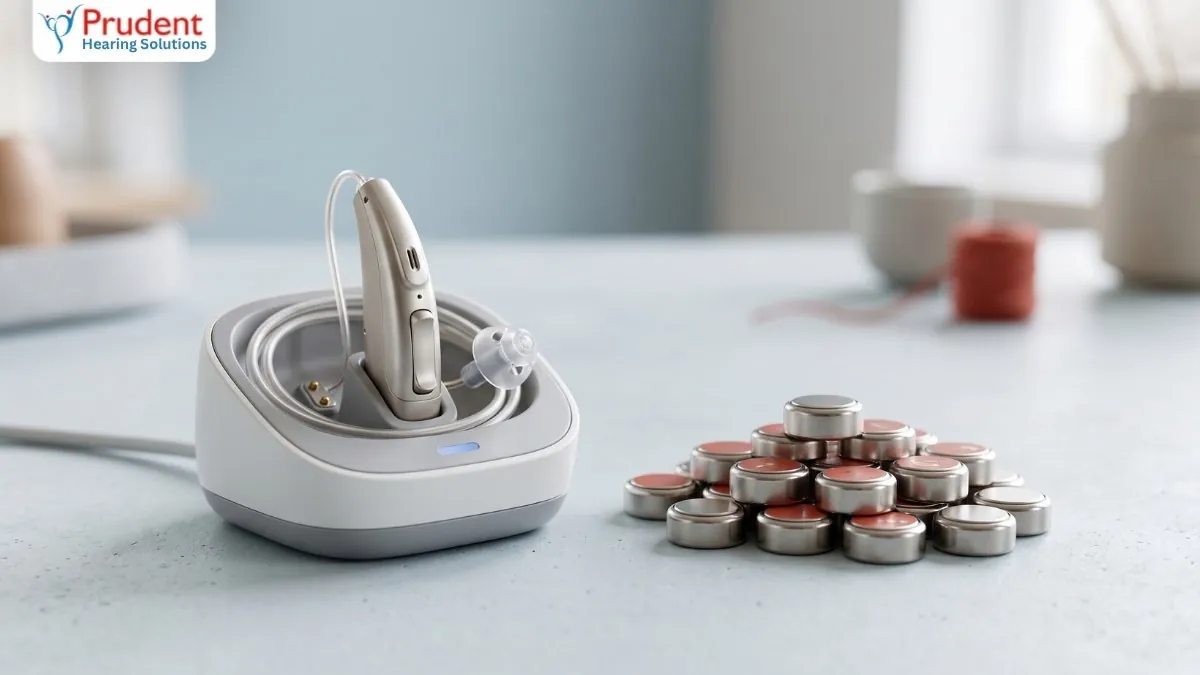
This is the single biggest reason elderly patients keep or abandon their aids. Fumbling with a size-312 battery every few days defeats many seniors, and loose button cells are a swallowing hazard around grandchildren. A lithium rechargeable drops into its case overnight and is ready by morning. If you want to weigh the trade-offs properly, our guide on rechargeable versus battery hearing aids lays them out.
Loud, clear speech, especially in noise
Age-related loss hits the high frequencies first, which is exactly where consonants like s, f, t and k live. That is why a parent will say, "I can hear you, I just can't understand you." Good senior aids amplify clarity, not just volume, and use directional microphones to lift a family member's voice above the ceiling fan, the traffic and the television. A cheap sound amplifier makes everything louder and nothing clearer, so avoid them.
A telecoil (the underrated feature)
A telecoil, or T-coil, lets the aid pick up sound directly from a hearing loop, a landline telephone, and a growing number of auditoriums, banks, temples and airport counters. For a senior who attends prayer meetings, satsangs or community gatherings, a telecoil can be the difference between following along and quietly drifting off. Many slim rechargeable models drop it to save space, so ask specifically whether your parent needs one.
Fall detection and safety
Some premium aids (Starkey in particular) use built-in motion sensors to detect a fall and send an automatic alert to a family member's phone. For a parent living alone, this quiet safety net is often worth more than a small step up in sound quality.
Direct TV and phone streaming
A TV streamer accessory (about Rs 17,500 to Rs 17,700 MRP on the 2026 Phonak and ReSound price lists) sends television audio straight into both aids at your parent's own volume, ending the household tug-of-war over the remote. Bluetooth calling keeps phone conversations clear too, which matters most for a parent who lives apart from the family.
"For an older parent, the best hearing aid is not the one with the most features. It is the one simple enough that it never gets left in the drawer."
How do I choose a hearing aid for an older parent with severe or profound hearing loss in India?
Severe and profound losses need more power and a different approach than mild age-related loss. Here the form factor and the fitting matter enormously, and this is where families most often buy the wrong thing.
- Choose a Super Power or Ultra Power BTE. These behind-the-ear models drive a much stronger receiver and hold the larger components needed for profound loss. Slim RIC and in-the-ear styles usually cannot deliver enough gain without whistling.
- Insist on a custom earmould. A tight, well-made mould stops the loud output leaking back and squealing, and it is far more comfortable for all-day wear.
- Prioritise a telecoil and streaming. When natural hearing is very limited, direct audio from the phone, TV and loop systems does more of the listening work.
- Set honest expectations. Powerful aids restore access to speech and everyday sound; they do not restore normal hearing, and a noisy hall may still be hard. That is normal, not a fault in the device.
If aids no longer give enough benefit (for example, very poor word understanding even at high volume), a good audiologist will say so and discuss whether a cochlear implant assessment is worth exploring. That candour is a sign you are in the right hands. Fitting profound loss well is skilled work: it needs real-ear measurement, careful fine-tuning and a couple of follow-up visits. Never buy a super-power aid off the shelf without a proper audiogram.
The three-appointment rule
Don't buy on the first visit. A proper hearing-aid purchase for a parent has three steps: a full hearing test, an in-clinic trial of one or two suitable models, and a final fitting with fine-tuning on the chosen aid. A provider who pushes a purchase at the first appointment is skipping the part that makes the aid work. For picks across every age and budget, see the best hearing aids in India.
Free or subsidised hearing aids for senior citizens
Some seniors can get a hearing aid free or reimbursed. Central-government pensioners with a CGHS card can claim up to ₹30,000 per ear for a qualifying rechargeable aid; see CGHS hearing aid reimbursement. Low-income seniors aged 60 and above can get a free aid at Rashtriya Vayoshri Yojana camps, which were still running in October 2026, and those with a disability certificate may qualify under the ADIP scheme. Our guide to free hearing aids for senior citizens compares all three routes, and government schemes for hearing aids covers the rest.
Where can I buy the most reliable hearing aids for seniors in India?
Where you buy matters as much as the device itself. A hearing aid is not a product you purchase once; it is a five-to-six-year relationship of fittings, cleanings, remote tweaks and repairs. Buy from a place that will still pick up the phone in year three.
- Choose an RCI-registered audiology clinic. The Rehabilitation Council of India registers qualified audiologists. A genuine clinic tests, fits and services aids. It does not just sell boxes.
- Insist on a proper trial and fitting. Expect a full hearing test, then an in-clinic trial of one or two brands, then a final fitting with adjustments.
- Avoid online hearing amplifiers. Cheap PSAPs sold online amplify everything, including noise, are not matched to your parent's audiogram, and can harm residual hearing at high volume.
- Check the aftercare. Ask about the warranty, free follow-up adjustments, cleaning, and whether they can tune the aids remotely if your parent lives in a different city from you.
Prudent Hearing Solutions has run RCI-registered audiology clinics since 2004, more than twenty years of fitting all the brands above. We are brand-neutral, so we fit whichever suits your parent's ears, hands and budget, and we let you trial two brands side by side before you commit. You will find us in Pune (Viman Nagar), Delhi (Rohini and Green Park) and Bengaluru (Jayanagar).
How much do hearing aids typically cost in India?
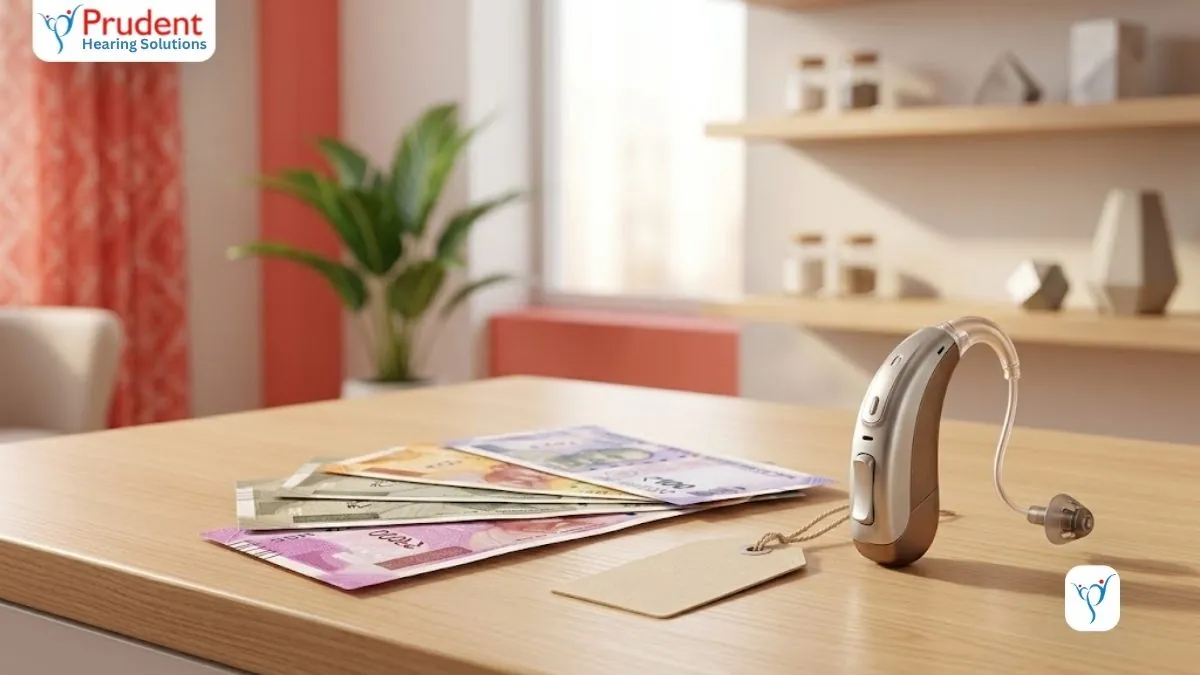
Prices depend on the technology level and, above all, on your parent's audiogram, so treat these as bands, not quotes. Entry-level digital aids run about Rs 11,000 to Rs 30,000 per device; mid-range rechargeable or Bluetooth models about Rs 35,000 to Rs 80,000 per device; and premium aids roughly Rs 1,20,000 to Rs 2,00,000 per device, so a premium pair can reach around Rs 4,00,000.
Since most seniors hear far better with both ears fitted, budget for a pair. For a full tier-by-tier breakdown see our hearing aid price in India 2026 guide, and if the cost feels steep, 0% EMI options can spread it over comfortable monthly instalments. Anything advertised under about Rs 40,000 for a pair is usually an amplifier, not a fitted medical device: loud, but not clear.
The kindest first step you can take for a parent is a proper hearing test, not a purchase. Book a free 45-minute digital hearing test at any Prudent Hearing office in Pune, Delhi or Bengaluru, and our RCI-registered audiologists will show you exactly what your parent can and cannot hear, then recommend honestly.
Book a free hearing test, compare current hearing aid prices, or call +91 9429690093 or WhatsApp +91 8485096505 to fix a time, and bring your parent along. This is a decision the whole family gets to make together.
Continue reading
- Starkey Genesis AI Review & Price in India (2026)
- hearing loss and fall risk in older adults
- top hearing aid brands in India
- rechargeable versus battery hearing aids
- hearing aid price in India 2026
- 0% EMI options
- Presbycusis: age-related hearing loss
- Home visit hearing test in Bangalore
- diabetes and hearing loss
- in-the-ear (ITE) hearing aids
Frequently asked questions
What are the best hearing aids available for senior citizens in India?
For most seniors the best options are rechargeable Receiver-in-Canal (RIC) or Behind-the-Ear (BTE) models, because they are easy to handle, easy to clean and powerful enough for age-related loss. Dependable 2026 choices include the Phonak Audeo Infinio and Lumity, Signia Motion and Pure Charge&Go, Oticon Intent, ReSound Vivia and Nexia, Widex Moment Sheer, Starkey Genesis AI and Unitron Moxi.
For very reduced hearing, a Super Power or Ultra Power BTE is the right family. Ultimately the best aid is the one your parent will wear daily, fitted correctly to their audiogram after a proper hearing test.
Which hearing aid brands are most recommended for elderly people in India?
Phonak, Signia, Oticon, Widex, ReSound, Starkey and Unitron are all excellent, and each suits a slightly different senior. Phonak leads on universal Bluetooth for calls with grandchildren, Signia keeps your parent's own voice natural for first-time wearers, Oticon offers a restful open sound, ReSound pairs beautifully with iPhone, Widex is best for music lovers, Starkey adds fall detection, and Unitron gives well-priced mid-range value. Brand loyalty should never override the fitting, because a well-fitted mid-range aid beats a badly-fitted premium one every time.
How do I choose a hearing aid for an older parent with severe or profound hearing loss in India?
Choose a Super Power or Ultra Power Behind-the-Ear model, because slim in-the-ear styles usually cannot deliver enough gain without whistling. Insist on a custom earmould, prioritise a telecoil and direct streaming, and set honest expectations: powerful aids restore access to speech but do not restore normal hearing, and noisy halls may still be hard. Have it fitted by an RCI-registered audiologist using real-ear measurement and a couple of follow-up visits. If word understanding stays very poor even at high volume, ask whether a cochlear implant assessment is worth exploring.
What features should seniors look for when buying a hearing aid in India?
Prioritise simple controls (large buttons and a magnetic charger the aid drops into), rechargeability so there are no tiny batteries to fumble with, and clear speech in noise from directional microphones rather than just extra volume. A telecoil helps in temples, auditoriums and on the phone, fall detection adds safety for a parent living alone, and a TV streamer ends arguments over the volume. In short, choose features that make the aid easy to wear and easy to hear with every day.
Where can I buy the most reliable hearing aids for seniors in India?
Buy from an RCI-registered audiology clinic that tests, fits and services aids rather than an outlet that only sells boxes, because a hearing aid is a five-to-six-year relationship of fittings and repairs. Insist on a full hearing test, an in-clinic trial of one or two brands, and a final fitting with adjustments, and check the warranty and aftercare. Avoid cheap online hearing amplifiers, which are not matched to your parent's audiogram. Prudent Hearing Solutions has run RCI-registered clinics since 2004 in Pune, Delhi and Bengaluru.
How much do hearing aids typically cost in India?
As a guide, entry-level digital aids cost about Rs 11,000 to Rs 30,000 per device, mid-range rechargeable or Bluetooth models about Rs 35,000 to Rs 80,000 per device, and premium aids roughly Rs 1,20,000 to Rs 2,00,000 per device, so a premium pair can reach around Rs 4,00,000.
Most seniors hear better with both ears fitted, so budget for a pair, and remember the final price depends on the audiogram and hearing test. Anything under about Rs 40,000 for a pair is usually an amplifier, not a fitted medical device. See our hearing aid price in India 2026 guide for a full breakdown, and consider 0% EMI to spread the cost.
Can senior citizens get a hearing aid free in India?
Some can. Central-government pensioners with a CGHS card can claim up to ₹30,000 per ear for a qualifying rechargeable aid. Low-income seniors may qualify for free or subsidised aids under the ADIP scheme (with a disability certificate) or through Rashtriya Vayoshri Yojana camps; check with your district social welfare office whether the camps are currently running.
Sources & further reading
We cross-checked this article against the following authoritative sources. Guidance and figures reflect the most recent public guidance available at the time of last review (October 2026). Clinical review by the Prudent Hearing clinical team.
- Hearing Aids (National Institute on Deafness and Other Communication Disorders (NIDCD, NIH))
- Registered audiologists in India (Rehabilitation Council of India (RCI))
Free consultation
Ready to hear the difference?
Book a free 45-minute hearing test at any Prudent Hearing clinic: no obligation, honest advice, expert audiologists.