Do Sony, Jabra and Philips OTC hearing aids really work in India? An honest look at consumer devices, who they suit, their limits, and when to get tested.
Quick answer
Yes, but with limits. OTC and consumer hearing devices like Sony CRE, Jabra Enhance and Philips can genuinely help adults with self-perceived mild hearing loss. They are not audiogram-tuned, are barely regulated in India, and are the wrong choice for moderate or worse loss - where a professional fitting still matters.
Key takeaways
- OTC hearing aids are a US FDA category for adults (18+) with perceived mild-to-moderate loss; India has no equivalent OTC framework yet.
- Sony CRE, Jabra Enhance, Philips and Samsung/Apple "hearing" features are real self-fit devices, not just amplifiers - but they skip the audiogram and real-ear tuning.
- In India, most of these are grey-market imports with thin local after-sales, so trial, warranty and repair support are the real risk.
- Anyone with one-sided loss, ringing, dizziness, drainage or muffled speech should get a hearing test first, not self-fit.
- If your loss is more than mild, a prescription aid fitted by an audiologist will usually outperform any OTC device.
Yes, but with limits. OTC and consumer hearing devices like Sony CRE, Jabra Enhance and Philips can genuinely help adults with self-perceived mild hearing loss. They are not audiogram-tuned, are barely regulated in India, and are the wrong choice for moderate or worse loss - where a professional fitting still matters.
What "OTC" and "consumer" hearing devices actually are
The term OTC comes from the United States. In 2022 the US FDA created a category of hearing aids that adults can buy directly, without a prescription or a professional fitting, for perceived mild-to-moderate hearing loss in people aged 18 and over. These are still regulated medical devices - not the cheap "sound amplifiers" sold at chemist counters.
Consumer-electronics brands then entered the space:
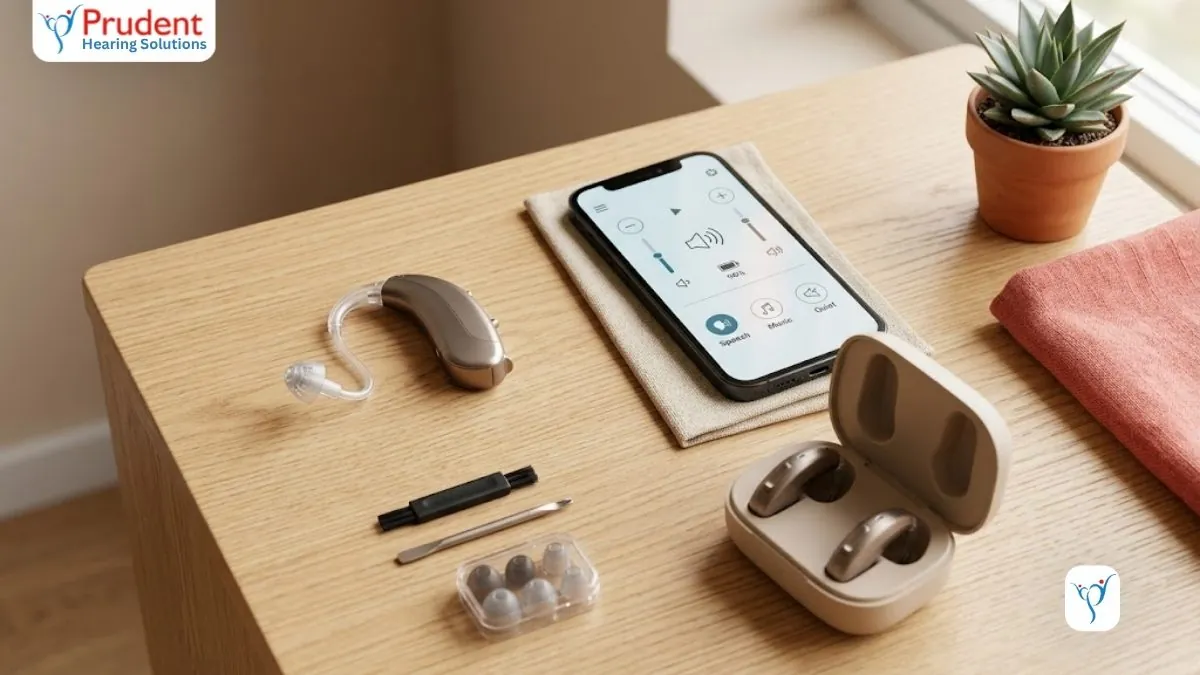
- Sony CRE - self-fit aids developed with a major hearing-aid manufacturer; you tune them through a phone app.
- Jabra Enhance - GN's direct-to-consumer line (the same group behind ReSound), sold with remote support in the US.
- Philips - sells both professionally-fitted (HearLink) and consumer-facing hearing products, depending on market.
- Samsung and Apple - added hearing-assistance features to Galaxy Buds and AirPods Pro; the AirPods hearing aid feature has US FDA authorisation for mild-to-moderate loss.
All of these let you skip the clinic. That is the appeal - and the catch.
OTC devices vs prescription aids vs amplifiers
Three very different things get lumped together, so it helps to separate them.
Amplifiers (PSAPs) make everything louder, including background noise. They do not target the specific frequencies where your hearing has dropped. For a genuine hearing loss, they are usually a poor fit.
OTC / consumer aids are smarter. They apply preset or app-based tuning and some noise management. But the tuning is based on how you think you hear, or a quick in-app screening - not a calibrated audiogram measured in a sound-treated room.
Prescription aids are programmed to your actual audiogram and verified with real-ear measurement, so the output is checked at your eardrum rather than assumed. For a fuller comparison, read our pillar guide, OTC Hearing Aids vs AirPods vs Prescription Hearing Aids.
Who a self-fit device genuinely suits
Self-fit can be a reasonable starting point if you tick most of these boxes:
- Your loss feels mild - you mainly struggle in noisy places, not in quiet one-to-one conversation.
- The loss is roughly equal in both ears.
- You have no ear pain, discharge, sudden change, ringing on one side, or dizziness.
- You are comfortable using a smartphone app to adjust settings yourself.
For this group, an OTC or consumer device can restore useful clarity at a lower cost and with less friction.
Who really needs a professional fitting
Self-fit is the wrong first step if any of these apply:
- Hearing loss in one ear only, or noticeably worse on one side.
- Sudden hearing loss - this is a medical emergency; see an ENT quickly.
- Ear pain, fluid, wax blockage, tinnitus or balance problems.
- You already suspect moderate or severe loss (people repeat themselves often; you miss speech even in quiet).
- The device is for a child or an older adult who cannot manage app-based self-tuning.
The honest reason is simple: an OTC device cannot see inside your ear, cannot run a diagnostic audiogram, and cannot verify output with real-ear measurement. If the underlying cause is medical, or the loss is more than mild, self-fitting can waste months and money while the problem goes unaddressed.
The India reality: availability and after-sales
Here is where buyers get caught out. The OTC category is a US regulation - India does not currently have an equivalent OTC hearing-aid framework. That has practical consequences:
- Many "OTC" models are not officially launched in India. What you find online is often an imported unit with no local warranty.
- After-sales, servicing and spare domes/receivers can be hard to source when the seller is overseas.
- App features, remote tuning and firmware support are sometimes region-locked and may not work fully on Indian networks or app stores.
- There is no local professional in the loop to check the fit or catch a medical red flag.
So a device that works beautifully for a US buyer with clinic backup can be a frustrating, unsupported purchase in India.
A realistic price picture
We will not quote exact figures for imported consumer devices, because pricing shifts with import duties, sellers and exchange rates - any fixed number would mislead. As an indicative band only: consumer and OTC-style self-fit devices generally sit below entry-level prescription aids, while a professionally fitted prescription pair spans a wide range from budget to premium. Treat all online "MRP" claims for grey-market imports with caution.
If you do decide a prescription aid is the right path, note that Prudent offers up to 30-50% off MRP and 0% EMI on fitted devices, so the cost gap with imports is often smaller than it first looks.
The sensible middle path
You do not have to choose blindly. Start with a proper hearing test - it is quick, painless and tells you exactly what you are dealing with. If the result confirms genuine mild loss with no medical concerns, a good consumer device may suit you well. If it shows more, you will have saved yourself a costly detour. Book a free hearing test with our RCI-registered audiologists, or ask about a home visit if getting to a clinic is difficult.
Continue reading
Frequently asked questions
Are OTC hearing aids available in India?
Not as a formal, regulated category. India has no OTC hearing-aid framework like the US FDA's, so most Sony, Jabra or Philips consumer units here are imports without local warranty or fitting support.
Do Sony, Jabra or Philips OTC aids work as well as prescription hearing aids?
For genuine mild loss, they can help noticeably. For moderate or worse loss, prescription aids tuned to your audiogram and verified with real-ear measurement will almost always perform better.
Can AirPods or Galaxy Buds replace hearing aids?
They now offer hearing-assistance features for mild-to-moderate loss and can be useful for occasional listening, but they are not a full-time replacement for a fitted hearing aid and battery life is limited.
Is a hearing amplifier the same as an OTC hearing aid?
No. Amplifiers boost all sound, including noise, and are not tuned to your hearing loss. OTC/consumer aids apply targeted, app-based tuning, which makes them a better - though still non-clinical - option.
Should I get a hearing test before buying a self-fit device?
Yes. A test confirms whether your loss is truly mild, rules out medical causes like wax, infection or one-sided loss, and tells you whether self-fitting is safe and sensible for you.
What if I buy an OTC device and it does not help?
That is common when the loss is more than mild or the cause is medical. An audiologist can retest, check the fit, and recommend a properly programmed prescription aid if needed.
Sources & further reading
We cross-checked this article against the following authoritative sources. Guidance and figures reflect the most recent public guidance available at the time of last review (September 2026). Clinical review by the Prudent Hearing clinical team.
- OTC Hearing Aids: What You Should Know (fda.gov)
- Hearing Aids (nidcd.nih.gov)
Free consultation
Ready to hear the difference?
Book a free 45-minute hearing test at any Prudent Hearing clinic: no obligation, honest advice, expert audiologists.