Educational information, not medical advice. This article is written to help you understand common ear and hearing issues. It is not a substitute for professional diagnosis or treatment. If your symptoms are severe, sudden, or persistent, please consult a qualified doctor or audiologist. For urgent symptoms (sudden hearing loss, bleeding from the ear, severe pain with dizziness, or a head injury), seek medical care the same day.
Do hearing aids really work? Yes: properly fitted aids manage hearing loss with real gains for speech, but they don't cure it. Honest expectations for India.
Yes. Properly fitted hearing aids work, and they have decades of clinical evidence behind them. But it helps to be precise about what "work" means, because the honest answer is more useful than the salesy one. A hearing aid manages hearing loss. It does not cure it. Worn every day and programmed to your audiogram, a good aid can turn straining to follow your grandchild into simply hearing her.
What it will not do is hand you back the ears you had at twenty-five. This is the honest version: what to expect, what you cannot expect, why doing nothing carries a real cost, and a straight answer to the fear that keeps people away. Will wearing aids make my hearing worse?
The straight answer: they manage, they don't cure
Modern hearing aids are tiny, tuned computers. A microphone picks up sound, a processor shapes it to the exact frequencies you have lost while leaving alone the ones you still hear normally, and a receiver delivers it into your ear. That shaping is the whole product.
It is also why a fitted aid is a different thing entirely from the cheap "ear machine" sold online, and why the technology is backed by real science rather than hope. If you want the mechanics in plain English, our guide on how hearing aids work walks through it.
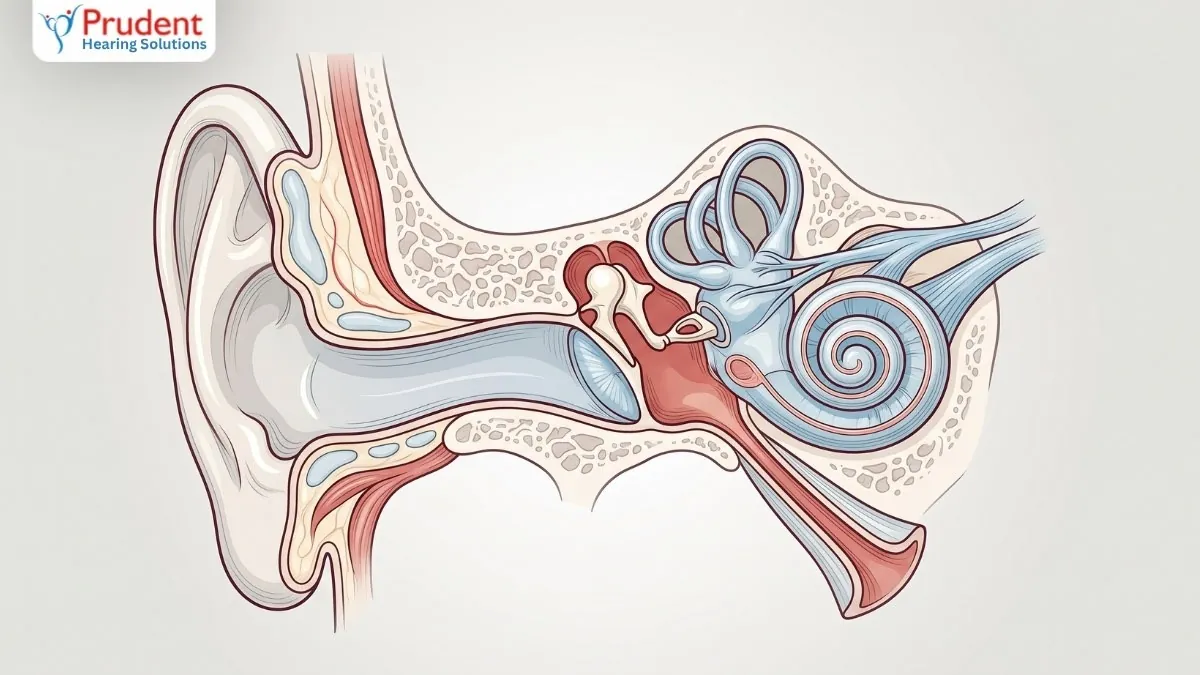
What they cannot do is repair the ear. Most adult hearing loss comes from damage to the tiny hair cells in the inner ear, and those do not grow back. An aid works around that damage; it does not undo it. Anyone who promises to "cure" your hearing with a device is not being straight with you. For any question about whether your loss can be treated medically or surgically (an infection, a perforation, otosclerosis), that is a conversation for an ENT doctor, not a hearing-aid shop.
How much better will I hear?
This is the question everyone actually wants answered, and the honest reply is: it depends on the situation. Aids do not lift everything equally. Some listening gets dramatically easier straight away; some stays hard for everyone, no matter how much you spend. Knowing which is which saves you disappointment.
Where the gains are biggest
- One-to-one conversation. Talking with your spouse, your doctor, a shopkeeper: this is where a well-fitted aid shines. Consonants like s, f, th and k come back, and words stop blurring together.
- Speech in a quiet room. The television at a normal volume, a phone call, a family chat in the living room. Most people notice this on day one.
- The sounds you had stopped noticing. The doorbell, the pressure cooker whistle, a car behind you, birds. Small things, but they add up to feeling connected to the world again.
- Not asking people to repeat themselves. For many, this alone is the point. Less strain, less exhaustion at the end of a day of listening.
Where it stays harder
- Noisy places. A wedding hall, a busy restaurant, a crowded bus. Premium aids with good directional microphones help a lot, but no aid fully separates one voice from a roaring crowd. A person with normal hearing struggles there too.
- Groups where everyone talks at once. Following three conversations at a dinner table is hard for anyone. Aids improve it; they do not make it effortless.
- Very soft or very distant speech. Someone muttering from another room is still a muttered voice from another room.
- Music, at first. It can sound different until the aid is fine-tuned and your brain adjusts.
Give your brain a few weeks
Here is the part nobody warns you about. When you have lost hearing gradually over years (the usual pattern with age-related loss), your brain slowly forgets what everyday sounds are like. Switch on aids and suddenly the fridge hums, your own footsteps are loud, and paper crinkles. This is normal. It is not the aids being wrong; it is your brain re-learning sounds it had filtered out.
That adjustment takes a few weeks of daily wear, not a few minutes. The people who succeed wear their aids from morning to night, not just for "important" occasions. The people who give up are usually the ones who wore them for an hour, decided it was "too loud", and dropped them in a drawer. A good clinic expects this and tunes the aids after you have lived with them. Our notes on what a trial and fitting involve and tips for new users cover the settling-in period honestly.
What hearing aids can't do
Keeping expectations realistic is what makes people happy with their aids. A hearing aid will not:
- Restore perfect or "young" hearing: it manages the loss, it does not reverse it.
- Make a noisy room sound like a quiet one for you when it doesn't for anyone else.
- Work miracles the day you get it: the brain needs weeks to adapt and the aid needs fine-tuning.
- Replace medical treatment where that is what is needed: wax, infection or a structural problem is a doctor's job first.
- Fix a loss it was never programmed for. A device bought without an audiogram is a guess. Separating genuine limits from marketing nonsense is the whole point of our hearing aid myths and facts guide.
What it costs you to do nothing
Plenty of people decide to "wait until it gets worse." It is worth being clear about what waiting actually costs, because the price is not only your hearing.
- You withdraw. Conversations become work, so you talk less, skip the family gathering, sit quietly at the function. Slowly the world shrinks.
- Relationships strain. "You never listen" and "stop shouting" are the soundtrack of untreated loss at home. Our note on talking to family about hearing loss exists because this is so common.
- Safety slips. Not hearing a horn on the road, a pressure cooker, a doorbell, someone calling a warning. These matter, especially for older people living alone.
- Work suffers. Missing instructions or mishearing on calls quietly chips away at confidence on the job. In India, the RPwD Act 2016 recognises hearing disability, but the day-to-day cost shows up long before any paperwork does.
There is also a well-established link between untreated hearing loss and faster cognitive decline, and it is one of the more serious reasons not to keep putting this off. When the brain is starved of clear sound for years, it appears to pay a price. We keep it general because the research is still developing, but the direction is consistent, and it is covered in our piece on untreated hearing loss and dementia. Treating hearing early is not just about hearing better today.
"In our experience, the regret we hear most is never "I got hearing aids too soon." It is "I wish I hadn't waited so many years." Doing nothing is not a neutral choice: it is a slow one, with a cost."
"Will wearing hearing aids make my hearing worse?"
This is the fear that keeps more people away than any other, so here is the honest answer: no. A correctly fitted hearing aid does not damage your hearing. It is programmed with a ceiling: a maximum output set below the level that would be uncomfortable or harmful for your ears specifically, calculated from your audiogram. That ceiling is precisely the protection an aid gives you that a raw amplifier does not.
So where does the fear come from? Two real things get confused with the aids. First, if your loss is progressive, it may worsen over time on its own: that is the underlying condition, not the aid causing it. Second, and this is the genuine risk, the cheap over-amplified "ear machines" sold with no output limit can and do cause harm.
Turn the wheel up because you still can't follow the conversation, and a door slam or a horn can push sound well past a safe level into an ear that is already damaged. Sustained over-amplification like this can worsen an ear that is already damaged.
The lesson is not "avoid hearing aids." It is the opposite. The two real dangers are untreated loss and unfitted, unlimited amplifiers. A genuine aid, fitted by a qualified professional at an RCI-registered clinic, protects your ears while it helps you hear. If you are noticing any of the signs you need a hearing test, the safe move is to get tested, not to wait or to buy something off a shelf.
What to do next
Start with a free hearing test. You will walk out with an audiogram, which turns all of this from a general worry into specific numbers about your ears. If an aid will help, a genuine one will be fitted, and Prudent lets you trial it before you buy, because the real proof is how you hear it for yourself, not on a spec sheet.
Hearing aids are GST-exempt in India and available on 0% EMI, and you can see what we fit and the honest costs on our pricing page. To book at our clinics in Pune, Delhi or Bengaluru, get in touch on +91 9429690093. Prudent Hearing Solutions has been fitting genuine aids since 2004, and the first honest thing we will tell you is whether you even need one. Prudent Hearing Solutions
Continue reading
Frequently asked questions
Do hearing aids really work for age-related hearing loss?
Yes. For the gradual, high-frequency loss that comes with age, properly fitted aids are the standard, evidence-backed treatment. They bring back the consonants that make speech clear, so one-to-one conversation and speech in quiet rooms improve a lot. They manage the loss rather than cure it, and they work best when worn every day and fine-tuned after a few weeks.
How much better will I actually hear with hearing aids?
Expect big gains for speech in quiet settings and one-to-one conversation, and real improvement for everyday sounds like the doorbell, phone and TV. Noisy places like weddings and restaurants stay harder for everyone, though good directional microphones help. No aid separates one voice from a roaring crowd perfectly, because normal-hearing people struggle there too.
Will wearing hearing aids make my natural hearing worse?
No. A correctly fitted aid is programmed with a maximum output ceiling set from your audiogram, so it cannot over-amplify into a harmful range. Your hearing may still change over time due to the underlying condition, but that is not caused by the aid. The genuine risk is cheap ear machines with no output limit, which can worsen hearing.
What happens if I don't treat my hearing loss?
Untreated loss tends to lead to social withdrawal, strained relationships at home, and safety risks like not hearing a horn or pressure cooker. It can also affect work. There is a well-established link between untreated hearing loss and faster cognitive decline, which is one of the more serious reasons not to keep postponing a hearing test.
Can hearing aids cure hearing loss?
No. Most adult hearing loss comes from damage to inner-ear hair cells, which do not regrow. Hearing aids work around that damage; they do not repair it. Any device or seller promising a cure is not being honest. If your loss might be medical or surgical in origin, see an ENT doctor first, before buying any device.
How long before hearing aids feel normal?
Usually a few weeks of daily wear, not a few minutes. When loss has crept up over years, your brain has forgotten everyday sounds, so at first the fridge hum and paper crinkle seem loud. That is normal re-learning. Wear the aids morning to night and return for a fine-tuning visit. The people who succeed are the consistent wearers.
Free consultation
Ready to hear the difference?
Book a free 45-minute hearing test at any Prudent Hearing clinic: no obligation, honest advice, expert audiologists.