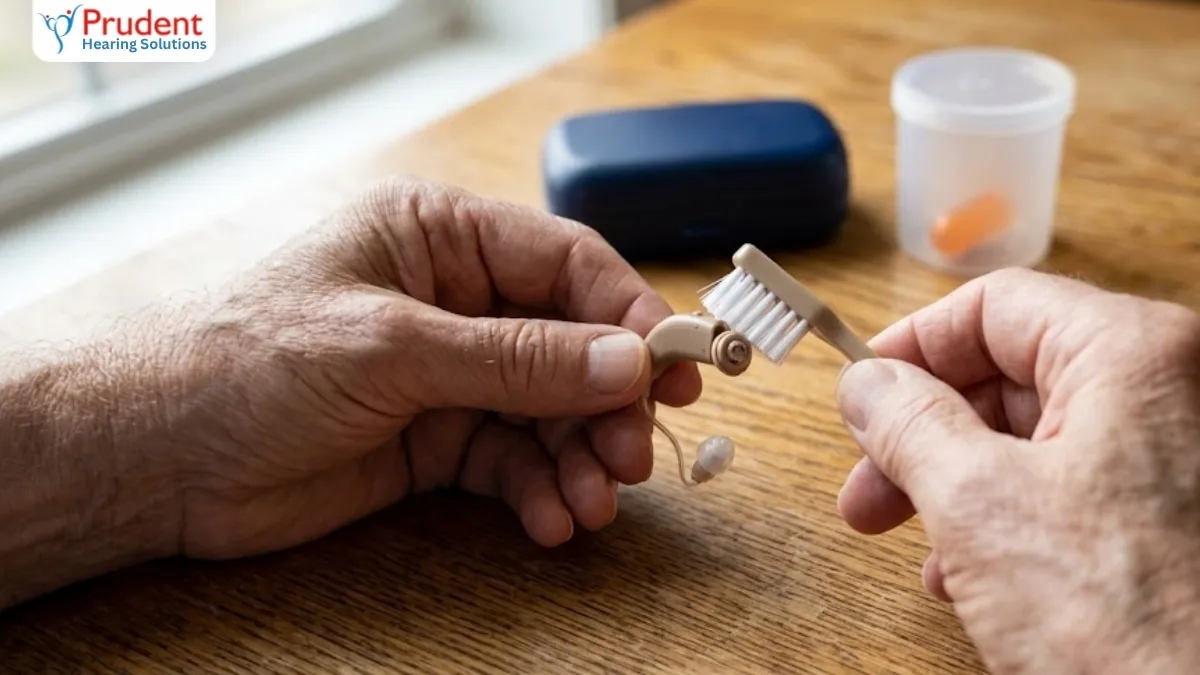
New to hearing aids? Our friendly first-30-days guide covers wear-time, odd sounds, restaurant and phone tips, daily care and when to go back for tuning.
First, well done. Choosing to wear hearing aids is one of the kindest things you can do for yourself and for the people who love talking to you. If you have just been fitted and the world suddenly sounds a little strange (brighter, busier, full of small noises you had quietly forgotten), that is completely normal. This friendly guide walks you through your first 30 days, one step at a time, so you know what to expect and what to do about it.
Here is the single most important idea to carry with you. Hearing aids do their work in your ears, but getting used to them happens in your brain. After months or years of missing certain sounds, your brain grew used to the quiet.
When those sounds return all at once, it needs a few weeks of gentle practice to sort the important ones from the background again. Almost everything that feels odd in the beginning settles as your brain relearns. Patience, not perfection, is what carries you through. It also helps to understand what a proper fitting involves, because your first month builds on that foundation.
What should I expect in my first week with hearing aids?
Your first week is about noticing, not judging. On day one, the sounds you are most likely to hear are the everyday ones you had stopped catching: the ceiling fan, the fridge humming, your own footsteps on the floor, the rustle of a newspaper, the clink of bangles or a spoon in a cup.
Speech may sound a little sharp or tinny, and your own voice can feel loud. None of this means the aids are set wrong. It means they are doing their job and your brain is catching up.
Wear them in easy places first. A quiet room at home, a calm chat with one family member, the television at a normal volume. These are ideal for week one. Save the wedding hall, the crowded market and the noisy restaurant for later, once your brain has found its feet. Keep a small note on your phone of anything that sounds too sharp, too soft or uncomfortable, so you can tell your audiologist exactly what to fine-tune.
- Your own voice sounding loud, boomy or like you are speaking inside a barrel.
- Soft background sounds (fans, clocks, traffic, birds) feeling surprisingly loud.
- Speech sounding sharp or slightly artificial, especially the 's' and 'sh' sounds.
- Mild tiredness by evening, because your brain is working harder than usual.
- A feeling that the aids are 'too much' at first, which almost always eases within days.
How many hours a day should I wear my new hearing aids?
Build up your wear time gently rather than wearing them all day from the very first morning. Think of it like breaking in a new pair of shoes, but for your ears. A comfortable, common plan looks like this, though your audiologist may adjust it to suit you and some people are advised to wear them full-time sooner:
- Days 1 to 3: about 3 to 4 hours a day, at home, in quiet surroundings.
- Days 4 to 7: around 5 to 6 hours a day, adding gentle background like the kitchen or a quiet street.
- Week 2: 6 to 8 hours a day, stepping into slightly busier places such as a shop or a small gathering.
- Weeks 3 to 4: work up to all your waking hours, including noisier outings.
By the end of the first month, the goal is to wear your hearing aids from the time you wake until you go to bed. Consistency matters more than length: a few hours every single day helps your brain adapt far faster than a full day once in a while. Do take them out for sleeping, bathing and swimming, and store them safely in their case or drying box when they are off.
Why do my own footsteps and voice sound loud at first?
This surprises almost every new wearer, so you are in good company. When something sits in your ear canal, it traps and amplifies the sounds your own body makes: your voice, your chewing, your footsteps, even your breathing. This is called the occlusion effect, a bit like the boomy feeling you get when you plug your ears with your fingers and speak. On top of that, your brain went years without hearing these sounds at full strength, so when they return they feel much louder than they really are.
The reassuring news is that most of this fades. Within a couple of weeks your brain learns to push these familiar body sounds into the background again, exactly as it does for people with normal hearing. You simply stop noticing them. Modern aids help too: Signia's Own Voice Processing, for example, is designed to keep your own voice sounding natural while still amplifying everyone else, and a good audiologist can adjust the fit and settings if the boominess lingers.
If your own voice still bothers you after two to three weeks, that is a clear signal to go back for a small tweak, not something to put up with. You can see what happens at a Signia fitting appointment if that is the brand you were fitted with.
Simple practice exercises for your first month
Adapting to hearing aids is a skill, and like any skill it rewards a little daily practice. None of these takes long, and together they train your brain to make sense of sound again:
- Read aloud to yourself for a few minutes each day. Hearing your own voice while you also see the words helps your brain re-learn speech sounds.
- Listen to an audiobook or a news bulletin while following along with subtitles or a transcript, so sound and meaning line up.
- Have unhurried one-to-one conversations in a quiet room, watching the speaker's face, since lip movement and expression make words easier to catch.
- Play a gentle 'find the sound' game: close your eyes and try to point to where a sound is coming from, which rebuilds your sense of direction.
- Sit quietly and simply name the everyday sounds you hear (the fan, a car, a bird, a distant TV) to teach your brain what is background and what is not.
Getting through restaurants, phone calls and TV
Restaurants and family functions
Noisy places are the hardest test for any hearing aid, new or old, so do not judge yourself by them in the first fortnight. When you do go out, sit with your back to the wall and the noise behind you, choose a corner table or a quieter room, and face the people you most want to hear.
Many aids have a dedicated restaurant or noise programme. Ask your audiologist to set one up and show you how to switch to it. And remember, everyone struggles to hear in a loud hall; you are not doing anything wrong. It helps enormously when your family knows how to support you, which is why talking to your family about hearing loss is worth doing early.
Phone calls
Phone calls can feel awkward at first because the phone and the hearing aid have to share the same ear. Hold the phone a little higher, near the top of your ear rather than tight against the canal.
If your aids and phone support it, Bluetooth streaming can send the caller's voice straight into both ears, though how smoothly this works (hands-free calling especially) varies from phone to phone and, on Android, from model to model, so ask your audiologist what your particular handset can do. Speakerphone in a quiet room is a simple fallback while you find your feet.
Television
If the TV feels too loud for everyone else but still unclear for you, resist the urge to keep turning up the volume. Switch on subtitles for the first few weeks so words and sound reinforce each other, sit a little closer, and ask your audiologist about a TV streaming accessory that sends the sound directly into your aids at your own level while the room stays at a normal volume.
Daily care basics for your new hearing aids
A few small habits keep your aids working well and lasting longer. They are simpler than they sound and take under a minute a day:
- Wipe them each evening with a soft, dry cloth: never water, soap or cleaning liquids.
- Store them in their case or, better, a drying box overnight to pull out moisture and sweat.
- Put your aids in after your shower, hair oil, spray and make-up, and take them out before all of these.
- Check the wax filters and domes regularly, as earwax is the most common reason an aid goes quiet.
- Keep rechargeable aids on their charger overnight, and keep spare batteries handy if yours use them.
- Protect them from heat, direct sun and humidity, and give them extra care during the monsoon when moisture is at its worst.
When should I go back to my audiologist after getting hearing aids?
Plan on at least one follow-up visit within the first two to four weeks. This fine-tuning appointment is a normal, expected part of the process, not a sign that anything has gone wrong. By then your brain has adjusted enough that your audiologist can make precise changes based on your real daily life rather than guesswork. Bring the notes you kept about anything that sounded too sharp, too soft or uncomfortable, and it helps to glance at your audiogram so you understand what is being adjusted and why.
Go back sooner, without waiting for the scheduled visit, if you notice any of these:
- Speech still sounds muffled or unclear after a couple of weeks of daily wear.
- Your own voice remains uncomfortably loud or boomy beyond the first fortnight.
- The aids whistle or squeal, which usually means the fit or the dome needs adjusting.
- Anything hurts, itches or feels physically uncomfortable in or around the ear.
- An aid keeps going quiet, cutting out or will not hold its charge.
A gentle, honest word on expectations
"Hearing aids manage hearing loss, but they do not cure it. For age-related and noise-related (sensorineural) loss, they make the most of the hearing you still have and keep you connected to conversation, television and family. Going in with that realistic expectation is exactly what keeps people happily wearing their aids for years."
Settle in with support from Prudent Hearing Solutions
Your first 30 days go far more smoothly with a clinic that answers the phone and welcomes you back for tuning. Prudent Hearing Solutions is an RCI-registered practice running since 2004, with offices in Pune (Viman Nagar), Delhi (Rohini and Green Park) and Bengaluru (Jayanagar).
We fit, trial and service Signia hearing aids, and every fitting starts with a free 45-minute hearing test, with 0% EMI available so cost need not stand in the way. If you are new to your aids and something does not feel right, do not struggle in silence. Book your free 45-minute hearing test or a fine-tuning visit, or call +91 9429690093, and let us help you settle in.
Continue reading
- a practical guide to traveling with hearing aids
- what a proper fitting involves
- a Signia fitting appointment
- talking to your family about hearing loss
- extra care during the monsoon
- your audiogram
- Wearing hearing aids at work
- Hearing aids with glasses, masks and earbuds
- adjusting volume, programs and the app
Frequently asked questions
What should I expect in my first week with hearing aids?
Expect to suddenly notice everyday sounds you had stopped hearing (the fan, the fridge, your own footsteps, the rustle of paper), and for speech to feel a little sharp and your own voice loud. This is completely normal and means the aids are working while your brain catches up. Wear them in quiet, easy places first and save noisy halls for later. Keep a note of anything uncomfortable so your audiologist can fine-tune it.
How many hours a day should I wear my new hearing aids?
Build up gradually. Start with about 3 to 4 hours a day in quiet surroundings for the first few days, move to 5 to 8 hours through week two, and work up to all your waking hours by the end of the first month.
Some people are advised to wear them full-time sooner, so follow your audiologist's plan. Consistency matters more than length: a few hours every single day helps your brain adapt far faster than a full day once in a while. Always remove them for sleeping, bathing and swimming.
Why do my own footsteps and voice sound loud at first?
When a device sits in your ear canal it traps and amplifies the sounds your own body makes: your voice, chewing, breathing and footsteps. This is called the occlusion effect, similar to the boomy feeling when you plug your ears and speak. Your brain also went years without hearing these at full strength, so they seem louder than they are. Most of it fades within two to three weeks; if it does not, go back for a small adjustment.
When should I go back to my audiologist after getting hearing aids?
Plan on a fine-tuning visit within the first two to four weeks. This is a normal, expected part of getting used to hearing aids, not a sign of a problem. Bring notes on anything that sounded too sharp, too soft or uncomfortable. Go back sooner if speech still sounds muffled after a couple of weeks, your own voice stays boomy, the aids whistle, anything hurts, or a device keeps cutting out or will not hold its charge.
How do I manage phone calls with new hearing aids?
Hold the phone a little higher, near the top of your ear rather than against the canal. If your aids and phone support it, Bluetooth streaming can send the caller's voice into both ears, although how smoothly that works varies from phone to phone.
Free consultation
Ready to hear the difference?
Book a free 45-minute hearing test at any Prudent Hearing clinic: no obligation, honest advice, expert audiologists.