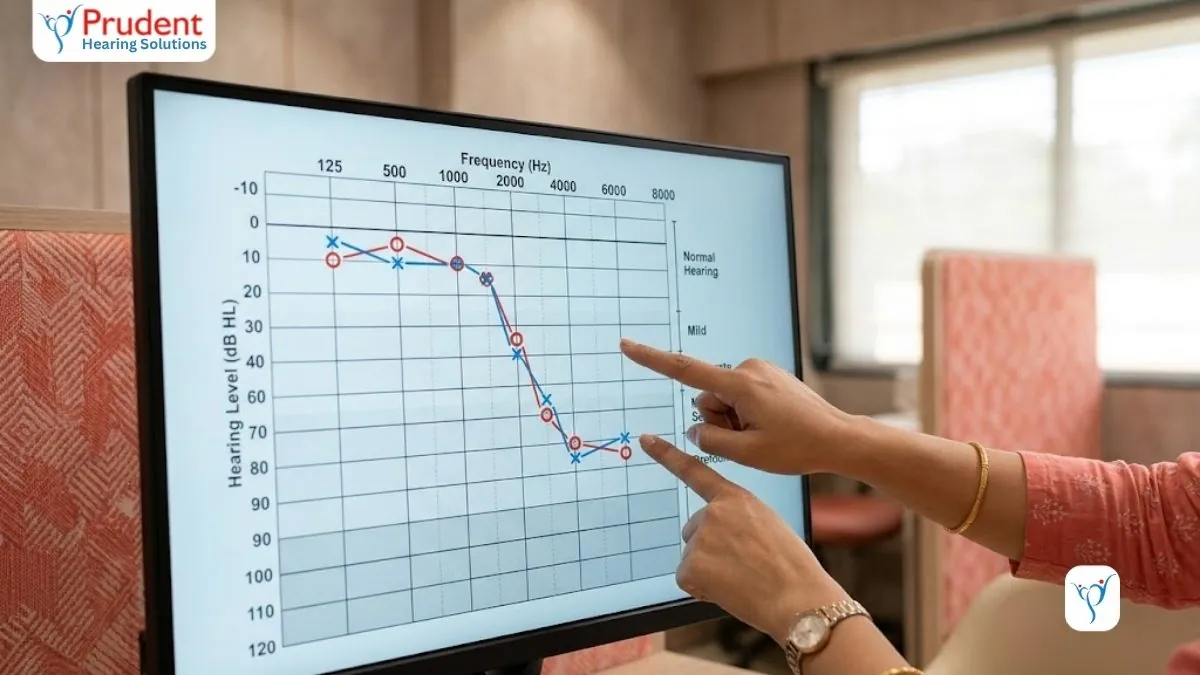
Audiometry is the standard clinical hearing test. Here is what it measures, how long it takes, who needs it, and roughly what it costs in India in 2026, plus where to get a free 45-minute assessment.
Audiometry is the standard clinical hearing test: a set of painless checks that measure how well each ear hears. A qualified audiologist plays tones and words through headphones in a quiet, sound-treated room, then plots the results on a chart called an audiogram. The full assessment usually takes about 30 to 45 minutes.
At paid diagnostic centres and hospitals across India, an audiometry test typically costs anywhere from a few hundred rupees up to around ₹1,500, though this varies with the city, the centre and which tests are included. At Prudent Hearing Solutions the 45-minute digital hearing test is free.
What is an audiometry test?
Audiometry is a group of hearing measurements done by an audiologist to find out whether you have hearing loss, how much, and what type. Instead of guessing from how you feel, it puts real numbers to your hearing at different pitches and speech levels.
Those numbers guide the decisions that follow, from whether you need a hearing aid to how it should be programmed. If you have noticed muffled speech, turning the TV up, or asking people to repeat themselves, the signs you need a hearing test are worth checking against your own experience first.
The main parts of an audiometry test
Pure-tone audiometry
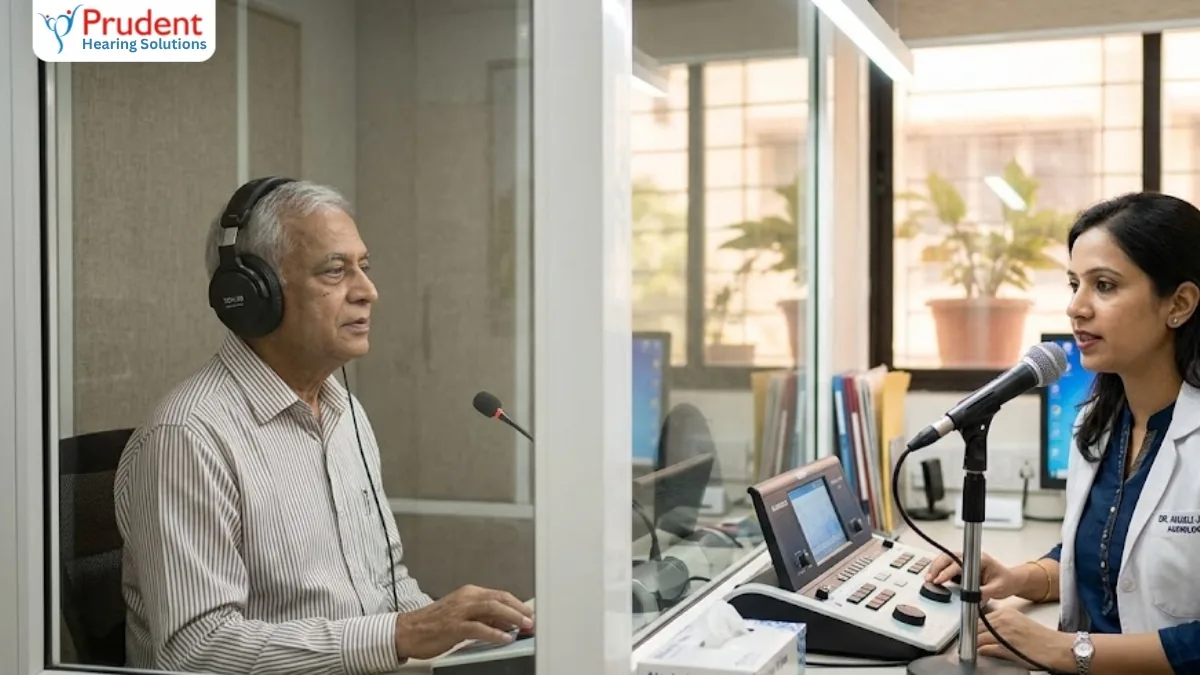
This is the core test. You sit in a sound-treated room wearing headphones, and the audiologist plays tones at different pitches (from low, deep sounds to high, whistle-like ones) at different volumes. Each time you hear a tone, you press a button or raise your hand.
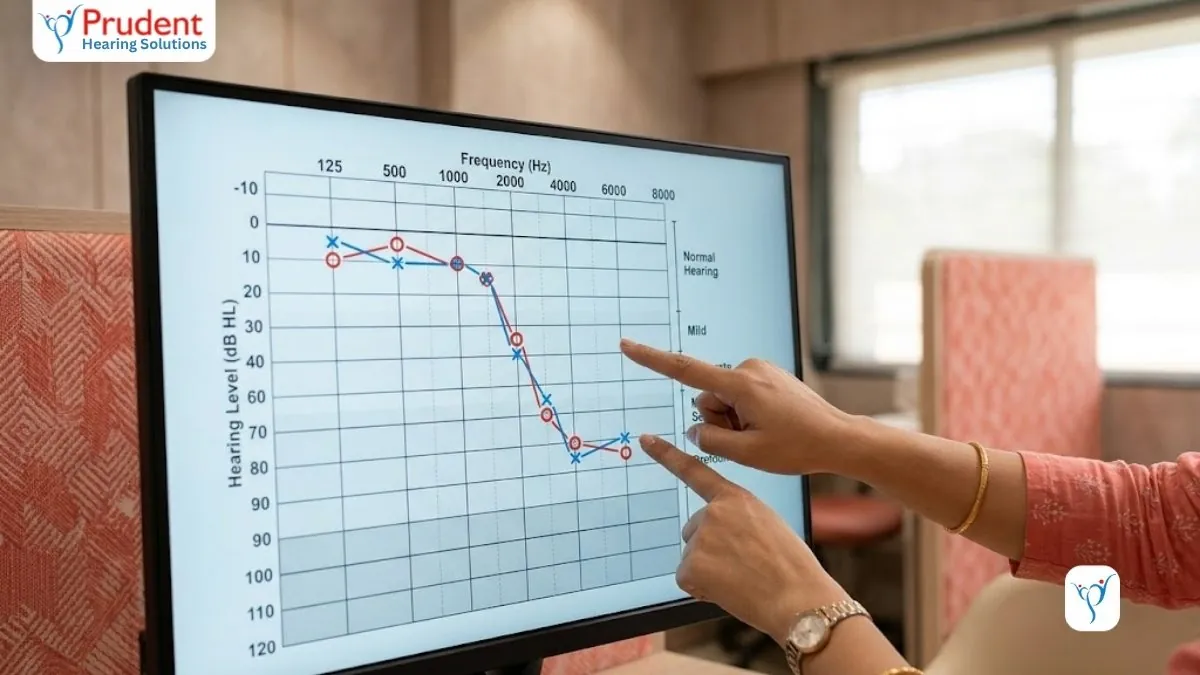
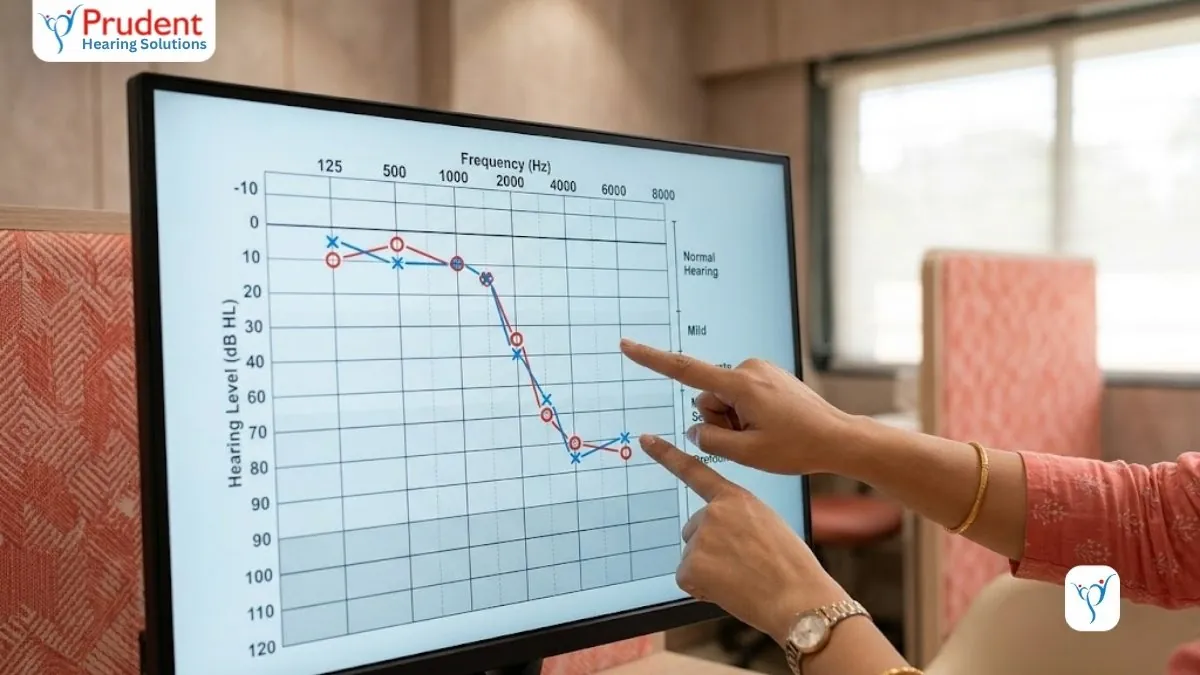
The softest volume you can hear at each pitch is your hearing threshold. A bone-conduction step, using a small vibrating device placed behind the ear, checks whether a blockage in the outer or middle ear is part of the problem. The results are plotted on the audiogram.
Speech audiometry
Hearing tones is one thing; understanding words is what matters day to day. In speech audiometry the audiologist checks the softest level at which you can just detect speech, and how clearly you repeat words played at a comfortable volume. Two people can have similar tone results but very different word clarity, which is why this step matters when choosing and setting up a hearing aid.
Tympanometry, OAE and BERA
Tympanometry (also called impedance testing) checks how well the eardrum and middle ear move. A soft probe gently changes the air pressure in the ear canal (there is nothing to press and no tones to respond to), and it helps spot fluid, infection or a stiff eardrum.
Two more tests are used in special situations: otoacoustic emissions (OAE), often used to screen newborns, and BERA (brainstem evoked response audiometry), used for babies, very young children, or when a nerve problem is suspected. Most adults only need pure-tone and speech testing, sometimes with tympanometry added.
What audiometry measures, and how long it takes
The test answers three questions: is there hearing loss, how severe is it, and where does it sit: the outer or middle ear (conductive), the inner ear or nerve (sensorineural), or both (mixed). The type matters because it changes the plan: some conductive problems are medical and may be treatable, while most age-related loss is sensorineural and is managed, not cured, with hearing aids.
For the detail behind these categories, see types and causes of hearing loss. A full adult assessment usually takes about 30 to 45 minutes, and in most clinics you get your results the same day.
- Whether one or both ears are affected, and by how much
- Your hearing threshold at different pitches, from low to high
- How clearly you understand speech, not just detect it
- Whether the outer, middle or inner ear is involved
- A baseline you can compare against in future tests
Who needs an audiometry test?
- Adults who strain to follow conversation, especially in noise or on the phone
- Anyone turning the TV or phone louder than others find comfortable
- People with ringing in the ears (tinnitus), dizziness or a blocked feeling
- Anyone exposed to loud noise at work, or who has taken certain strong medicines
- Newborns and young children, screened with OAE or BERA
- Adults over 60, since age-related loss builds up slowly and is easy to miss
Why get audiometry before buying a hearing aid
A hearing aid is not a volume knob. It is programmed pitch by pitch to the numbers on your audiogram, so buying one without a test is like buying glasses without an eye test. Audiometry also tells you things a shop cannot: whether the loss is in the inner ear (where a hearing aid helps) or caused by wax, fluid or a perforated eardrum (where a doctor should treat it first), whether one ear or both need help, and how well you understand words, which sets realistic expectations.
Ask for the audiogram in writing, because it lets you compare quotes on the same model and is needed again at every reprogramming. Our hearing aids page lists every model with prices once you know your type of loss.
How much does an audiometry test cost in India in 2026?
There is no single national price. At private diagnostic centres and hospitals, a paid audiometry test in India typically ranges from a few hundred rupees up to around ₹1,500, but the exact figure varies. What you pay depends on the city, the centre's setup, and which tests are bundled: pure-tone alone tends to sit at the lower end, while adding speech audiometry, tympanometry, or a signed report for a medical or job requirement can push it higher.
Some hospitals charge separately for each test and for the audiologist's report, so always ask what is included before you book. If you also plan to buy a device later, it helps to understand hearing aid prices in India up front, so the test and the fitting sit inside one budget.
At Prudent Hearing Solutions the 45-minute digital hearing test is free. You get pure-tone and speech testing by a qualified audiologist, your audiogram explained in plain language, and honest advice on whether you actually need a hearing aid, with no pressure to buy on the day.
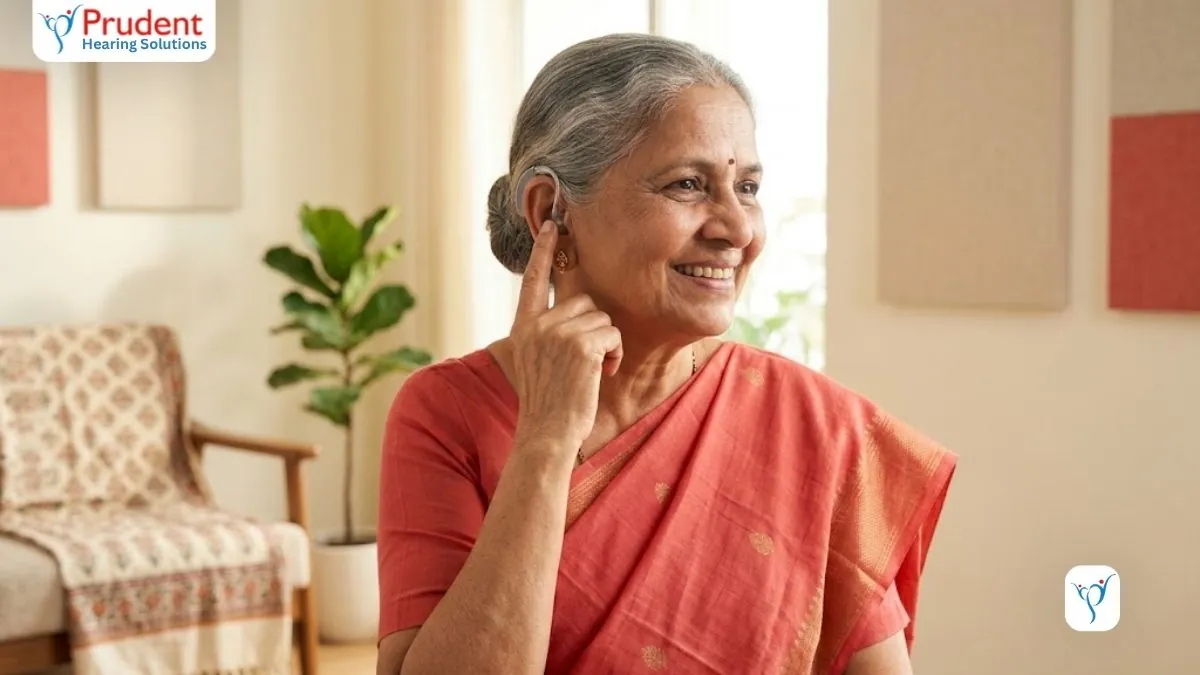
If a device is right for you, Prudent lets you trial it before you pay, offers 0% EMI, provides free programming support, and fits and services all major brands. You can book a free hearing test at the Pune, Delhi or Bengaluru clinics, or ask about a home visit.
Reading your audiogram and what comes next
Your results come back as an audiogram: a graph with pitch across the top and volume down the side, marked with symbols for each ear. The lower the marks sit on the chart, the louder sounds have to be for you to hear them. Your audiologist walks you through it, but reading understanding your audiogram beforehand makes the terms click faster. If the test shows loss that a hearing aid can help, it is worth knowing how hearing aids work and what a first fitting involves before you decide anything.
"An audiometry test does not cure hearing loss. It measures it clearly, so the right plan can manage it. The numbers only become useful when someone sits with you and explains what they mean for your daily life."
If speech has been sounding muffled, book a hearing test rather than waiting for it to pass. A free 45-minute assessment at Prudent gives you clear numbers, a plain-language explanation, and a no-pressure answer on what, if anything, to do next. Call +91 9429690093 or book a free hearing test at the Viman Nagar (Pune), Rohini or Green Park (Delhi), or Jayanagar (Bengaluru) clinics.
Continue reading
Frequently asked questions
How much does an audiometry test cost in India?
At private diagnostic centres and hospitals across India a paid audiometry test usually costs from a few hundred rupees up to around ₹1,500, though the exact figure varies with the city, the centre and which tests are included. Prices are not standardised, and some hospitals bill each test separately. At Prudent Hearing Solutions the 45-minute assessment is free, and the clinic confirms any charges before anything is done.
Is an audiometry test painful?
No. Audiometry is painless. You simply listen to tones and words through headphones and respond when you hear them. Tympanometry uses a gentle change in air pressure in the ear canal, which feels like a light fullness for a few seconds. Nothing is inserted deep into the ear.
How long does an audiometry test take?
A full adult audiometry assessment usually takes about 30 to 45 minutes, including pure-tone and speech testing and time to explain your results. A basic screening can be quicker, while adding tympanometry or a signed report for a job or medical requirement can take a little longer.
Do I need a doctor's referral for an audiometry test?
Usually not for a routine hearing test. You can often walk into an audiology clinic and book an assessment directly. A referral may be needed only if the test is for a specific medical or employment report, or if an ENT has asked for it as part of treatment. At Prudent you can book the free assessment yourself.
What is the difference between audiometry and a hearing screening?
A screening is a quick pass-or-fail check to flag whether you might have a problem. Full audiometry measures how much and what type of hearing loss you have across different pitches, plus how clearly you understand speech. If a screening raises a concern, a full audiometry test is the next step.
Is the hearing test at Prudent really free?
Yes. The 45-minute digital hearing test at Prudent Hearing Solutions is free, with no obligation to buy anything. You get pure-tone and speech testing, your audiogram explained, and honest advice. If a hearing aid would help, you can trial it before you pay and use 0% EMI. Exact device prices are quoted at the visit and depend on the model you choose.
Free consultation
Ready to hear the difference?
Book a free 45-minute hearing test at any Prudent Hearing clinic: no obligation, honest advice, expert audiologists.