Buying your first hearing aid in India, step by step: spotting the signs, the hearing test, reading your audiogram, comparing models, the trial and after-care.
Buying your first hearing aid can feel bigger than it needs to. Most people arrive at our clinics after months, sometimes years, of putting it off, half-expecting a hard sell and a huge bill. It does not have to be like that. Getting your first hearing aid is a process, and when you take it one step at a time it becomes calm and clear.
This guide walks you through every step the way we would in person: noticing you need help, the hearing test, reading your audiogram, why an audiologist matters, matching a device to your life, the in-clinic trial and fitting, and the after-care that keeps it working. Hearing aids do not cure hearing loss, and we will be honest about that throughout. What they do, fitted well, is give you back the sounds and conversations you have been missing.
Step 1: Recognising that you need help
The hardest step is often the first one, admitting that hearing has become an effort. Hearing loss usually creeps in slowly, so the people around you notice before you do. You turn the TV up a little more each month. You catch words in a quiet room but lose them in a restaurant or at a wedding.
You ask people to repeat themselves, or you nod along and hope you guessed right. Phone calls feel like work. Consonants like s, f, t and k go missing, so speech sounds mumbled rather than soft. None of this means anything is wrong with you. It means it is time to get tested, the same way you would check your eyes or your blood sugar.
If you are not sure whether you are there yet, our list of the signs you need a hearing test is a good gut-check. A common pattern we see is a person waiting seven to ten years from first noticing to first testing. Those are years of strained dinners and quieter phone calls you do not need to lose. The earlier you act, the easier your brain adjusts to hearing aids later, because it has not gone as long without those sounds.
What factors should I consider before buying a hearing aid for the first time?
Before you look at a single device, it helps to know what actually drives a good first purchase. A hearing aid is not like a phone, where the newest and priciest is simply the best. The right choice is the one that matches your ears, your daily life, your hands and your budget. Here are the factors that matter most, roughly in order of importance.
- Your hearing loss itself: the degree (mild to profound) and the shape of your audiogram decide how much power you need and which styles will physically work.
- Your daily life: a retired person who is mostly at home has very different needs from someone in meetings, on phone calls, or on noisy streets all day.
- Dexterity and eyesight: tiny in-the-ear devices and small batteries are fiddly. If your fingers are less nimble, a slightly larger or rechargeable device is kinder.
- Budget, set honestly: good hearing is possible across a wide price range in India, and a mid-range device fitted well beats a premium device fitted badly.
- Connectivity: if you want to stream phone calls, music or the TV straight into your ears, look for Bluetooth support from the start.
- Follow-up and service: where will you go for adjustments, repairs and cleaning? A local clinic you can walk into matters more than most people expect.
Notice that price is on the list, but it is not at the top of it. The two things that decide most of your success are the accuracy of your hearing test and the quality of the fitting, not the number on the box. Keep that in mind whenever the conversation drifts too quickly towards models and prices.
Step 2: The hearing test, step by step
This is where the guessing ends. At every Prudent office we start with a free 45-minute digital hearing test, and nothing is sold to you at this stage. The test is painless, quick and quiet. Here is what it involves so nothing feels unfamiliar when you arrive.
Before the test
We talk first. When did you notice the change, in one ear or both, any ringing, any dizziness, any history of ear infections, noise exposure or family hearing loss? Then we look inside your ears with a light, because sometimes the whole problem is a plug of wax and no hearing aid is needed at all. It is always worth ruling out the simple, reversible causes before anything else.
The test itself
In a quiet room you wear headphones and press a button, or raise a hand, each time you hear a beep. We test a range of pitches from low to high in each ear separately, find the softest level you can hear at each pitch, and often check how well you understand words, not just tones.
Word clarity matters, because two people with the same volume of loss can understand speech very differently. The result of all this is your audiogram, a single graph that becomes the foundation for everything that follows.
Step 3: Reading your audiogram
Your audiogram is a simple graph once someone shows you how to read it. Pitch runs left (low) to right (high), and loudness runs top (soft) to bottom (loud). The lower your marks sit on the graph, the more hearing you have lost at that pitch. Most age-related and noise-related loss slopes downhill to the right, which means you hear the low rumble of a voice but miss the high consonants that give words their clarity. That single picture explains why speech can feel loud enough yet still sound mumbled.
You do not have to become an expert, but understanding your audiogram in a few minutes puts you in charge of the conversation instead of being talked at. Ask your audiologist to show you both ears, point to where your loss begins, and explain in plain words what that means for everyday speech. A device is only ever as good as the audiogram it is programmed to, so this is time well spent.
Should I consult an audiologist before choosing a hearing aid in India?
In one word, yes. This is the step people are most tempted to skip, and it is the one that separates a hearing aid that helps from one that ends up in a drawer. An audiologist is a trained, RCI-registered professional, not a salesperson.
Anyone can hand you a device off a shelf or ship one from a website; only a qualified audiologist can measure your specific loss, program the device to your audiogram, fine-tune it to real speech in your ears, and adjust it over the following weeks as your brain re-learns sound.
An over-the-counter or online hearing aid is set to an average. Your ears are not average. A device that is too loud is uncomfortable, so you stop wearing it; a device that is too quiet does nothing, so you conclude that hearing aids do not work. Both are fitting problems, not device problems, and both are avoidable. In India, insist that a Rehabilitation Council of India (RCI) registered audiologist runs your test and your fitting, and check that you can return for free follow-up adjustments without paying each time.
"The two things that decide whether your first hearing aid succeeds are the accuracy of the test and the quality of the fitting, not the price of the device."
How do I know which type of hearing aid is right for my level of hearing loss?
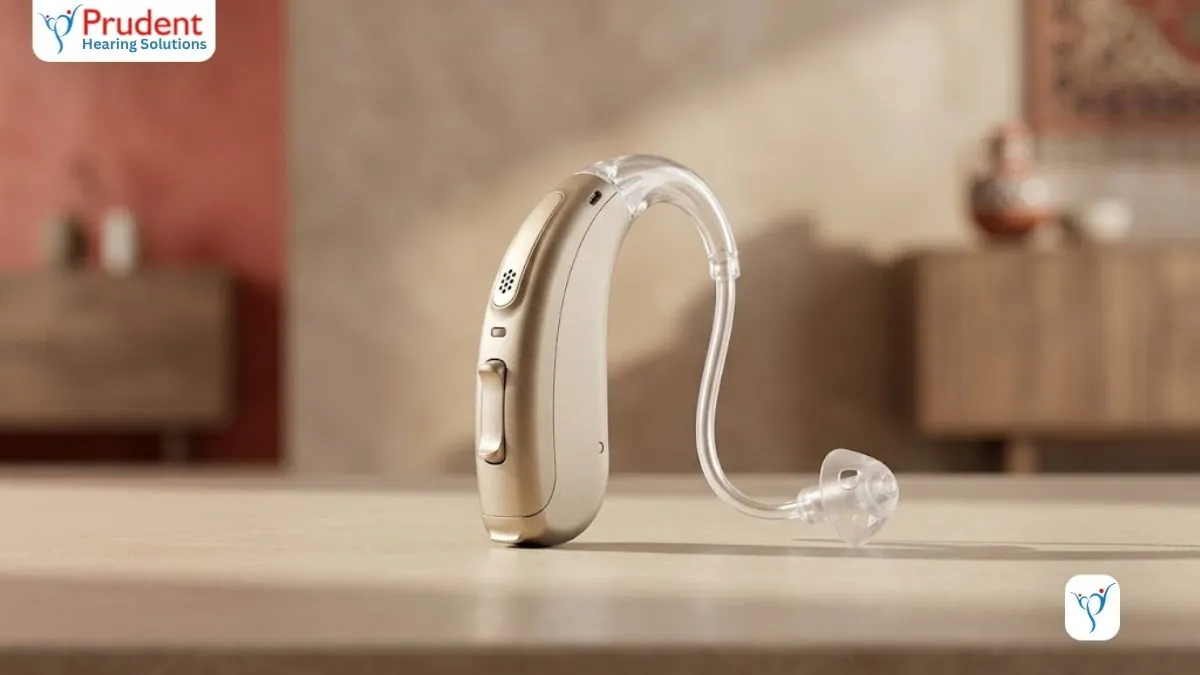
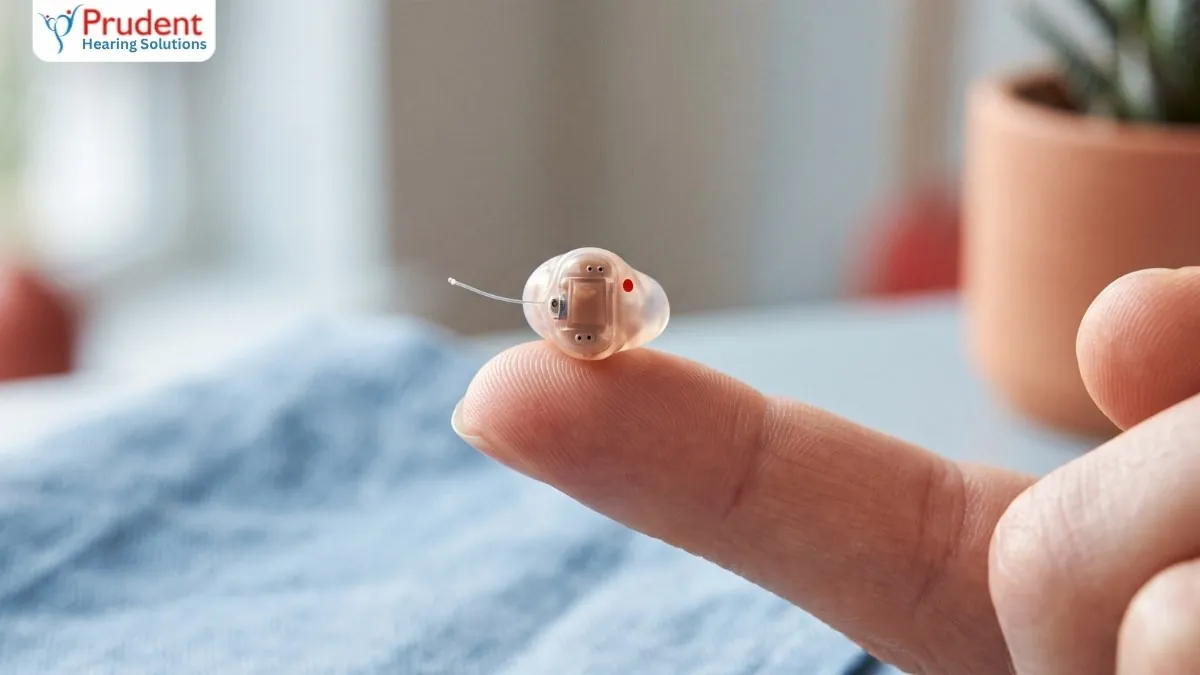
Your audiogram, not your preference, sets the outer limits here. As a rough guide, milder losses can be managed by almost any style, including the tiny invisible in-canal devices; more severe losses need the power and larger battery of a behind-the-ear aid, and the discreet in-canal styles may simply not be strong enough to help.
Very high-frequency losses often do best with an open-fit behind-the-ear device that leaves the ear canal unblocked. This is exactly the judgement an audiologist makes for you, matching the shape of your loss to what each style can physically deliver.
So the honest order is: test first, then style. Once you know your loss, you can weigh the trade-offs between the main families, from nearly invisible custom pieces to slim behind-the-ear models with Bluetooth. Just remember that the smallest device is not automatically the best one for your ears, and going back to your audiogram is the surest way to see which styles are genuinely on the table for you.
How do I compare different hearing aid models to find the best fit for my lifestyle?
Once your audiogram has narrowed the safe choices, comparing models becomes a lifestyle question rather than a medical one. The clinic fits the major brands, Phonak, Signia, Oticon, Widex, ReSound, Starkey and Unitron, and within each brand there are tiers. Moving up a tier mostly buys you better performance in difficult situations, especially background noise, rather than louder sound. So the real question is simple: how difficult are your listening situations?
- Mostly at home, one-to-one chats and TV: an entry to mid-range device usually does the job well.
- Busy family life, markets, restaurants, places of worship: a mid-range device with good noise handling earns its keep.
- Work meetings, frequent phone calls, travel and driving: look at premium features and strong Bluetooth streaming.
- Music lovers and professionals who need natural sound: the top tiers hold detail better in complex, layered sound.
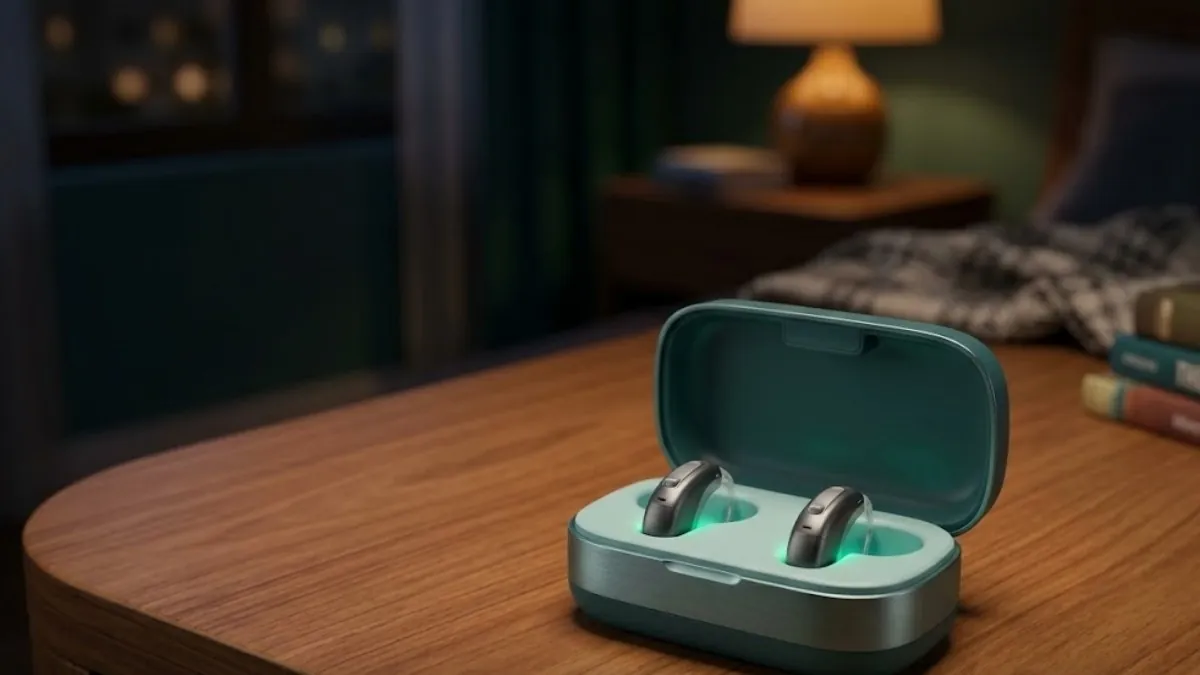
Weigh a few practical things alongside performance: rechargeable versus disposable batteries, whether you want Bluetooth, how visible you want the device to be, and how easy it is to handle. Do not pay for a top-tier device's crowd-and-concert processing if your week is mostly spent in quiet rooms. A good audiologist will tell you where the extra money stops making a real difference for your particular life, and our guide to choosing the right hearing aid for your lifestyle breaks this trade-off down further.
On price, expect broad bands in India: entry-level devices run roughly 11,000 to 30,000 rupees per ear, mid-range 35,000 to 80,000, and premium 1,20,000 to 2,00,000. These figures are per device, so a pair costs close to double. Your final price depends on your audiogram and your test, so treat these as a map, not a quote, and see our detailed look at hearing aid prices in India for the full picture. If you would rather spread the cost, 0% EMI is available.
Step 4: The trial and fitting
Here is the part first-timers rarely know about: you can try before you buy. At the fitting, your audiologist programs the device to your audiogram, places it in your ear, and checks the levels against real speech. You hear the difference for yourself before you commit. This trial is the real test, because it lets you judge the aid rather than a spec sheet.
The first days feel strange for almost everyone. Your own voice sounds odd, the fridge hum and the ceiling fan seem loud, and paper crinkles feel sharp. This is normal. Your brain has not heard these sounds clearly in years and needs a few weeks to settle.
Wear the aids a little longer each day and go back for adjustments rather than giving up. Our walk-through of what the trial and fitting really involve sets out this adjustment period honestly, so you know what is normal and what is worth a call to your audiologist.
Step 5: After-care that protects your investment
The sale is not the end of the relationship; it is the start of it. A hearing aid is a medical device you wear for years, and it needs looking after and re-tuning. Good after-care is part of what you are paying for, so make sure it is genuinely included before you commit.
- Follow-up fine-tuning in the first weeks and months as you adjust.
- Regular cleaning and wax-filter changes to keep the sound clear.
- Drying and protection, which matter a great deal in humid and monsoon conditions.
- A yearly hearing re-check, since hearing can change and the device may need re-programming.
- Warranty, repair and trial-return terms, understood in writing before you pay.
This is another reason to buy from a clinic you can actually reach. A device bought cheaply online with no one nearby to service it often costs more in the long run, in frustration if not in rupees. When you can walk in for a quick clean or a small adjustment, the hearing aid stays in your ear and doing its job, which is the whole point.
You do not have to work all of this out alone, and you certainly should not buy blind. The honest first step is simply to get tested. Book a free 45-minute digital hearing test at a Prudent Hearing Solutions office in Pune (Viman Nagar), Delhi (Rohini or Green Park) or Bengaluru (Jayanagar), and let an RCI-registered audiologist show you exactly where your hearing stands before you decide anything.
We have been fitting hearing aids across India since 2004, and there is never any pressure to buy. Call us on +91 9429690093 or WhatsApp +91 8485096505, and if cost is a worry, ask about 0% EMI.
Continue reading
Frequently asked questions
What factors should I consider before buying a hearing aid for the first time?
Start with your hearing test, because the degree and shape of your loss decide how much power you need and which styles will physically work. After that, weigh your daily life (a quiet home versus noisy work and travel), your dexterity and eyesight for handling small devices, whether you want Bluetooth streaming, and a budget you set honestly.
Just as important is where you will go for fittings, cleaning and repairs. Remember that the accuracy of the test and the quality of the fitting matter more to your success than the price of the device.
Should I consult an audiologist before choosing a hearing aid in India?
Yes, and it is the step that matters most. An RCI-registered audiologist measures your specific loss, programs the device to your audiogram, fine-tunes it to real speech in your ears, and adjusts it over the following weeks. An over-the-counter or online device is set to an average, and your ears are not average, which is why so many self-bought aids end up unworn in a drawer. Insist on a qualified audiologist for both the test and the fitting, and check that free follow-up is included.
How do I compare different hearing aid models to find the best fit for my lifestyle?
Once your audiogram has narrowed the safe choices, comparison becomes a lifestyle question. Higher tiers mostly buy better performance in noise rather than more volume, so match the tier to how difficult your listening situations really are: a mostly-quiet home needs far less than daily meetings, markets and travel. Then weigh practical points like rechargeable versus disposable batteries, Bluetooth, visibility and ease of handling. A good audiologist will tell you where spending more stops making a real difference for your particular life.
What is the process of getting a hearing test and selecting the right hearing aid?
It runs in clear steps. First comes a free 45-minute digital hearing test: a chat about your history, a look inside your ears, then a quiet-room test of different pitches in each ear plus a check of how well you understand words, which together produce your audiogram.
Your audiologist then explains the results and matches suitable styles and tiers to your loss and lifestyle, and lets you trial a device in the clinic before you pay. Only after the trial and fitting, with any adjustments made, do you decide whether to buy.
How do I know which type of hearing aid is right for my level of hearing loss?
Your audiogram sets the limits, not your preference. Milder losses can be managed by almost any style, including tiny invisible in-canal devices, while more severe or high-frequency losses usually need the power and larger battery of a behind-the-ear aid. The smallest device is not automatically the best one for your ears. Let your audiologist match the shape of your loss to what each style can physically deliver, and read our audiogram guide so you can follow the reasoning.
Free consultation
Ready to hear the difference?
Book a free 45-minute hearing test at any Prudent Hearing clinic: no obligation, honest advice, expert audiologists.