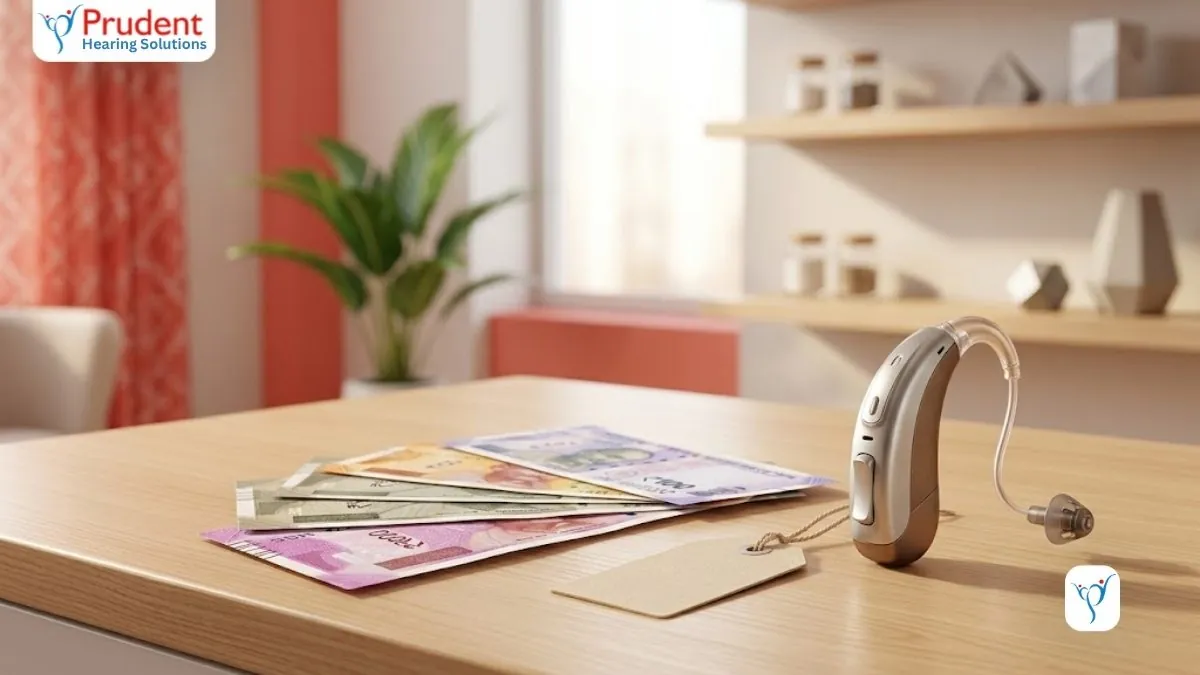
A kaan ki machine is simply a hearing aid. Here is a plain-language look at what it is, the main types, why the price varies, broad price bands per ear, and how a free hearing test and 0% EMI make it affordable in India.
A kaan ki machine (hearing aid) is simply the everyday Hindi name for a hearing aid, a small electronic medical device you wear to hear and understand speech more clearly. In India, the price of a kaan ki machine depends mainly on the technology level inside it and is quoted per ear, so a basic model costs far less than a premium one.
But price is not the first question. A proper hearing test decides which machine actually suits your ears. At Prudent Hearing Solutions the hearing test is free and takes about 45 minutes, you can trial a device in the clinic before buying, and most machines are available on 0% EMI.
What a kaan ki machine (hearing aid) actually is
A kaan ki machine is not a one-size-fits-all gadget you pick off a shelf. It is a medical device that a qualified audiologist programs to match your exact hearing loss, your ear shape, and your daily routine. Two people wearing the same model can have it set up very differently.
It is also honest to be clear about one thing: a hearing aid manages hearing loss, it does not cure it. It helps you follow conversations, the television, and phone calls again, but the underlying loss stays. If you want the plain basics first, read what a hearing aid actually is.
The main types of kaan ki machine, in simple terms
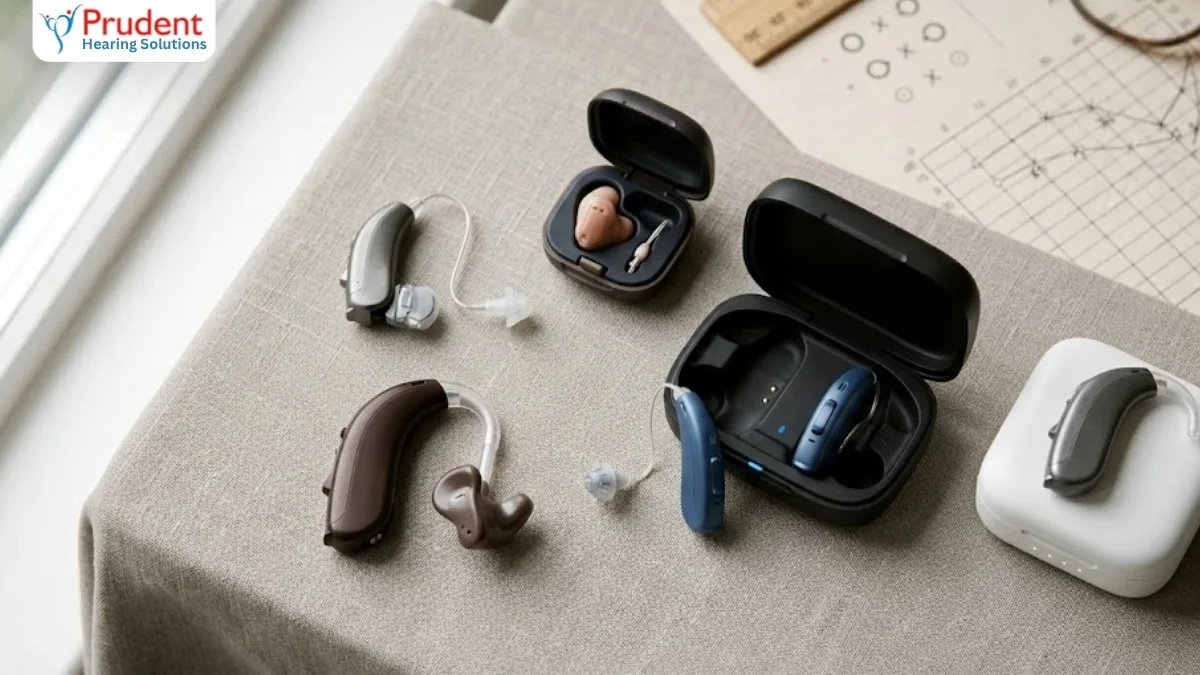
Behind-the-ear (BTE)
The BTE sits behind your ear and sends sound through a thin tube into the ear. It is the most common and most sturdy style, easy to hold and clean, and it suits a wide range of hearing losses. Many older users prefer it because the controls are simple and the battery is easy to change.
Receiver-in-canal (RIC)
A RIC works like a BTE but is smaller and more discreet, with the tiny speaker sitting inside the ear canal and only a slim body behind the ear. It gives a natural sound and is one of the more popular styles today. You can compare all the shapes side by side on our hearing aid types page.
In-the-ear and invisible (CIC/IIC)
These machines sit inside the ear itself and are custom-made from a mould of your ear. The smallest ones are nearly invisible when worn. They appeal to people who want a discreet look and usually suit mild to moderate hearing loss rather than severe loss.
Why the price of a kaan ki machine varies
The biggest reason two machines that look almost identical can cost very differently is the technology inside them, mainly how well they separate speech from background noise and how automatically they adjust as you move between quiet and busy places. Extra features such as a rechargeable battery or Bluetooth streaming also raise the price. And because a machine is counted per ear, fitting both ears costs more than fitting one. For a full breakdown by brand and level, see the detailed hearing aid price guide.
- Technology level: entry, mid-range, or premium processing
- One ear or both ears (price is per ear)
- Style: standard BTE and RIC versus custom-made invisible models
- Extra features: rechargeable battery, Bluetooth, automatic noise handling
- Brand, warranty, and the service package included
Broad price bands to expect
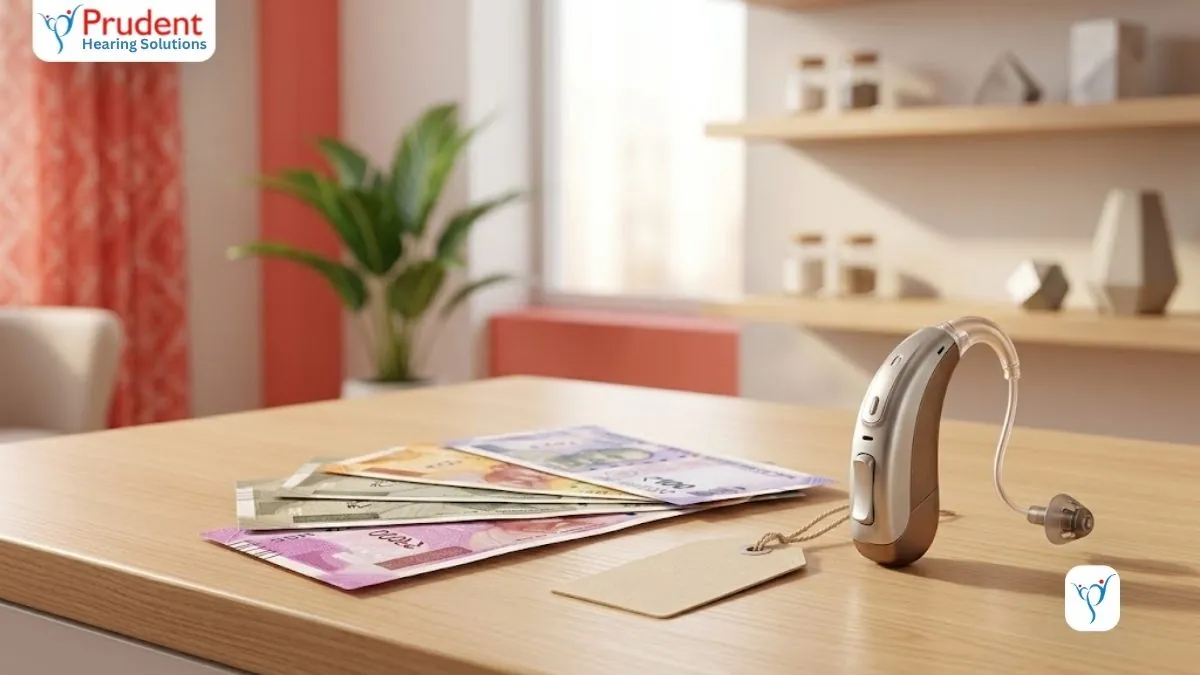
Because prices vary with technology levels and ongoing offers, it helps to think in broad bands per ear rather than fixed figures. The exact cost depends on the model, the features, and whether you fit one ear or both. The bands below describe what each level gives you. Prudent shares the current price for your specific machine during your visit, once the hearing test shows what you actually need, so you are never guessing.
- Entry level: reliable, basic everyday hearing at the most affordable band per ear
- Mid-range: clearer speech in noise and more comfort features, at a middle band per ear
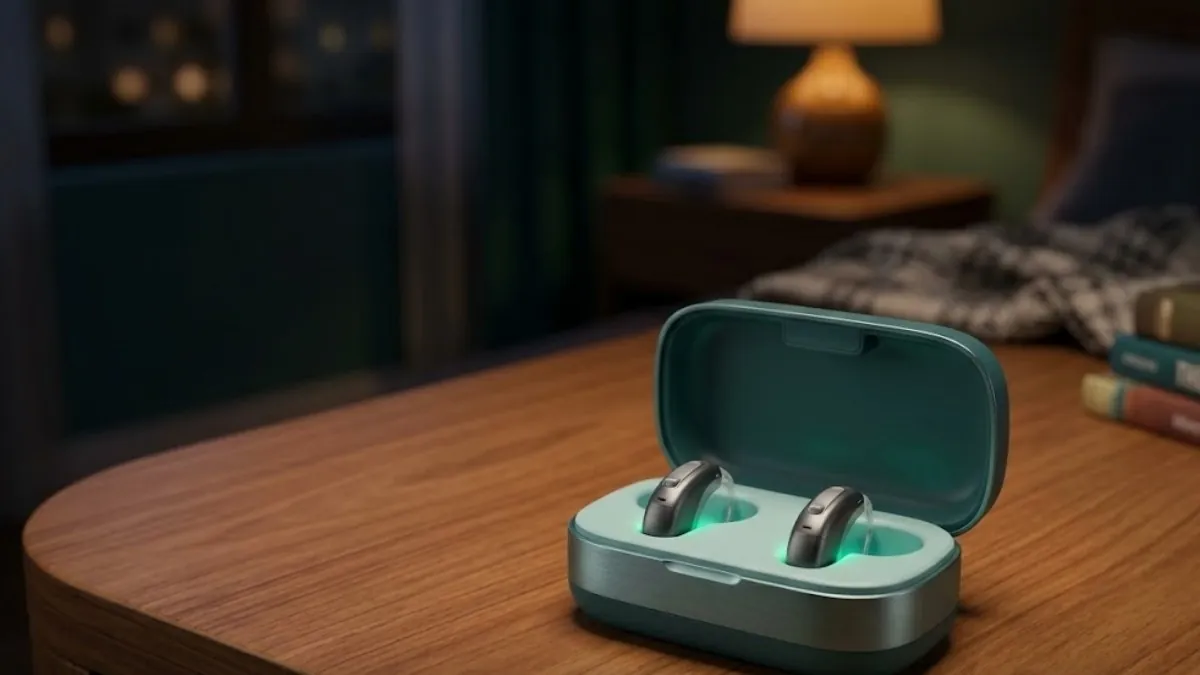
- Premium: stronger noise reduction, rechargeability, and Bluetooth streaming, at the top band per ear
Ear machine and hearing machine: the same thing in English
Many people search in English for an "ear machine", a "hearing machine" or an "ear hearing machine". These are all the same device as a kaan ki machine, which is simply a hearing aid. The name changes with the language, not the product.
So when you compare an ear machine price you saw online against a hearing aid price here, you are comparing the same thing, as long as it is a real fitted aid and not a cheap amplifier. If you are not sure which one you are looking at, our guide on the difference between a hearing aid and an amplifier shows how to tell them apart before you spend anything.
Ear machine price in India (2026)
The price of an ear machine or hearing machine follows the technology inside it, not the label on the box. As an indicative guide, per ear:
- Entry level: about Rs 11,000 to 35,000 per ear, for reliable everyday hearing in quieter settings.
- Mid-range: about Rs 35,000 to 70,000 per ear, with better speech in noise, rechargeable batteries and Bluetooth.
- Premium: about Rs 70,000 to 1,20,000 per ear, for clearer speech in busy, noisy places.
- A device sold for a few hundred or a couple of thousand rupees is almost always an amplifier, not a fitted hearing machine.
These are indicative bands, not fixed quotes. Prudent confirms the exact figure for your specific machine at your visit, and you can see the current multi-brand list on our hearing aid price list. For an older parent who wants something simple and reliable, our guide to the best hearing machines for senior citizens is a good next read.
Hearing machine company names
The main hearing machine companies in India are the same global groups behind every hearing aid brand: WS Audiology (Signia, Widex), Sonova (Phonak, Unitron), Demant (Oticon), GN (ReSound, Interton) and Starkey. See hearing aid companies in India for the full list, and top 10 hearing aid brands in India for how they compare.
Which hearing machine is best for old age?
For most older parents the best choice is a rechargeable behind-the-ear or receiver-in-canal aid with simple controls: no tiny batteries to change, and easy to put in and clean. The exact model depends on the hearing test. Our guide to the best hearing aids for senior citizens compares the options.
A proper hearing test comes first
Buying a kaan ki machine without a hearing test is like buying spectacles without an eye test. A free hearing test at Prudent takes about 45 minutes, is painless, and shows exactly which sounds and pitches you are missing. From there, your audiologist recommends a suitable machine, and you can trial it in the clinic before you commit to buying. If this is all new to you, the first-time buyer guide walks through every step.
Making a kaan ki machine affordable
A hearing aid is a long-term purchase, and you should not have to pay for it all at once. Most machines at Prudent are available on 0% EMI, so you can spread the cost across easy monthly instalments with no extra interest. Programming and fine-tuning for the life of the device are free, and Prudent fits and services all major brands. Older buyers often want simple, dependable controls, so the guide to the best hearing aids for senior citizens is a useful read for machines that are easy to handle.
"The right kaan ki machine is not the most expensive one. It is the one matched to your hearing, your ears, and your daily life."
The simplest first step is a hearing test. Everything else, including the honest price for your specific needs, follows from it. Prudent Hearing Solutions runs clinics in Pune (Viman Nagar), Delhi (Rohini and Green Park), and Bengaluru (Jayanagar), and you can find them all on our locations page. Call +91 9429690093 or book a free hearing test to find the kaan ki machine that fits you.
Continue reading
Frequently asked questions
Kaan ki machine ka price kitna hota hai in India?
The price of a kaan ki machine depends mainly on the technology level and is quoted per ear, so it varies from one model to another. Entry-level machines are the most affordable, while mid-range and premium models cost more because they handle noise better and add features like rechargeability and Bluetooth. Prudent shares the current price during your visit, after the free hearing test shows what you need. See our detailed price guide for a full breakdown.
Is a kaan ki machine the same as a hearing aid?
Yes. Kaan ki machine is the common Hindi and colloquial term for a hearing aid. It is the same medical device, programmed by an audiologist to match your specific hearing loss, not a generic amplifier bought off a shelf.
Can a kaan ki machine cure hearing loss?
No. A hearing aid manages hearing loss by helping you hear and understand speech again, but it does not cure the underlying loss. Worn regularly and set up correctly, it can make a big difference to daily life and to keeping your listening skills sharp.
Which type of kaan ki machine is best for me?
It depends on your hearing test results, your ear anatomy, and your lifestyle. Behind-the-ear and receiver-in-canal styles suit most people, while small in-the-ear and invisible models suit milder losses and those wanting discretion. The best way to decide is a hearing test followed by a trial before you buy.
Do I need one kaan ki machine or two?
It depends on whether one or both ears are affected. If both ears have hearing loss, two machines usually give more natural, balanced hearing and make it easier to tell where sounds come from. Your audiologist will advise after the test. Remember that price is counted per ear.
Can I buy a kaan ki machine on EMI?
Yes. Most machines at Prudent are available on 0% EMI, so you can pay in easy monthly instalments instead of all at once. Free lifetime programming is included, and Prudent fits and services all major brands.
Hearing machine ki best company kaun si hai?
There is no single best company. Almost every hearing machine sold in India comes from five groups: WS Audiology (Signia, Widex), Sonova (Phonak, Unitron), Demant (Oticon), GN (ReSound, Interton) and Starkey. The right brand and model depend on your hearing test, budget and how you will use it, which is why an audiologist should recommend it after testing.
Free consultation
Ready to hear the difference?
Book a free 45-minute hearing test at any Prudent Hearing clinic: no obligation, honest advice, expert audiologists.