Educational information, not medical advice. This article is written to help you understand common ear and hearing issues. It is not a substitute for professional diagnosis or treatment. If your symptoms are severe, sudden, or persistent, please consult a qualified doctor or audiologist. For urgent symptoms (sudden hearing loss, bleeding from the ear, severe pain with dizziness, or a head injury), seek medical care the same day.
Monsoon is peak season for ear infections, itching and blocked ears in India, and the damp quietly wrecks hearing aids too. What protects both, and what to avoid.
Quick answer
Humidity, sweat and rain are the leading cause of hearing aid failures during Indian monsoons. Wipe aids with a dry cloth every night, open the battery door or park rechargeables in the charger, use a dry-aid kit or electric dehumidifier weekly, never wear aids in the shower or heavy rain, and book a professional service every six months to keep wax filters, domes and receivers in good condition.
Key takeaways
- Moisture damage, not drops, is the #1 monsoon cause of hearing aid breakdowns.
- IP68-rated aids handle splashes but not sustained rain.
- Never use a hair dryer or microwave to dry an aid; heat destroys electronics.
- A weekly dry-aid kit doubles the average service life of the device.
- Book a professional clean and check every 6 months, or sooner after monsoon.
India's monsoon is peak season for ear trouble. Trapped water, high humidity and damp earphones push up ear infections, itching and that blocked, muffled feeling, and the very same moisture quietly damages hearing aids. This guide covers what protects both your ears and your devices through the rains, and the common home fixes that make things worse.
Why ears act up in the monsoon
Warm, humid air keeps the ear canal moist, and moisture is what fungus and bacteria need to grow. Water from rain, a swim or a bath softens ear wax so it swells and blocks the canal, and cotton buds push it deeper. The most common monsoon complaints we see are a fungal infection (otomycosis), an itchy ear that will not settle, and a blocked or muffled ear after a cold.
Safe vs. what makes it worse
Do this:
- Dry the outer ear with a towel after rain, a bath or a swim, and tilt the head to let trapped water run out
- Keep the ear canal itself dry and leave it alone; if water is stuck, a few minutes on a low, warm hair-dryer held well back usually clears it
- Use ear plugs or a shower cap edge when bathing if you are prone to infections
- See a clinician early for drops if the ear is painful, itchy or discharging
Avoid this, because it backfires:
- Cotton buds or hairpins inside the canal; they push wax in, scratch the skin and invite infection
- Home oil or DIY drops when the ear is already infected or the eardrum may be perforated
- Leaving damp earphones or hearing aids sealed in a case overnight
- Ignoring a blocked ear for weeks; monsoon wax and fungus rarely clear on their own
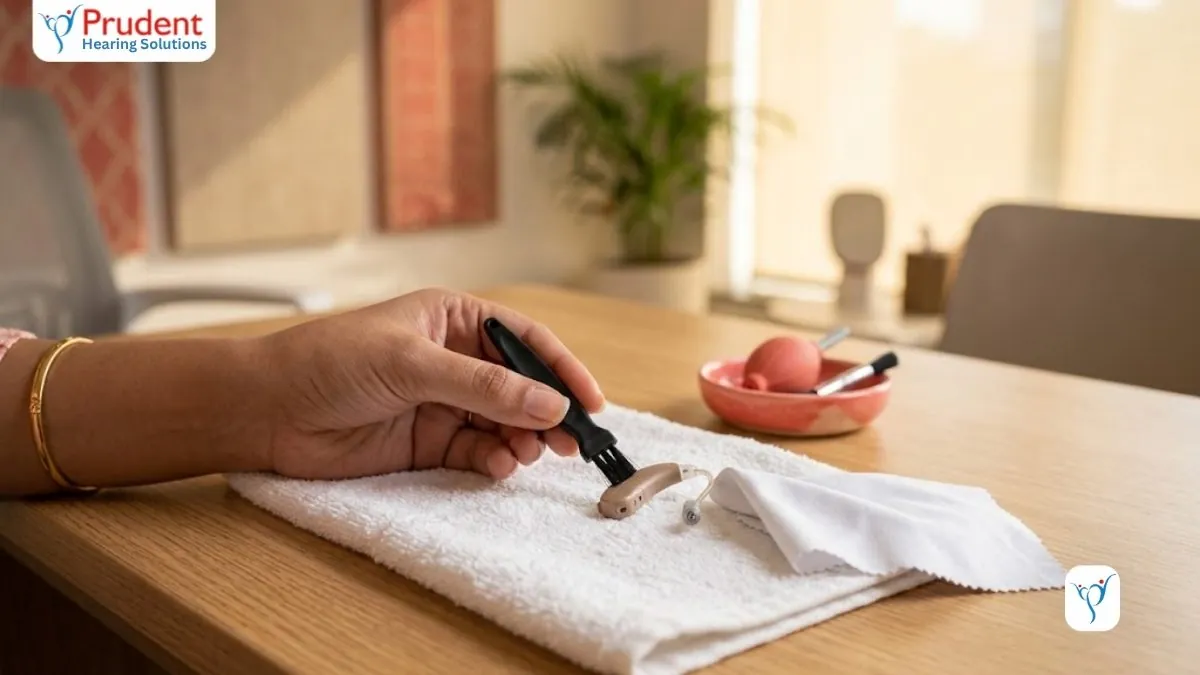
Protecting hearing aids: the 60-second nightly routine
Humidity is brutal on the electronics. An expensive hearing aid can develop microphone crackle in a single monsoon without a simple routine.
- Wipe the shell with a dry microfibre cloth
- Brush the microphone port and wax filter with the supplied brush
- Open the battery door, or take the aid out of the charger for 30 minutes
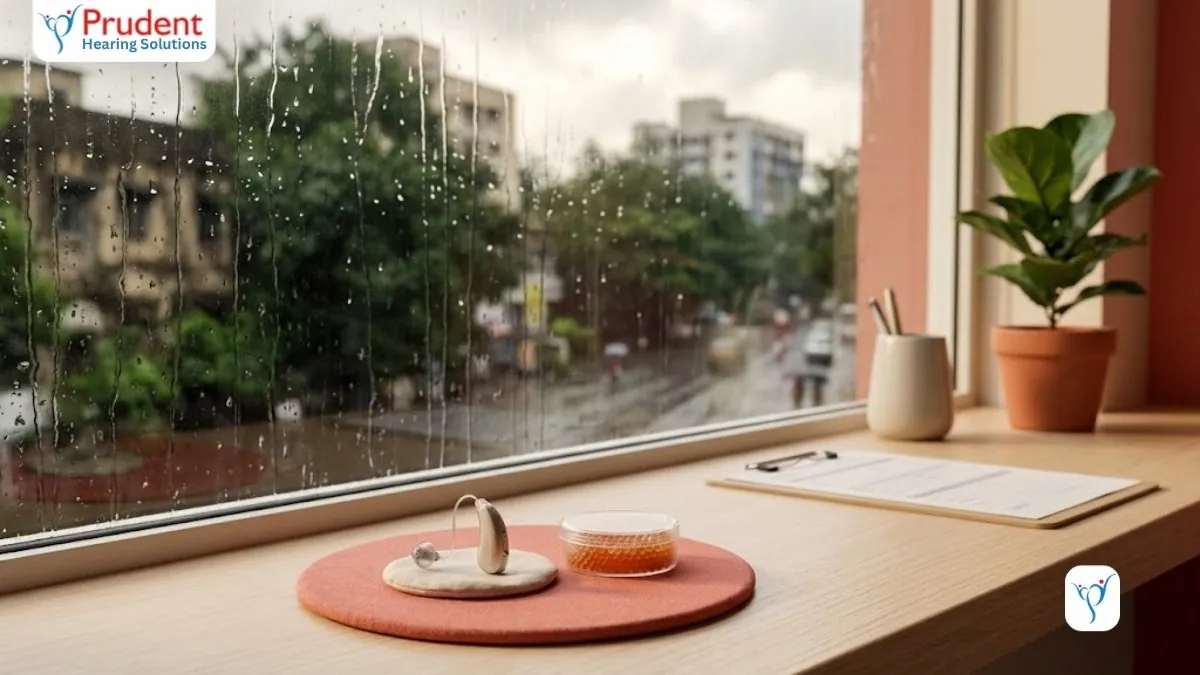
- Store in a drying kit or electric dehumidifier overnight
Every week, and what to avoid
- Replace the wax filter if speech sounds muffled
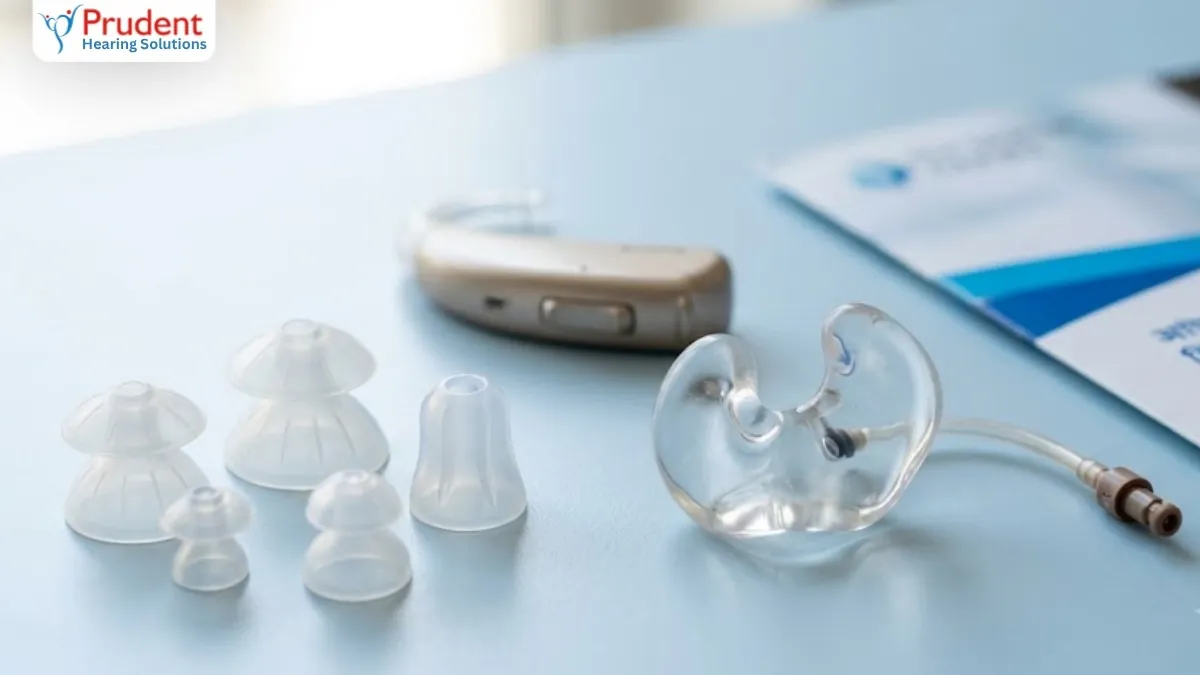
- Inspect the dome or ear-mould for debris and wipe the charging contacts with a dry cotton swab
- Never use tissue paper, which leaves lint in the ports
- Never blow on the aid, because moisture from your breath damages the mic
- Never wear aids in the shower or heavy rain without a cover
When to see a clinic, not wait it out
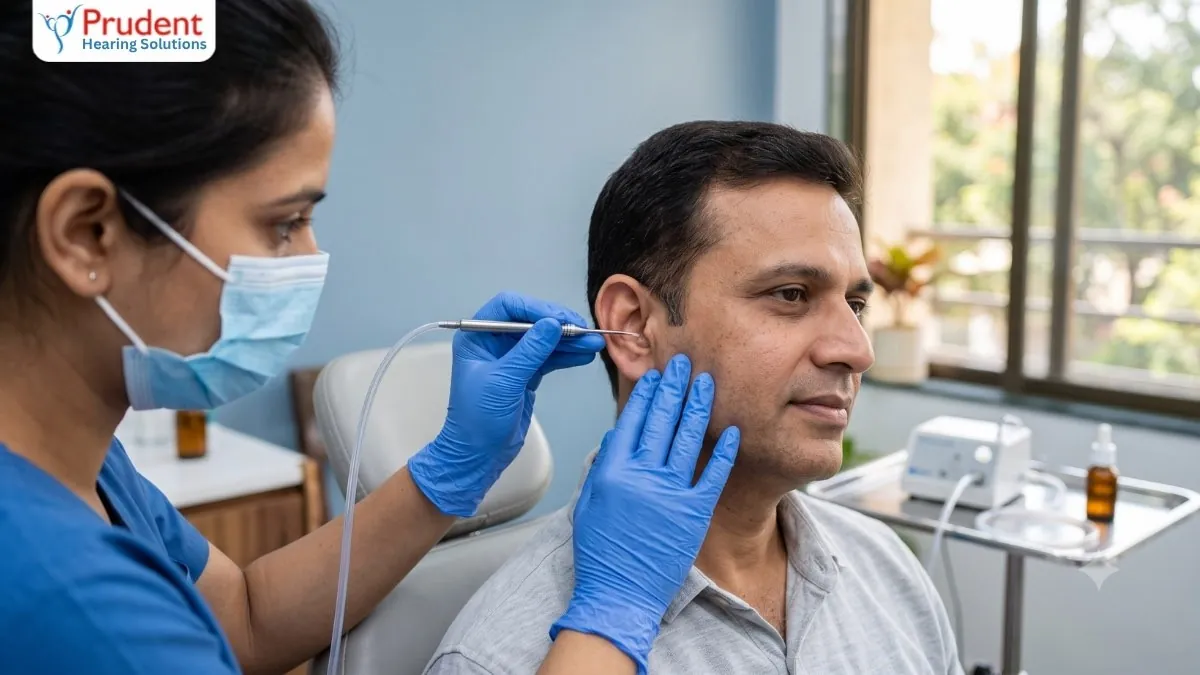
Book a check if you have ear pain or discharge, an itch that keeps returning, or an ear that stays blocked or muffled for more than a few days. Ringing that starts suddenly, or a sudden drop in hearing, should be seen quickly rather than left for the rains to pass. A quick look with an otoscope tells wax, fungus and infection apart, which decides the right treatment.
Free monsoon check-up at Prudent Hearing
Bring your aids to any of our clinics in Pune, Delhi or Bengaluru for a free dehumidification cycle, wax-filter change and micro-clean, or come in for an ear examination if something does not feel right. Call or WhatsApp +91 9429690093, or book a free hearing test.
Continue reading
Frequently asked questions
Are hearing aids waterproof?
Most are water-resistant, not waterproof. Many modern aids carry an IP68 rating, which means they cope with sweat, humidity and light rain, but not a shower, a swim or being submerged. Take them off before bathing or swimming, dry them straight away if you get caught in the rain, and park them in a dry-aid kit overnight during the monsoon. Treat 'water-resistant' as protection against everyday moisture, not permission to get them wet.
Can I wear hearing aids while sleeping or exercising?
Exercising, yes; sleeping, usually no. Sweat from a workout is fine for water-resistant aids as long as you wipe and dry them afterwards. For sleep, most people take their aids out: lying on them is uncomfortable, they can whistle against the pillow, and your ears benefit from a break. The exception is a device your audiologist has specifically set up for overnight use.
How do I protect my hearing aids in the monsoon?
Wipe the aids with a soft dry cloth every night, open the battery door (or park rechargeables in the charger) to let moisture escape, use a dry-aid kit or electric dehumidifier weekly, and never wear aids in the shower or heavy rain. Sweat and humidity are the biggest cause of monsoon breakdowns.
Can rain damage my hearing aids?
Modern IP68-rated hearing aids handle splashes and light rain, but sustained rain, water pooling in the case or getting caught in a downpour can still push moisture into the microphones and receivers. Cover the aids with a cap or umbrella and dry them straight away when you get home.
What should I do if my hearing aid gets wet?
Switch the aid off, open the battery door or remove from the charger, wipe the outside with a dry lint-free cloth, and place it overnight in a dry-aid kit or airtight box with fresh silica gel sachets. Do not use a hair dryer or microwave, because heat damages the electronics.
How often should I service my hearing aid?
A professional service every 6 months is ideal in India, and more often during and after the monsoon. Your audiologist will replace wax filters and domes, clean receivers, test performance and pick up small issues before they become expensive repairs.
Sources & further reading
We cross-checked this article against the following authoritative sources. Guidance and figures reflect the most recent public guidance available at the time of last review (July 2026). Clinical review by the Prudent Hearing clinical team.
- Hearing Aids (National Institute on Deafness and Other Communication Disorders (NIDCD, NIH))
Free consultation
Ready to hear the difference?
Book a free 45-minute hearing test at any Prudent Hearing clinic: no obligation, honest advice, expert audiologists.