Educational information, not medical advice. This article is written to help you understand common ear and hearing issues. It is not a substitute for professional diagnosis or treatment. If your symptoms are severe, sudden, or persistent, please consult a qualified doctor or audiologist. For urgent symptoms (sudden hearing loss, bleeding from the ear, severe pain with dizziness, or a head injury), seek medical care the same day.
A common cold can leave your ear blocked, throbbing or leaking clear fluid. Here's what's happening inside your ear, and the safe, evidence-based ways to relieve it at home.
Quick answer
A cold inflames the Eustachian tube between the nose and middle ear; when it swells shut, pressure and fluid build up behind the eardrum and cause pain, popping and blockage. Yawning, swallowing, warm compresses, steam inhalation, saline nasal spray and a gentle Valsalva manoeuvre usually help. See a doctor if pain lasts more than 48–72 hours, if you have fever above 38.5 °C, coloured discharge, or sudden hearing loss.
Key takeaways
- Ear pain during a cold is usually Eustachian tube dysfunction, not always an infection.
- Warm compresses, saline nasal spray and steam are safe first-line measures.
- Never blow the nose forcefully, as it can push infection into the middle ear.
- Painless clear discharge is often a good sign of drainage.
- Red flags: fever >38.5 °C, bloody discharge, sudden deafness, severe dizziness.
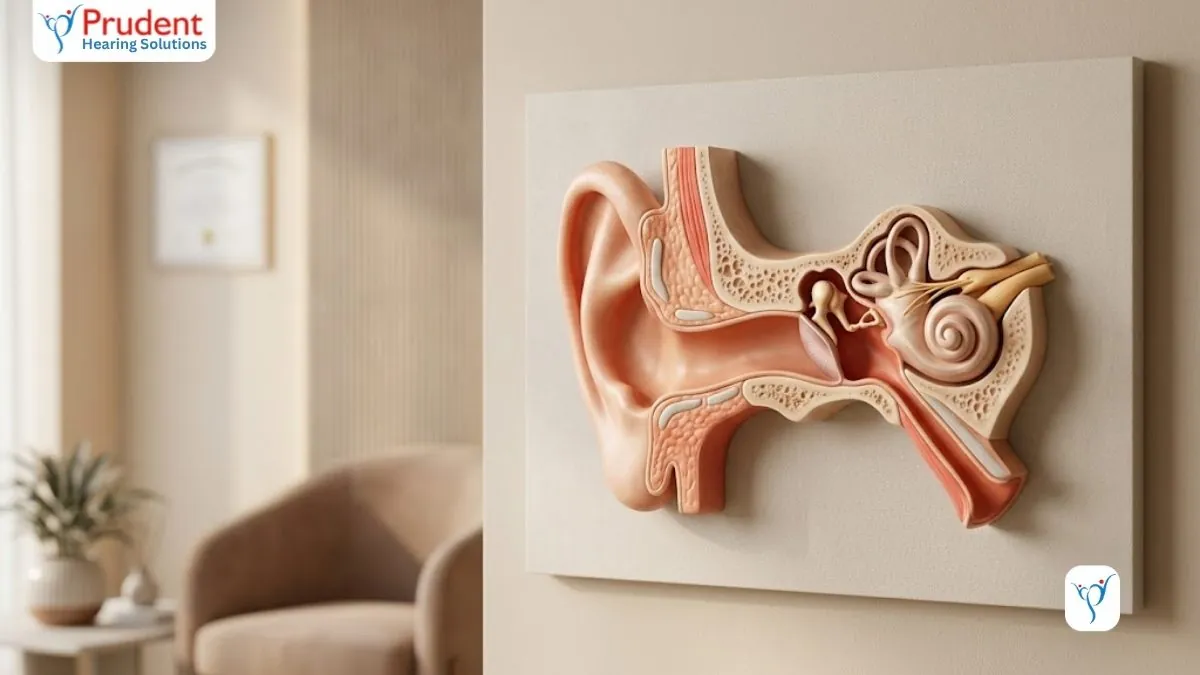
When you have a cold, the Eustachian tube (the tiny drainage tube between the back of your nose and your middle ear) swells shut. Pressure builds behind the eardrum, fluid collects, and you feel it as blockage, popping, muffled hearing or a sharp ache.
Why the ear hurts when you have a cold
- Blocked Eustachian tube → negative pressure pulls on the eardrum
- Fluid trapped in the middle ear → dull ache and muffled hearing
- Secondary bacterial infection (otitis media) → sharper pain, sometimes fever
How to open a blocked ear safely at home
- Yawn, chew gum or swallow repeatedly to activate the Eustachian tube
- The Valsalva manoeuvre: pinch your nose, close your mouth, gently blow (never forcefully)
- Warm compress over the ear for 10–15 minutes
- Steam inhalation twice a day to shrink nasal swelling
- A saline nasal spray or decongestant (short course, per pharmacist advice)
- Sleep with your head slightly elevated
Clear fluid leaking from the ear with no pain
Painless clear discharge is usually the middle-ear fluid finally draining after the Eustachian tube reopens, which is often a good sign. However, thin watery fluid after a head injury needs urgent review to rule out a cerebrospinal fluid (CSF) leak.
When ear pain from a cold needs a doctor
- Pain lasting more than 48–72 hours
- Fever above 38.5 °C
- Yellow, green or bloody discharge
- Sudden drop in hearing that doesn't recover within a few hours
- Severe pain in one ear with dizziness
What NOT to do
- Do not put cotton buds inside the canal, as they push wax and infection deeper
- Do not use garlic, oil or onion juice: there is no evidence, and they can worsen infection
- Do not blow your nose forcefully, as it drives infection into the middle ear
If blockage or muffled hearing lasts more than 10 days after the cold clears, book a free ear check at Prudent Hearing. Persistent middle-ear fluid is a common, easily treated cause of temporary hearing loss.
Continue reading
Frequently asked questions
Why does my ear hurt when I have a cold?
A cold inflames the Eustachian tube, the tiny drainage tube between the back of your nose and the middle ear. When it swells shut, pressure builds behind the eardrum and fluid collects, which you feel as blockage, popping or a sharp ache on the affected side.
How do I open a blocked ear at home?
Try yawning, chewing gum or swallowing repeatedly to activate the Eustachian tube. A gentle Valsalva manoeuvre (pinch the nose, close the mouth, blow softly), warm compresses, steam inhalation, saline nasal spray and sleeping with the head elevated are all safe first steps. Never blow forcefully, as it can drive infection into the middle ear.
Is clear fluid leaking from the ear with no pain serious?
Usually not. Painless clear discharge is often middle-ear fluid finally draining after a cold, which is a good sign. However, watery fluid after a head injury needs urgent review to rule out a cerebrospinal fluid leak, and any discharge lasting more than a few days should be examined by a clinician.
When should I see a doctor for ear pain from a cold?
See a doctor if pain lasts more than 48–72 hours, if you develop a fever above 38.5 °C, yellow/green/bloody discharge, sudden hearing loss, or severe pain with dizziness. Persistent muffled hearing more than 10 days after the cold clears also needs an ear check.
Sources & further reading
We cross-checked this article against the following authoritative sources. Guidance and figures reflect the most recent public guidance available at the time of last review (July 2026). Clinical review by the Prudent Hearing clinical team.
- Earache (NHS UK)
- Hearing Aids (National Institute on Deafness and Other Communication Disorders (NIDCD, NIH))
Free consultation
Ready to hear the difference?
Book a free 45-minute hearing test at any Prudent Hearing clinic: no obligation, honest advice, expert audiologists.