Educational information, not medical advice. This article is written to help you understand common ear and hearing issues. It is not a substitute for professional diagnosis or treatment. If your symptoms are severe, sudden, or persistent, please consult a qualified doctor or audiologist. For urgent symptoms (sudden hearing loss, bleeding from the ear, severe pain with dizziness, or a head injury), seek medical care the same day.
Which ear drops actually help adult ear pain, and which ones you should never use if there's a chance your eardrum is perforated.
Quick answer
For mild adult ear pain with an intact eardrum, analgesic drops containing lignocaine or choline salicylate give 30–60 minutes of numbing relief. Confirmed bacterial infections need antibiotic drops such as ciprofloxacin or ofloxacin, prescribed after a clinician examines the ear. Never use aminoglycoside drops (neomycin, gentamicin) if the eardrum may be perforated, because they can cause permanent inner-ear damage.
Key takeaways
- Numbing drops = symptom relief only, not a treatment for infection.
- Ciprofloxacin and ofloxacin drops are safe with a perforated eardrum; neomycin/gentamicin are not.
- Warm the bottle in the hand for 2 minutes before instilling. Cold drops trigger dizziness.
- Lie on the unaffected side for 5 minutes so drops reach the eardrum.
- See a clinician if pain lasts >48 hours, or with fever, discharge, dizziness or hearing loss.
Ear drops are one of the most misused medicines in India. Using the wrong drop on a perforated eardrum can permanently damage hearing. This guide is educational, so always confirm with a doctor before using any drop on yourself.
Ear drops for ear pain in adults: quick comparison
- Pain-relief (analgesic) drops: numb the eardrum for a short time. They suit mild outer-ear pain or early middle-ear pain. Avoid them if the eardrum may be perforated or there is any discharge.
- Antibiotic plus steroid drops: treat a confirmed bacterial infection and are prescription medicines. Do not use them unless a doctor has checked that the eardrum is intact, because some antibiotics can harm the inner ear.
- Wax-softening drops: loosen wax before it is removed. They are not for pain, and should be avoided with a hole in the eardrum or an active ear infection.
The main categories of ear drops
1. Analgesic (pain-relief) drops
Contain lignocaine, benzocaine or choline salicylate. Common brands in India: Otogesic, Otek AC. They numb the eardrum for 30–60 minutes of relief, useful for mild otitis externa or early otitis media.
2. Antibiotic + steroid drops
Ciprofloxacin, ofloxacin or gentamicin combined with a steroid (e.g. Ciplox-D, Otek). Used for confirmed bacterial ear infections. Should only be started after a doctor examines the ear.
3. Wax-softening drops
Sodium bicarbonate, docusate or carbamide peroxide (e.g. Waxonil, Soliwax). Used for 3–5 nights before wax removal, not for pain.
Ear pain or ear infection? Which drops fit which situation
| Situation | Drops that usually fit | Prescription needed? |
|---|---|---|
| Mild outer-ear pain or early middle-ear pain, no discharge | Pain-relief (analgesic) drops | Ask a doctor first; avoid if the eardrum may be perforated |
| A bacterial infection confirmed by a doctor | Antibiotic plus steroid drops | Yes |
| A blocked feeling from wax, with no pain or discharge | Wax-softening drops | Usually not, but avoid them if the eardrum may be perforated |
| Any discharge, or a possible hole in the eardrum | No drops until a doctor has examined the ear | See a doctor |
A critical safety rule
"Never put any drop into an ear that is discharging fluid unless a doctor has confirmed the eardrum is intact. Certain antibiotic drops (aminoglycosides like neomycin, gentamicin) are toxic to the inner ear if the eardrum is perforated."
How to use ear drops correctly
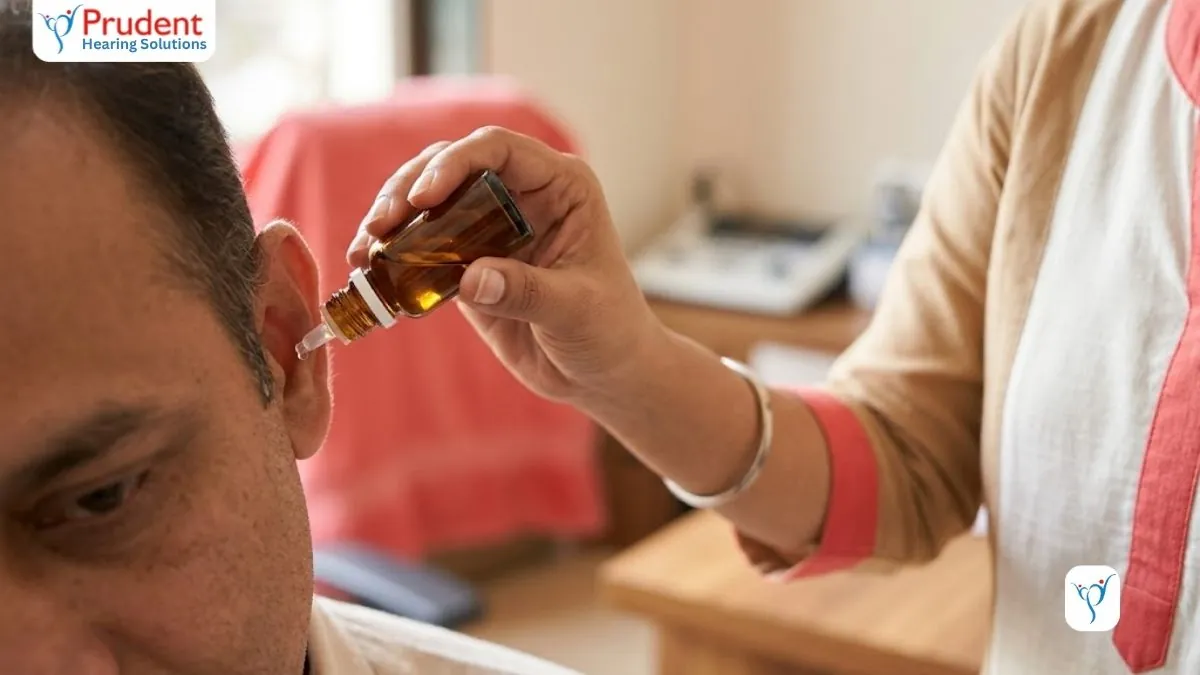
- Warm the bottle in your hand for 2 minutes, because cold drops cause dizziness
- Lie on your side, affected ear up
- Pull the pinna gently up and back (adults)
- Instill the prescribed number of drops
- Stay on your side for 5 minutes to let the drop reach the eardrum
Tablets for ear pain: what about painkillers?
Alongside drops, an ordinary oral painkiller is often what actually settles an earache for the first day or two. Paracetamol or ibuprofen, taken as the pack directs, works for most adults while the cause is being sorted out. A painkiller only masks the pain, though.
It does not treat an infection, so if the pain lasts more than a day or two, gets worse, or comes with discharge or hearing loss, see a clinician rather than continuing tablets. People with stomach ulcers, kidney problems or on blood thinners should ask a doctor or pharmacist before taking ibuprofen, and no one should exceed the stated dose.
When drops are not enough
Pain lasting more than 48 hours, fever, discharge, dizziness or hearing loss all need in-person examination. Book a free ear check at any Prudent Hearing clinic. We'll examine your ear with a video otoscope and refer you to an ENT if needed.
Worried about your own hearing rather than a passing ear problem? A free 45-minute hearing test at Prudent tells you exactly where you stand, with no pressure to buy. You can book a free hearing test at our Pune, Delhi or Bengaluru clinics, or see the range of hearing aids we fit.
Continue reading
Frequently asked questions
What are the best ear drops for ear pain in adults?
For mild adult ear pain with an intact eardrum, analgesic drops containing lignocaine or choline salicylate (brands like Otogesic or Otek AC in India) give 30–60 minutes of numbing relief. Confirmed bacterial infections need antibiotic drops such as ciprofloxacin or ofloxacin, prescribed only after a clinician examines the ear.
Can I use ear drops if my eardrum is perforated?
No. Never put any drop into a discharging ear unless a doctor has confirmed the eardrum is intact. Aminoglycoside antibiotics like neomycin and gentamicin are toxic to the inner ear if the eardrum is perforated and can cause permanent hearing loss.
How should I use ear drops correctly?
Warm the bottle in your hand for 2 minutes, lie on your side with the affected ear up, pull the pinna gently up and back, instill the prescribed number of drops, and stay lying for 5 minutes so the drops reach the eardrum. Cold drops can trigger dizziness.
When are ear drops not enough for ear pain?
Pain lasting more than 48 hours, fever, coloured discharge, dizziness or hearing loss all need in-person examination. Ear drops manage symptoms, but they don't replace a diagnosis.
Can I take a painkiller tablet for ear pain?
Yes. Paracetamol or ibuprofen, taken as the pack directs, settles most adult earaches for the first day or two. A painkiller only masks the pain and does not treat an infection, so see a doctor if the pain lasts more than a day or two, worsens, or comes with discharge or hearing loss.
Sources & further reading
We cross-checked this article against the following authoritative sources. Guidance and figures reflect the most recent public guidance available at the time of last review (October 2026). Clinical review by the Prudent Hearing clinical team.
- Earache (NHS UK)
Free consultation
Ready to hear the difference?
Book a free 45-minute hearing test at any Prudent Hearing clinic: no obligation, honest advice, expert audiologists.