Educational information, not medical advice. This article is written to help you understand common ear and hearing issues. It is not a substitute for professional diagnosis or treatment. If your symptoms are severe, sudden, or persistent, please consult a qualified doctor or audiologist. For urgent symptoms (sudden hearing loss, bleeding from the ear, severe pain with dizziness, or a head injury), seek medical care the same day.
Learn how to clean and maintain hearing aids the right way: daily wiping, wax-guard changes, overnight drying and monsoon care, plus when to get a service.
Good hearing aids are small, clever and surprisingly hardy, but they live in a tough neighbourhood. All day they sit in the warm, waxy, humid environment of your ear canal, and in India they also face pocket sweat, dust, hair oil and the monsoon. None of that is a problem if you give them a few minutes of care.
The habit is simple, it takes less time than brushing your teeth, and it is the single biggest thing you can do to keep the sound clear and avoid repair bills. This is a brand-agnostic guide: the routine below works for a Phonak, Signia, Oticon, Widex, ReSound, Starkey or Unitron aid, whether it sits behind your ear or inside it.
A modern hearing aid is a real investment, whether you have chosen an affordable entry-level pair or a premium set with the latest technology, so it is well worth protecting. Looking after it protects that money and, more importantly, protects your hearing day to day. Remember that a hearing aid manages hearing loss rather than curing it, so keeping it clean and dry is what keeps you connected to the people around you. Here is exactly how to do it.
Why a clean hearing aid simply sounds better
Most of the 'my hearing aid has stopped working' visits we see at our clinics are not broken electronics at all. They are earwax and moisture. Wax builds up over the tiny sound outlet and the aid goes quiet, muffled or crackly.
Moisture creeps into the microphone ports and does much the same. Clear both away and the sound usually comes straight back. That is why a small daily habit prevents most problems before they ever start, and why cleaning is not fussy housekeeping but the core of looking after your hearing.
How do I clean and maintain my hearing aids properly?
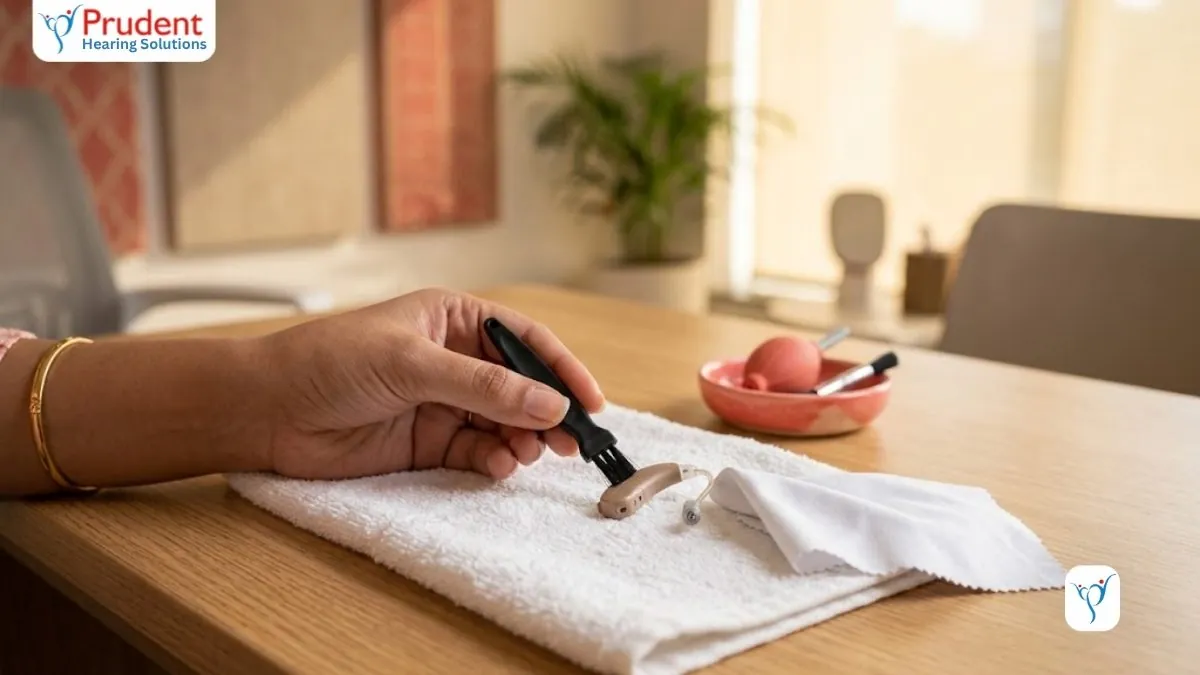
Cleaning a hearing aid is mechanical and dry. You are gently removing wax and wiping off moisture, never washing it. You only need three things, and they usually come in the box: a soft dry cloth, the small brush, and the thin wax pick or loop. Build the routine into two layers, a quick daily wipe and a slightly deeper weekly clean, and you will rarely have trouble.
Your daily routine (about two minutes)
- Wipe the whole aid with a dry, soft cloth. A microfibre or spectacle cloth is ideal. Never use water, alcohol, sanitiser or wet wipes on the electronics.
- Use the little brush to sweep across the microphone ports on top of the aid and around the receiver or dome, holding it facing downwards so debris falls out rather than in.
- On a behind-the-ear aid, check the earmould, dome and tubing for wax or droplets of moisture.
- Do this at night when you take the aids out, so any daytime moisture has all night to dry off before morning.
Your weekly routine
- Look closely at the dome or earmould and use the wax loop or pick to lift out any wax sitting in the opening.
- On a behind-the-ear aid, detach the earmould if your model allows and wipe the tubing, then make sure it is completely dry before reconnecting.
- Wipe the battery contacts or the charger pins gently with a dry cloth or a cotton bud.
- Give the whole device a proper brush, including the seams and edges where wax likes to hide.
Most in-the-ear aids and receiver-in-canal models have a small disposable wax guard or filter sitting in front of the receiver. It is your aid's first line of defence, and it is designed to be replaced, not cleaned. When the sound goes weak, muffled or dead in one aid and a quick brush does not fix it, a blocked wax guard is the usual culprit. Swap it for a fresh one using the little tool from the pack. Your audiologist will show you once, and after that it takes only seconds.
How often should I clean my hearing aids?
A quick wipe and brush every night, a closer clean once a week, and a wax-guard change whenever the sound drops. That is the whole schedule. Domes and disposable filters are replaced as needed rather than on a fixed date, usually every few weeks to a couple of months depending on how much wax you produce.
On top of your home care, plan a professional clean and check at the clinic every few months. In India's climate, and especially through the monsoon, err on the side of cleaning and drying a little more often than you think you need to.
Drying overnight: the habit that saves aids
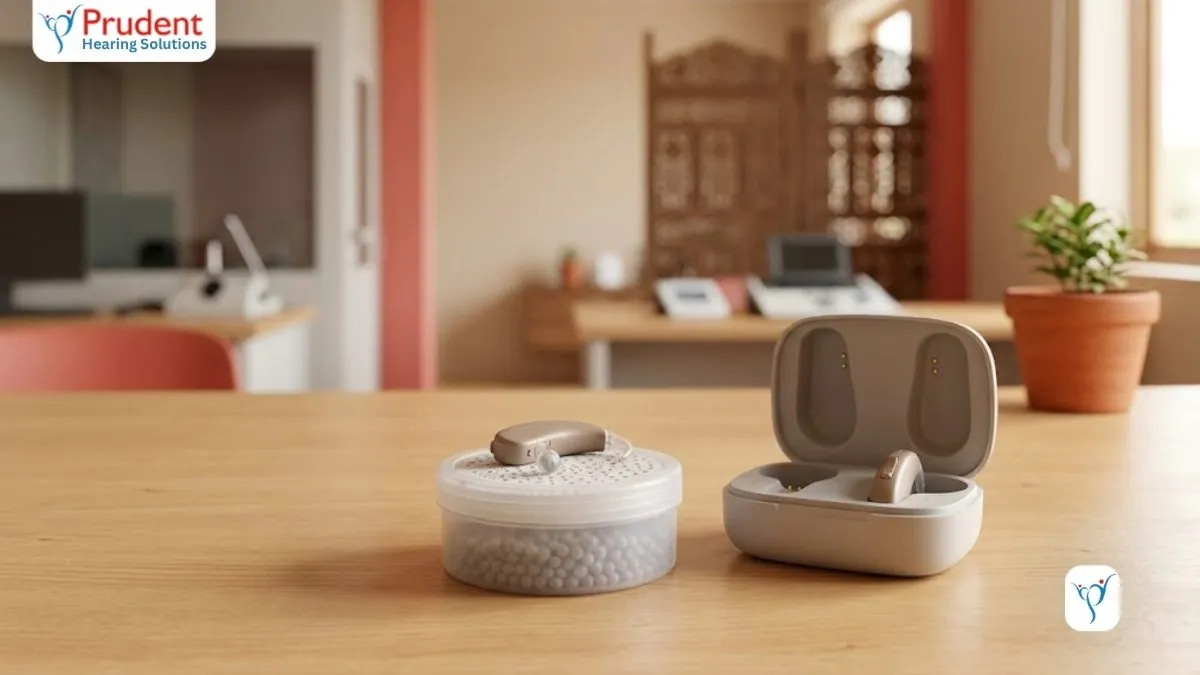
Sound is only half the job; moisture is the other half. When you take the aids out at night, give them a real chance to dry. If your aid uses disposable batteries, open the battery door fully. This switches it off and lets air circulate inside. If it is a rechargeable, simply place it in its charging case, which also powers it down. Whether a rechargeable or a battery model suits you better is a separate decision, but the drying habit matters either way.
In humid weather a plain open battery door is not always enough. A drying aid pulls the moisture out overnight. The simplest is a small pot with a drying capsule or desiccant. Better still is an electronic hearing aid dryer, a little box that gently warms and dries the aids while you sleep. Both are inexpensive, we stock them at the clinic, and through the monsoon they are close to essential.
Can hearing aids get wet?
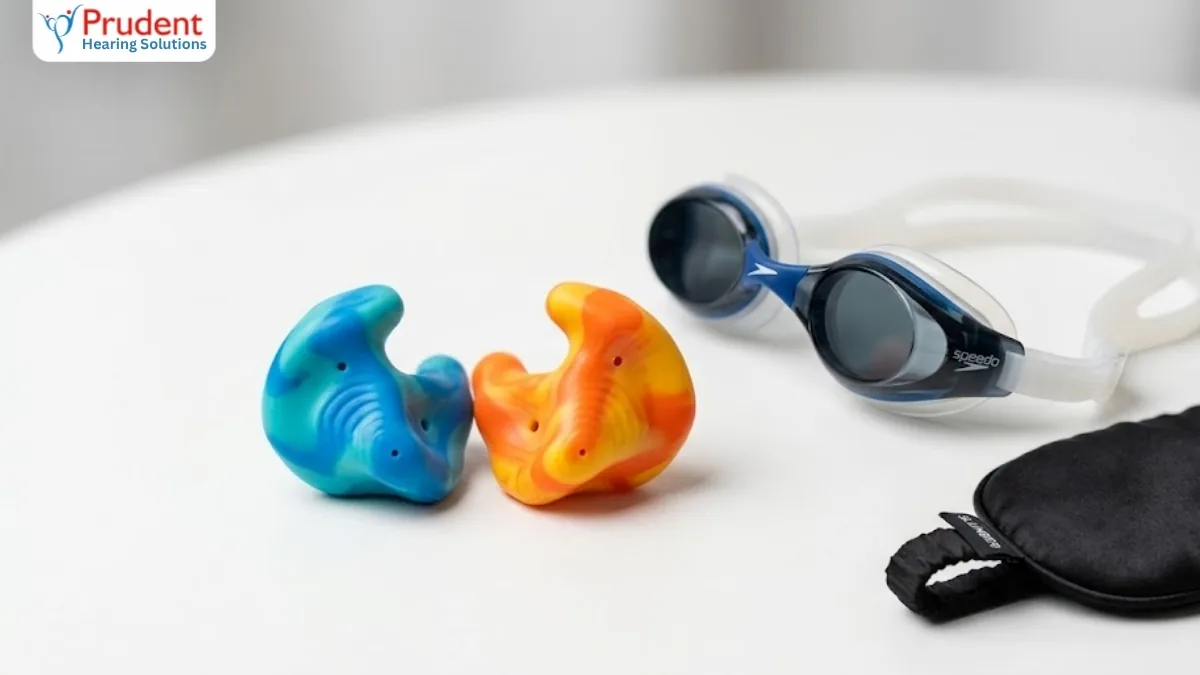
Most modern hearing aids carry an IP rating, and you will often see IP68, which means they resist sweat, humidity and the odd splash or rain shower. That is reassuring for daily life in India. But moisture-resistant is not the same as waterproof: no hearing aid is designed for swimming, showering or being dunked.
Take them out before a bath, a swim, or standing under heavy rain. If an aid does get soaked, do not switch it on and do not try to dry it with heat. Open the battery door, pat it dry, place it in a drying kit or bring it to us. Getting the moisture out safely gives it the best chance of coming back to life.
How do I stop my hearing aid from getting blocked by earwax?
Earwax is the number one enemy of clear hearing-aid sound, so a little prevention goes a long way. The idea is to keep wax off the aid and to keep your own ears reasonably clear without pushing wax deeper.
- Wipe and brush the aid every day, paying special attention to the outlet where sound leaves, and change the wax guard or filter as soon as the sound weakens.
- Keep your ears reasonably free of heavy wax, but do not dig with cotton buds, which only push wax deeper. If you feel blocked, have it checked and cleared safely.
- Put the aid in only after your ears are clean and dry, not straight after a bath.
- If one aid keeps clogging quickly, mention it at the clinic. A different dome style or a fresh wax-guard system often helps.
For safe ways to keep your ears clear at home, our everyday ear-care guide is a good starting point, and if you have heavy or hardened wax, our piece comparing professional wax removal methods explains your options. Clean ears and a clean aid together are what keep the sound crisp.
What you should never do
A few well-meant habits do real harm. Avoid these and you will spare yourself most repairs:
- Do not rinse or wash the aid in water, and never soak it.
- Do not use alcohol, spirit, sanitiser, spray cleaners or wet wipes on the body of the aid, as they damage the coating and seals.
- Do not blow hard into the aid or tubing to clear it. Your breath is warm and moist and pushes water deeper. Use the brush or a small puffer instead.
- Do not use a hairdryer, microwave, oven or direct sun to dry an aid. Heat warps the plastic and kills the electronics.
- Do not leave aids on a hot car dashboard, near a stove, or anywhere they will bake.
Heat, sweat and sprays: grooming order matters
Hearing aids and grooming products do not mix. Hairspray, gel, perfume, sunscreen and face lotion can clog the microphone ports and gum up the casing. The simple rule is that aids go in last: finish your hair, spray, cream and make-up first, let everything settle, and only then put your aids in.
Keep them away from strong heat too, whether that is a hairdryer, the direct summer sun or a parked car. If you sweat heavily during workouts or a hot Delhi afternoon, wipe the aids more often and dry them well at night. A sweatband or a moisture guard sleeve can help active users.
Monsoon and humidity: extra care in India
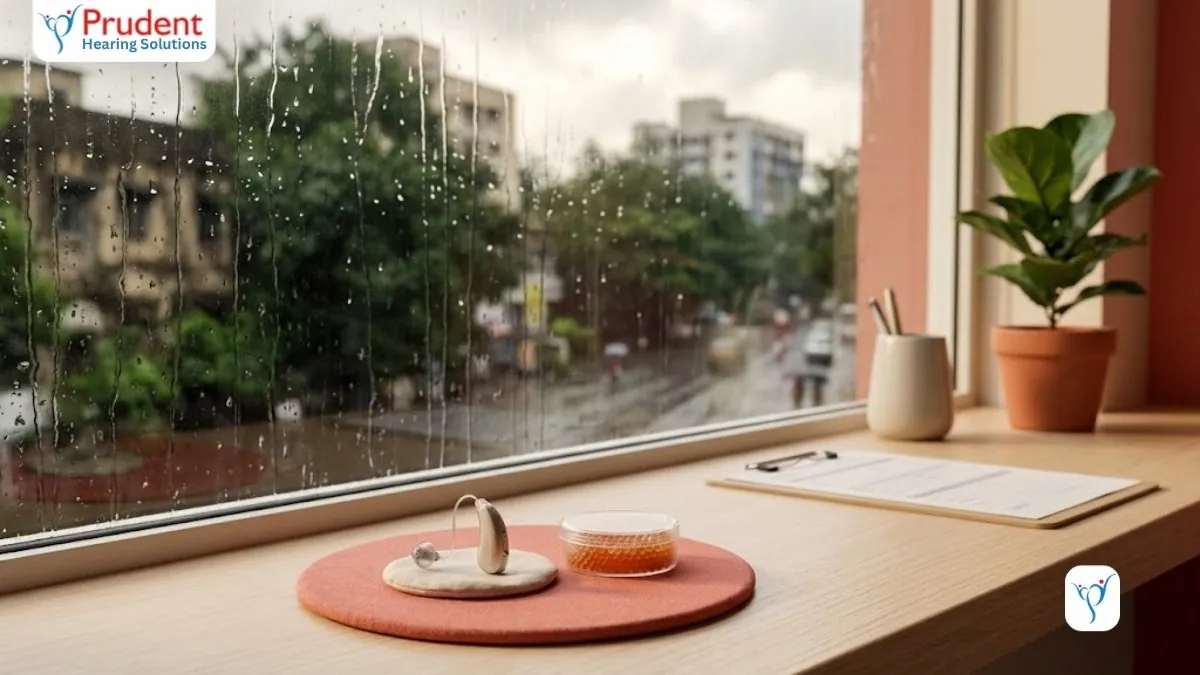
India's monsoon is the hardest season for hearing aids. Weeks of high humidity mean moisture that would normally dry off just sits inside the device, and that is when muffled sound and dropouts appear.
The fix is plain discipline: dry the aids every single night in a drying capsule or electronic dryer, wipe them whenever they feel damp, carry a small pouch to protect them from sudden rain, and never leave them in a bag beside a wet umbrella. Our dedicated monsoon hearing-aid care guide goes deeper on getting your devices safely through the rains.
When to bring them in for a professional clean
Home care handles the daily grime, but a clinic clean reaches what you cannot. Every few months, bring your aids in for a professional clean and check. We clear deep wax, replace tired wax guards, tubing and domes, vacuum out the microphone ports, and confirm that both aids still meet their fitted settings.
If your aid stays dead after a wax-guard change and a good dry, whistles constantly, sounds distorted, or has taken a soaking, do not wait for the schedule; come in. Prudent stocks batteries, domes, wax guards, drying kits and other accessories, and we service and repair all major brands, so most issues are sorted quickly.
"Two dry minutes a night save most of the repairs we see. Clean it, dry it, and put your aids in last after grooming. That is ninety percent of hearing-aid care."
Book a free hearing test with Prudent Hearing Solutions
Prudent Hearing Solutions has been fitting and caring for hearing aids since 2004, and our audiologists are RCI-registered. We fit and service every major brand, including Phonak, Signia, Oticon, Widex, ReSound, Starkey and Unitron, and we are happy to show you the cleaning routine hands-on with your own devices. If you would like a check-up, a professional clean, or advice on the right drying kit, come and see us.
We offer a free 45-minute hearing test, and EMI options on hearing aids are available as per current rules. You will find us in Pune (Viman Nagar), Delhi (Rohini and Green Park) and Bengaluru (Jayanagar); these are our only locations. Call us on +91 9429690093 or WhatsApp +91 8485096505 to book a time that suits you.
Continue reading
- why hearing aids whistle and how to stop it
- monsoon hearing-aid care guide
- everyday ear-care guide
- rechargeable vs battery hearing aids
- professional ear wax removal methods
- Signia care and troubleshooting
- Hearing aid batteries
- Repair and servicing
- Wearing aids with glasses, masks and earbuds
- caring for ear moulds and domes
Frequently asked questions
How do I clean and maintain my hearing aids properly?
Keep it dry and mechanical, never wet. Each night, wipe the whole aid with a soft dry cloth and use the small brush to clear the microphone ports and the receiver or dome, then let it dry overnight with the battery door open or in its charger. Once a week, use the wax pick or loop on the dome or earmould and wipe the tubing and contacts. Change the disposable wax guard whenever the sound goes weak, and never use water, alcohol or wet wipes on the electronics.
How often should I clean my hearing aids?
Give them a quick wipe and brush every night and a closer clean once a week. Replace the disposable wax guard or filter whenever the sound drops, which is usually every few weeks to a couple of months depending on how much wax you produce. On top of home care, book a professional clean and check at the clinic every few months. In India's humid climate, and especially during the monsoon, clean and dry them a little more often.
Can hearing aids get wet?
Most modern hearing aids are moisture-resistant, often IP68 rated, so they cope with sweat, humidity and a light splash or rain. But moisture-resistant is not waterproof, and no hearing aid is meant for swimming, showering or being dunked, so take them out first. If an aid does get soaked, do not switch it on or use heat to dry it. Open the battery door, pat it dry, place it in a drying kit, and bring it in if it does not recover.
How do I stop my hearing aid from getting blocked by earwax?
Wipe and brush the aid every day, focusing on the sound outlet, and change the wax guard or filter as soon as sound weakens. Keep your own ears reasonably clear, but avoid cotton buds, which push wax deeper, and put the aids in only after your ears are clean and dry. If one aid keeps clogging quickly, ask your audiologist about a different dome or wax-guard system. Heavy or hardened wax is best cleared safely at the clinic.
What should I never do when cleaning a hearing aid?
Never rinse, wash or soak it, and never use alcohol, sanitiser, spray cleaners or wet wipes on it. Do not blow hard into the aid or tubing, and never dry it with a hairdryer, microwave, oven or direct sun. Liquids and heat cause most avoidable repairs.
Free consultation
Ready to hear the difference?
Book a free 45-minute hearing test at any Prudent Hearing clinic: no obligation, honest advice, expert audiologists.