Educational information, not medical advice. This article is written to help you understand common ear and hearing issues. It is not a substitute for professional diagnosis or treatment. If your symptoms are severe, sudden, or persistent, please consult a qualified doctor or audiologist. For urgent symptoms (sudden hearing loss, bleeding from the ear, severe pain with dizziness, or a head injury), seek medical care the same day.
Ears are largely self-cleaning, so most people never need to clean inside them. Here is what is safe at home (wiping the outer ear, softening drops), how to use hydrogen peroxide cautiously, why cotton buds and ear candling are unsafe, and when to see a doctor or professional for blocked wax.
Most people never need to clean inside their ears at all. Ears are largely self-cleaning: earwax is protective, and the ear canal slowly moves old wax outward on its own, carrying dust and dead skin with it. So the safest way to clean your ears at home is to leave the canal alone and simply wipe the outer ear with a soft cloth.
If wax feels bothersome, a few days of softening drops (plain olive oil, or a pharmacy wax-softening drop) usually settles it. What you should not do is push cotton buds, pins, or candles into the ear, or sit for a roadside ear cleaning. For genuinely blocked or impacted wax, a trained professional can remove it safely.
Your ears are largely self-cleaning
The ear canal has a quiet cleaning system built in. Tiny hairs and a slow, conveyor-belt movement of the skin push wax from deep inside the canal towards the opening, where it dries, flakes, and falls away without you noticing. Jaw movement from talking and chewing helps the process along. Earwax, or cerumen, is not dirt. It is made by glands in the outer part of the canal and it does a real job, which is why scraping it all out is usually the wrong instinct.
- Traps dust, grit, and dead skin so they do not reach the eardrum
- Keeps the delicate canal skin lightly moisturised so it does not get dry and itchy
- Is mildly acidic and slightly antibacterial, which helps keep infection down
- Acts as a physical barrier against water and small insects
How to clean your ears safely at home
For almost everyone, safe home cleaning means the outer ear only. After a bath or shower, wipe the folds of the outer ear and the entrance of the canal with a soft, damp cloth or a tissue over your finger, then dry gently. That is all most ears need. Never dig a cloth, cotton bud, or fingernail down into the canal to reach wax you cannot see, because that is where damage happens.
- Wipe only the outer ear and the visible opening with a soft cloth, then pat dry
- Do not insert anything into the ear canal, not even a cotton bud wrapped in cloth
- Tilt your head and gently dry the outer ear after swimming or bathing to reduce trapped moisture
- If wax feels blocked or heavy, use softening drops for a few days rather than trying to scoop it out
Softening drops for stubborn wax
If wax is building up and making the ear feel full, softening it is the gentle first step. A few drops of plain olive oil, or a pharmacy wax-softening drop such as one containing carbamide peroxide, used over three to five days softens the wax so the ear's own cleaning can move it out.
Lie with the ear facing up for a minute after each dose, and follow the instructions on the product you are using. This is slow on purpose, and slow is safer. If you have ear pain, discharge, or a known hole in the eardrum, do not put anything in the ear; have it looked at first, and see our note on ear drops for pain in adults for why this matters.
Hydrogen peroxide in the ear: use it with caution
A diluted, low-strength hydrogen peroxide ear solution can soften and bubble wax loose, which is why many people reach for it. It can work, but it is not for everyone, and the fizzing and temporary muffled or crackling feeling put some people off. It can also irritate the canal skin if overused. Treat it as an occasional option rather than a routine, follow the product instructions, and check with a professional first if you are unsure.
- Do not use hydrogen peroxide if you have ear pain or any discharge from the ear
- Do not use it if you have a known or suspected perforated eardrum, or ear grommets (tubes) fitted
- Do not use it repeatedly day after day, as this can dry and irritate the canal
- Stop and see a professional if the ear becomes painful, itchy, or more blocked than before
What not to do (be firm about these)
Some of the most common ear-cleaning habits are the ones that cause the most harm. Cotton buds are the biggest culprit: they may pull out a little wax at the entrance, but they push the rest deeper, pressing it into a hard plug against the eardrum. They also scratch the canal and trigger the itch-scratch cycle that leaves the ear irritated. Pushing anything hard into the ear risks tearing the eardrum, which you can read about in perforated eardrum: symptoms and healing.
- Cotton buds (ear buds): push wax deeper, cause itching, and can injure the canal or eardrum
- Ear candling: it does not remove wax and it is unsafe, causing burns, hot wax dripping into the ear, and eardrum damage
- Sharp or hard objects: keys, hairpins, matchsticks, or pen caps can tear the canal or drum in an instant
- Roadside or untrained ear cleaners: a real infection risk in India, as shared tools and unsterile probes can introduce bacteria and fungus
Ear candling deserves a firm no on its own. The idea that a lit hollow candle placed in the ear creates suction and draws out wax has been tested and does not hold up; the residue people see is just candle wax, not earwax. What it can do is burn the face and ear, drip molten wax onto the eardrum, and even perforate it.
There is no safe way to use it, so skip it entirely. Roadside ear cleaning carries a different danger: the tools move from ear to ear without proper cleaning, and an unsterile probe scraping the canal is a classic route to a painful outer-ear infection or a fungal one, which we cover in ear fungus (otomycosis). For safe day-to-day habits around water, itching, and insects, see our everyday ear care guide.
When to see a doctor or a professional
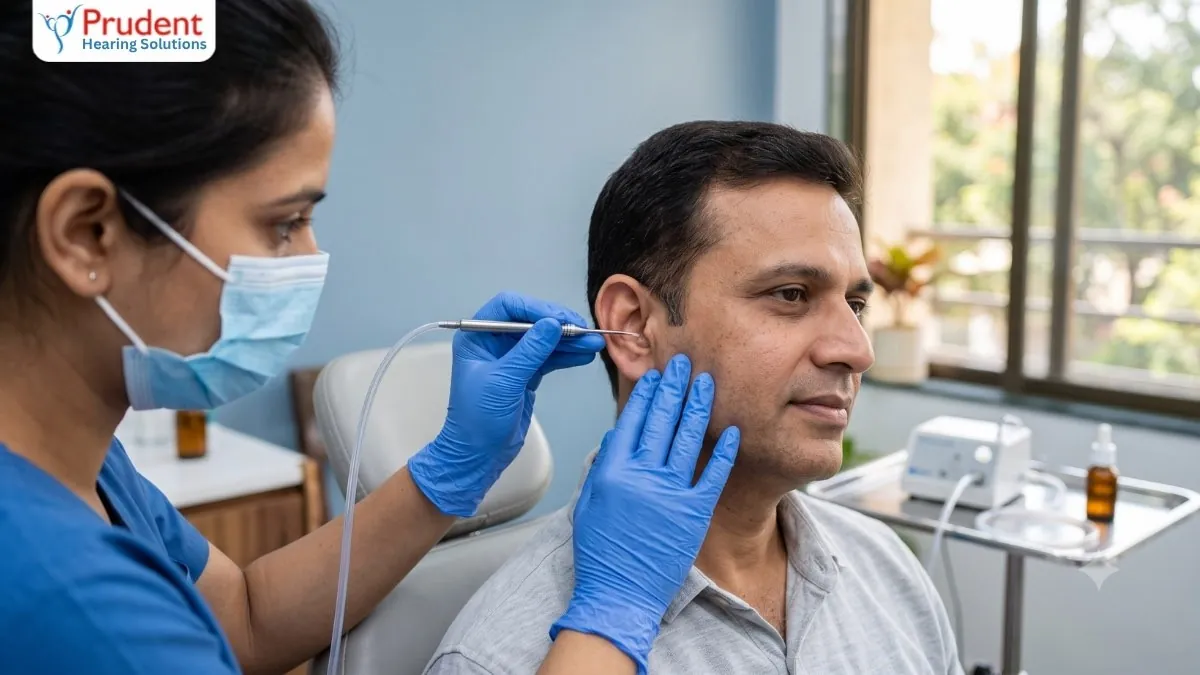
Sometimes wax genuinely becomes impacted and home softening is not enough. If your ear simply feels blocked or your hearing is a little muffled, a trained clinician can clear the wax safely with microsuction (a gentle vacuum under a microscope) or careful irrigation, without pressing it deeper.
But some symptoms are not about wax at all: ear pain, discharge, a sudden drop in hearing, or dizziness should be seen by a doctor or ENT promptly, as these can point to an infection or another problem that needs medical treatment. We compare the two removal methods in microsuction versus syringing, and if muffled hearing lingers once the wax is cleared, it is worth checking whether anything else is going on, as explained in the signs you need a hearing test.
- A blocked, full, or muffled feeling in one or both ears that does not clear with softening drops
- A sudden or noticeable drop in hearing on one side (see a doctor promptly)
- Ear pain, itching, or any discharge from the ear (see a doctor)
- Ringing (tinnitus) or dizziness alongside a blocked feeling
- Repeated wax build-up, or if you wear hearing aids or earbuds that trap wax
- Any doubt at all, especially if you have a history of a perforated eardrum or ear surgery
"The healthiest thing you can do for most ears is less, not more. Wipe the outside, soften wax when it bothers you, and keep everything else out; when in doubt, let a professional look rather than dig."
How Prudent Hearing Solutions can help
Prudent Hearing Solutions is an RCI-registered audiology clinic, so our role is safe hearing test and advice, not medicine or surgery. Anything involving infection, pain, a discharge, or a damaged eardrum should be seen by a doctor or ENT first. Once the ear is safe to work with, we can advise on wax that keeps building up and check whether it is affecting your hearing with a /hearing-test that takes about 45 minutes.
If a hearing loss remains once the ear is clear, we can talk through /hearing-aids options honestly, keeping in mind that hearing aids manage hearing loss rather than cure it. There is never any pressure to buy. You can find your nearest clinic at /locations or reach us through /contact to ask a question or book a check.
Continue reading
Frequently asked questions
How do I clean my ears safely at home?
For almost everyone, wipe only the outer ear and the entrance of the canal with a soft, damp cloth after bathing, then dry gently. Do not put cotton buds, fingers, or any object into the ear canal. If wax feels blocked, use a few days of softening drops (plain olive oil or a pharmacy wax-softening drop) rather than trying to scoop it out. The canal is designed to clean itself, so leaving it alone is usually the safest choice.
Is it safe to put hydrogen peroxide in your ear for wax?
A diluted, low-strength hydrogen peroxide ear solution can soften and bubble wax loose, but it is not for everyone. Do not use it if you have ear pain, discharge, a known or suspected perforated eardrum, or ear tubes (grommets), and do not use it day after day, as it can dry and irritate the canal skin. Expect some fizzing and a temporary muffled feeling, and follow the product instructions. If you are unsure, or the ear becomes painful or more blocked, check with a professional before continuing.
Does ear candling actually work?
No. Ear candling does not remove earwax; the residue left behind is simply melted candle wax, not wax from your ear. It is also genuinely unsafe, with a real risk of burns to the face and ear, hot wax dripping onto or perforating the eardrum, and canal injury. There is no safe way to use it, so it is best avoided entirely.
Are cotton buds bad for cleaning ears?
Yes, they usually do more harm than good. A cotton bud may remove a little wax at the opening, but it pushes the rest deeper and can pack it into a hard plug against the eardrum. Cotton buds also scratch the canal, trigger itching, and can injure the eardrum. Keep them for the outer ear only, and never insert them into the canal.
How do I get rid of blocked or impacted ear wax?
Start with a few days of softening drops (olive oil or a pharmacy wax-softening drop), which often lets the ear clear itself. If the ear still feels blocked or hearing is muffled, see a professional for clinical removal by microsuction or careful irrigation. If there is pain, discharge, or a sudden drop in hearing, see a doctor or ENT promptly instead. Avoid digging it out with buds or sharp objects, which pushes wax deeper and can damage the ear.
How often should I clean my ears?
Rarely, and only the outside. Since ears are self-cleaning, most people just need to wipe the outer ear with a cloth after a shower. There is no need to clean inside the canal on a schedule. If you find you need frequent removal because wax keeps building up, or you wear hearing aids or earbuds that trap wax, it is better to have it checked and cleared professionally than to clean the canal yourself.
Free consultation
Ready to hear the difference?
Book a free 45-minute hearing test at any Prudent Hearing clinic: no obligation, honest advice, expert audiologists.