Educational information, not medical advice. This article is written to help you understand common ear and hearing issues. It is not a substitute for professional diagnosis or treatment. If your symptoms are severe, sudden, or persistent, please consult a qualified doctor or audiologist. For urgent symptoms (sudden hearing loss, bleeding from the ear, severe pain with dizziness, or a head injury), seek medical care the same day.
A perforated eardrum is a hole or tear in the eardrum. Learn the signs of a ruptured eardrum, what causes it, how it heals, and the red flags that mean you should see a doctor.
A perforated eardrum is a hole or tear in the thin membrane that separates your ear canal from the middle ear. Most are caused by an ear infection, a sudden change in pressure, or something pushed too far into the ear, and most small ones heal on their own within a few weeks.
Until then, three rules matter more than anything else: keep the ear completely dry, put nothing inside it, and see a doctor or ENT to confirm what is going on. Do not start ear drops, fly, or swim without medical advice.
What is a perforated (ruptured) eardrum?
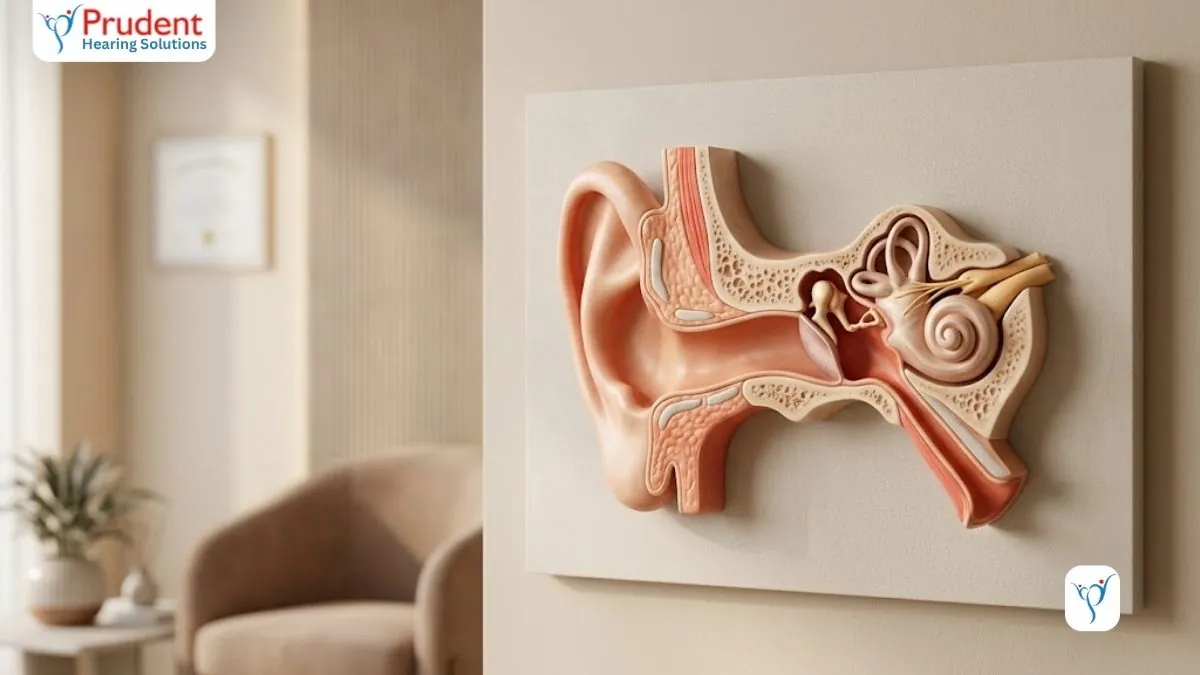
The eardrum, or tympanic membrane, is a delicate flap of tissue about the size of your smallest fingernail. It vibrates when sound hits it and passes that movement into the tiny bones of the middle ear. A perforated eardrum means that membrane has a hole or tear in it. You may also hear it called a ruptured, burst, or damaged eardrum.
The size of the hole and where it sits both affect how much your hearing changes and how quickly it recovers. A small tear near the edge often closes quietly on its own, while a large or central hole may take longer or need an ENT surgeon to repair it. If you are curious about how the eardrum fits into the wider hearing system, our guide to the human hearing range and parts of the ear explains it in plain language.
Signs of a ruptured eardrum
The classic pattern is sudden, sharp ear pain that then eases, sometimes quite abruptly, as pressure behind the eardrum is released. Symptoms vary with the cause, so you may notice one sign or several together.
- Sudden ear pain that may quickly settle down
- Fluid or discharge draining from the ear (clear, cloudy, or slightly blood-stained)
- Muffled or reduced hearing on that side
- Ringing, buzzing, or hissing in the ear (tinnitus)
- A small amount of bleeding from the ear
- Occasionally a brief spinning or off-balance feeling
What causes a burst eardrum?
- Middle-ear infection: fluid and pus build up behind the eardrum until the pressure pushes a hole through it
- Sudden pressure change: a slap to the ear, a blast, or barotrauma from flying or scuba diving
- Poking objects in the ear: cotton buds, hairpins, keys, or matchsticks pushed too far
- Direct injury: a fall, a road accident, or a sports knock to the side of the head
- A very loud, sudden noise close to the ear, such as an explosion
In India, two everyday habits account for a large share of cases. The first is cleaning ears with cotton buds, pins, or the tip of a pen, which can tear the drum in an instant. The second is untreated ear infections, which are more common during the humid monsoon months.
If your ear pain started with a cold or blocked feeling, our article on ear pain and blocked ears due to a cold explains what is happening behind the drum. For safer day-to-day habits, especially around water and itching, see our everyday ear care guide.
How a damaged eardrum affects your hearing
When the eardrum has a hole, it cannot vibrate as fully, so sound is not passed on as efficiently. This usually causes what is called conductive hearing loss, where sound is blocked on its way in rather than the inner-ear nerve being damaged.
The drop in hearing is often mild to moderate and, in most cases, improves as the drum heals. A hearing test can measure exactly how much the perforation is affecting you and whether the loss is purely conductive. You can read more about the different patterns in our overview of the types and causes of hearing loss.
Healing: what helps and what to avoid
Most small perforations close by themselves within a few weeks, because the eardrum is good at repairing itself. The single most important thing you can do is keep the ear dry, since water can carry bacteria into the middle ear and turn a simple perforation into an infection. Your job is to protect the ear and give it time; the actual diagnosis and follow-up belong with a doctor or ENT.
- Do keep the ear completely dry: use a cotton ball smeared with a little petroleum jelly while bathing, and avoid getting the head underwater
- Do rest and let it heal; sneeze with your mouth open to avoid pressure spikes
- Do see a doctor or ENT to confirm the diagnosis and rule out infection
- Do not put anything in the ear, including cotton buds, oil, or home remedies
- Do not use ear drops unless a doctor has prescribed them for your specific case
- Do not fly or swim until a doctor confirms the drum has healed
Two common instincts can make things worse. The first is reaching for ear drops to stop the discharge; with a hole in the drum, some drops can reach the middle ear and should only be used on medical advice, as we explain in our note on ear drops for ear pain in adults. The second is trying to clean the ear out. Never syringe an ear that may have a perforation, and if wax is a separate concern, our comparison of microsuction versus syringing explains why gentle methods are safer.
When an ENT repair is needed
If a perforation is large, sits in a difficult position, or has not closed after a few months, an ENT surgeon may recommend a repair. Two common procedures are myringoplasty, which patches the eardrum itself, and tympanoplasty, which also addresses the middle-ear bones if needed. These are often day-care surgeries and generally have good outcomes. This is medical and surgical care that Prudent does not provide; your ENT is the right person to advise on and carry out any repair.
Red flags: when to see a doctor promptly
- Severe or worsening ear pain that will not settle
- Heavy bleeding from the ear
- A sudden, severe drop in hearing
- Dizziness, vertigo, or a persistent spinning sensation
- High fever, spreading redness, or foul-smelling discharge
- A perforation that follows a serious head injury or accident
How Prudent Hearing Solutions can help
Prudent is an RCI-registered audiology clinic, not an ENT surgical practice, so we do not treat the infection or repair the eardrum itself; for that, please see a doctor or ENT. Where we do help is measuring the impact on your hearing and supporting your recovery. Once your doctor confirms the ear is safe to test, a hearing test tells you exactly how much the perforation has affected each ear and whether the loss is conductive.
If any hearing loss remains after the drum has healed, we can discuss hearing aid options; remember that hearing aids manage hearing loss, they do not cure it. If you are unsure whether your symptoms need checking, our guide to the signs you need a hearing test is a good place to start, and you can contact us to book a hearing test at any of our clinics.
"A perforated eardrum is usually a patient healer. Keep the ear dry, keep everything out of it, and let a doctor guide the timeline; rushing it rarely helps, and a little care goes a long way."
Worried about your own hearing rather than a passing ear problem? A free 45-minute hearing test at Prudent tells you exactly where you stand, with no pressure to buy. You can book a free hearing test at our Pune, Delhi or Bengaluru clinics, or see the range of hearing aids we fit.
Continue reading
Frequently asked questions
Can a perforated eardrum heal on its own?
Yes. Most small perforations heal by themselves within a few weeks. The key is to keep the ear completely dry, put nothing inside it, and let a doctor confirm there is no infection slowing things down. Larger or non-healing holes may need an ENT repair.
How do I know if my eardrum is ruptured?
Common signs are sudden ear pain that then eases, fluid or discharge from the ear, muffled hearing on that side, ringing, and sometimes a little bleeding. Only a doctor or ENT can confirm it by looking at the eardrum, so see one if you notice these signs.
Is a perforated eardrum always painful?
Not always. The pain is often sharp at first and then settles quickly once the pressure is released. Some people mainly notice muffled hearing or discharge rather than ongoing pain. Severe or worsening pain is a red flag to see a doctor promptly.
Can I fly or swim with a perforated eardrum?
No, not until a doctor confirms it has healed. Water can carry bacteria into the middle ear and cause infection, and pressure changes from flying can be painful or slow healing. Keep the ear dry and wait for medical clearance.
Will a perforated eardrum cause permanent hearing loss?
Usually not. The hearing loss from a perforation is often mild to moderate and conductive, and it tends to improve as the drum heals. If any loss remains afterward, a hearing test can measure it and hearing aids can help manage it, though they do not cure it.
Do I need surgery for a perforated eardrum?
Most people do not. Small holes close on their own. Surgery, such as myringoplasty or tympanoplasty, is considered only when a perforation is large, poorly placed, or has not healed after a few months. An ENT surgeon is the right person to advise on this.
Free consultation
Ready to hear the difference?
Book a free 45-minute hearing test at any Prudent Hearing clinic: no obligation, honest advice, expert audiologists.