Educational information, not medical advice. This article is written to help you understand common ear and hearing issues. It is not a substitute for professional diagnosis or treatment. If your symptoms are severe, sudden, or persistent, please consult a qualified doctor or audiologist. For urgent symptoms (sudden hearing loss, bleeding from the ear, severe pain with dizziness, or a head injury), seek medical care the same day.
Ear wax is normal and mostly clears on its own. Here is an honest, safety-first guide to removing it when it doesn't: drops, syringing and microsuction compared, real costs in India, and the red flags that mean you should see a clinician first.
Quick answer
Most ears clear wax on their own, so you only need ear wax removal when a hardened plug blocks the canal. For mild build-up, softening drops (olive oil or sodium bicarbonate) help. For a full block, professional irrigation or microsuction works. Microsuction uses gentle suction with no water and is safest if you have a perforation, grommets or previous ear surgery. Never use cotton buds, candles or hairpins.
Key takeaways
- Ear wax is normal and self-clearing; healthy ears do not need cleaning from the inside.
- Cotton buds, ear candles and hairpins push wax deeper and can injure the canal or eardrum.
- Softening drops suit mild build-up; irrigation and microsuction handle a full block.
- Microsuction uses no water and is the safer choice for perforations, grommets or past ear surgery.
- Professional removal in India usually costs a few hundred to a couple of thousand rupees; microsuction costs more than syringing.
- See a clinician first if you have ear pain, discharge, a suspected perforation, diabetes, one hearing ear or dizziness.
Most ears clean themselves. Ear wax is normal, and in the majority of people it works its way out on its own. You only need ear wax removal when wax builds up, hardens and blocks the canal, and even then, how it is removed matters. This guide explains the safe options, what to avoid completely, what removal costs in India, and the warning signs that mean you should see a clinician instead of trying anything at home.
Why ear wax is normal and clears on its own
Ear wax, or cerumen, is not dirt. It is a mix of oil, dead skin and secretions that protects the ear canal, traps dust and keeps the skin from drying out. In most ears it clears by itself. Jaw movement from talking and chewing slowly pushes old wax outward, where it dries and falls away without you noticing. You do not need to clean healthy ears from the inside. Wiping the outer ear with a cloth is enough. Problems start when people try to remove wax that was never in the way, or when narrow or hairy canals, hearing aids, earphones or age-related dry wax stop the natural clearing. When wax genuinely blocks the canal and affects hearing, that is when professional removal helps.
Why cotton buds, ear candles and hairpins are unsafe
Keep all of these out of your ear canal. They do more harm than good. Cotton buds remove a little wax at the opening but push most of it deeper, where it packs down against the eardrum and becomes impacted. Ear candles have no proven benefit and can drip hot wax into the canal, burn the ear, or cause a perforation. Hairpins, keys, matchsticks and pen caps scratch the delicate canal skin, introduce infection, and can tear the eardrum.
- Cotton buds push wax deeper and can pack it hard against the eardrum.
- Ear candles risk burns, hot-wax drips and a punctured eardrum, with no real benefit.
- Hairpins, keys and matchsticks cut the canal skin and can perforate the drum.
- A scratched canal is an easy route for a painful infection.
Softening drops for mild build-up
For mild build-up, softening drops are the gentlest first step. Plain olive oil or sodium bicarbonate ear drops loosen hardened wax so it can clear on its own. Warm the bottle to body temperature in your hands, lie on your side, put two or three drops in the upper ear, and stay still for a few minutes. Do this once or twice a day for three to five days. Do not use drops if you have ear pain, discharge, grommets, or a known or suspected hole in the eardrum. If a few days of drops make no difference, stop and have a clinician look rather than dripping in more. Softening drops alone clear many mild cases and often make later removal quicker. They will not shift a hard, fully impacted plug, and they are not a substitute for professional removal when the ear is completely blocked.
Professional irrigation and syringing
Irrigation, often still called syringing, is a controlled flush of warm water that washes wax out of the canal. Done properly with an electronic irrigator at body temperature, it is quick and effective for softened wax. The old metal-syringe method with high, uncontrolled pressure is largely abandoned because it could damage the ear. Irrigation has real limits. Water that is too cold or too warm can make you dizzy for a moment. More importantly, it is not safe for everyone. Anyone with a perforated eardrum, grommets, previous ear surgery, an active ear infection, diabetes, or only one hearing ear should not be irrigated, because trapped water and pressure can cause infection or damage. For those ears, a dry method is safer.
Microsuction: why clinics now prefer it
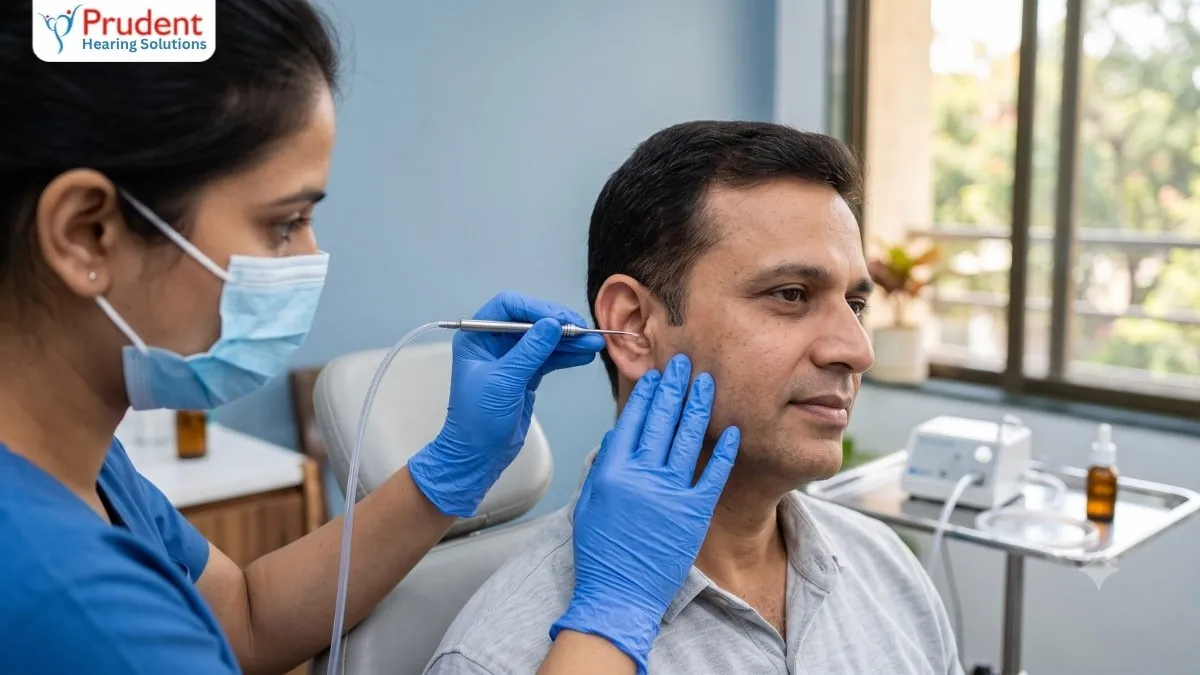
Microsuction is the method most ear clinics now prefer. A clinician looks into your ear under a microscope or magnifying loupe and uses a fine, low-pressure suction to lift the wax out. No water goes in, so the canal stays dry. Because the clinician sees exactly what they are doing the whole time, it is precise and generally safe even for ears that cannot be irrigated: perforated eardrums, grommets, previous surgery, infection, or a single hearing ear. It is usually quick and does not need days of softening first, though a little oil beforehand helps with very hard wax.
- Pros: no water, works for perforations and grommets, done under direct vision, fast, low infection risk.
- Cons: the suction sounds loud close to the eardrum, which some people dislike, and brief dizziness is possible.
- It needs a trained clinician and proper equipment, so it usually costs more than syringing.
How to decide which method
Match the method to your ear, not to fashion. For mild, soft build-up, try softening drops first. If the ear is fully blocked and you have no risk factors, irrigation or microsuction both work well. If you have a perforation, grommets, previous ear surgery, an ear infection, diabetes, or only one hearing ear, choose microsuction and skip irrigation. If you are not sure whether your eardrum is intact, do not guess. Have a clinician look first. When money is tight, syringing of already-softened wax is cheaper. When safety and precision matter, microsuction is worth the extra.
What ear wax removal costs in India
Professional ear wax removal in India is not expensive. In most clinics it ranges from a few hundred to a couple of thousand rupees, depending on the city, the method and how difficult the wax is. Simple irrigation or syringing sits at the lower end. Microsuction typically costs more than syringing because it needs a microscope, suction equipment and a trained clinician, but it is still affordable and often worth it for a blocked, uncomfortable ear or a high-risk one. Softening drops from a pharmacy cost very little and may be all a mild case needs. These are approximate ranges, not fixed rates, so ask your clinic what they charge before you book. Be wary of anyone promising a dramatic deep clean of a healthy ear. You do not need it.
Red flags: when not to self-treat or irrigate
If any of the following apply, do not use drops, do not irrigate, and do not let anyone syringe your ear. See a clinician who can look inside first. These situations need a proper examination, because the wrong move can cause pain, infection or lasting damage.
- Ear pain, or fluid, pus or blood coming from the ear.
- A known or suspected hole (perforation) in the eardrum.
- Grommets (ear tubes) in place, or any previous ear surgery.
- Diabetes, which raises the risk of a stubborn ear-canal infection.
- Only one hearing ear, where any risk to your good ear is not worth taking.
- Dizziness, vertigo, or sudden hearing loss.
Can wax cause hearing loss or tinnitus?
Yes, and usually only temporarily. When wax fully blocks the canal, sound cannot reach the eardrum properly, so the ear feels plugged and sounds are muffled. This is a conductive hearing loss, and it lifts once the wax is cleared. Impacted wax can also cause tinnitus, meaning ringing, buzzing or hissing, along with a feeling of fullness and mild dizziness. These usually settle after removal. If your hearing does not come back, or the ringing stays after the wax is gone, the cause is something else and you should have your hearing tested. Do not assume every blocked or ringing ear is only wax. Sometimes wax and a genuine hearing loss exist together, which is why an examination matters.
What to do next
If your ear feels blocked, muffled or is ringing, the safest first step is to have someone look inside before you put anything into it. At Prudent Hearing Solutions our RCI-registered audiologists can examine your ears and check whether wax is the real cause or whether your hearing needs attention. We have clinics in Pune (Viman Nagar), Delhi (Rohini and Green Park) and Bengaluru (Jayanagar), and the hearing test is free and takes about 45 minutes. Call +91 9429690093 to book. No pressure and no hard sell, just a clear answer about your ears.
Continue reading
Frequently asked questions
Is microsuction better than syringing?
For most blocked ears both work, but microsuction is generally safer. It uses gentle suction with no water, so it suits ears that cannot be irrigated: perforated eardrums, grommets, previous surgery, infection or a single hearing ear. The clinician removes wax under direct vision. Syringing is fine for softened wax in a healthy ear and usually costs less. Microsuction typically costs a little more.
How can I remove ear wax safely at home?
For mild build-up, warm plain olive oil or sodium bicarbonate drops to body temperature, put two or three drops in the ear while lying on your side, and repeat for three to five days to let the wax clear itself. Do not use cotton buds, ear candles or any object. Do not use drops if you have ear pain, discharge, grommets or a suspected perforation. If drops do not help in a few days, see a clinician.
Does ear wax cause hearing loss?
It can, but usually only temporarily. A plug that fully blocks the canal muffles sound and can cause a blocked feeling, tinnitus or mild dizziness. This clears once the wax is removed. If your hearing or the ringing does not improve after removal, wax was not the only cause and you should have your hearing tested.
Where can I get ear wax removal near me in Pune?
Have your ears examined by a qualified clinician before anything is put in them. Prudent Hearing Solutions has an RCI-registered audiology clinic in Pune (Viman Nagar), plus clinics in Delhi (Rohini and Green Park) and Bengaluru (Jayanagar). Our audiologists can check whether wax is the real cause and whether your hearing needs attention. Call +91 9429690093 to book. The hearing test is free and takes about 45 minutes.
Sources & further reading
We cross-checked this article against the following authoritative sources. Guidance and figures reflect the most recent public guidance available at the time of last review (July 2026). Clinical review by the Prudent Hearing clinical team.
- Earwax build-up (NHS UK)
- Hearing Aids (National Institute on Deafness and Other Communication Disorders (NIDCD, NIH))
Free consultation
Ready to hear the difference?
Book a free 45-minute hearing test at any Prudent Hearing clinic: no obligation, honest advice, expert audiologists.