Educational information, not medical advice. This article is written to help you understand common ear and hearing issues. It is not a substitute for professional diagnosis or treatment. If your symptoms are severe, sudden, or persistent, please consult a qualified doctor or audiologist. For urgent symptoms (sudden hearing loss, bleeding from the ear, severe pain with dizziness, or a head injury), seek medical care the same day.
Hearing aid stopped working? A practical India guide to safe home fixes, when to see a clinic, repair costs, warranty and what to do with a wet aid.
There is a small moment of panic that almost every hearing aid wearer knows: you put the aid in, and it is silent. No whistle, no crackle, nothing. Before you assume the worst, take a breath. In our clinics we see this every week, and the honest truth is that most of the time the device is not broken at all.
A flat battery, a plug of wax, or a night of Indian humidity is far more likely than a genuine fault. This guide walks you through what usually goes wrong, the safe fixes you can try yourself at home, and the point at which it is wiser to stop and let a professional take over.
The aim here is to be genuinely useful, not to scare you into a service visit you may not need. Roughly speaking, a large share of dead hearing aids are revived in a few minutes with a clean wax guard and a proper drying session. The rest need a technician, and even then the repair is often quick and inexpensive. Knowing which is which saves you time, money and worry.
Why a hearing aid suddenly stops working
A hearing aid is a tiny, sensitive device sitting in one of the warmest, waxiest, most humid places on your body. When it goes quiet or sounds weak, the cause almost always falls into one of a handful of everyday problems rather than a deep electronic failure.
- A flat or undercharged battery, or a rechargeable aid that never fully charged overnight because of dirty charger contacts.
- A wax-blocked wax guard or receiver, so the sound simply cannot get out into your ear.
- Moisture inside the aid after a humid, sweaty or rainy day.
- A split, twisted or wax-blocked tube or dome on a behind-the-ear aid.
- The wrong program is selected, or the volume has been turned right down or muted by accident.
- On a Bluetooth aid, the connection to your phone has dropped and it needs to be re-paired.
How do I fix a hearing aid that stopped working?
Start with the simplest thing and work your way up. Do not open the device or poke inside it. Every fix below is safe to try at home, and in that order they solve the vast majority of silent-aid cases. Give each step a proper try before moving to the next.
- Check the power first. Put in a fresh battery, or if it is rechargeable, seat it firmly in the charger and confirm the charging light actually comes on, then leave it to charge fully.
- Change the wax guard. This little white filter blocks with wax and is the single most common reason an aid goes quiet. Use the replacement tool from your box to pop in a fresh one.
- Clean the ports with the brush. Gently brush the microphone openings and the receiver end, and wipe the body with a dry cloth. Never use water, alcohol or tissues that shed fibres.
- Dry it overnight. Leave the aid open (battery door open, or out of the charger) in a hearing-aid drying kit or dehumidifier. This alone rescues many aids after a monsoon day.
- Restart and re-check settings. Switch it off and on, make sure the volume is up and you are on the everyday program, not a muted or special one.
- Re-pair the app. For a Bluetooth aid, forget the device in your phone settings, restart the aid, and pair again from scratch.
If you would like the cleaning steps in more detail, our guide on how to clean and maintain hearing aids covers the daily routine, and for Signia wearers there is a dedicated walkthrough on Signia care and battery troubleshooting. Working through those two resources solves most problems people bring to the clinic.
When to stop and take it to a clinic
If you have changed the wax guard, confirmed a full charge, dried the aid overnight and it is still silent or distorted, stop there. That is the signal that the fault is inside the device, and continuing to fiddle with it can make things worse. Also bring it in straight away if you see visible damage, if it is crackling or cutting in and out, if feedback whistling has become constant, or if it got wet. These are jobs for a technician, not the kitchen table.
My hearing aid got wet, what should I do?
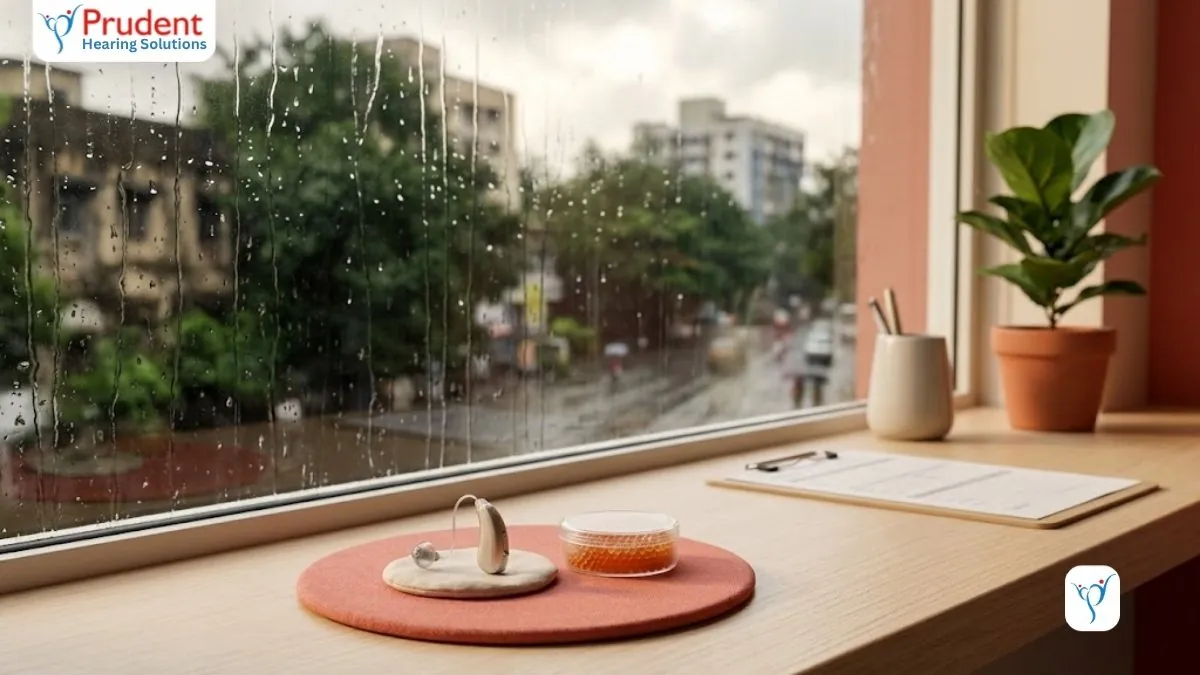
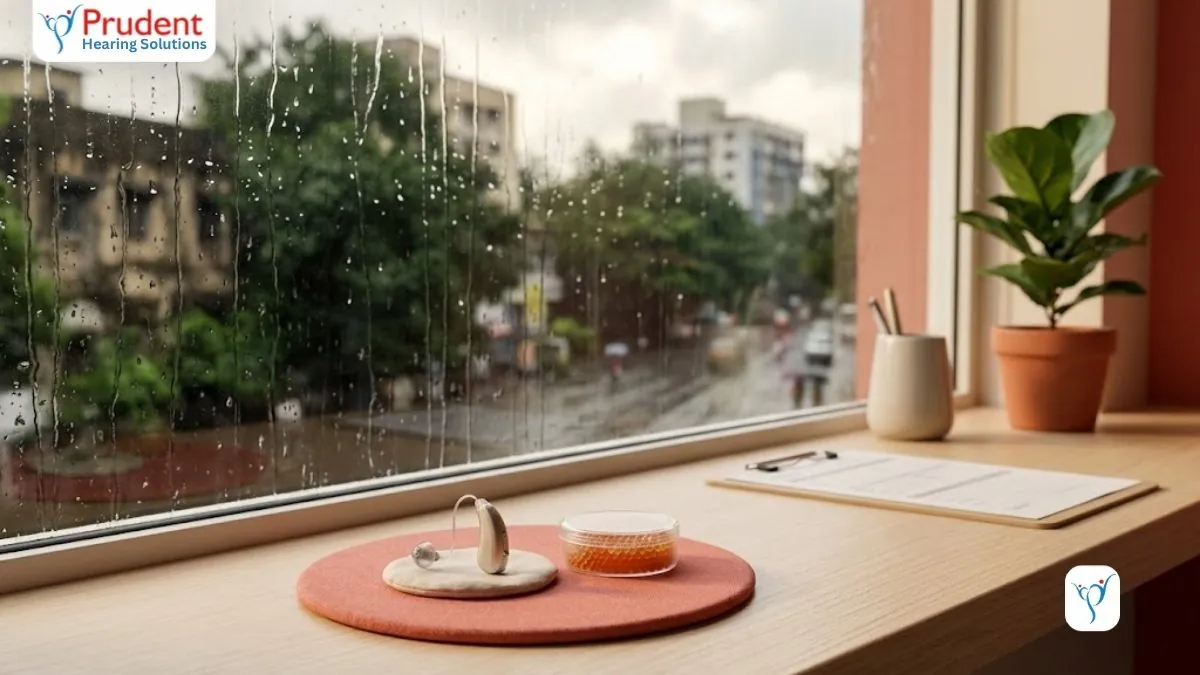
Water is one of the most common reasons aids land on our repair bench, especially during the rains. Modern aids are moisture-resistant, not waterproof, so quick and correct action makes a real difference to whether it survives. The golden rule is gentle drying and absolutely no heat.
- Switch it off immediately and remove the battery, or take a rechargeable aid out of its charger. Do not try to power it on to test it.
- Dab it dry with a soft, dry cloth. Do not shake it hard or blow into it.
- Place it in a desiccant drying kit or an electronic dehumidifier and leave it for several hours, ideally overnight, with the battery door open.
- Never use a hairdryer, oven, microwave, direct sunlight or any other heat source. Heat warps the delicate internal parts and usually turns a recoverable aid into a dead one.
- Once dry, if it still will not work properly, take it to your clinic. Say clearly that it got wet, so the technician knows to check for corrosion.
If you live somewhere humid or you are heading into the monsoon, our guide on hearing aid care in the monsoon is worth reading before the rains start rather than after your aid has already taken a soaking.
What professional repair and servicing actually involves
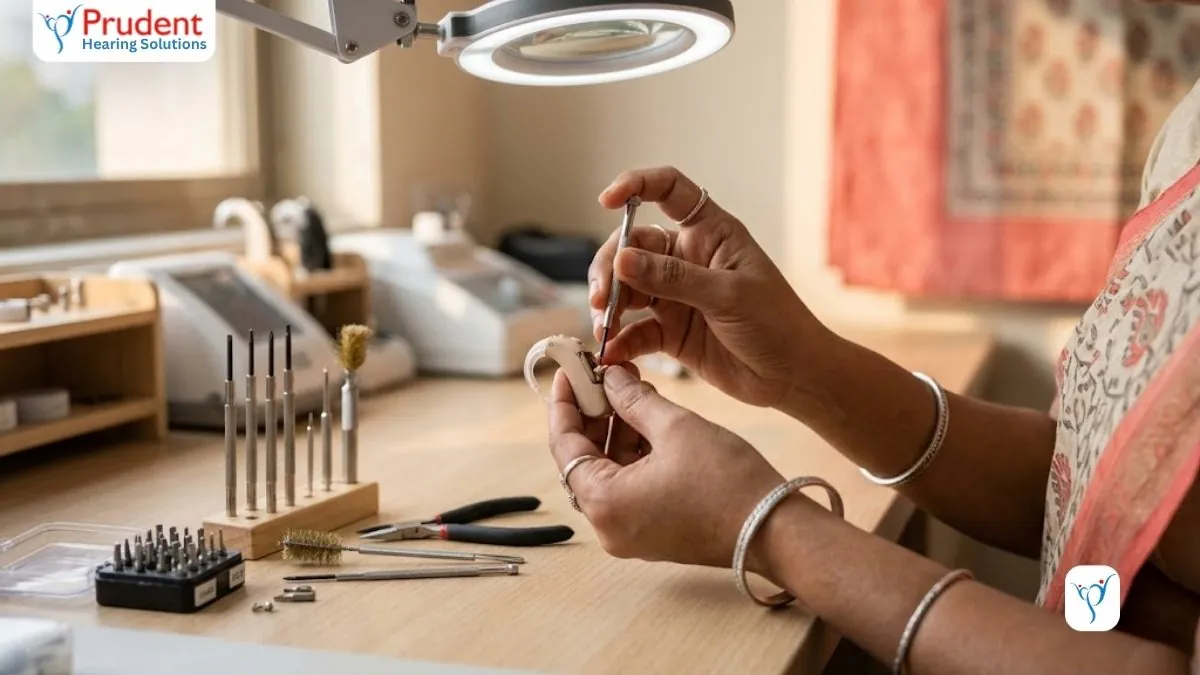
When a home fix is not enough, a repair usually happens at one of two levels. Most jobs are handled at the clinic the same day. Deeper electronic faults are sent to the manufacturer, who has the specialist equipment to open and rebuild the sealed core of the device.
- At the clinic: replacing the receiver or speaker unit, re-tubing a behind-the-ear aid, swapping worn domes and wax filters, a deep clean and vacuum of stubborn wax, and re-shelling or re-fitting a custom in-the-ear aid.
- At the manufacturer: board-level electronic faults, water-corrosion repairs, and anything under warranty that needs the sealed housing opened. Your clinic packs and ships it, tracks it, and calls you when it is back.
Turnaround: how long does it take?
Minor fixes are often done while you wait or on the same day, because a wax filter, a dome, a tube or even a click-on receiver can be replaced there and then. Repairs that go back to the manufacturer typically take about one to three weeks, depending on the brand, the part and shipping. A good clinic will give you a realistic date up front and, where possible, lend you a spare so you are not left without hearing in the meantime.
How much does hearing aid repair cost in India?
Cost depends entirely on what is wrong, so treat these as general bands rather than fixed prices. The reassuring part is that the most common problems are also the cheapest to fix, and many are done free of charge for aids bought from the same clinic.
- Routine cleaning, wax-guard changes and dome swaps are cheap, and often free at the clinic where you were fitted.
- Replacing a receiver or speaker, re-tubing or minor part replacement is a moderate, one-off cost.
- Out-of-warranty, board-level repairs sent to the manufacturer are the most expensive, since they involve specialist labour and shipping.
Warranty versus out-of-warranty
This is the part that surprises people, so it is worth being clear. A manufacturer warranty usually covers manufacturing defects, meaning the device failing on its own without misuse. It does not normally cover physical damage or water damage, so a cracked, crushed or drowned aid is generally a chargeable repair even if the warranty is still running.
Keep your purchase invoice and warranty card safe, because a repair that is free under warranty can otherwise be billed. Our guide on hearing aid warranty and after-sales support in India explains exactly what is and is not covered so there are no nasty surprises.
Where can I get my hearing aid repaired in India?
The best first stop is the audiology clinic that fitted you, because they hold your records, have your prescription, and can often fix small issues on the spot. If you bought online or from a shop that no longer supports you, any full-service hearing clinic with a qualified audiologist can help, as most service and repair all the major brands including Phonak, Signia, Oticon, Widex, ReSound, Starkey and Unitron.
Avoid unbranded roadside repairers who open the sealed unit, as an untrained repair can void your warranty and ruin the aid. If you are looking for a properly qualified centre, our guide on finding a hearing aid centre near you in India points you in the right direction.
Can any hearing aid be repaired?
Almost any modern hearing aid can be repaired, as long as the manufacturer still supports it and the spare parts are available. Wax filters, domes, tubes and receivers are standard replaceable parts, and even water-damaged aids can often be revived if you act quickly.
The main exception is a very old model whose parts are no longer made, or an aid so badly damaged that a repair would cost close to a new device. In those cases a technician will tell you honestly that it is beyond economical repair, and it becomes a good moment to look at a newer aid rather than keep paying to patch up an ageing one.
A simple routine that prevents most repairs
The wearers who almost never need repairs are the ones who look after the aid a little every day. It takes two minutes and saves a great deal of trouble.
- Wipe the aid with a dry cloth each night and brush the microphone and receiver openings.
- Change the wax guard the moment sound gets soft, rather than waiting for total silence.
- Dry the aid overnight in a drying kit, every night if you live somewhere humid.
- Store it out of the bathroom and away from heat, and take it out before a shower, swim or heavy workout.
- Book a professional clean and check-up at your clinic once or twice a year to catch problems early.
Follow that routine and most silent-aid mornings simply stop happening. When one does, work calmly through the home fixes above, and if the aid is still not right, that is the moment to bring it to a professional.
Bring your hearing aid in and let us take a look
If your aid has stopped working and the home fixes have not brought it back, do not struggle in silence. Prudent Hearing Solutions is an RCI-registered clinic that services and repairs all major brands, including Phonak, Signia, Oticon, Widex, ReSound, Starkey and Unitron. We have clinics in Pune (Viman Nagar), Delhi (Rohini and Green Park) and Bengaluru (Jayanagar).
Many small repairs are sorted the same day, and where a job must go to the manufacturer we handle the whole process for you. We also offer a free 45-minute hearing test and 0% EMI on new aids if it turns out yours has reached the end of its life. Bring your aid in, or call us on +91 9429690093, and we will get you hearing clearly again.
Continue reading
Frequently asked questions
How do I fix a hearing aid that stopped working?
Work from the simplest cause up. First check the power: fit a fresh battery or confirm a rechargeable aid actually charged fully. Then change the wax guard, since a wax-blocked filter is the most common reason an aid goes silent.
Brush the microphone and receiver ports clean, dry the aid overnight in a drying kit or dehumidifier, and restart it. For a Bluetooth aid, re-pair it to your phone. If it is still silent or distorted after all that, the fault is likely inside the device and it needs professional service, so stop and take it to your clinic.
My hearing aid got wet, what should I do?
Act quickly and gently. Switch the aid off at once and remove the battery, or take a rechargeable aid out of its charger, and do not try to power it on. Dab it dry with a soft cloth, then place it in a desiccant drying kit or an electronic dehumidifier for several hours, ideally overnight, with the battery door open.
Never use a hairdryer, oven, microwave or direct heat, as heat warps the internal parts and usually kills a recoverable aid. Once dry, if it still will not work, take it to your clinic and tell them it got wet so they can check for corrosion.
Where can I get my hearing aid repaired in India?
The best first stop is the audiology clinic that fitted you, as they have your records and can often fix small issues on the spot. If that clinic no longer supports you, any full-service hearing centre with a qualified audiologist can help, since most service and repair all major brands such as Phonak, Signia, Oticon, Widex, ReSound, Starkey and Unitron.
Avoid unbranded roadside repairers who open the sealed unit, because an untrained repair can void your warranty. Prudent Hearing Solutions repairs all major brands at its clinics in Pune, Delhi and Bengaluru.
How much does hearing aid repair cost in India?
It depends on what is wrong, so treat costs as general bands. Routine cleaning, wax-guard changes and dome swaps are cheap and often free at the clinic where you were fitted. Replacing a receiver or speaker, or re-tubing, is a moderate one-off cost.
Out-of-warranty, board-level repairs that go back to the manufacturer are the most expensive because they involve specialist labour and shipping. Keep your invoice and warranty card, since a repair that would be free under warranty can otherwise be billed. Remember that warranty usually covers manufacturing defects, not physical or water damage.
Can any hearing aid be repaired?
Almost any modern hearing aid can be repaired as long as the manufacturer still supports the model and spare parts are available. Wax filters, domes, tubes and receivers are standard replaceable parts, and even water-damaged aids can often be revived if you act quickly.
The exceptions are very old models whose parts are no longer made, and aids so badly damaged that a repair would cost close to a new device. In those cases a technician will tell you honestly that it is beyond economical repair, and it becomes a sensible moment to consider a newer aid.
Free consultation
Ready to hear the difference?
Book a free 45-minute hearing test at any Prudent Hearing clinic: no obligation, honest advice, expert audiologists.