Educational information, not medical advice. This article is written to help you understand common ear and hearing issues. It is not a substitute for professional diagnosis or treatment. If your symptoms are severe, sudden, or persistent, please consult a qualified doctor or audiologist. For urgent symptoms (sudden hearing loss, bleeding from the ear, severe pain with dizziness, or a head injury), seek medical care the same day.
A plain guide to hearing aid batteries in India: the four zinc-air sizes and colour codes, how long each lasts, safe storage, and where to buy them.
If you wear behind-the-ear or in-the-ear hearing aids that run on disposable batteries, those tiny button cells are the one part you will replace again and again. Most people find them a small mystery at first: which size do I need, how long should one last, and where do I even buy them without overpaying?
This guide answers all of that in plain terms for India, covering the four standard battery sizes and their colour codes, how many days each one runs, the right way to handle and store them, roughly what they cost and where to get them locally, and how rechargeable models sidestep the whole routine.
One thing is worth knowing up front. Nearly every disposable hearing-aid battery today is a zinc-air cell. That means it stays dormant until air reaches it, which is why each battery comes sealed with a small coloured sticker. The moment you peel that tab off, the battery starts to activate, and there is a simple trick to getting the most out of it that we will come to. First, the sizes.
Which cell is used in hearing aids? The four battery sizes
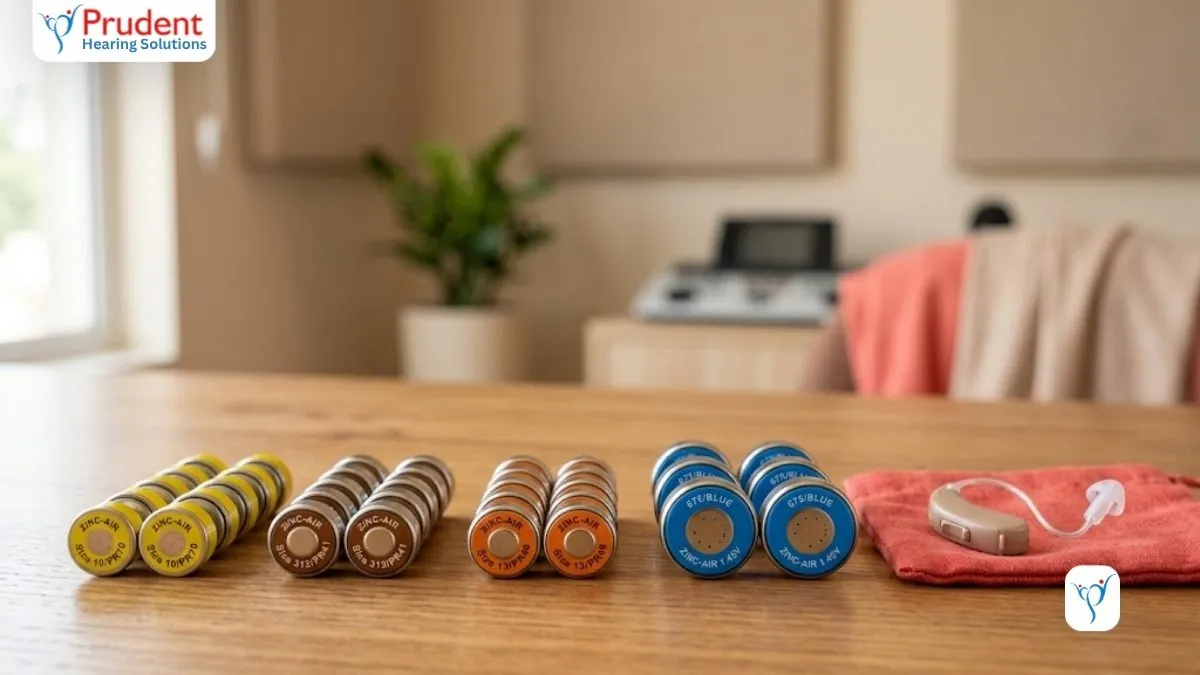
There are four standard disposable sizes used across almost every brand sold in India, from Phonak and Signia to Oticon, Widex, ReSound, Starkey and Unitron. Helpfully, the whole world uses the same colour code on the packaging and the tab, so a size 13 is orange whether it is made by Rayovac, Power One, Duracell or a brand's own label. That colour is the quickest way to buy the right one without squinting at tiny numbers.
- Size 10 (yellow): the smallest cell, used in tiny in-the-ear aids and slim receiver-in-canal models.
- Size 312 (brown): one of the most common sizes in India, used in many standard RIC and in-the-ear aids.
- Size 13 (orange): a larger cell for behind-the-ear aids and some in-the-ear models, giving longer life.
- Size 675 (blue): the biggest cell, used in powerful behind-the-ear aids for more severe hearing loss.
If you are not sure which one your aid takes, the colour on your current pack is the answer, or your audiologist will tell you in seconds. As a rough rule, the smaller and more discreet the hearing aid, the smaller the battery, and the more often you will need to change it. In India these batteries are often called cells, so if a chemist asks which cell you need, give the size number or the colour.
How long do hearing aid batteries last?
Battery life depends mostly on the size of the cell, but also on how powerful your aid is and how much you stream audio from a phone. As a broad guide, a single zinc-air battery lasts somewhere between about three and fourteen days. Smaller cells run down faster because they simply hold less energy; larger cells in power aids last the longest.
- Size 10 (yellow): roughly 3 to 7 days.
- Size 312 (brown): roughly 3 to 10 days.
- Size 13 (orange): roughly 6 to 14 days.
- Size 675 (blue): the longest of the four, often up to about two weeks and sometimes a little more.
Two things drain batteries faster than people expect. The first is streaming: taking phone calls or listening to music straight through your aids uses far more power than ordinary listening, so heavy streamers see shorter life. The second is a higher-power setting for a stronger hearing loss. Cold, dry air can shorten life a little too, which matters if you travel to the hills. Treat any published figure as a ballpark rather than a promise, and judge by your own week.
Why you peel the sticker and wait a minute
Because zinc-air batteries are air-activated, the little coloured tab is not just packaging, it is an airtight seal. When you peel it off, oxygen begins reacting inside the cell and the battery wakes up. The trick most people miss is to wait about a minute after removing the tab before you pop the battery into the aid.
Giving it that full minute to breathe lets it reach full strength and can add a little to its overall life. Peel, wait a minute, then insert. Do not stick the tab back on to save a battery, because once air has got in, the clock has already started.
How to store and handle hearing aid batteries safely
Good storage keeps your spares reliable and keeps everyone in the house safe. A few simple habits cover it:
- Keep the tabs on until the moment you need a battery. A sealed cell stays fresh for a long time; an activated one does not.
- Store them at normal room temperature in a dry place. Do not refrigerate hearing-aid batteries; the old fridge advice is a myth for zinc-air cells, and condensation can actually harm them.
- Keep batteries away from coins, keys and other metal in a pocket or bag, which can short them out.
- Open the battery door of your aid at night. This switches it off to save power and lets any moisture escape, which matters a lot in humid Indian weather.
- Store loose button cells well out of reach of children and pets. Swallowing one is a genuine medical emergency; if it ever happens, seek help immediately.
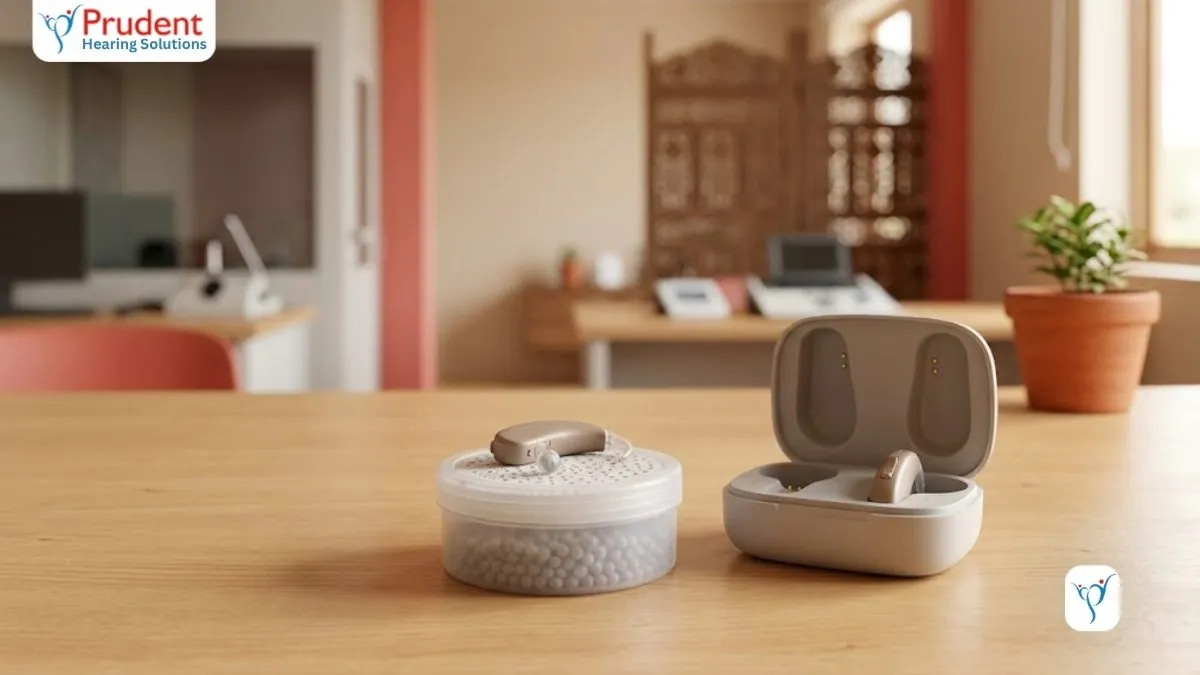
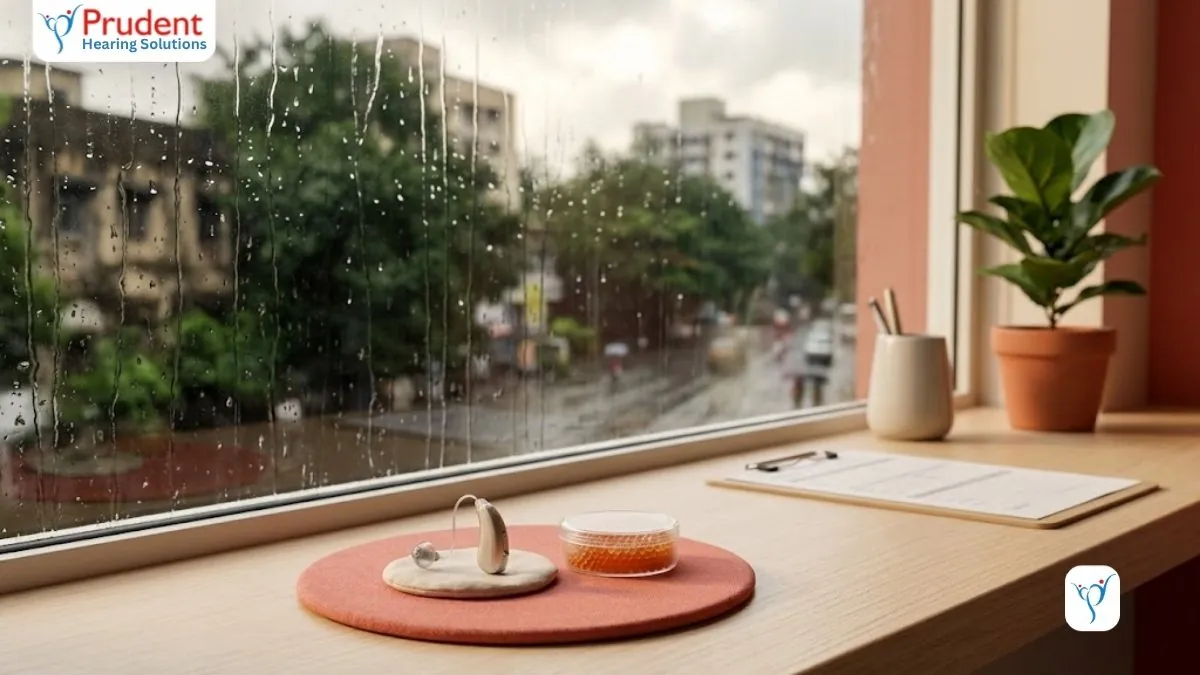
In the monsoon especially, moisture is the enemy of both the battery and the aid itself. A small drying box or dehumidifier jar overnight helps, and it pairs naturally with caring for hearing aids in the monsoon and the wider routine of how to clean and maintain your hearing aids.
Where can I buy hearing aid batteries in India?
You have three practical options in India, and most wearers end up using a mix of them.
- Your hearing clinic: the most reliable source. Audiology clinics stock the right size for your aid and genuine, fresh stock, and can confirm you are buying the correct cell. Prudent Hearing keeps batteries and accessories on hand alongside repairs and servicing.
- Chemists and opticians: many larger pharmacies and optical shops carry the common sizes, especially 312 and 13. These are handy in a pinch, though the smaller size 10 and the larger 675 can be harder to find.
- Online: e-commerce sites list every size in multi-packs, often the cheapest per battery. Buy from reputable sellers, check that the colour code matches your size, and look at the expiry date, since old stock loses charge sitting on the shelf.
On price, keep expectations general. Disposable batteries are inexpensive per cell and are usually sold in strips or multi-packs, with the bigger multi-packs working out cheaper each. Prices vary by brand, size and where you buy, so it is worth comparing, and current rates are best confirmed locally.
What matters more than shaving a few rupees is buying fresh stock, in the right size, from a source you trust. This is a small running cost next to the aid itself; for the bigger picture on what devices cost, see our guide to hearing aid prices in India.
Are rechargeable hearing aids better than battery-operated ones?
Rechargeable hearing aids remove the disposable-battery routine altogether. Instead of a zinc-air cell, they use a built-in lithium-ion battery that you top up overnight in a charging case, much like a phone. A full charge typically runs a whole day, and there are no tabs to peel, no fiddly little cells to change with stiff or arthritic fingers, and nothing to buy again and again.
Whether they are better depends on you. Rechargeables are convenient and are often the easier choice for older users or anyone who struggles with tiny batteries, and they save the ongoing cost and waste of disposables. On the other hand, disposable-battery aids never leave you stuck with a flat device if you forget to charge, since a spare cell gets you going in seconds, and they still include the smallest, most discreet models.
Bear in mind that either type helps you manage hearing loss rather than cure it, so the fitting and follow-up matter more than the power source. If you are weighing the two, our detailed comparison of rechargeable versus battery hearing aids lays out the trade-offs in full.
"The best battery is the one you will actually keep up with. For some that is a fresh zinc-air cell in a pocket; for others it is a charger on the bedside table."
Getting the right batteries, and the right advice
Disposable hearing-aid batteries are simple once you know the code. Match the colour and size to your aid, peel the tab and wait a minute, store spares dry at room temperature and away from children, and open the battery door at night. Do that and you will get honest, predictable life from every cell.
If you are ever unsure which size you need, or whether a rechargeable model would suit you better, an audiologist can settle it in minutes. Rules, stock and prices do change over time, so confirm current details locally rather than relying on a figure you read once.
Prudent Hearing Solutions is an RCI-registered clinic (established 2004) with offices in Pune (Viman Nagar), Delhi (Rohini and Green Park) and Bengaluru (Jayanagar). We fit all major brands, stock batteries and accessories, handle repairs and servicing, and offer EMI options on hearing aids as per current schemes. If you would like your aids checked, or want to know whether rechargeable is right for you, book a free 45-minute hearing test. You can also find a hearing aid centre near you, or call +91 9429690093.
Continue reading
Frequently asked questions
What are the different hearing aid battery sizes?
Almost all disposable hearing aids use one of four zinc-air sizes, each with a universal colour code: size 10 (yellow), size 312 (brown), size 13 (orange) and size 675 (blue). Size 10 is the smallest and 675 the largest, generally used in more powerful behind-the-ear aids. The colour on your current pack, or a quick word with your audiologist, is the easiest way to confirm which one your aid takes.
How long do hearing aid batteries last?
A single zinc-air battery usually lasts between about three and fourteen days. Smaller cells run out faster, so a size 10 often lasts 3 to 7 days, while a larger 675 can run up to about two weeks. Heavy streaming of calls and music, and higher power settings for a stronger hearing loss, both shorten that life, so treat any figure as a ballpark and judge by your own week.
Where can I buy hearing aid batteries in India?
You can buy them at your hearing clinic, at many chemists and opticians, or online. Clinics are the most reliable for fresh stock in the exact size your aid needs, chemists are convenient for common sizes like 312 and 13, and online multi-packs are often cheapest per cell. Wherever you buy, check that the colour code matches your size and look at the expiry date. Prudent Hearing keeps batteries and accessories in stock at its clinics.
Are rechargeable hearing aids better than battery-operated ones?
It depends on you. Rechargeable models use a built-in lithium-ion battery you charge overnight, so there are no tabs to peel or tiny cells to change, which suits older users and anyone who dislikes fiddly batteries. Disposable-battery aids, though, never leave you stuck if you forget to charge and still include the smallest, most discreet designs. Either way, the device helps manage hearing loss rather than cure it. Our full comparison of rechargeable versus battery hearing aids weighs both sides.
Which cell is used in hearing aids?
Disposable hearing aids use small zinc-air button cells in four standard sizes, each with a colour code: size 10 (yellow), 312 (brown), 13 (orange) and 675 (blue). The size depends on the aid, so check your current pack or ask your audiologist. Rechargeable hearing aids use a built-in lithium-ion battery instead and never need cells.
Free consultation
Ready to hear the difference?
Book a free 45-minute hearing test at any Prudent Hearing clinic: no obligation, honest advice, expert audiologists.