A quick note: Prudent Hearing Solutions is an RCI-registered hearing-aid clinic for people with hearing loss. We run hearing tests and fit medical hearing aids. We do not sell AirPods, TWS or consumer earbuds. If you are looking to buy earbuds, you are in the wrong place, but if you are struggling to hear, we can genuinely help.
Educational information, not medical advice. This article is written to help you understand common ear and hearing issues. It is not a substitute for professional diagnosis or treatment. If your symptoms are severe, sudden, or persistent, please consult a qualified doctor or audiologist. For urgent symptoms (sudden hearing loss, bleeding from the ear, severe pain with dizziness, or a head injury), seek medical care the same day.
Can you wear hearing aids with glasses, masks and earbuds? Yes, with the right order and care. Plus the everyday mistakes that quietly damage your aids.
Yes, you can wear hearing aids with glasses every day, and millions of people do. You can also wear them with a face mask, and stream phone calls and music straight into your ears. What you generally can't do is wear earbuds or over-ear headphones on top of a behind-the-ear aid, because the aid is already sitting where the bud wants to go.
This guide covers the small daily habits that make glasses, masks and headphones work with your aids, and then the mistakes that quietly damage them. A hearing aid manages your hearing loss; it doesn't cure it, so looking after the device is really looking after your hearing.
Wearing hearing aids with glasses
The space behind your ear is small, and a behind-the-ear (BTE) or receiver-in-canal (RIC) aid has to share it with the arm of your spectacles. Most people manage both comfortably within a day or two. The trick is order and placement.
The order: glasses first, aids second
- Put your glasses on first, settle them on your nose and ears, then place the hearing aids behind them, tucked closer to your head.
- Take them off in reverse: hearing aids out first, then glasses. Pull your glasses off over an aid that's still hooked on your ear and you can flick it to the floor.
- Do all of this over a bed or a sofa, not a hard floor, until the habit becomes automatic.
The aid should sit snug against the back of your ear, with the spectacle arm resting just above or below it, not pressing on the microphone or the tubing. If you get a sore spot behind the ear after a few hours, the two are fighting for the same groove. A small adjustment at your fitting appointment usually settles it.
Frames that play well with hearing aids
- Thin-temple or wire frames leave more room behind the ear than thick acetate arms.
- Frames that grip well at the front (a good nose-bridge fit) lean less on the ear, so taking them off disturbs the aid less.
- If your glasses are heavy or you wear them all day, raise it with your audiologist before you choose an aid style.
This is where the style of aid matters. A slim RIC sits low and hugs the head, so it competes less with a spectacle arm than a bulkier device. Our RIC hearing aids guide explains the shape.
If you wear thick or heavy frames from morning to night, an in-the-ear or invisible in-canal aid removes the conflict altogether by sitting inside the ear, with nothing behind it at all; see invisible CIC and IIC hearing aids. Neither is automatically better (your audiogram decides), but heavy glasses-wearers should put it on the table. Our BTE guide covers when behind-the-ear is still the right call.
Hearing aids built into spectacles
Some people search for hearing aids built into spectacles rather than worn alongside them. Two kinds exist. Bone-conduction spectacle aids press a vibrating pad against the bone behind the ear and are used for some conductive losses; see our guide to bone-anchored and bone conduction hearing aids. Newer hearing glasses with microphones in the frame are aimed at mild to moderate loss, but their availability in India is limited. For most people, a slim receiver-in-canal aid worn with ordinary glasses is still the simplest option.
Wearing hearing aids with a face mask
Masks are still part of daily life for many people: in hospitals and clinics, on crowded trains, during pollution spikes and flu season. An ear-loop mask and a behind-the-ear aid want the same anchor point, and that causes two problems.
- Tangle: the loop catches under the aid and lifts it off the ear.
- The fling-off: whipping a mask off in a hurry can send a small aid flying, often without you feeling it go until it's already gone.
"The most common way people lose a hearing aid isn't dropping it. It's pulling off a mask, or a pair of glasses, and flinging the aid across the room without ever feeling it leave the ear."
How to wear both without losing an aid
- Use a mask extender or a head-loop mask: the loops fasten behind your head or on buttons instead of around your ears, so nothing tugs on the aid.
- Remove the mask slowly, easing each loop forward over the ear rather than yanking it, with a hand cupped near the aid.
- Do a two-second ear check after taking a mask off, especially in a clinic, an auto, or anywhere you couldn't easily search the floor.
- Take the mask off over a table or your lap, so a dislodged aid lands somewhere findable.
If you're in and out of a mask all day for work, a head-loop style is worth its small cost. It removes the daily risk entirely.
Wearing hearing aids with earbuds and headphones
This is the one that surprises people. If you have a behind-the-ear or receiver-in-canal aid, you generally can't wear earbuds or over-ear headphones on top of them, and you shouldn't try.
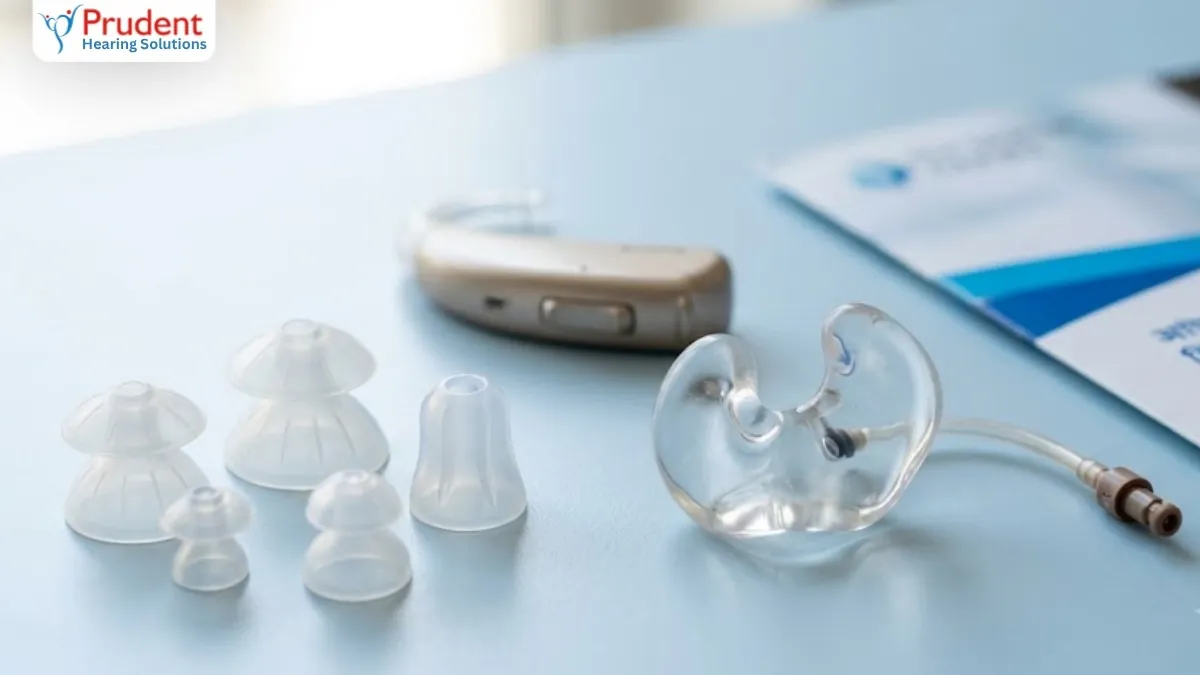
- In-ear buds (AirPods and the like) need the ear canal, which your aid's dome or receiver is already filling. Force a bud in and you get feedback whistling, a poor seal, or both.
- Over-ear headphones press on the microphones of a BTE or RIC aid, which causes feedback and muffled, distorted sound.
- Stacking either one risks knocking the aid loose or damaging it.
The answer isn't to take your aids out. If your aids support Bluetooth, stream through the aids themselves: phone calls, music, videos, navigation and video calls go straight into your ears at a volume already shaped to your loss, and your aids become your headphones. (Whether audio reaches one ear or both depends on your model and phone, and entry-level aids may not have Bluetooth at all.) Our Bluetooth hearing aids guide and behind-the-ear and Bluetooth hearing aids explain how to set it up.
When a single earbud still makes sense
If you wear one aid and have normal or near-normal hearing in the other ear, you can pop a single bud in the unaided ear for a quick call or a podcast, while the aided ear carries on doing its own job. A phone's speaker or a neck-worn streamer works too. And if you've been weighing consumer earbuds against real hearing aids, our piece on AirPods Pro 2 as a hearing aid is honest about where they help and where they fall short.
Mistakes to avoid with hearing aids
Most of the repairs we see aren't manufacturing faults. They're habits. Avoid these and your aids last longer and sound better.
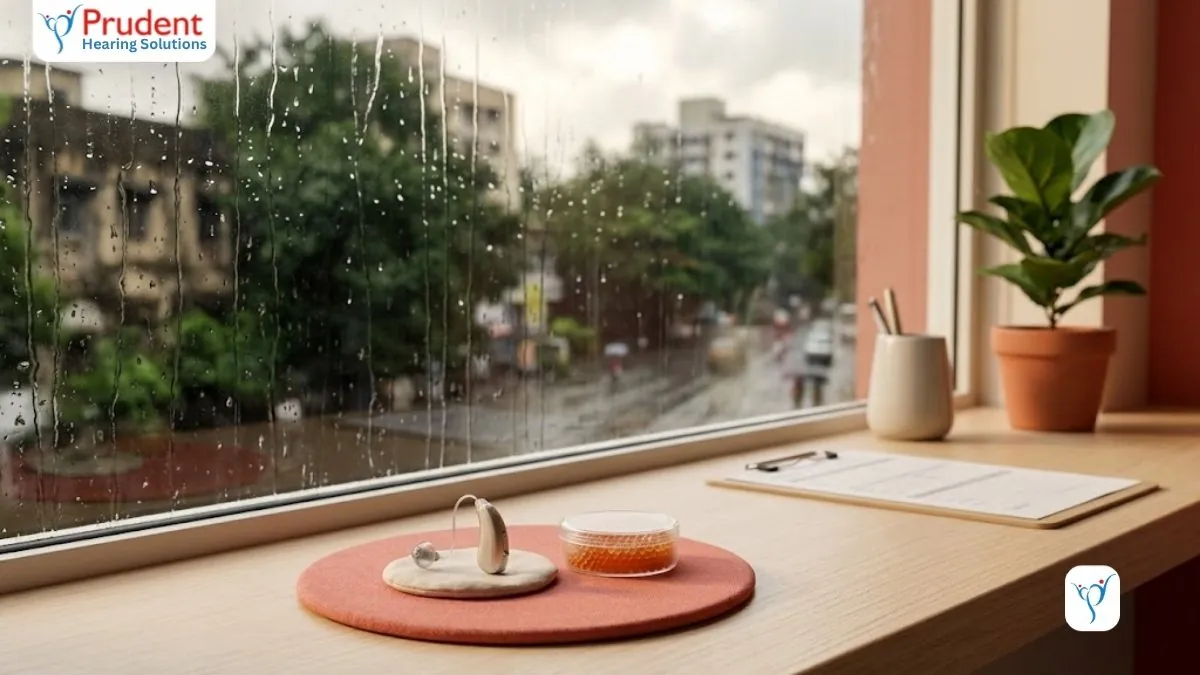
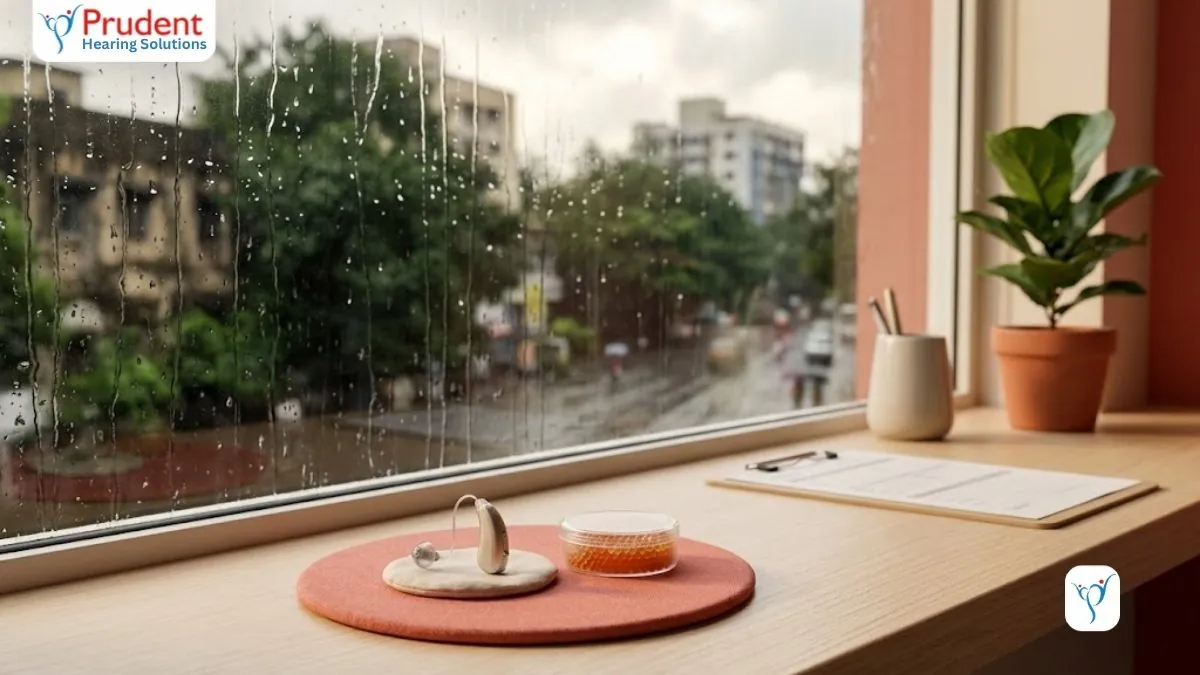
- Moisture, sweat and the monsoon. Water is the number one enemy of the electronics. Don't wear aids in the shower or the rain, wipe off sweat after a workout or a humid commute, and dry them in a dehumidifier box overnight. Our monsoon care guide is essential reading from June to September.
- Sleeping in them. Lying on an aid can crack the shell, whistle in your ear all night and flatten the battery. Take them out, switch them off, and store them.
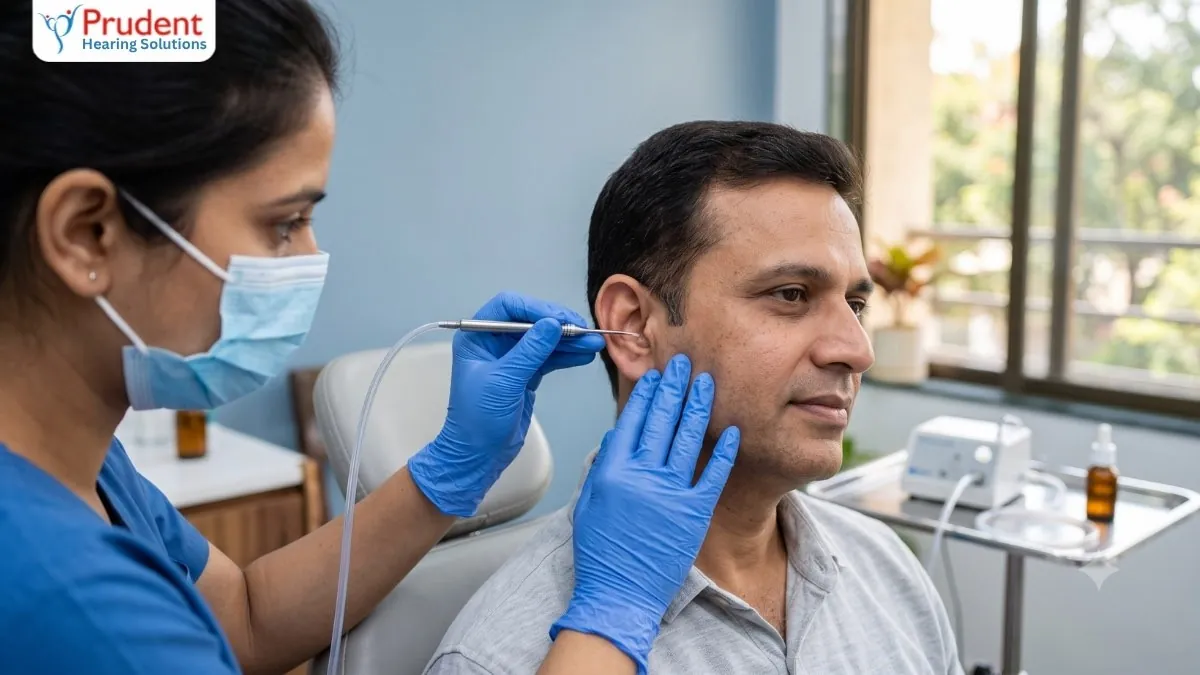
- Cotton buds in your ears. They push wax deeper and can hurt the canal, and clogged wax is a leading cause of an aid that 'stopped working'. Clean your ears the safe way instead; see how to clean your ears safely at home. If an ear is painful, blocked or discharging, see a doctor or ENT rather than treating it yourself.
- Wrong storage. No sunny windowsill, no hot car, no steamy bathroom, and never loose in a bag where they get crushed or lost. Use the case, keep it cool and dry, and out of reach of children and pets (dogs love the smell).
- Letting wax clog the receiver. Change the wax guard on schedule and clean the aid daily. A two-minute routine prevents most 'dead' aids, and how to clean and maintain hearing aids walks you through it.
- Skipping follow-ups. Your hearing and your ears change. A tuning visit and a professional clean keep the aid matched to you, and programming is free for life at Prudent, so there's no reason to skip it. If something is genuinely wrong, repair and servicing beats buying new.
- Buying the wrong device. The biggest mistake happens before you ever wear it: a cheap 'ear machine' bought online, or an aid that doesn't match your audiogram. Get tested first. Our tips for new hearing aid users cover settling in, and hearing aid side effects explains what's normal and what isn't.
The bottom line
Glasses, masks and hearing aids all share the same small patch of real estate behind your ear, and with a little order and care they coexist fine. Earbuds are the exception: let your aids be your headphones instead. And the mistakes that shorten an aid's life are almost all avoidable: keep it dry, keep it clean, store it properly, and keep your follow-ups.
A hearing aid manages hearing loss (it doesn't cure it), and it can't do its job sitting damaged in a drawer. If you're choosing your first pair, or your glasses and your current aids are fighting each other, book a free hearing test, see the range and prices, or get in touch on +91 9429690093. Prudent has been fitting hearing aids since 2004, with clinics in Pune, Delhi and Bengaluru. Prudent Hearing Solutions
Continue reading
Frequently asked questions
Can I wear hearing aids with glasses at the same time?
Yes. Behind-the-ear and RIC aids share the space behind your ear with the spectacle arm, and most people are comfortable within a day or two. Put your glasses on first and the aids behind them, closer to your head. If you wear heavy frames all day, a slim RIC or an in-the-ear aid competes less for that space, so ask your audiologist.
Should I put my glasses or my hearing aids on first?
Glasses first, then hearing aids tucked in behind them. Reverse it to take them off: hearing aids out first, then glasses. Removing glasses over an aid that is still on your ear is one of the easiest ways to knock it off and lose it.
How do I stop losing my hearing aid when I take off a mask?
Use a head-loop mask or a mask extender so the loops fasten behind your head instead of around your ears. Remove any ear-loop mask slowly, easing the loops forward with a hand cupped near the aid, and do a quick ear check afterwards. Take the mask off over a table or your lap so a dislodged aid lands somewhere you can find it.
Can I use AirPods or earbuds with my hearing aids?
Generally no: an in-ear bud can't share the canal with a BTE or RIC aid's dome, and over-ear headphones press on the aid's microphones and cause feedback. Instead, if your aids have Bluetooth, stream calls and music straight through the aids themselves. If you wear only one aid and hear well in the other ear, a single bud in the unaided ear is fine for a quick call.
Can I wear my hearing aids in the rain or while sweating?
No. Moisture is the biggest cause of hearing-aid failure. Keep them out of the shower and rain, wipe off sweat after exercise or a humid commute, and dry them in a dehumidifier box overnight, especially through the Indian monsoon.
Is it okay to sleep with my hearing aids in?
No. Lying on an aid can crack the shell, whistle in your ear through the night and drain the battery. Take them out, switch them off, and store them in their case in a cool, dry place away from children and pets.
Free consultation
Ready to hear the difference?
Book a free 45-minute hearing test at any Prudent Hearing clinic: no obligation, honest advice, expert audiologists.