A quick note: Prudent Hearing Solutions is an RCI-registered hearing-aid clinic for people with hearing loss. We run hearing tests and fit medical hearing aids. We do not sell AirPods, TWS or consumer earbuds. If you are looking to buy earbuds, you are in the wrong place, but if you are struggling to hear, we can genuinely help.
Can the AirPods Pro 2 work as a hearing aid? What Apple's self-fit feature helps with, its limits, and why a real hearing test is the smart next step.
You have probably seen the headlines. Apple added a hearing aid feature to the AirPods Pro 2, and suddenly a pair of earbuds many people already own can help with hearing. If you or someone in your family has been struggling to follow conversations, that news is genuinely hopeful. It is also easy to misread.
So let us slow down and look at what this feature actually is, who it suits, and where a proper hearing test still matters.
Can AirPods be used as hearing aids?
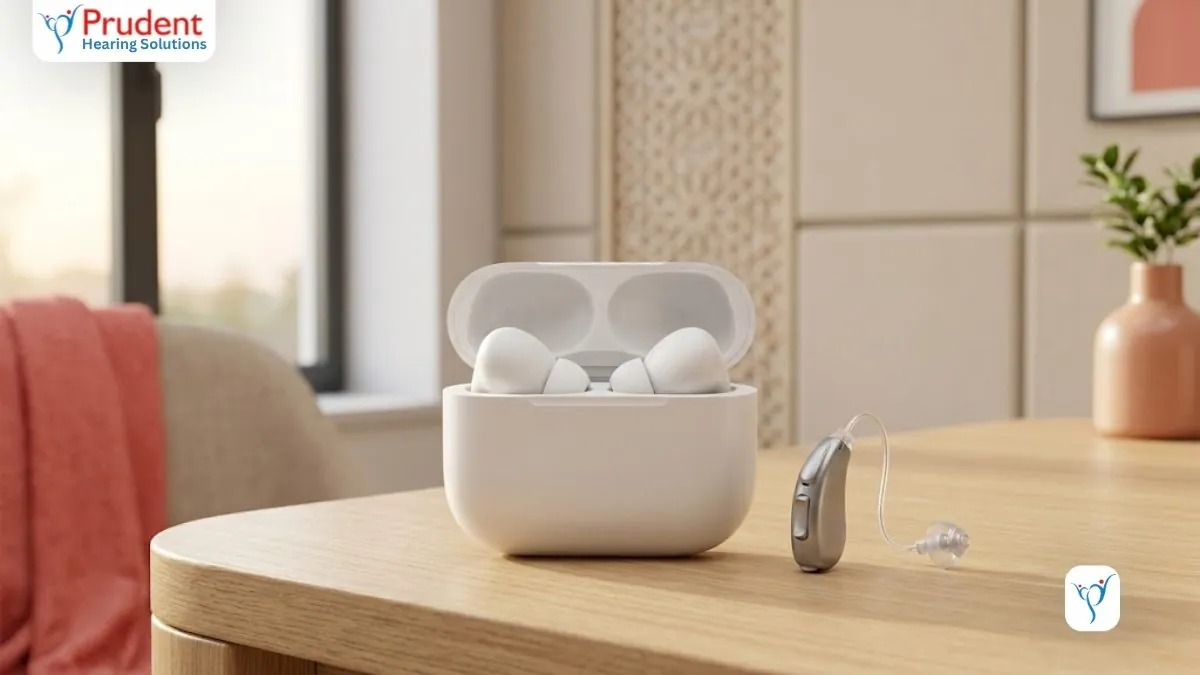
Yes, within limits. Apple's Hearing Aid feature turns the AirPods Pro 2 into what is called an over-the-counter, self-fit hearing aid. In plain terms, you take a short hearing test on your iPhone, and the earbuds then adjust sound to match the results, making speech and everyday sounds clearer for you.
It is a real feature built on real audiology, not a gimmick. For someone with perceived mild-to-moderate hearing difficulty, it can make a noticeable difference to television, one-to-one chats and quieter rooms.
The word doing a lot of work there is "perceived". You are grading your own hearing at home, without anyone examining your ears or checking why your hearing has changed.
How the AirPods Pro 2 hearing feature works
The setup lives in your iPhone settings. You run a quick hearing test using the earbuds, ideally in a quiet space, and the phone builds a simple profile of the sounds you find hard to hear.
From then on, the AirPods amplify the frequencies you tend to miss. There are also related tools, such as reducing loud environmental noise and a built-in test you can repeat later. It is convenient, private and quick, which is a big part of the appeal.
Newer Apple earbuds are expected to carry similar hearing tools, so if you are reading about the airpods pro 3 hearing aid feature, the same principle applies. Convenience is high. The depth of a clinical evaluation is not part of the package.
The Hearing Test feature: a 5-minute screening check
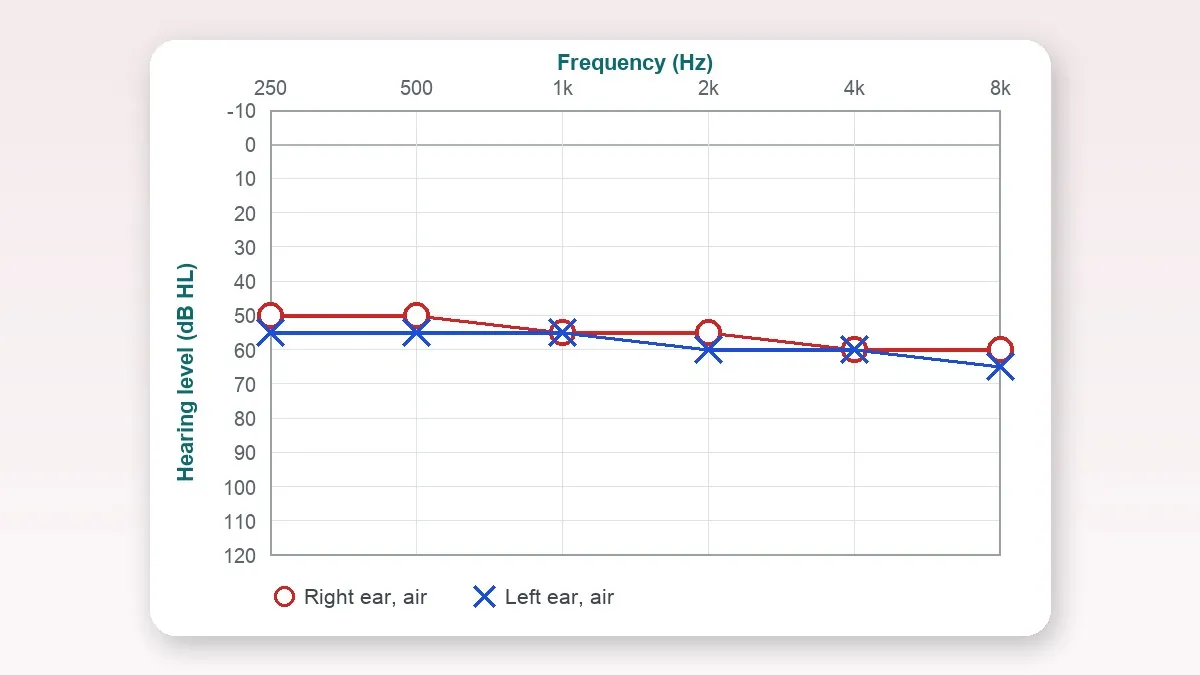
Apple's Hearing Test is the first of the three hearing health features. It plays soft tones at different pitches through the AirPods Pro 2 and asks you to tap when you hear each one, the same pure-tone principle used in a clinic, run from your iPhone in about five minutes. At the end you get a result that estimates your hearing in each ear and saves it in the Health app, where you can view it or export it as a PDF.
Apple validated this test against standard clinical audiometry, and for a quick, private screening it is genuinely useful. It can flag that one ear is worse than the other, or that your hearing has slipped since last year. But it stays a screening, not a diagnosis.
It does not look inside your ear, so it cannot tell whether the cause is wax, fluid, an infection or nerve-related loss, and those need very different treatment. Treat a poor result as a prompt to get a proper hearing test, not as the final word.
The Hearing Aid feature: a self-fit, over-the-counter aid
The Hearing Aid feature uses your Hearing Test result, or an audiogram you enter yourself, to turn the AirPods Pro 2 into a self-fit, over-the-counter hearing aid. It amplifies the specific pitches you struggle with, lifts the voices in front of you, and includes Media Assist, which applies the same personalised tuning to phone calls, music and videos.
It is designed for perceived mild-to-moderate hearing loss, and you can adjust it yourself:
- Overall amplification, plus a left/right balance for a weaker ear
- Tone and a focus on speech coming from in front of you
- Transparency, so you still hear your surroundings
- It needs AirPods Pro 2, a recent iPhone and iOS, and is only switched on in supported countries
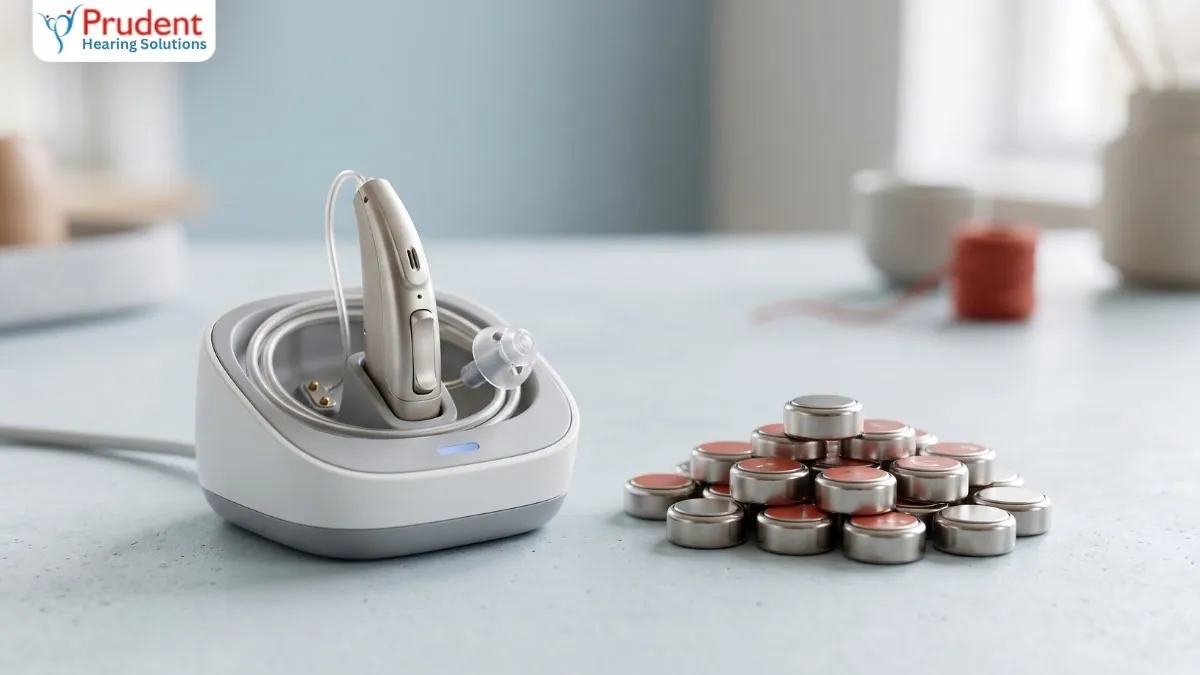
What it will not do is replace a medical hearing aid for moderate-to-severe or complex loss. Battery life is a single day at best, the fit is a standard silicone tip rather than a device matched to your ear canal, and there is no real-ear verification of the result. For a few hours of clearer television or one-to-one conversation it is excellent value; as an all-day, long-term solution it has real limits.
Hearing Protection and Loud Sound Reduction
The third feature works the other way round. Hearing Protection reduces loud environmental noise in real time across Transparency, Adaptive and Active Noise Cancellation modes, so sudden or sustained loud sounds are softened while quieter speech still comes through. Apple positions it for places like concerts, sporting events, power tools and heavy traffic.
It is a sensible everyday safeguard, and protecting your ears from loud noise is one of the best things you can do for your long-term hearing. It is not, however, a substitute for certified ear protection in genuinely dangerous, sustained noise. Industrial work, firing ranges and professional live-music settings still need rated earplugs or earmuffs.
Where an apple hearing aid genuinely helps
There are honest strengths worth acknowledging.
For many people, the hardest part of hearing loss is admitting it and taking a first step. An apple hearing aid feature you can try discreetly, using a device you already wear, lowers that barrier. It can help you notice that yes, sounds really are clearer with a little support.
It can also be a useful bridge. Some people use it while they arrange a proper appointment, or in specific settings like watching a film at home. As a gentle introduction to what amplified hearing feels like, it does a fair job.
What it cannot do
Here is the part that matters most for your safety, and it is not a criticism of Apple.
A self-fit device is designed for mild-to-moderate difficulty that you perceive yourself. It is not appropriate for moderate-to-severe or severe hearing loss, and it cannot tell you why your hearing has changed. That second point is the important one.
Hearing loss has many causes. Some are simple, like earwax. Some need medical attention, like an infection, a perforated eardrum, or fluid behind the drum. A pair of earbuds cannot look inside your ear, measure your hearing across the full range, or flag a cause that needs treatment.
If you rely only on a self-test, you might amplify sound over a problem that a professional would want to see. You could also under- or over-estimate your own loss, because grading your hearing accurately is genuinely hard to do alone.
When to see a professional promptly
Some symptoms should not wait for an app, and should not be managed with earbuds at all. Please arrange to see an audiologist or doctor soon if you notice any of these.
- Sudden hearing loss, especially in one ear, which needs urgent attention
- Hearing that is clearly worse in one ear than the other
- Ringing or noise in only one ear, or a sound that pulses in time with your heartbeat
- Pain, pressure, discharge or fluid from the ear
- Dizziness along with hearing changes
These are signs your ears are asking for a look, not just a volume adjustment.
The sensible next step: know what you actually have
Think of the AirPods feature as a smoke detector, not a diagnosis. It can alert you that something is worth checking. It cannot tell you what is going on or how best to manage it.
A professional hearing test fills that gap. An audiologist examines your ears, measures your hearing properly across frequencies, and explains the likely cause. From there you get advice that fits your actual hearing, whether that is reassurance, treating something simple, or a properly fitted solution if you need one.
If a self-test made you curious, that curiosity is worth following. You can book a hearing test at Prudent Hearing Solutions, where qualified audiologists will tell you what your hearing is really doing, not just what an app estimated. Our centres are easy to reach, and you can find our clinics in Pune, Delhi and Bengaluru whenever you are ready.
There is real reason for hope here. Help for hearing has never been more accessible. The wisest thing you can do with that access is pair it with a proper check, so any step you take is the right one for you.
Continue reading
Frequently asked questions
Can AirPods be used as hearing aids?
Not as a substitute for a prescribed hearing aid. AirPods Pro 2 include an Apple Hearing Aid feature, available in some regions, that can help with mild to moderate loss for casual use, but they are not programmed to your audiogram by an audiologist, have short battery life, and are visible in the ear. For a real, persistent hearing loss they are not a long-term answer. A free hearing test tells you whether you need a proper hearing aid or whether a feature like this is enough for now.
Can AirPods Pro 2 be used as a hearing aid?
They include an over-the-counter, self-fit hearing feature intended for perceived mild-to-moderate hearing difficulty. It can help some people in some settings, but it is not a medical hearing aid fitted to your specific loss.
Is Apple's hearing feature a substitute for a hearing test?
No. It does not diagnose your hearing or find the cause of any loss. A professional hearing test is the sensible next step to know what you actually have before deciding on any device.
Who should not rely on AirPods as hearing aids?
Anyone with moderate-to-severe hearing loss, loss in one ear only, sudden changes, pain or discharge should see an audiologist rather than self-fit a consumer device.
Are AirPods cheaper than hearing aids?
They can cost less upfront, but they are not a like-for-like replacement for a fitted hearing aid or the professional support that comes with one. The right comparison starts with knowing your actual hearing.
What is the sensible next step if I think I have hearing loss?
Have your hearing tested by a qualified audiologist. It tells you what you actually have, whether a device would help, and which type suits you, which no self-fit earbud can do.
Free consultation
Ready to hear the difference?
Book a free 45-minute hearing test at any Prudent Hearing clinic: no obligation, honest advice, expert audiologists.