Best hearing aids for BPO, call-centre and phone-based jobs in India: Bluetooth calls streamed to both ears, headset use, RIC styles and the features that matter.
If your working day is one call after another (a BPO floor, a sales desk, tele-support, or a work-from-home softphone), the best hearing aids for you are modern Bluetooth receiver-in-canal (RIC) models that stream calls straight into both ears, hands-free, with a clear, natural own-voice and strong noise handling for a busy open-plan room. And yes, hearing aids do work with headsets and headphones. But for phone-heavy jobs, the smarter move is usually to let the hearing aids be the headset, rather than balancing a headset on top of them.
One honest note first: a hearing aid manages hearing loss, it does not cure it. It will not turn a noisy call-centre floor into a quiet recording studio. What the right aid does is make speech on calls easier to follow and far less tiring across a full shift, once an audiologist has set it up for your ears. Anything medical (ear pain, discharge, or a sudden drop in hearing) belongs with a doctor or ENT, not a gadget.
Why phone work is harder on your hearing than it looks
India runs one of the world's largest phone-based workforces. Lakhs of people spend the day on BPO floors, outbound sales, tele-support lines and remote desks. That kind of work puts a specific, unusual load on your ears.
- Open-plan noise: dozens of colleagues talking at once, all day long.
- Long shifts: six to nine hours of near-continuous listening, often on night shifts.
- One ear tied up: a traditional headset covers one ear, so you strain the other to hear the room.
- Mixed audio sources: calls arrive through a desk phone, a mobile, or a softphone running on a laptop.
- Back-to-back calls: no gap to rest your ears between conversations.
- Your own voice: you talk for hours, and if you sound boxed-in or too loud to yourself, you tire fast and start speaking unnaturally.
Add even a mild hearing loss to that, and the day becomes exhausting. A few misheard words on a call are not just tiring: they cost you accuracy, and they chip away at your confidence.
Will hearing aids work with a headset or headphones?
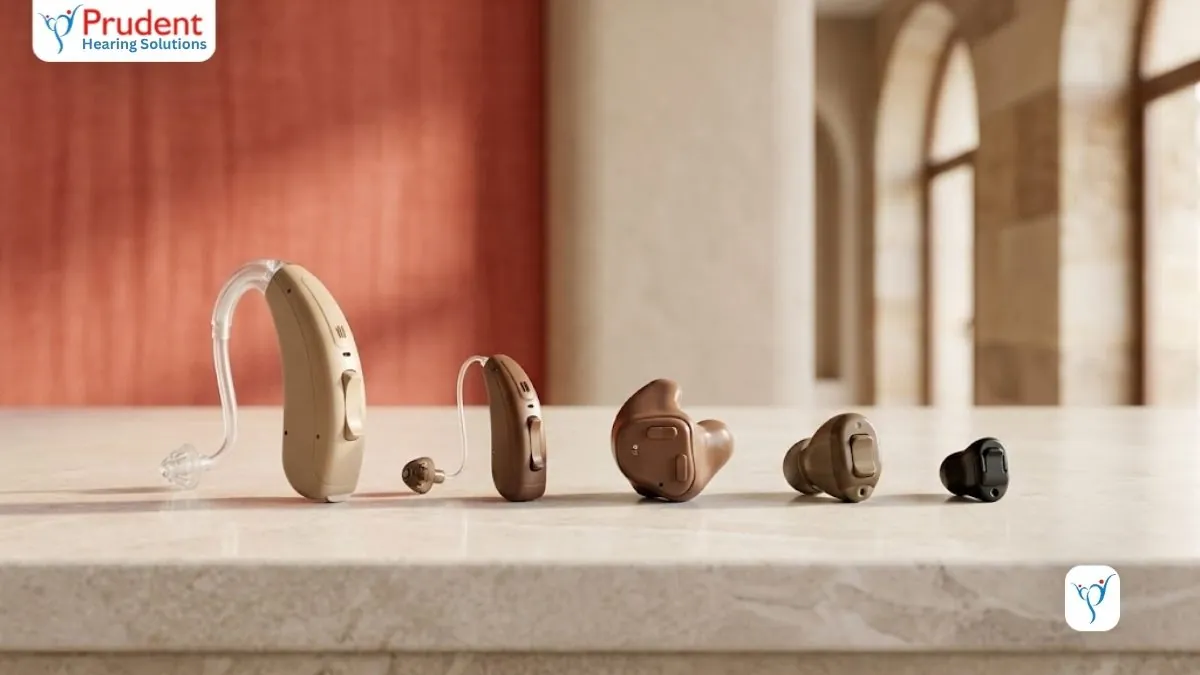
Yes. You can absolutely wear a headset or headphones over hearing aids. How well it works depends mostly on the style of aid you wear. Slim receiver-in-canal (RIC) aids sit low and close to the ear, so an over-ear or on-ear headset cushion usually fits over them without whistling. Bulkier behind-the-ear (BTE) aids stick out more, which can cause feedback (that high-pitched whistle) when a headset presses against them. This is one reason RIC tends to be the practical choice for call work.
The better option: let the hearing aids be the headset
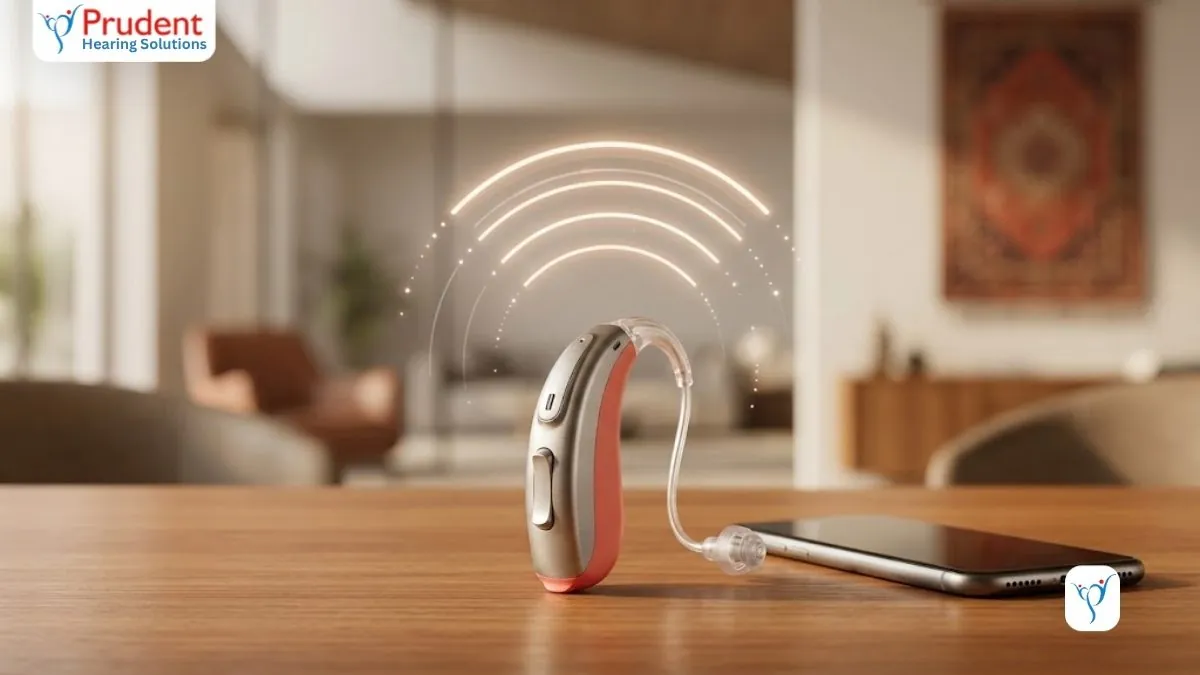
Most modern Bluetooth aids can take a phone call directly, streaming the caller's voice into both ears at once. How your own voice is picked up depends on the model: on select aids (notably Phonak's universal Bluetooth and newer Bluetooth LE Audio models), the aids' own microphones capture your voice too, so calls are genuinely hands-free, while many other Bluetooth aids stream the caller into your ears but still use the phone's microphone for your voice, so you hold or angle the phone as usual.
Confirm hands-free calling with your own phone at the fitting. For laptop and softphone calls, many models pair with a small streamer or dongle that turns the aids into a wireless headset for your computer.
- Aids as the headset: call audio streams into both ears, hands-free, with no headband. Best for mobile and, with a streamer, for softphone and laptop calls.
- Headset over the aids: keep your existing work headset and wear slim RIC aids underneath. Simple, but you are back to one-eared audio and possible feedback with bulky styles.
"For most call-centre staff, the cleanest fix is to stop stacking a headset on top of a hearing aid and let the hearing aids do both jobs."
The features that actually matter for phone jobs
- Hands-free Bluetooth calls to both ears: the single biggest win. Both ears hear the caller, so speech is clearer and less tiring. More detail in our Bluetooth hearing aids guide.
- Laptop and softphone streaming: check the aid can connect to your computer, directly or through a small streamer, if your calls run on a softphone.
- Telecoil: a built-in coil that picks up compatible desk phones and loop systems cleanly, still useful at some offices and public counters.
- Strong noise handling: good directional microphones and noise reduction lift the caller's voice above an open-plan floor.
- Natural own-voice: quality aids are tuned so your own voice sounds normal, not boomy or hollow, which is vital when you speak for hours.
- All-day power: rechargeable aids that last a full shift, or easy-to-swap batteries, save you a mid-call panic.
- App control: raise or lower volume and switch to a 'call' or 'noisy office' setting discreetly from your phone.
If any of those terms are new to you, our plain-English piece on hearing aid features explained walks through each one without the jargon.
Which style wins for phone-based work
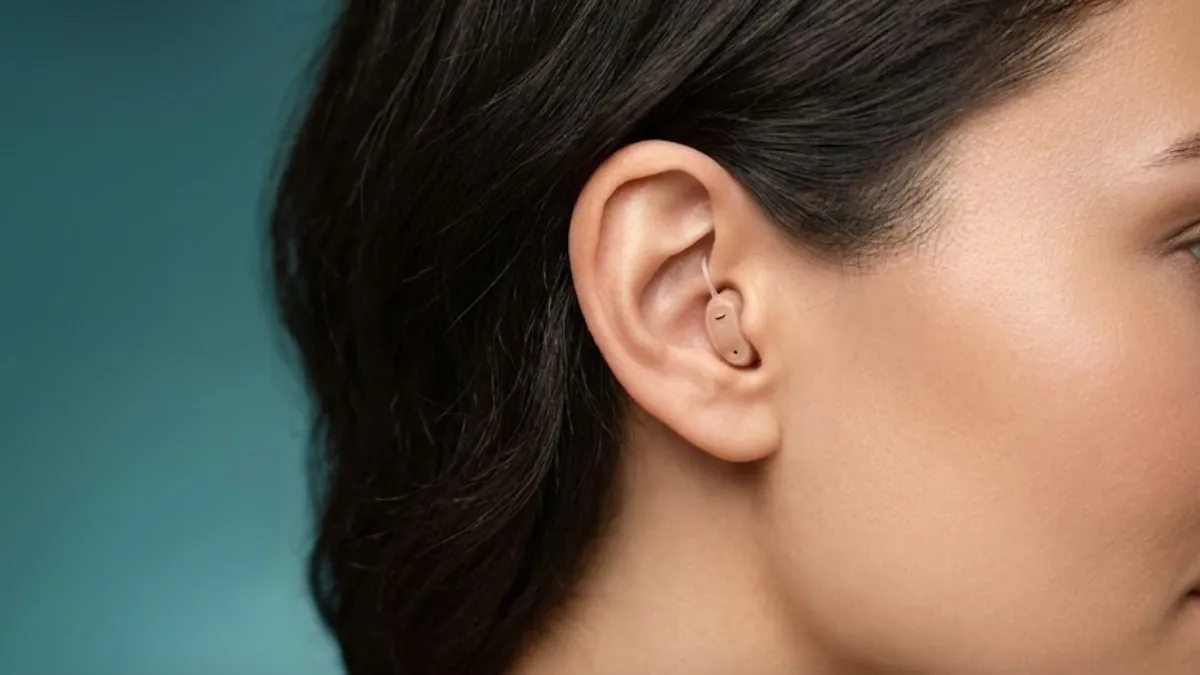
For phone-heavy jobs, a Bluetooth RIC hearing aid is usually the sweet spot: discreet, comfortable under a headset if you still need one, and packed with streaming and noise features. Tiny in-the-canal styles look nearly invisible but often drop Bluetooth and telecoil to stay small, a trade-off worth weighing up in our BTE vs CIC comparison. For most call work, invisibility matters less than clean, hands-free call audio.
Brand pointers, at a feature level
We fit all the major brands, and no single one is 'the call-centre brand'. What matters is which phone you use and how the features suit your day.
- Phonak: its recent aids use universal Bluetooth that connects hands-free to almost any phone, including the many Android handsets common in India, which is handy if your team isn't all on iPhones. See Phonak hearing aids.
- Signia: strong app control and own-voice processing, with easy on-phone switching between quiet and noisy settings. See how it works in Signia's app connectivity.
If you are weighing the two, our Signia vs Phonak comparison goes deeper. We have kept model prices out of this post on purpose. You will find current, honest figures in rupees on our pricing page.
Bring your actual work phone to the fitting
This is the step people skip, and it matters most for call work. Bring your real work phone, your headset, and if you can, a note of the softphone your company uses. India's device mix is enormous, so a feature that pairs perfectly with one handset may behave differently on another.
Testing with your own kit at the trial and fitting is the only way to be sure calls come through cleanly before you spend a rupee. Start with a free hearing test so the aids are set for your ears first, then check the calls.
How Prudent Hearing Solutions can help
We are an RCI-registered hearing-aid clinic, established in 2004, with centres in Pune (Viman Nagar), Delhi (Rohini and Green Park) and Bengaluru (Jayanagar). We sell only genuine hearing aids, up to 30–50% off manufacturer MRP. Hearing aids are GST-exempt in India, and 0% EMI is available to spread the cost. Every fitting includes a free hearing test, a trial before you buy, and free lifetime programming, so as your job or your hearing changes, we retune the aids at no extra charge.
Try before you commit, on your own phone and your own floor. Call us on +91 9429690093 or get in touch to book a trial.
Continue reading
Frequently asked questions
Can I take office calls without a headset if I wear hearing aids?
Often yes, but it depends on the model. Most modern Bluetooth hearing aids stream mobile calls into both ears; on select aids, notably Phonak's universal Bluetooth and newer Bluetooth LE Audio models, the aids' own microphones also capture your voice for fully hands-free calls, while many others stream the caller in but still use the phone's microphone for your voice. For laptop or softphone calls, a small streamer or dongle turns the aids into a wireless headset for your computer, so you may not need a separate headset at all.
Will a call-centre headset whistle over my hearing aids?
It can. Bulky behind-the-ear (BTE) aids stick out and may cause feedback when a headset presses on them. Slim receiver-in-canal (RIC) aids sit lower and usually fit under an over-ear headset without whistling. If you must keep a wired headset, RIC is the safer style, and we test the exact combination at your fitting.
Which is better for an Android phone: Phonak or Signia?
Both are strong. Phonak's recent aids use universal Bluetooth that connects hands-free to almost any phone, including the many Android handsets common in India. Signia offers excellent app control and own-voice tuning. There is no single winner. Bring your actual phone to the fitting and compare call quality directly.
Do I need a telecoil for a call-centre job?
It is not essential for everyone. A telecoil is useful if your office uses loop systems or telecoil-compatible desk phones, and at some public counters. If your calls are all mobile or softphone based, clean Bluetooth streaming matters more. Ask the audiologist which features fit your setup.
Will hearing aids stop my ears getting tired on long shifts?
They can reduce listening effort by placing the caller's voice in both ears and cutting background noise, which helps a lot across a six-to-nine-hour shift. But a hearing aid manages hearing loss, it does not cure it. All-day comfort depends on a correct fitting and choosing an aid with good own-voice processing and all-day power.
How much do these hearing aids cost in India?
We keep specific model prices off our blog posts to avoid confusion. You will find current figures in rupees on our pricing page. Hearing aids are GST-exempt in India, 0% EMI is available, and we offer genuine aids up to 30–50% off manufacturer MRP, with a free trial before you buy.
Free consultation
Ready to hear the difference?
Book a free 45-minute hearing test at any Prudent Hearing clinic: no obligation, honest advice, expert audiologists.