A plain-English guide to hearing aid features that actually matter, from noise reduction and Bluetooth to why a cheap sound amplifier is not a hearing aid.
Walk into any hearing aid shop, or scroll through a few product pages online, and you meet a wall of words: channels, AI, directional microphones, telecoil, IP68, Made-for-iPhone. Most of it is real technology. Some of it is marketing dressed up to sound clever. This guide translates the jargon into plain language so you can tell the difference between a feature that genuinely helps you hear and one that mainly helps sell the device.
What a hearing aid feature is actually for
Before the list, one idea worth holding on to. Every worthwhile feature exists to do one of three things: make speech clearer, make listening more comfortable, or make the device easier to live with day to day. If a feature does not clearly do one of those, it is decoration. Keep that simple test in mind and the choosing gets much easier.
What features are essential in a good quality hearing aid?
These are the features that do the quiet, unglamorous work of helping you understand people. None of them make for a flashy advertisement, but they are what separate a real hearing aid from a toy.
- Digital sound processing with multiple channels or bands. The device splits sound into frequency bands and adjusts each one to your loss. More bands allow finer tuning, so your audiologist can lift the exact pitches you struggle with instead of turning everything up.
- Digital noise reduction. The aid recognises steady background sound, like a fan or traffic hum, and eases it down so speech stands out. It will not make a noisy wedding hall silent, but it lowers listening fatigue.
- Directional microphones. Two microphones work together to focus on the voice in front of you and soften sound from behind. This is one of the single biggest helps for conversation in a crowd.
- Feedback or whistle cancellation. Good aids catch and stop that high-pitched squeal before you hear it, even when you hug someone or hold a phone to your ear.
- A proper fitting to your audiogram. Not a chip or a switch, but the thing that makes all the above work. The aid must be programmed to your specific hearing test results.
Notice that the most important item on that list is not really a feature at all, it is the fitting. A mid-range aid set up carefully by a qualified audiologist will almost always outperform a premium aid bought off the shelf and never adjusted.
What are the latest features in modern hearing aids?
This is where the newer technology lives. Some of it is genuinely useful, some is a nice-to-have. Here is an honest read on each.
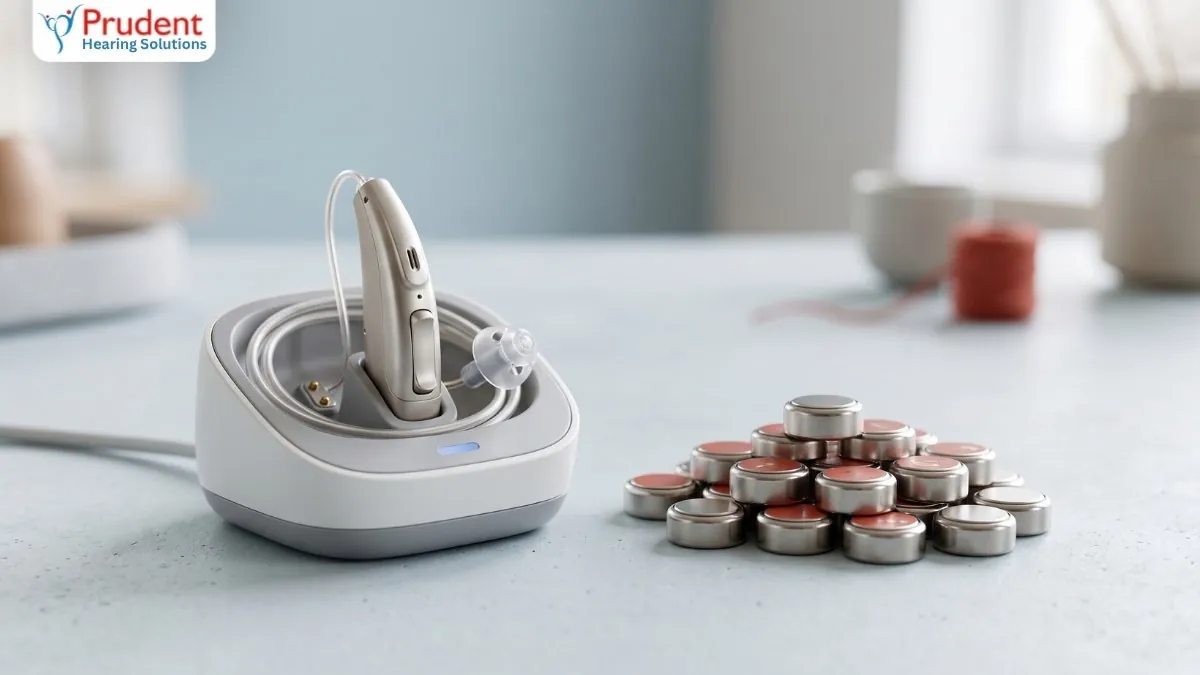
- Rechargeable lithium batteries. Drop the aids on a charging dock at night, wake up to a full day of power, and never fiddle with tiny disposable cells again. A real convenience, especially for older users or anyone with dexterity trouble. Disposable batteries still have their place if you travel where charging is unreliable.
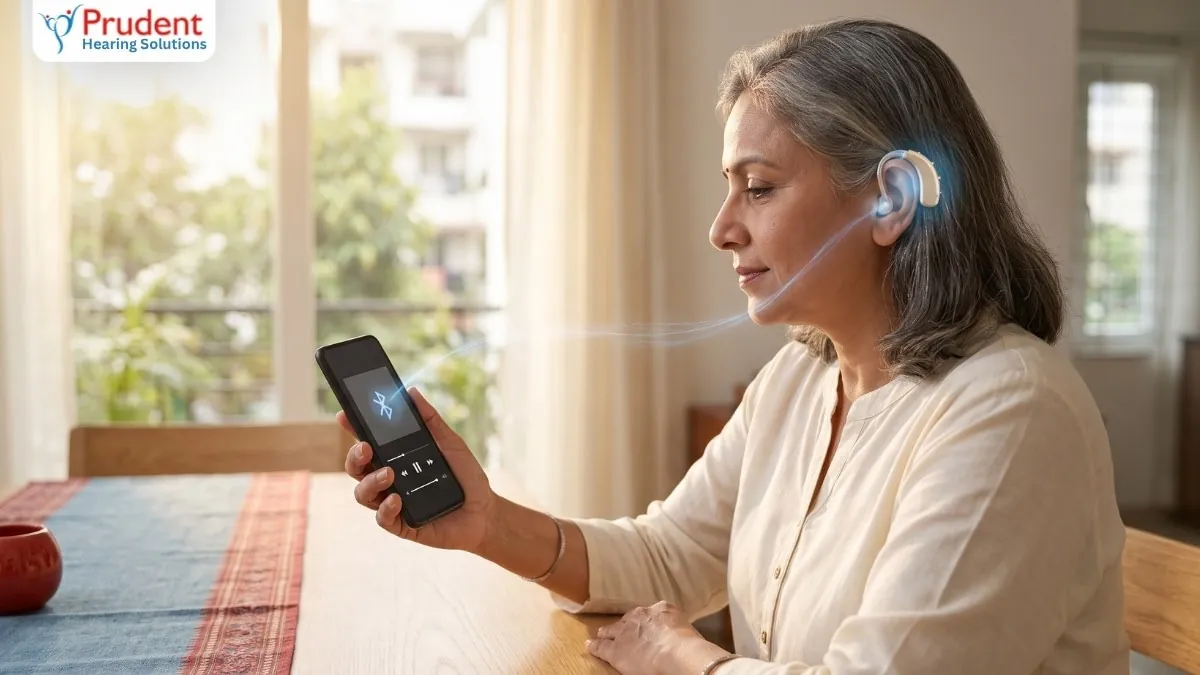
- Bluetooth streaming. Calls, music and TV audio play straight into your ears. On iPhone this is smooth through the Made-for-iPhone standard; on Android it works through ASHA and newer LE Audio, though the experience varies by phone model, so check compatibility before you buy.
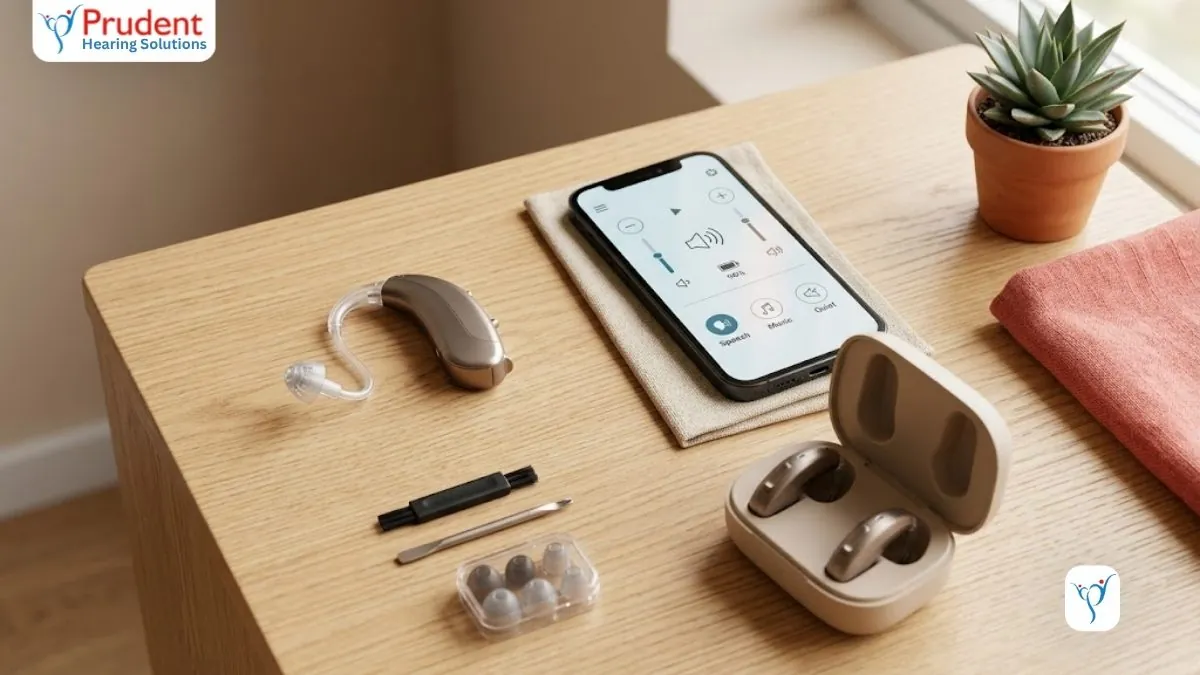
- A companion smartphone app. Change volume, switch programmes and tweak the sound quietly from your phone, without touching the aids in public.
- AI and automatic scene detection. The aid senses whether you are in a quiet room, a restaurant or a car and shifts its settings on its own. When it works well, you simply stop thinking about the device.
- Telecoil. An older but still useful feature that connects to induction loops at some banks, temples, airports and auditoriums, and to compatible landline phones.
- Tinnitus masking. Built-in soft sounds that can take the edge off ringing in the ears for people who also have tinnitus.
- Water and moisture resistance, shown as an IP rating such as IP68. This matters a great deal in India, where sweat, humidity and monsoon damp are among the biggest killers of hearing aids.
- Remote or tele-fitting. Your audiologist adjusts the aids over the internet while you sit at home, a genuine help if you live far from the clinic.
Which hearing aids offer discreet models for mild hearing loss?
If your loss is mild to moderate and you would rather nobody noticed the aid, you have good options. Discretion is not just vanity; for many first-time users it is the difference between wearing the aid and leaving it in a drawer.
- Invisible-in-canal (IIC) and completely-in-canal (CIC) aids sit deep in the ear canal and are all but invisible. They suit mild to moderate loss and small to medium canals.
- Slim receiver-in-canal (RIC) aids tuck a thin wire over the top of the ear. The body is tiny and hides behind the ear, and they handle a wider range of loss while still looking discreet.
Almost every major brand Prudent fits offers these discreet styles, from Phonak and Signia to Oticon, Widex, ReSound, Starkey and Unitron. The trade-off is that the smallest devices leave less room for large batteries and dual microphones, so you swap a little performance for near-invisibility. Our guide to invisible CIC and IIC hearing aids covers where that line falls for your ear canal and priorities.
What are the benefits of smart hearing aids with smartphone connectivity?
Smart, connected aids have become popular for good reason. Once your hearing aids talk to your phone, several everyday frustrations quietly ease off.
- Phone calls land directly in both ears, so callers come through more clearly than they ever did with a handset against one ear.
- TV, music and video stream straight in, at your own volume, without blasting the whole room.
- You adjust volume and programmes discreetly from the app, with no fiddling in public.
- Your audiologist can fine-tune the aids remotely, so small tweaks may not need a clinic visit.
- Handy extras on some models, like find-my-hearing-aid, battery status and basic activity tracking.
The honest caveat is that these benefits only shine if you are comfortable with a smartphone, and Bluetooth performance still varies by phone, especially on Android. Our guide to Bluetooth hearing aids in India explains what to check first. If you or your parent rarely uses a phone, a simpler, reliable aid may serve better than a feature-packed one that goes unused.
What is the difference between a hearing aid and a sound amplifier?
This is the most important distinction in this whole article, and the one that costs people the most. A hearing aid and a sound amplifier are not the same thing, no matter how similar the online photos look.
A sound amplifier, sometimes sold as a PSAP, is the cheap device you see online for a few hundred to a couple of thousand rupees. It makes everything louder, all at once, with no tuning to your ears. Speech, clatter, traffic and background noise all get pushed up together, which is uncomfortable and can actually damage your hearing further, because it may blast the frequencies you already hear perfectly well.
A hearing aid is a medical device. It is programmed to your audiogram, lifting only the pitches you have lost, protecting the ones you have, and shaping sound so speech becomes clearer rather than merely louder. It is fitted, verified and adjusted by a qualified professional. That fitting is the entire point, and it is exactly what a cheap amplifier can never give you.
If a device sells with no hearing test, no fitting and a price that looks too good to be true, it is almost certainly an amplifier, not a hearing aid. Treating the two as interchangeable is a common and expensive mistake.
Matching features to your life and budget
Which features you actually need depends less on the brochure and more on how you live.
- Mild loss, quiet life at home: a discreet aid with clear speech processing, feedback cancellation and basic noise reduction is usually plenty.
- Busy social life, meetings, restaurants, travel: prioritise strong directional microphones, good noise reduction, automatic scene detection and Bluetooth.
- Older parent who is not tech-heavy: rechargeability and plain reliability matter far more than a clever app.
- Humid city or monsoon-hit region: a solid IP rating is not optional.
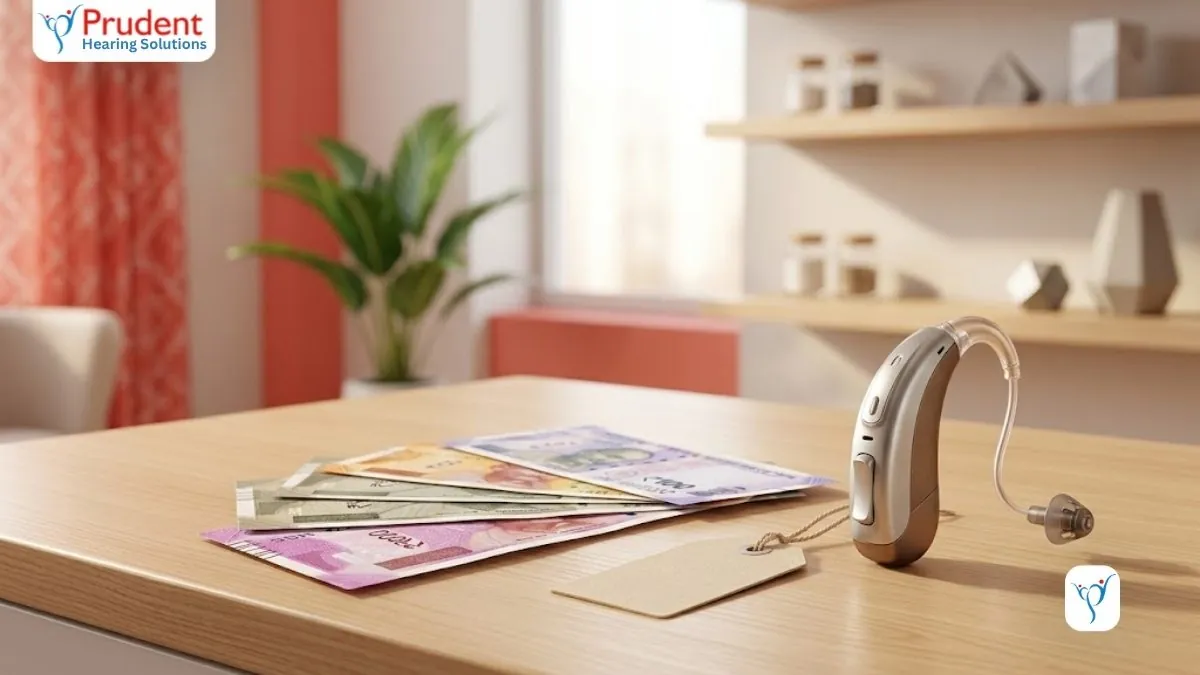
In India, prices per device run from more affordable entry-level aids to premium models that cost several times as much, and the exact figures vary by brand, model, technology level and current offers, so treat any number you see as a starting point rather than a firm quote.
What the extra money mostly buys is sharper performance in noisy places and more automation, not better sound in a quiet room. Our hearing aid price guide for India lays out the current bands in more detail. If cost is a worry, ask about EMI and finance options, as per the current rules, and remember that the right mid-range aid, well fitted, beats a premium one bought carelessly.
If you are still weighing types and styles, our guide on how to choose the right hearing aid walks through the whole process step by step, and if this is your first purchase, the first-time buyer's guide covers what to expect from test to fitting.
"The best feature in any hearing aid is the audiologist who fits it. Everything else is built on top of that."
The honest bottom line
Features are tools, not trophies. The right hearing aid is the one that fits your ears, your particular loss and your daily life, set up by someone who knows what they are doing. Ignore the buzzwords that do not map to clearer speech, more comfort or an easier day, and you will not overpay for shelf appeal you never use.
Prudent Hearing Solutions has been fitting hearing aids since 2004 and is RCI-registered, with clinics in Pune (Viman Nagar), Delhi (Rohini and Green Park) and Bengaluru (Jayanagar). We fit all the major brands, stock batteries and accessories, and handle repairs and servicing.
Book a free 45-minute hearing test, hear the features that actually matter for your ears, and ask about EMI and finance options as per the current rules. Call +91 9429690093. One honest note: hearing aids manage sensorineural hearing loss, they do not cure it, and because prices and phone compatibility change, do check the current details when you visit.
Continue reading
- invisible CIC and IIC hearing aids
- Bluetooth hearing aids in India
- how to choose the right hearing aid
- first-time buyer's guide
- hearing aid price guide for India
- RIC hearing aids
- Latest rechargeable models
- How to hear better in noise
- Are expensive hearing aids worth it?
- how to control your hearing aids (volume, programs, app)
Frequently asked questions
What features are essential in a good quality hearing aid?
The essentials are digital sound processing with multiple channels, digital noise reduction, directional microphones that focus on speech in front of you, and feedback cancellation that stops whistling. Just as important is a proper fitting programmed to your audiogram, without which none of the features work as they should. A well-fitted mid-range aid usually beats a premium aid that is never adjusted.
What are the latest features in modern hearing aids?
Modern aids offer rechargeable lithium batteries, Bluetooth streaming for calls and media, a smartphone companion app, and AI-driven automatic scene detection that adjusts settings on its own. Many also include tinnitus masking, telecoil, a strong IP rating for dust and moisture, and remote or tele-fitting by your audiologist. Not every feature matters for every user, so choose the ones that fit your daily life.
Which hearing aids offer discreet models for mild hearing loss?
For mild to moderate loss, the most discreet options are invisible-in-canal (IIC) and completely-in-canal (CIC) aids that sit deep in the ear, plus slim receiver-in-canal (RIC) styles that hide behind the ear with a thin wire. Nearly every major brand, including Phonak, Signia, Oticon, Widex, ReSound, Starkey and Unitron, makes these. The smallest devices trade a little battery life and microphone power for near-invisibility, so an audiologist should confirm what suits your ear canal.
What are the benefits of smart hearing aids with smartphone connectivity?
Smart, connected aids stream phone calls, TV and music straight into both ears at your chosen volume, and let you adjust settings quietly from an app. Your audiologist can also fine-tune them remotely, so small changes may not need a clinic visit. These benefits are real, but they only help if you are comfortable using a smartphone, and Bluetooth performance still varies by phone, especially on Android.
What is the difference between a hearing aid and a sound amplifier?
A hearing aid is a medical device programmed to your audiogram, lifting only the pitches you have lost and shaping sound so speech is clearer, fitted and verified by a professional. A sound amplifier, or PSAP, is a cheap device that simply makes everything louder with no tuning to your ears, and it can actually harm your hearing. They are not interchangeable, and a device sold with no hearing test or fitting is almost always an amplifier, not a hearing aid.
Free consultation
Ready to hear the difference?
Book a free 45-minute hearing test at any Prudent Hearing clinic: no obligation, honest advice, expert audiologists.