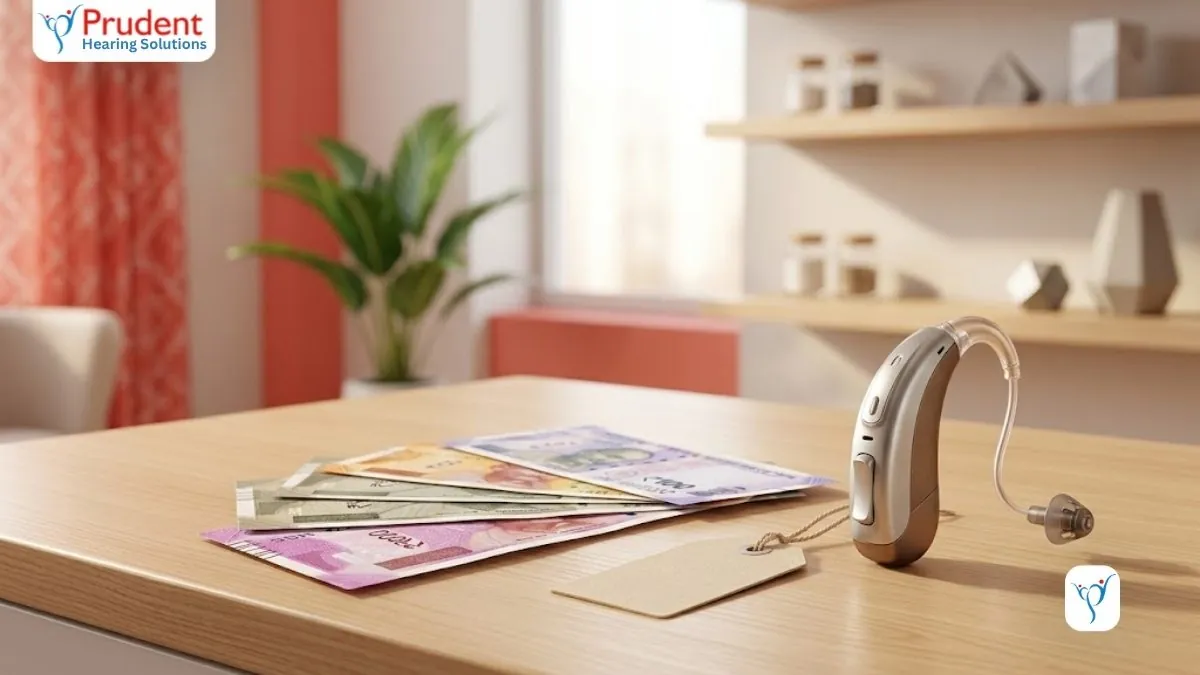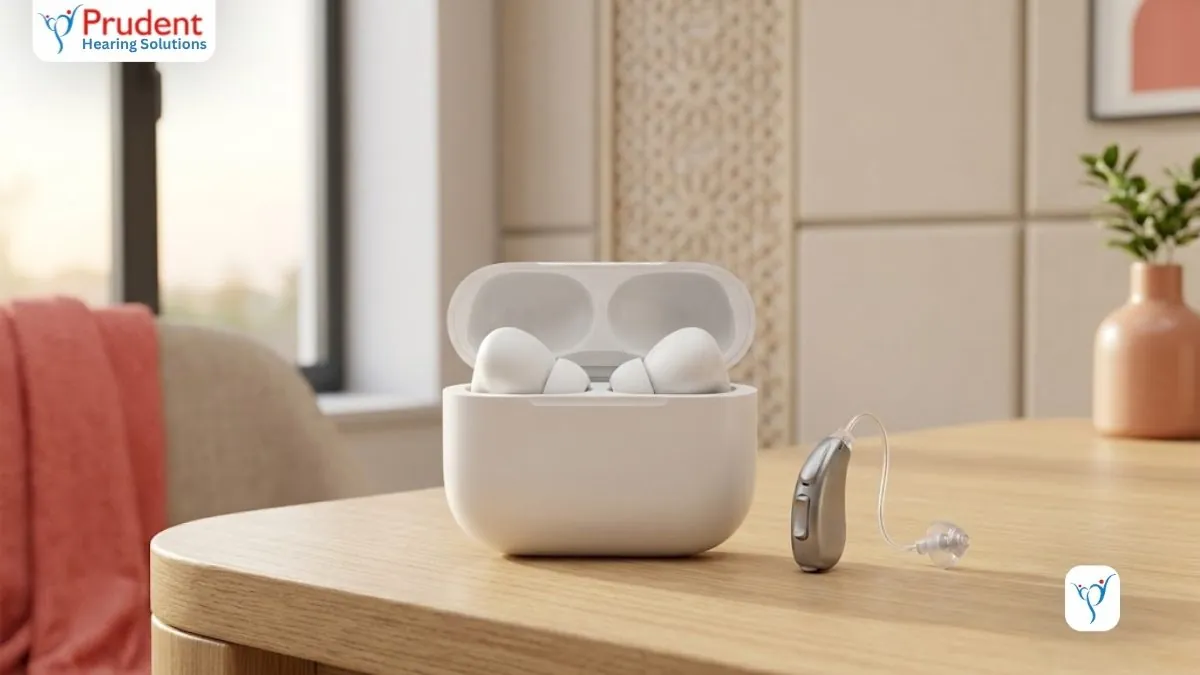
Are expensive hearing aids worth it in India? A clear decision guide: what more money buys, what it doesn't, and how to pick the right level for your life.
Short answer: no, expensive hearing aids are not automatically better, and paying more does not make you hear better in a quiet room. What the extra money buys is performance in difficult listening: a crowded restaurant, a wedding hall, a meeting where three people talk over each other.
If your days are mostly quiet and one-to-one, a good entry or mid-range aid can serve you beautifully. The dearest device on the shelf is rarely the right one. The right level comes from two things: your audiogram and your lifestyle. This is a decision guide, not a price list. For the actual figures, see our pricing pages.
The honest answer: price buys performance in difficulty, not louder sound
Every genuine hearing aid from a major brand, from the entry model to the flagship, will make speech audible again in a calm setting. That part is largely solved even at the bottom of the range. Where devices separate is in how well they hold on to one voice when the room gets noisy and busy.
That is what you are really paying for as the price climbs. So the useful question is not "is the expensive one better" (in a hard listening situation, usually yes). The useful question is "how hard are the situations I actually spend my life in, and am I paying for capability I will genuinely use."
What more money actually buys
Moving up the range is not marketing air. Real things change, and they mostly help in complex, social, noisy environments:
- More channels. Higher models split sound into more frequency bands, so the aid can shape amplification to your loss more precisely and keep speech separate from background rumble. We explain this in plain terms in hearing aid features explained.
- Better speech-in-noise handling. Faster processing, sharper directional microphones and stronger noise reduction let the aid lean towards the voice in front of you and pull down the clatter around it. This is the single biggest reason premium exists.
- Automatic scene switching. The aid senses whether you are in quiet, in traffic, in a restaurant or listening to music, and adjusts itself, no fiddling with a button.
- Bluetooth streaming. Calls, YouTube and music go straight into the aids from your phone. Genuinely useful if you are on calls all day; a nice-to-have if you rarely use it.
- Rechargeability. Drop them on a charger at night, no tiny batteries to change. A convenience feature, not a hearing feature.
- More discreet styles. Slimmer receiver-in-canal and invisible fittings tend to sit in the mid-to-upper range.
What more money does NOT change
This is where a lot of money gets wasted, so it is worth being blunt:
- Basic audibility in a quiet room. A well-fitted entry aid already makes conversation across the dining table clear. Spending three times more will not make that quiet voice noticeably clearer.
- The nature of your hearing loss. A hearing aid manages hearing loss. It does not cure it and it does not restore normal hearing. No price tier changes that.
- A poor prescription or a rushed fitting. A flagship device programmed carelessly will underperform a mid aid fitted properly to your audiogram. The fitting matters more than the badge.
- A medical problem that needs a doctor. Sudden loss, pain, discharge, dizziness or one-sided loss are ENT questions, not hearing-aid questions. See a doctor first. No aid, cheap or costly, is the right answer to those.
"The most expensive hearing aid in the wrong life is a bad buy. A mid-range aid matched to your audiogram and your day is a very good one."
When premium is genuinely worth it
Pay up when your ears have to work hard, often. Premium earns its price for people who live and work in noise and complexity:
- You have a busy social or working life: meetings, client calls, presentations, teaching.
- You eat out often, or spend time in restaurants, cafes, function halls and large family gatherings.
- You are still working and need to follow group conversations reliably.
- You want to stream phone calls and audio straight to your ears through the day.
- You have a more significant or steeply sloping loss, where extra channels and processing do real work.
If several of those describe you, the jump from a good aid to a premium one is often the difference between coping and genuinely keeping up. If you are weighing two strong brands at this level, Signia vs Phonak is a fair place to start.
When a good entry or mid-range aid is plenty
Just as often, the honest advice is to spend less. A well-chosen entry or mid aid is the right call when:
- Your days are mostly at home, quiet, and one-to-one.
- Your outings are calm: a walk, the temple, a few close family members at a time.
- You mainly want the television and everyday conversation to be clear again.
- Your loss is mild to moderate and fairly flat.
- This is your first pair and you want to build the habit before investing more.
Do not confuse "entry-level" with "cheap ear machine". A genuine, professionally fitted entry aid is a real medical device. The roadside amplifier is not. That trap is worth understanding in the cheapest good hearing aid in India.
Diminishing returns at the very top
The gap between an entry aid and a mid-range aid is large and easy to hear. The gap between a mid aid and a good premium aid is real and worth paying for if your life is noisy. But the gap between the second-from-top and the absolute flagship is often small: a little more polish in the hardest rooms, the newest chip, the slimmest shell.
For most people, the sweet spot sits in the upper-mid to lower-premium band, not at the ceiling. Paying for the flagship makes sense when you truly live in the most demanding environments; for everyone else, the money is better kept.
What is included in the price beyond the hardware
A hearing aid is not a boxed gadget. A fair price includes the professional care that makes the device actually work for you, and that care is a big part of the value:
- The hearing test and diagnosis: a proper audiogram, not a guess. Start with a free hearing test.
- The prescription and fitting: matching the right model and settings to your specific loss.
- Programming and fine-tuning: the follow-up visits where the aid is adjusted to how it sounds in your real life. At Prudent this programming is free for life.
- A trial before you buy: so you judge the aid for yourself in the clinic, not from a showroom demo.
- Warranty and after-sales support: repairs, servicing and help when something goes wrong. Understand this before you buy in our guide to warranty and after-sales in India.
A slightly lower sticker with no fitting, no follow-up and no warranty is not cheaper. It is unfinished. The device is only as good as the person programming it.
How to decide a fair price for your life
Here is a simple framework. Work through it in order and let it point you to a level, not a specific model:
- Start with the audiogram. How much loss, and what shape? This sets the minimum capability you need. Skip this and every price is a guess.
- Map your real week. Count the genuinely difficult listening situations: noisy, group, work. Many and frequent points to premium. Few and calm points to entry or mid.
- Match, do not maximise. Choose the lowest tier that comfortably covers your hardest regular situation, plus a little headroom. Do not buy for a life you do not lead.
- Separate hearing features from convenience. Decide honestly whether Bluetooth and rechargeability are must-haves for you or just nice extras.
- Count the whole package. Compare fitting, follow-ups, warranty and trial, not just the number on the tag.
- Then talk price. MRP is the list price, not what you pay. Prudent offers up to 30-50% off MRP, hearing aids are GST-exempt in India, and 0% EMI is available if you want to spread the cost.
If you would like the reasoning laid out further, how to choose the right hearing aid walks through the same decision step by step.
The bottom line
Expensive hearing aids are worth it for the right person and a waste for the wrong one. Price buys performance in difficult, noisy, social settings, not basic audibility in a quiet room, and never a cure. Let your audiogram and your lifestyle choose the level, take the trial before you commit, and count the fitting and aftercare as part of the value, not an extra.
Prudent Hearing Solutions has been fitting hearing aids across India since 2004, with RCI-registered audiologists in Pune, Delhi and Bengaluru. Book a free hearing test, or contact us on +91 9429690093 to talk it through before you spend a rupee.
Continue reading
Frequently asked questions
Are expensive hearing aids actually better than cheaper ones?
In difficult, noisy situations, yes: higher-priced aids handle speech-in-noise, group conversations and automatic scene changes better. But in a quiet room, a well-fitted entry aid is already clear, and paying more will not make that quiet voice noticeably better. The right level depends on your audiogram and how noisy your daily life is, not on buying the dearest model.
What is a fair price to pay for a hearing aid in India?
A fair price is the lowest tier that comfortably covers your hardest regular listening situation, plus a little headroom, matched to your audiogram, not maximised. For most people that is the upper-mid band rather than the flagship. MRP is only the list price; Prudent offers up to 30-50% off MRP, hearing aids are GST-exempt, and 0% EMI is available. Your exact figure is confirmed at the appointment.
What is included in the cost of a hearing aid besides the device?
A proper price includes the hearing test and diagnosis, the prescription and fitting, programming and follow-up fine-tuning, a trial before you buy, and warranty with after-sales support. At Prudent, programming is free for life. A lower sticker with no fitting, follow-up or warranty is unfinished, not cheaper: the device only performs as well as the person who programmes it.
Do more channels in a hearing aid really make a difference?
More channels let the aid shape amplification to your loss more precisely and separate speech from background noise, which helps most in complex, noisy environments. In quiet, one-to-one settings the difference is small. Channels matter more if you have a steeply sloping loss or spend a lot of time in noise, and less if your loss is mild and flat and your days are calm.
When is a budget or mid-range hearing aid enough?
A good entry or mid aid is plenty when your days are mostly quiet and one-to-one, your outings are calm, your loss is mild to moderate and fairly flat, and you mainly want the television and everyday conversation clear again. It is also sensible for a first pair, to build the habit before investing more. This is different from a cheap roadside amplifier, which is not a fitted hearing aid.
Can a costly hearing aid cure my hearing loss?
No. A hearing aid manages hearing loss (it makes sound audible and clearer), but it does not cure the loss or restore normal hearing, at any price. Sudden loss, pain, discharge, dizziness or one-sided loss are medical issues that need an ENT or doctor first, not a hearing aid. A trial and a proper fitting will show you realistically what any device can and cannot do for you.
Free consultation
Ready to hear the difference?
Book a free 45-minute hearing test at any Prudent Hearing clinic: no obligation, honest advice, expert audiologists.