OTC hearing aids, the AirPods hearing-aid feature, prescription aids and India's ADIP scheme compared: what helps mild hearing loss, and when to see an audiologist.
Quick answer
For a healthy adult with mild-to-moderate hearing difficulty, over-the-counter (OTC) hearing aids and the FDA-authorised AirPods Pro hearing-aid feature are both real, regulated options, but only for adults 18 and older who self-perceive mild-to-moderate loss. They are not for children or severe loss. For the self-fitting AirPods feature specifically, 2026 clinical data show its benefit sits below professionally fitted aids, with gain that often did not meet prescriptive targets. A diagnostic hearing test should always come first.
Key takeaways
- OTC hearing aids are an FDA-regulated device category (since 2022) for adults 18+ with perceived mild-to-moderate hearing loss. Learn more from the NIDCD.
- The AirPods Pro hearing-aid feature is FDA-authorised self-fitting software with a built-in hearing screen, but a 2026 peer-reviewed study found gain often fell below prescriptive targets and speech-in-noise benefit was not statistically significant.
- Prescription hearing aids, fitted by an audiologist, cover a wider range of loss and are matched to your exact audiogram.
- In India, the AirPods hearing-test and hearing-aid features still await regulatory authorisation; the government's ADIP scheme and NPPCD remain the reliable affordable route.
- None of these replaces a professional hearing test. Book a free hearing test to know your actual hearing level before you spend.
For a healthy adult with mild-to-moderate hearing difficulty, over-the-counter (OTC) hearing aids and the FDA-authorised AirPods Pro hearing-aid feature are both real, regulated options, but only for adults 18 and older who self-perceive mild-to-moderate loss. They are not for children or severe loss. For the self-fitting AirPods feature specifically, 2026 clinical data show its benefit sits below professionally fitted aids, with gain that often did not meet prescriptive targets. A diagnostic hearing test should always come first.
What are OTC hearing aids?
OTC hearing aids are a class of hearing aids that adults can buy directly, online or over a counter, without a prescription, professional fitting, or an audiologist visit. The U.S. FDA created the category in 2022, and it is intended only for adults 18 and older who perceive mild-to-moderate hearing loss. They differ from prescription aids, which are programmed to your measured audiogram by a professional and can address more severe loss.
Even with OTC devices, the NIDCD advises that a hearing test helps you know whether an OTC device is appropriate at all. In our clinics we often see people who bought an amplifier for what turned out to be earwax or a treatable middle-ear problem: a test first would have saved them the guesswork.
What is the AirPods Pro hearing aid feature?
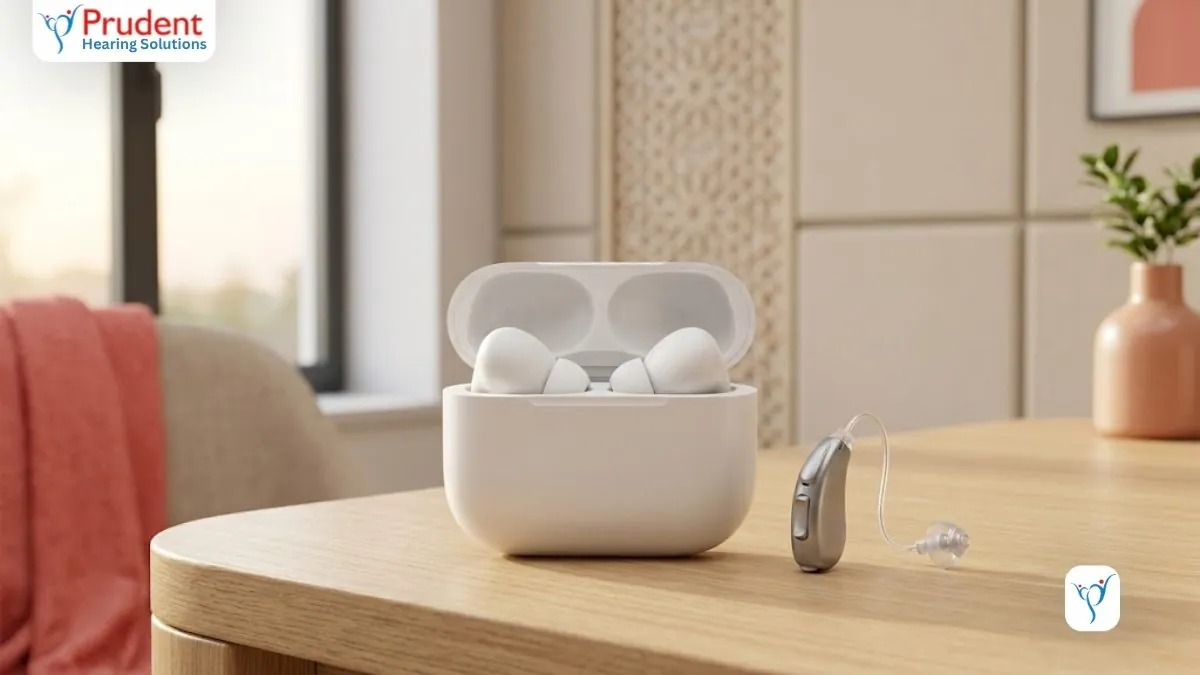
Apple's Hearing Aid Feature turns eligible AirPods (AirPods Pro 2 and 3, and AirPods 4 with Active Noise Cancellation) into a self-fitting, software-based OTC hearing aid. It includes a built-in Hearing Test and adjusts sound based on your results. The FDA authorised this software for adults 18+ with perceived mild-to-moderate hearing loss.
It is a genuine, regulated hearing tool for that group, not a gimmick. But it is bounded: it is not for children, not for severe loss, and not a substitute for diagnostic testing when something feels wrong with your ears.
Can AirPods be used as hearing aids?
Yes, but only for adults 18 and older with mild-to-moderate hearing loss, and only after you understand your hearing level. The AirPods hearing-aid feature is FDA-authorised for exactly that group. It is convenient and discreet, and many people already own the hardware.
However, a 2026 study in the American Journal of Audiology reported high usability but gain that often did not meet prescriptive targets and a speech-in-noise benefit that was not statistically significant. If you struggle in noisy rooms, hear ringing, have loss in one ear only, or have moderate-to-severe difficulty, AirPods are not enough: you need a diagnostic test and a proper fitting. Start with a free hearing test.
Is the AirPods hearing aid feature available in India?
Not yet as a hearing-aid or hearing-test tool. AirPods Pro 3 sells in India, but the regulated Hearing Test and Hearing Aid features are still pending authorisation here, as Apple's own feature-availability page confirms, and Apple's support guide lists the countries where these features are switched on.
Until that changes, the dependable local path is a proper diagnostic hearing test with an RCI-registered audiologist, followed by clinic-fitted hearing aids, and, if you qualify, government assistance through ADIP. We can arrange a home-visit hearing test if travelling to a centre is difficult for an elderly family member.
OTC vs AirPods vs prescription hearing aids: a quick comparison
- Who it's for. OTC hearing aids: Adults 18+, perceived mild-to-moderate loss; AirPods hearing-aid feature: Adults 18+, perceived mild-to-moderate loss; Prescription hearing aids: Any age; mild to severe/profound loss
- Fitting. OTC hearing aids: Self-fit; AirPods hearing-aid feature: Self-fit via built-in test; Prescription hearing aids: Fitted to your audiogram by an audiologist
- Diagnostic test. OTC hearing aids: Not included (recommended first); AirPods hearing-aid feature: Built-in screening test (not a full diagnostic); Prescription hearing aids: Full diagnostic audiogram
- Regulatory status. OTC hearing aids: FDA category since 2022; AirPods hearing-aid feature: FDA-authorised software; Prescription hearing aids: Regulated medical device
- Fit for severe loss / children. OTC hearing aids: No; AirPods hearing-aid feature: No; Prescription hearing aids: Yes
- Available in India (as hearing aid). OTC hearing aids: Limited; AirPods hearing-aid feature: Not yet authorised; Prescription hearing aids: Yes, through clinics
- Professional support & follow-up. OTC hearing aids: Minimal; AirPods hearing-aid feature: Minimal; Prescription hearing aids: Ongoing (real-ear checks, tuning, counselling)
A screening test built into a consumer device is a useful nudge, but it is not the same as a diagnostic audiogram. A diagnostic test can flag wax, fluid, one-sided loss, or nerve issues that no self-fit device is designed to catch.
What does "prescription hearing aid" mean in India?
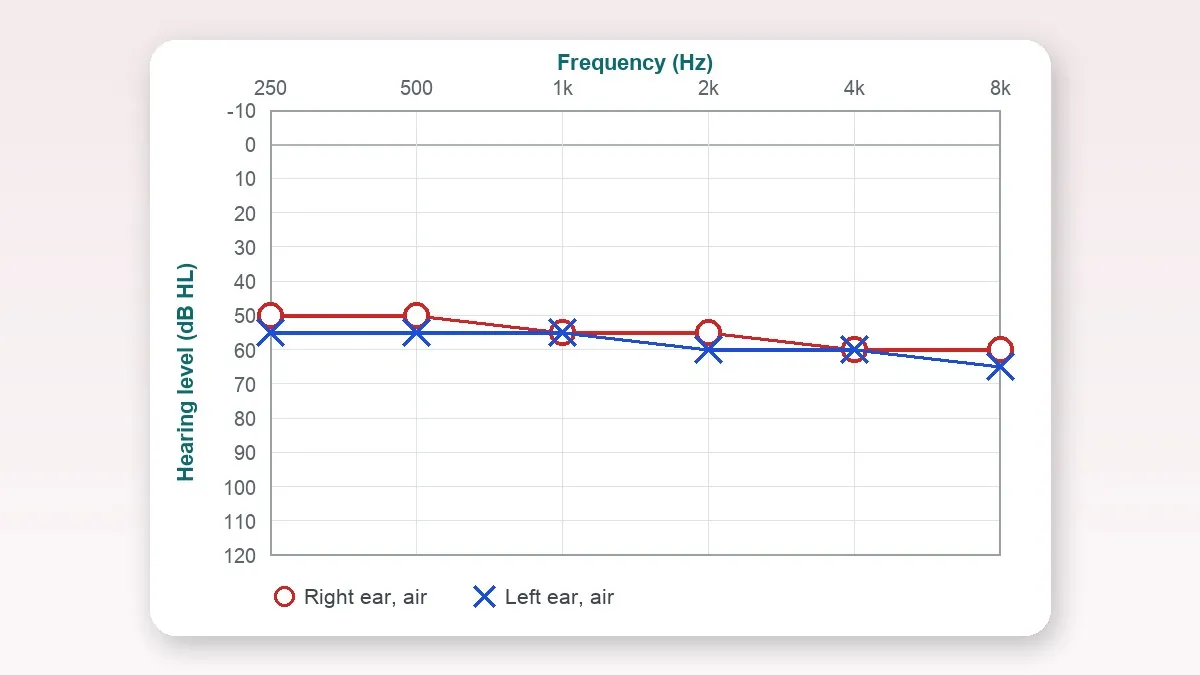
Unlike spectacles, a hearing aid in India does not usually come with a separate prescription slip. The prescription is your audiogram plus the settings an audiologist programmes into the aid to match it, then checks and fine-tunes. That is what separates a prescription hearing aid from an OTC device or an amplifier: it is fitted to your measured hearing loss rather than to an average. Bring your audiogram if you already have one, or start with a free hearing test.
What is the ADIP scheme for hearing aids?
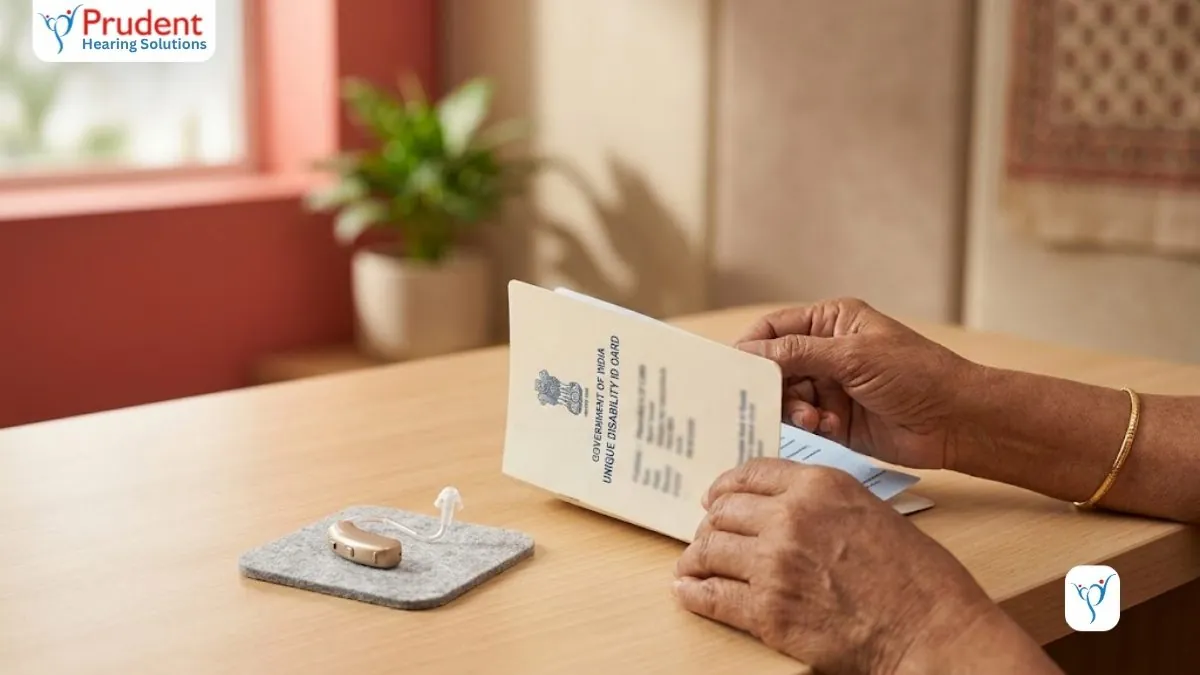
ADIP (Assistance to Disabled Persons for Purchase/Fitting of Aids and Appliances) is a Government of India scheme that provides free or subsidised hearing aids to eligible people with disability. To qualify for hearing aids, a person generally needs a benchmark disability of at least 40%, certified through the disability certificate and UDID (Unique Disability ID) system.
Assistance is income-linked: at the time of writing, people with monthly income up to Rs 22,500 receive the aid free (100% assistance), and those earning Rs 22,501–30,000 receive 50% assistance. Aids are distributed through camps and empanelled centres. The scheme details are published on the Department of Empowerment of Persons with Disabilities (DEPwD) ADIP page. A disability-certificate-grade diagnostic hearing test is the first step: book that with a qualified audiologist. (Always confirm current eligibility limits and dates on the official portal, as figures are revised periodically.)
Are there free hearing aid government schemes in India?
Yes, mainly ADIP and the National Programme for Prevention and Control of Deafness (NPPCD). ADIP supplies free or subsidised aids to eligible people with certified disability, distributed through camps and centres. NPPCD works on early identification, treatment and rehabilitation of hearing loss across districts; its remit is set out by the Ministry of Health & Family Welfare.
These schemes matter because cost is the single biggest barrier to hearing care: the WHO reports that most people who could benefit from hearing aids do not use one. Whichever route you take, it starts with a hearing test: we can guide you on documentation and next steps.
So which one is right for me?
If you are an adult with recent, mild difficulty (asking people to repeat themselves, turning up the TV), an OTC device or the AirPods feature (where authorised) is a reasonable, low-risk first step, provided you have had a test to rule out treatable causes.
If your loss is moderate-to-severe, in one ear, sudden, accompanied by ringing or dizziness, or if the person is a child, you need professional diagnostics and fitting. In our experience the people happiest with any device, consumer or prescription, are those who got tested first and matched the device to their real hearing, not their assumption. Explore hearing aid options and fitting, or simply contact us to talk it through.
Ready to find out where your hearing actually stands?
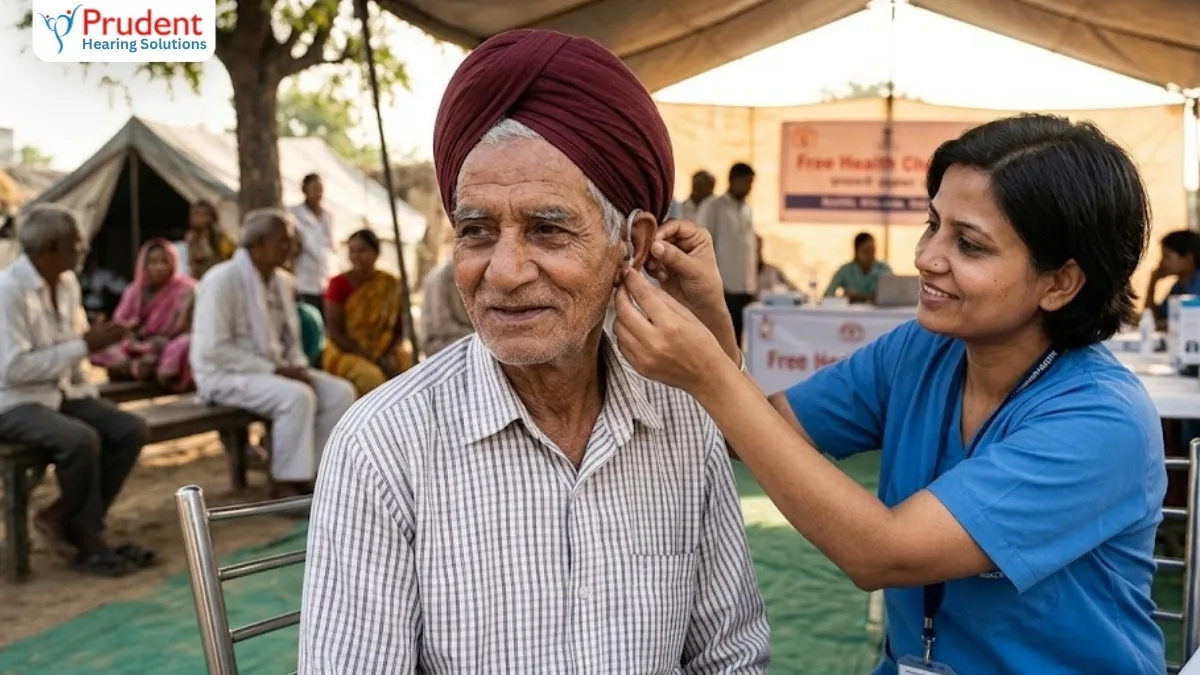
Before you buy any device (OTC, AirPods, or prescription) get a clear picture of your hearing. Our RCI-registered audiologists (MASLP/BASLP) run diagnostic tests at our Pune and Pimpri-Chinchwad (PCMC) clinics, and we offer home visits for elderly family members. Book a free hearing test, see hearing aid options, or contact us. No pressure, just an honest assessment of what will help.
Continue reading
Frequently asked questions
Are OTC hearing aids as good as prescription hearing aids?
For mild-to-moderate loss in adults, OTC aids can help, but prescription aids are matched to your measured audiogram and cover a wider range of loss. A 2026 study found self-fitting consumer devices often delivered less gain than fitted aids and no statistically significant speech-in-noise benefit.
Can AirPods replace hearing aids?
Only for adults 18+ with perceived mild-to-moderate loss, and only where the feature is authorised. They do not suit children, severe loss, or one-sided loss, and they do not replace a diagnostic hearing test.
Is the AirPods hearing test available in India?
Not yet. Apple's feature-availability page lists India's Hearing Test and Hearing Aid features as pending authorisation. Use a clinic diagnostic test in the meantime.
Who is eligible for a free hearing aid under ADIP?
Broadly, people with a certified benchmark disability of at least 40% and income within the scheme's ceilings: full assistance up to Rs 22,500/month and 50% for Rs 22,501–30,000. Confirm current limits on the official DEPwD portal.
Do I need a hearing test before buying an OTC hearing aid or AirPods?
It is strongly recommended. A test rules out wax, infection, fluid or one-sided loss that a self-fit device cannot address, and tells you whether your loss is genuinely in the mild-to-moderate range these devices are made for.
Are OTC hearing aids safe for children?
No. OTC hearing aids and the AirPods hearing-aid feature are authorised for adults 18 and older only. Children need paediatric audiology assessment and professionally fitted devices.
Sources & further reading
We cross-checked this article against the following authoritative sources. Guidance and figures reflect the most recent public guidance available at the time of last review (September 2026). Clinical review by the Prudent Hearing clinical team.
- Over-the-Counter Hearing Aids (NIDCD)
- Hearing Aids (NIDCD)
- Authorises first over-the-counter hearing aid software (FDA)
- self-fitting hearing-aid feature usability and outcomes (American Journal of Audiology (ASHA, 2026))
- AirPods Pro feature availability (India) (Apple)
- AirPods hearing features guide (Apple Support)
- ADIP Scheme (DEPwD)
- National Programme for Prevention and Control of Deafness (NPPCD) (MoHFW)
Free consultation
Ready to hear the difference?
Book a free 45-minute hearing test at any Prudent Hearing clinic: no obligation, honest advice, expert audiologists.