The ADIP scheme, run by the Ministry of Social Justice & Empowerment, gives free or heavily subsidised aids and appliances, including hearing aids, to eligible persons with a disability. This honest guide explains who qualifies, the documents you need, how much is subsidised, and how to apply through camps and ALIMCO, so you can pursue it without being misled by fake numbers or false promises.
The short answer: what ADIP is and who it helps
If you are researching whether the government can help pay for a hearing aid for your parent, here is the bottom line first. ADIP, the Assistance to Disabled Persons for Purchase/Fitting of Aids and Appliances scheme, is a central government scheme that provides aids and appliances, including hearing aids, either completely free or at a heavily subsidised cost to eligible persons with a disability.
It is run by the Department of Empowerment of Persons with Disabilities under the Ministry of Social Justice & Empowerment, and the aids are usually distributed through ALIMCO and other implementing agencies at assessment and distribution camps.
To qualify, two things generally matter most: the person must hold a valid disability certificate, and the family's income must fall within the scheme's income ceiling. We will walk through both honestly below. One caution up front, because this is your money and your parent's care: income limits, subsidy amounts and eligibility rules are set officially and are revised from time to time, so we will not quote exact rupee figures that could be out of date, instead we will show you exactly where to confirm the current numbers.
A word on where we fit in. Prudent Hearing Solutions does not administer ADIP and cannot hand out government aids: no private clinic can. What we can do is the clinical part that the whole process rests on: a free 45-minute hearing test, a clear audiogram, and honest guidance on the disability certificate process so your paperwork is in order before you approach a camp or agency.
What ADIP actually covers
ADIP is not a hearing-aid-only scheme. It covers a wide range of standard aids and appliances for different disabilities (mobility aids, low-vision and Braille aids, and so on) and hearing aids are one category within it. For a person with a certified hearing disability, that typically means a hearing aid supplied and fitted through the scheme's channels rather than bought over a shop counter.
It helps to be realistic about what is provided. The aids issued under a government scheme are usually standard models selected by the scheme, most often behind-the-ear (BTE) types that suit a broad range of hearing loss.
They are genuine, functional hearing aids that can make a real difference, but they are not the same as choosing a specific premium brand and model on trial in a private clinic. If your parent needs a particular feature, or has severe or profound hearing loss with more demanding requirements, it is worth understanding this trade-off before you decide the route.
Whichever route you take, remember the one fact that never changes: a hearing aid manages hearing loss, it does not cure it. The quality of the fitting and follow-up behind the device matters as much as the device itself.
Who runs it: the Ministry, ALIMCO and the agencies
Understanding who does what makes the process far less confusing. ADIP sits under the Department of Empowerment of Persons with Disabilities (DEPwD), part of the Ministry of Social Justice & Empowerment. That department sets the policy, the eligibility rules and the funding.
On the ground, the aids reach people through implementing agencies. ALIMCO (the Artificial Limbs Manufacturing Corporation of India, a government undertaking) is a major manufacturer and distributor of the appliances. Alongside it, a range of implementing agencies deliver the scheme locally: national institutes, District Disability Rehabilitation Centres (DDRCs), state agencies and registered voluntary organisations. These agencies are the ones that usually organise the assessment and distribution camps where beneficiaries are examined, measured and fitted.
So in practice, the government funds the scheme, ALIMCO and implementing agencies deliver it, and camps are where most people actually get assessed and receive their aid. Your job is to find the agency or camp operating in your district and to arrive with the right paperwork.
Who is eligible for ADIP
Eligibility is decided against a few clear conditions. The most important are a valid disability certificate and an income within the scheme's ceiling. Broadly, an applicant is expected to meet the following:
- Be an Indian citizen of any age (some appliances have age-related conditions, so check the rule for hearing aids specifically).
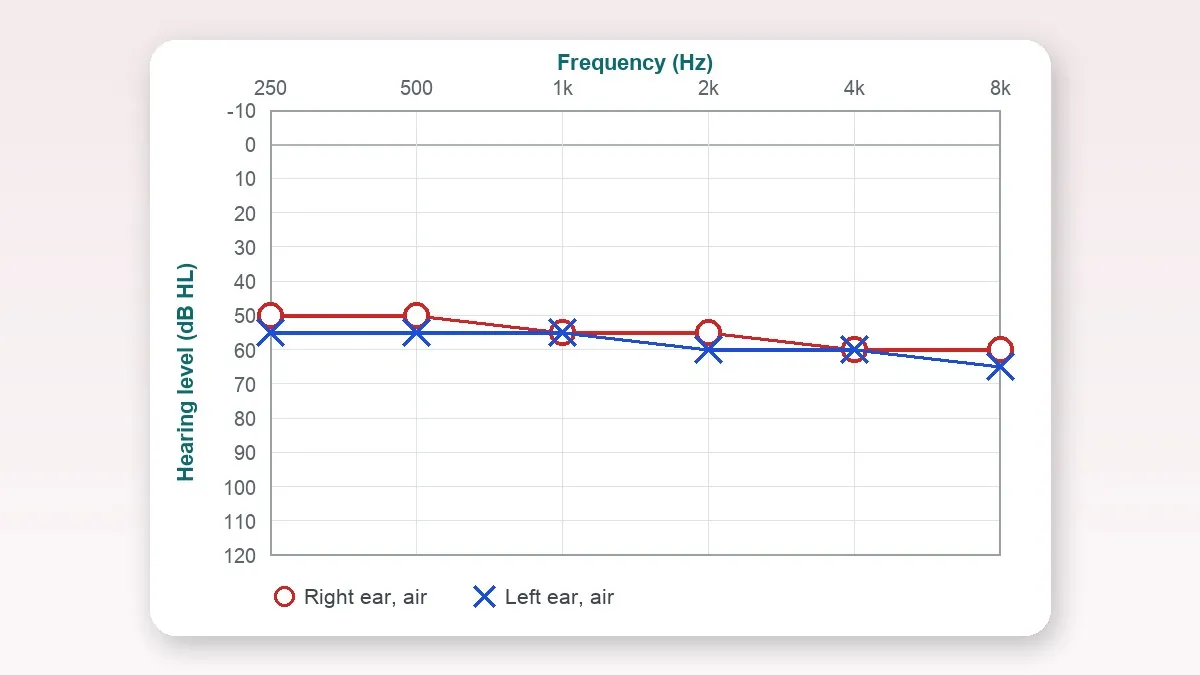
- Hold a valid disability certificate. In India a disability certificate is generally issued when disability is assessed at a benchmark level, commonly 40% or more, by the competent medical authority, based on proper testing. For hearing, that assessment rests on an audiogram from a pure-tone hearing test.
- Have a monthly family income within the scheme's income ceiling. An income limit does apply, but the exact figure is set officially and revised periodically, so confirm the current limit on the official portal rather than trusting a number you read second-hand.
- Not have received the same aid free or subsidised from any government source within the stipulated period (there are usually rules on how often the same appliance can be claimed).
- Be recommended as suitable for the aid after a clinical assessment, since the aid must genuinely fit the person's degree and type of hearing loss.
How much is free, and how much is subsidised
This is the question every family wants answered, and it deserves an honest reply rather than a made-up figure. ADIP is designed around income slabs. In broad terms, applicants with the lowest family income typically receive the aid completely free, while those whose income is higher but still within the ceiling receive a partial subsidy and pay the balance. Above the ceiling, a person is not eligible under the scheme.
We are deliberately not printing exact rupee figures for the slabs or the grant amount, because those numbers are set by the scheme and change from time to time: quoting a stale figure could send you into a camp with the wrong expectation. Treat it like this: an income ceiling applies, there is more than one subsidy level, and the precise figures must be confirmed officially before you count on them. Check the DEPwD / ADIP scheme details and, where relevant, the UDID portal for the current rules.
If it turns out your family's income is above the ADIP ceiling, do not assume there is no help at all. There are other government schemes and support routes for hearing aids in India, and for a private purchase you may be able to claim tax deductions under Section 80DD or 80U. Hearing aids are also GST-exempt in India, which brings the private cost down somewhat.
Documents you will need
Camps and agencies move quickly, and applications stall most often for missing paperwork. Get these ready in advance: take the originals plus a set of photocopies. Exact requirements can vary slightly by agency, so it is always worth a quick call ahead to confirm the current checklist.
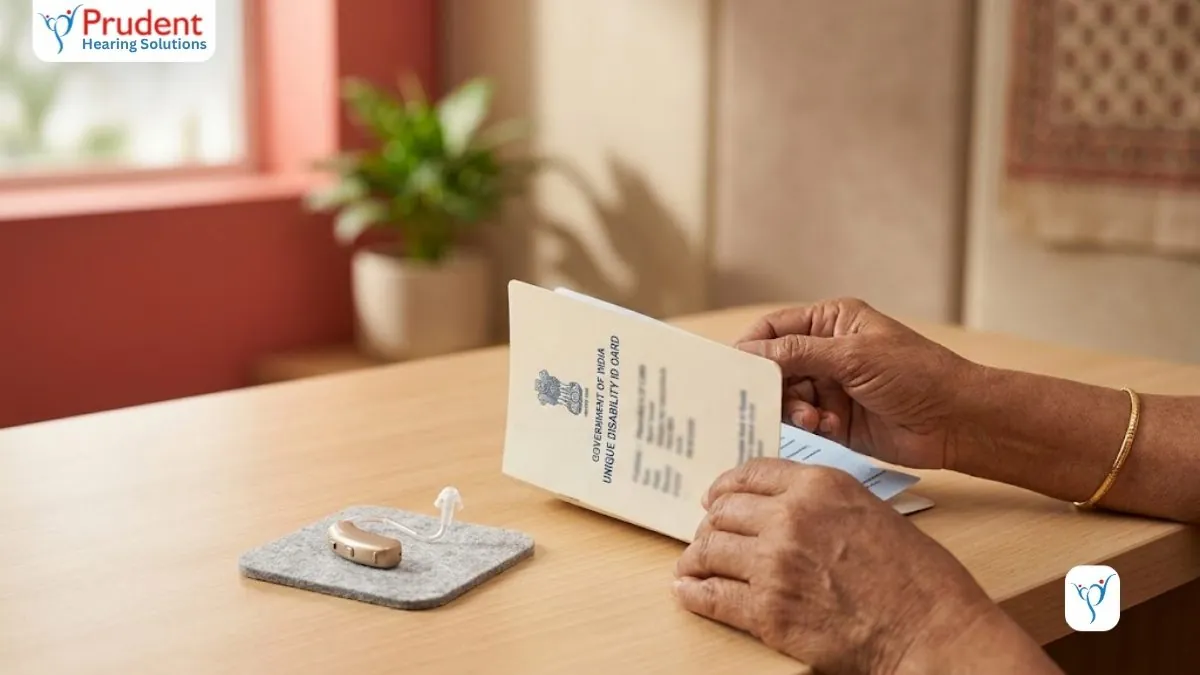
- Disability certificate, or the UDID card (Unique Disability ID) if the person has one. This is the single most important document, without it, an ADIP application generally cannot proceed.
- Income proof, such as an income certificate from the competent authority, to establish which subsidy slab applies.
- Identity proof: Aadhaar is the usual one, along with any other ID the agency asks for.
- Recent passport-size photographs (carry a few spares).
- The audiogram / hearing test report supporting the hearing disability, and any doctor's or audiologist's recommendation, if requested.
- Address proof, if the agency requires it to confirm your district.
How to apply, step by step
There is no single national counter you walk up to; ADIP works through agencies and camps, so the practical path looks like this.
First, get the clinical groundwork done. Have a proper hearing test so you have a current audiogram, and obtain the disability certificate (or UDID card) if the person does not already hold one. A pure-tone audiometry test is the assessment the certificate relies on, and we can do that free at Prudent and explain the result plainly.
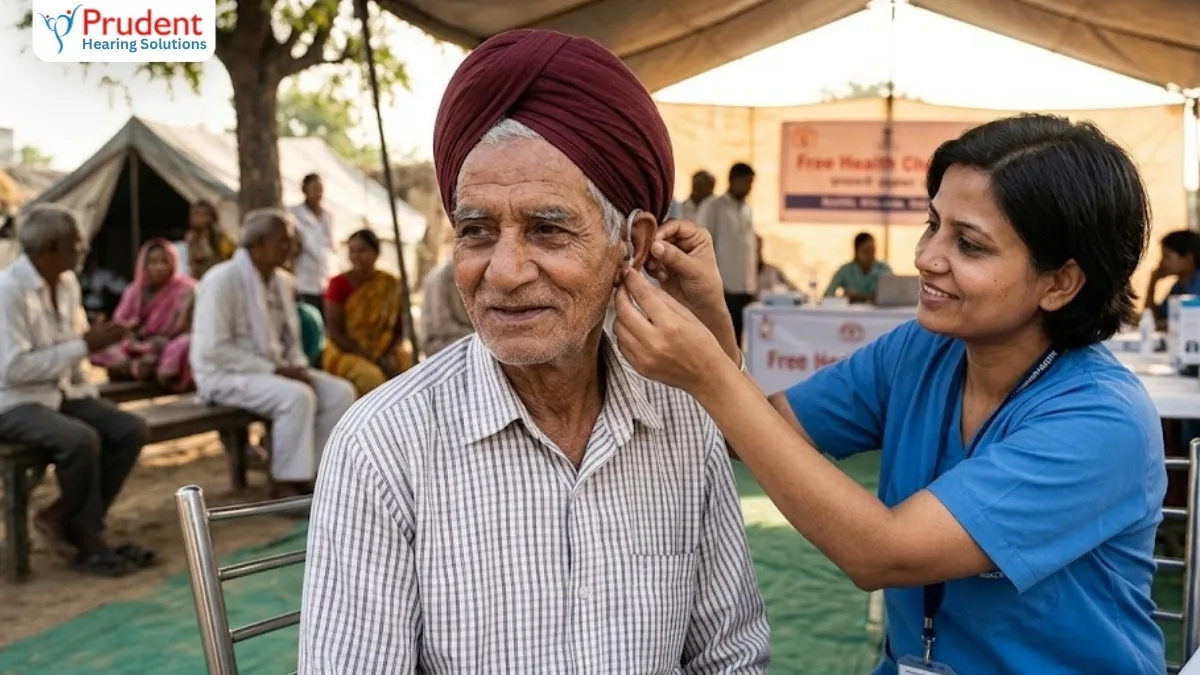
Second, find the implementing agency or camp near you. ADIP assessment and distribution camps are organised by ALIMCO and implementing agencies (DDRCs, national institutes, state agencies and registered NGOs) and are usually announced locally. You can ask at your District Disability Rehabilitation Centre, check the DEPwD / ADIP information online, or enquire with ALIMCO about camps in your area.
Third, apply through that agency with your complete document set. At the camp, the person is assessed to confirm the aid is suitable, the income slab decides whether it is free or partly subsidised, and, where the assessment supports it, the aid is fitted and handed over, often at the camp itself or on a later distribution date.
- Step 1: Complete the hearing test and get the audiogram; secure the disability certificate or UDID card.
- Step 2: Locate the nearest ADIP camp or implementing agency (DDRC, national institute, state agency, ALIMCO or a registered NGO).
- Step 3: Submit the application with all documents; attend the assessment.
- Step 4: Receive the aid free or on subsidy per your income slab, and attend the fitting.
- Step 5: Ask about follow-up and servicing so the aid keeps working well over time.
What to honestly expect from an ADIP hearing aid
Going in with realistic expectations saves a lot of disappointment. ADIP is a genuinely valuable scheme for families who could not otherwise afford a hearing aid, and the aids provided do help people hear again. But it is a standard-provision scheme, not a boutique service.
That means the model is usually chosen by the scheme rather than picked by you on trial, the choice is generally a dependable standard type such as a BTE, and whether one ear or both are fitted depends on the assessment and the current rules. There can be waiting time between application, camp date and distribution, and the range of after-sales fine-tuning may be more limited than a private clinic offers.
None of that is a reason to avoid ADIP, for many families it is exactly the right route. It is simply a reason to know what you are signing up for, so you can weigh it fairly against buying privately.
ADIP vs buying privately: how to decide
The honest way to choose is to match the route to the situation, not to assume free is always best or that private is always better.
ADIP makes strong sense when cost is the main barrier, the person holds (or can obtain), a disability certificate, and family income is within the ceiling. A standard, well-fitted aid that is actually worn every day beats an expensive one the family cannot afford. Buying privately makes more sense when you want to choose a specific brand and model, trial devices on the ears before paying, get particular features for a demanding lifestyle, or you fall outside the income ceiling.
It is not always either-or. Some families start with ADIP and upgrade later; others buy privately but still use the disability certificate for tax relief under 80DD or 80U. Whatever you decide, base it on a real hearing test and clear advice, not on a sales pitch or an advertisement promising a specific 'free' model.
How Prudent can help, and what we don't do
Let us be completely clear so there is no confusion. Prudent Hearing Solutions is not a government body, we do not run or administer ADIP, and we cannot promise or issue an ADIP aid. Anyone claiming a private clinic can 'guarantee' you a government hearing aid should be treated with caution.
What we genuinely help with is the clinical foundation the whole process depends on. Our RCI-registered audiologists (MASLP/BASLP) can give you a free 45-minute hearing test, produce a clear audiogram, and explain in plain language what your parent's hearing loss actually is. We can guide you on the disability certificate process so your paperwork is sound before you approach a camp or agency, and we can talk you honestly through whether ADIP, another scheme, or a private purchase fits your situation best.
If you would like that starting point, book a free hearing test at our Pune, Delhi or Bengaluru clinic, or simply call us on +91 9429690093 and WhatsApp us on +91 8485096505 and we will point you in the right direction.
Your next step
ADIP can be a real lifeline for a family that needs a hearing aid but is worried about the cost: free or heavily subsidised aids, backed by a national scheme, delivered through camps and agencies across India. The path is straightforward once you know it: get the hearing test and audiogram, secure the disability certificate, confirm the current income ceiling officially, gather your documents, and apply through a camp or implementing agency.
Start with the part you can do today. Get your parent's hearing tested and the audiogram in hand: everything else, whether you go the ADIP route or another, builds on that. We are glad to be that first, no-pressure step whenever you are ready.
Continue reading
Frequently asked questions
Is the ADIP hearing aid really free?
It can be. ADIP is built around income slabs: applicants with the lowest family income typically receive the aid completely free, while those with higher income but still within the scheme's ceiling get a partial subsidy and pay the balance. The exact income figures and subsidy levels are set officially and revised from time to time, so confirm the current numbers on the DEPwD / ADIP portal rather than relying on any fixed figure you read online.
Does ADIP cover hearing aids?
Yes. ADIP covers a range of standard aids and appliances for different disabilities, and hearing aids are one of the categories. The aids provided are usually standard models chosen by the scheme, most often behind-the-ear (BTE) types, fitted after a clinical assessment confirms they suit the person's hearing loss.
Do I need a disability certificate to apply for ADIP?
In almost all cases, yes. A valid disability certificate, or the UDID (Unique Disability ID) card, is the key document for an ADIP application. In India a disability certificate is generally issued when disability is assessed at a benchmark level (commonly 40% or more) by the competent medical authority. For hearing, that assessment is based on an audiogram from a proper hearing test.
What income qualifies for ADIP?
An income ceiling applies, and there is more than one subsidy slab within it, but we won't quote a fixed rupee figure, because the limits are set by the scheme and change periodically. Treat it this way: check the current income limit and slabs officially before you count on qualifying. If your family income is above the ceiling, look at other government schemes or the tax deductions available on a private purchase.
Where and how do I apply for an ADIP hearing aid?
ADIP works through implementing agencies and camps rather than a single counter. Get your hearing test, audiogram and disability certificate ready, then find the nearest assessment or distribution camp: run by ALIMCO, a District Disability Rehabilitation Centre (DDRC), a national institute, a state agency or a registered NGO. Apply through that agency with your full document set, attend the assessment, and receive the aid free or on subsidy according to your income slab.
Does Prudent Hearing Solutions provide hearing aids under ADIP?
No. Prudent does not run or administer ADIP, and no private clinic can issue a government aid or guarantee one. What we do is the clinical groundwork the scheme depends on: a free 45-minute hearing test, a clear audiogram, and honest guidance on the disability-certificate process, so your paperwork is in order before you approach a camp or agency. Call us on +91 9429690093 or WhatsApp +91 8485096505 to start.
Free consultation
Ready to hear the difference?
Book a free 45-minute hearing test at any Prudent Hearing clinic: no obligation, honest advice, expert audiologists.