The honest answer is usually no, standard Indian health insurance rarely covers hearing aids. But GST exemption, the government ADIP scheme, and tax relief under Section 80DD/80U can meaningfully reduce what your family pays. Here is how each one works, and what to ask your insurer before you assume anything.
The short answer
In most cases, no. Standard Indian health insurance and mediclaim policies usually do not pay for hearing aids. Insurers commonly treat a hearing aid as an external appliance or aid, and external appliances fall under the standard exclusions in most policy wordings. So if you are buying a hearing aid for a parent and hoping to claim it back on their health cover, plan as though it will not be covered.
There are exceptions worth checking. Some employer group plans, and certain policies with specific riders or add-ons, may treat things differently, so coverage, when it exists at all, tends to be rare and specific to the exact policy. The only way to know for certain is to read your own policy document and ask your insurer directly, in writing.
The better news is that real help exists in India even when insurance says no. Hearing aids are GST-exempt, the government's ADIP scheme provides free or subsidised aids to eligible people, and you may be able to claim income-tax relief under Section 80DD or 80U when there is a certified disability. This guide walks through each one honestly, so your family can plan the cost without guesswork.
Why hearing aids are usually excluded
Most Indian health insurance is built around hospitalisation. It pays when someone is admitted and treated for an illness or injury. A hearing aid does not fit that model. It is a device you wear at home, day to day, to manage a long-term condition, not a treatment given during a hospital stay. That is the core reason it usually sits outside cover.
In policy language, hearing aids are typically grouped with other external appliances and durable equipment that insurers exclude by default. It is not a judgement about how much your parent needs the device. It is simply how most retail health policies in India are written.
- A hearing aid is treated as an external appliance or aid, not in-patient hospitalisation.
- External appliances and durable devices are a standard exclusion in most policy wordings.
- There is usually no surgery or admission involved, which is what most policies are designed to pay for.
- Because it manages a long-term condition rather than curing an acute illness, it falls outside typical claim rules.
When a hearing aid might be covered
Do not rule it out entirely without checking, because a few situations can differ. The point is never to assume in either direction, but to confirm against your specific policy.
If any of the situations below apply to you, it is worth a proper conversation with your insurer or HR team before you buy.
- Corporate or group health plans: some employer-provided plans have wider benefits than a retail policy, and the rules can vary by company.
- Specific riders or add-ons: a policy may include an optional benefit that changes what is covered, so read what you actually bought.
- Policy-specific wording: a small number of products may treat aids differently, but this is uncommon, so verify rather than expect it.
- A linked medical procedure: cover is about the policy, not the device, so ask how any related treatment or surgery would be handled.
What to ask your insurer
Before you spend anything, get clear answers in writing. A phone call is easy to misremember; an email or a note from your agent gives you something to rely on. Ask plainly and keep the replies.
Use these questions as a simple script for the call or email.
- Does my current policy cover hearing aids in any form? Please point me to the exact clause.
- Is a hearing aid listed as an exclusion in my policy wording?
- Do any riders, add-ons or top-ups on my policy change this?
- If I am on a corporate or group plan, does that plan cover hearing aids or related tests?
- Are the hearing test and audiologist consultation treated differently from the device itself?
- Please confirm your answer in writing (email or letter) so I have it on record.
GST exemption: a saving that is already built in
Here is something that helps every buyer, whether or not you have insurance. Hearing aids are GST-exempt in India. Unlike most products you buy, there is no Goods and Services Tax added on top of the price of the device itself. That is a real reduction in what your family pays, and it applies automatically, with no form to fill or claim to file.
It is a small piece of good policy that recognises hearing aids as essential health devices. When you compare quotes, remember that the aid itself already comes without GST loaded onto it.
ADIP scheme: free or subsidised hearing aids
If cost is the main worry, the government's ADIP scheme is the most important thing to know about. ADIP (Assistance to Disabled Persons for Purchase/Fitting of Aids and Appliances) is run under the Ministry of Social Justice and Empowerment, and it provides aids and appliances, including hearing aids, free of cost or at subsidised rates to eligible persons.
Eligibility generally depends on factors such as a certified hearing disability and an income ceiling, and the exact income limits and documents are set officially and can change over time. So do not rely on a figure you read online, ours included. Check the current official ADIP rules, or ask an audiologist or an ADIP camp organiser what applies right now.
For a step-by-step look at who qualifies and how to apply, see our detailed guides on the ADIP scheme and on government schemes for hearing aids in India. They are the right starting point if this route feels like a fit for your parent.
Tax relief under Section 80DD and 80U
The income-tax route does not reduce the shop price, but it can reduce your tax when there is a certified disability in the family. This is separate from insurance and separate from GST, and many families miss it.
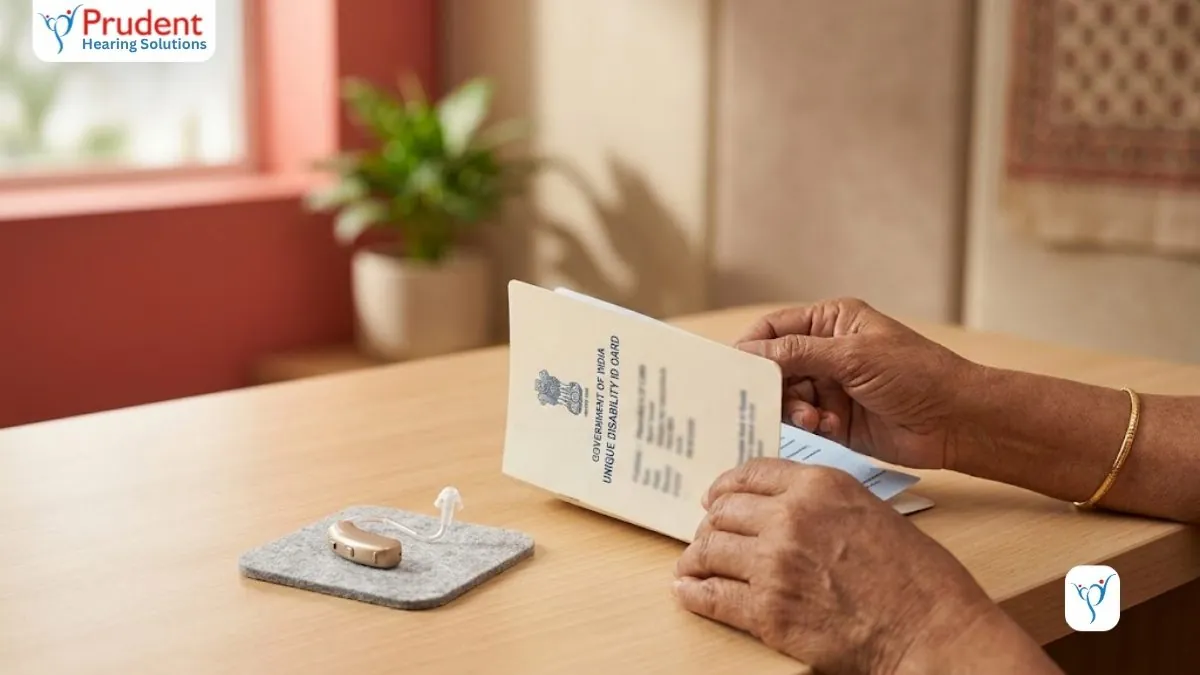
Section 80U allows a deduction for a person with a certified disability filing their own return. Section 80DD allows a deduction for a taxpayer who is caring for and has incurred expenses on a dependant with a certified disability, which is often the situation when an adult child is buying for a parent. In both cases a disability certificate is central to the claim.
The deduction amounts, the degree-of-disability bands, and the certificate requirements are fixed by law and can be revised, so confirm the current figures and rules for the relevant assessment year before you file, ideally with a tax professional. Our guide on hearing aid tax deductions under 80DD and 80U explains the paperwork and how the certificate ties in.
What hearing aids actually cost in India
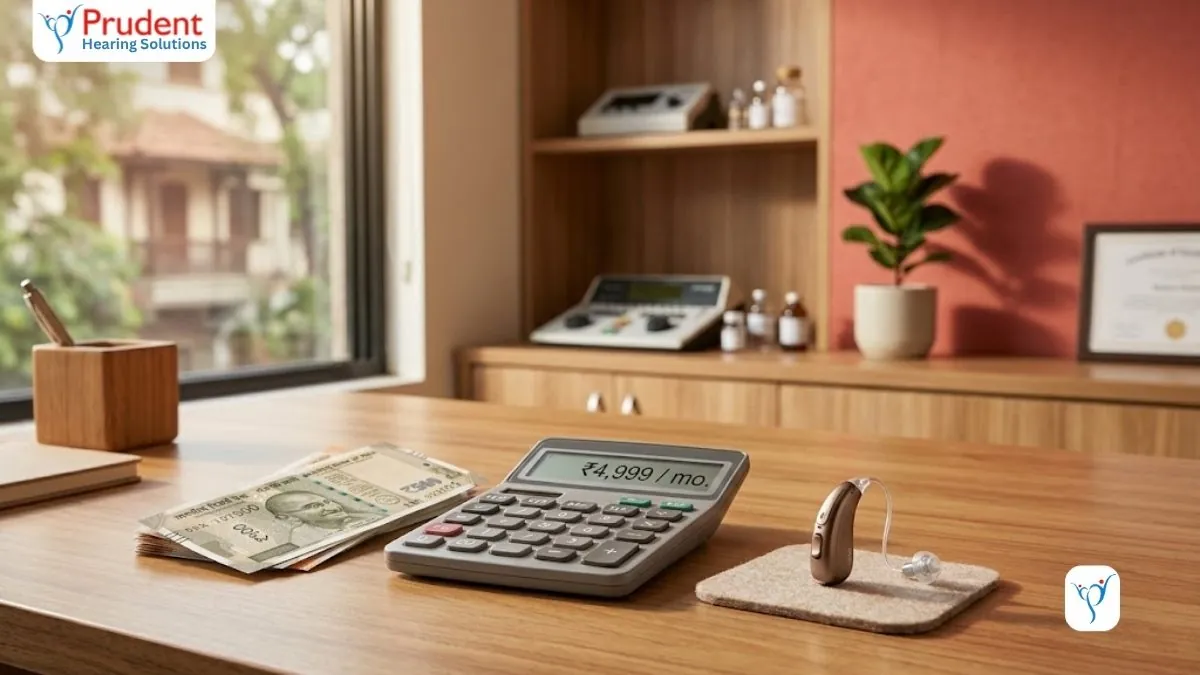
Since insurance rarely helps, it is worth knowing the honest price bands so you can plan. Prices vary a lot with the level of technology, the brand, and whether one or both ears need help. As a rough guide, per ear:
These are ranges, not fixed prices, and the right choice depends on your parent's hearing loss and how they live, not on picking the most expensive option. A good audiologist will steer you to the level of technology that actually helps, which is often not the top of the range.
- Entry level: roughly Rs 11,000 to Rs 35,000 per ear, suitable for straightforward needs.
- Mid range: roughly Rs 35,000 to Rs 70,000 per ear, with better performance in noise and more features.
- Premium: roughly Rs 70,000 to Rs 1,20,000 per ear, with the most advanced processing and connectivity.
- Remember: the price is already GST-exempt, and at Prudent you can get up to 30 to 50 percent off MRP, with 0 percent EMI to spread the cost.
How to bring the cost down without insurance
Even without a claim, there are several genuine ways to make hearing aids more affordable. Used together, they can change the picture significantly for a family budget.
The single most useful step is to get a proper hearing test first, so you buy the right device once, rather than the wrong device twice.
- Use the ADIP scheme if your parent is eligible for a free or subsidised aid.
- Claim tax relief under 80DD or 80U where there is a certified disability.
- Buy GST-exempt, which is automatic on the device.
- Ask for the discount: Prudent offers up to 30 to 50 percent off MRP.
- Spread the payment with 0 percent EMI instead of paying it all at once.
- Match the technology to the need, so you are not paying for features that will not be used.
- Try before you buy, so you are confident the device is right before committing.
How Prudent Hearing Solutions can help
You do not have to work all of this out alone. Start with a free 45-minute hearing test with our RCI-registered audiologists (MASLP/BASLP), who will explain your parent's hearing clearly and honestly, with no pressure to buy on the day.
We fit all the major brands, including Signia, Phonak, Oticon, Widex, ReSound, Starkey, Unitron and Interton, so the recommendation is based on your parent's needs, not on one company's catalogue. You can trial before you buy, use 0 percent EMI, and benefit from up to 30 to 50 percent off MRP, on top of the built-in GST exemption. We can also point you towards the ADIP scheme and the tax-relief route where they apply.
One honest note to keep in mind: a hearing aid manages hearing loss, it does not cure it. Fitted well and worn regularly, though, it can make a real difference to a parent's daily life. To book a test or ask a question, call us on +91 9429690093. We have centres in Pune, Delhi and Bengaluru, and we are expanding to Mumbai.
Continue reading
Frequently asked questions
Does health insurance in India cover hearing aids?
In most cases, no. Standard health insurance and mediclaim policies in India usually treat a hearing aid as an external appliance, which is a standard exclusion. Some corporate or group plans, or policies with specific riders, may differ, so read your policy wording and confirm with your insurer in writing before you assume either way.
Is a hearing aid covered under mediclaim?
Generally it is not. Mediclaim policies are built around hospitalisation and typically exclude external appliances and devices you use day to day at home. Coverage, where it exists, is rare and policy-specific, so ask your insurer to point you to the exact clause that applies to hearing aids on your plan.
Can I claim a hearing aid on income tax in India?
You may be able to claim relief under Section 80U (for a person with a certified disability) or Section 80DD (for a taxpayer supporting a dependant with a certified disability). A disability certificate is central to the claim. The deduction amounts and rules are set by law and can change, so confirm the current figures for the relevant year, ideally with a tax professional.
Are hearing aids GST-exempt in India?
Yes. Hearing aids are GST-exempt in India, so no Goods and Services Tax is added to the price of the device itself. This saving applies automatically to every buyer, with no form to file, whether or not you have any insurance.
How can I get a free or subsidised hearing aid in India?
The government's ADIP scheme provides hearing aids free of cost or at subsidised rates to eligible persons, based on factors such as a certified hearing disability and an income ceiling. The exact limits and documents are set officially and can change, so check the current ADIP rules or ask an audiologist. See our ADIP scheme guide for the step-by-step process.
What should I ask my insurer about hearing aids?
Ask whether your policy covers hearing aids at all and to point you to the exact clause; whether aids are listed as an exclusion; whether any rider or add-on changes this; and, if you are on a corporate or group plan, whether that plan is different. Get the answer in writing so you have it on record before you buy.
Free consultation
Ready to hear the difference?
Book a free 45-minute hearing test at any Prudent Hearing clinic: no obligation, honest advice, expert audiologists.