Educational information, not medical advice. This article is written to help you understand common ear and hearing issues. It is not a substitute for professional diagnosis or treatment. If your symptoms are severe, sudden, or persistent, please consult a qualified doctor or audiologist. For urgent symptoms (sudden hearing loss, bleeding from the ear, severe pain with dizziness, or a head injury), seek medical care the same day.
Sudden hearing loss in one ear is a medical emergency. Steroids work best within 72 hours. Learn the red flags and act same-day. Call +91 9429690093.
Quick answer
Sudden sensorineural hearing loss (SSNHL) is a rapid, unexplained loss of hearing, usually in one ear, that develops over three days or less. The US National Institute on Deafness (NIDCD) classifies it as a medical emergency: corticosteroids started within 72 hours give the best chance of recovery, and delay beyond two to four weeks makes lasting loss far more likely. See an ENT the same day.
Key takeaways
- Sudden hearing loss in one ear is an emergency, not something to sleep on. Get seen the same day.
- The main treatment is corticosteroids (tablets or injections into the ear), and earlier is better, ideally within 72 hours (NIDCD; AAO-HNS guideline).
- SSNHL can be post-viral: it sometimes follows a cold or other infection.
- New one-sided ringing (tinnitus), ear fullness or dizziness with a hearing drop are red flags, not minor niggles.
- Most sudden loss has no identifiable cause, so normal-looking ears do not rule it out. A hearing test (audiogram) confirms it.
"URGENT: ACT TODAY. If your hearing has suddenly dropped or gone muffled in one ear over minutes, hours or on waking (with or without ringing, fullness or dizziness) treat it as a medical emergency. Do not wait for a routine appointment and do not try home remedies. See an ENT specialist or go to a hospital emergency department the same day. Steroid treatment works best when it starts within 72 hours. Call us on +91 9429690093 for an urgent hearing test, and ask your doctor about starting treatment immediately."
Sudden sensorineural hearing loss (SSNHL) is a rapid, unexplained loss of hearing, usually in one ear, that develops over three days or less. The US National Institute on Deafness (NIDCD) classifies it as a medical emergency: corticosteroids started within 72 hours give the best chance of recovery, and delay beyond two to four weeks makes lasting loss far more likely. See an ENT the same day.
Is sudden hearing loss an emergency?
Yes, unambiguously. SSNHL is one of the few true emergencies in ear care. The inner-ear hair cells and hearing nerve appear to have a short window in which treatment can still help; once that window closes, the loss can become permanent.
The NIDCD and the American Academy of Otolaryngology (AAO-HNS) clinical practice guideline both advise urgent evaluation and prompt corticosteroids. In our clinics we often meet people who assumed a blocked ear would simply clear on its own and lost days that mattered. If your hearing drops suddenly, the safe assumption is emergency until a specialist proves otherwise.
What is sudden sensorineural hearing loss (SSNHL)?
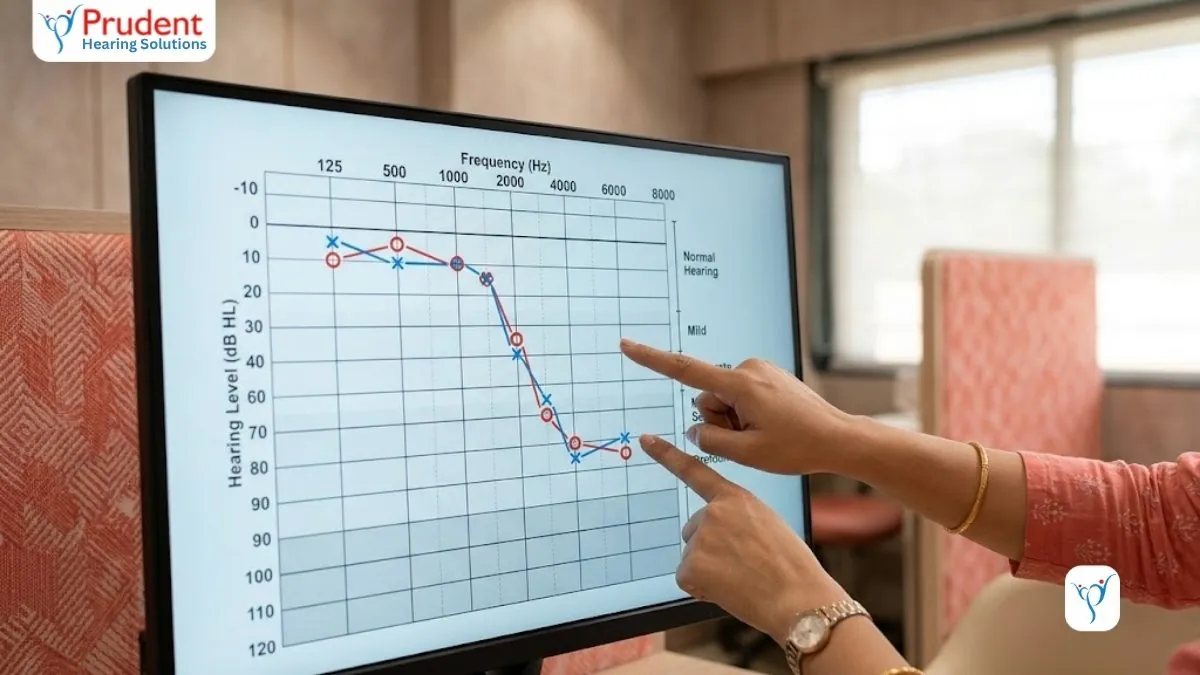
SSNHL is a fast loss of hearing caused by a problem in the inner ear (the cochlea) or the hearing nerve, rather than a simple blockage. It is usually defined as a drop of at least 30 decibels across three connected frequencies, developing within 72 hours.
Most cases affect one ear only, and around nine in ten have no identifiable cause even after testing (AAO-HNS guideline). Suspected triggers include viral infection, problems with inner-ear blood flow, autoimmune conditions and, rarely, a tumour on the hearing nerve. Because you cannot tell the cause from symptoms alone, every sudden one-sided loss needs urgent professional assessment.
Why do the first 72 hours matter so much?
Recovery odds fall as time passes. Corticosteroids, the first-line treatment, are most effective when started within about 72 hours of onset, and evidence and guidelines agree that starting beyond two to four weeks offers little benefit (NIDCD; SSNHL review, PMC). A share of people recover some or all hearing on their own, but there is no reliable way to know in advance who will. Waiting to "see if it improves" gambles your hearing on the worst odds. Same-day care keeps the treatment window open.
How is sudden hearing loss treated?
The established first-line treatment is corticosteroids, given either as oral tablets or as an intratympanic injection (steroid delivered directly through the eardrum into the middle ear) (NIDCD; AAO-HNS guideline). Intratympanic steroids are also used as salvage treatment when oral steroids do not fully work, and can suit people who cannot take oral steroids, such as some with diabetes (treatment review, PMC).
An ENT may order an MRI to look for rarer causes. This is not an optional or delayable treatment: the decision to start belongs with a doctor, and the priority is starting soon.
- First-line treatment, Corticosteroids, oral tablets or intratympanic injection (NIDCD)
- Best timing: Start ideally within 72 hours; benefit is limited after 2–4 weeks
- If steroids don't fully work: Intratympanic steroid as salvage therapy (PMC review)
- Further tests: ENT assessment; MRI to exclude rarer causes such as a nerve tumour
- If loss persists, Audiologic rehabilitation, hearing aids or other devices
Evidence status: ESTABLISHED. SSNHL as an emergency, the treatment window, and steroids as first-line care are supported by the NIDCD and the AAO-HNS clinical practice guideline.
What is intratympanic steroid treatment?
Intratympanic (IT) steroid treatment is an injection of steroid through the eardrum into the middle ear, where it is absorbed toward the inner ear. It delivers a higher local dose while limiting the whole-body side effects of oral steroids, which makes it useful for people who cannot take high-dose oral steroids, for example, some people with diabetes.
IT steroids are used in three ways: as initial therapy, combined with oral steroids, or as salvage treatment when an oral course has not restored hearing. Evidence reviews support IT injection as a recognised part of SSNHL management, including its salvage role (SSNHL treatment review, PMC). The procedure is done in clinic and is generally well tolerated, though temporary dizziness or a brief burning feeling can occur.
What are the realistic recovery odds?
Recovery varies widely and cannot be predicted precisely for any one person. Some people regain some or all of their hearing; a meaningful share are left with permanent loss even after correct, timely treatment (review, PMC).
Factors linked to poorer recovery include severe or profound loss at diagnosis, a delay before starting treatment, dizziness or vertigo alongside the hearing drop, and older age. Because no treatment guarantees a cure, the honest goal is to give hearing the best possible chance by acting fast, not to promise a specific result.
Muffled hearing in one ear after a cold: fluid or emergency?
This is the hardest call, and it is worth getting right. Most muffled hearing after a cold is a middle-ear problem: fluid or congestion behind the eardrum (a conductive issue) that usually clears over days to weeks (MedlinePlus). But sudden sensorineural hearing loss can be post-viral and can begin the same way.
Treat it as an emergency and seek care within 72 hours if any of these apply: the drop was sudden or severe, it is clearly one-sided, speech sounds distorted rather than just quiet, or it comes with spinning dizziness (vertigo) or new ringing. When in doubt, get tested today rather than waiting for the cold to pass.
Sudden hearing loss with tinnitus (ringing) in one ear
New, sudden ringing in one ear alongside a hearing drop is a classic warning sign of SSNHL, not ordinary tinnitus to manage at home (NIDCD tinnitus). The two often appear together because both come from the same inner-ear injury.
The action is the same as for any sudden one-sided loss: same-day ENT or emergency assessment, and an audiogram to measure what has changed. If steroids are started promptly, they may help both the hearing and, in some people, the tinnitus. Do not assume the ringing will simply settle: have it checked while treatment can still make a difference.
Red flags: when to seek same-day care
Seek urgent ENT or emergency care today if you have any of the following:
- Hearing that suddenly drops or goes muffled in one ear over minutes to a few days
- A loud "pop" followed by reduced hearing
- New one-sided tinnitus (ringing, buzzing, roaring) with a hearing change
- Ear fullness that does not clear, especially after a cold
- Vertigo or severe imbalance with the hearing change
- Distorted sound: voices are present but hard to make out
None of these should be watched at home. In our clinics we can perform an urgent audiogram to confirm the type and degree of loss, then work alongside your ENT so treatment starts without delay.
What to do right now
1. Do not wait. Sudden one-sided hearing loss is time-critical. 2. See an ENT or go to an emergency department today and ask about starting corticosteroids. 3. Book an urgent audiogram so the loss is measured and documented. 4. Avoid home remedies: ear drops, oils and cotton buds will not treat SSNHL and can waste the treatment window.
If your hearing has changed suddenly, call Prudent Hearing Solutions on +91 9429690093 for a priority hearing test, or contact us to arrange same-day assessment. Our RCI-registered audiologists (MASLP/BASLP) across Pune, Delhi and Bengaluru will test your hearing quickly and coordinate with your ENT so treatment is not delayed. There is no pressure, just prompt, honest care when timing counts.
Continue reading
Frequently asked questions
Can sudden hearing loss go away on its own?
Some people recover part or all of their hearing spontaneously, but there is no reliable way to predict who will (NIDCD). Because prompt steroids improve the odds, waiting to see if it clears is a poor bet. Get assessed the same day.
How quickly do I need treatment?
As fast as possible, ideally corticosteroids within 72 hours of onset. Benefit drops sharply after two to four weeks (AAO-HNS guideline).
Is muffled hearing after a cold always an emergency?
No, most is temporary middle-ear fluid (MedlinePlus). But a sudden, severe or one-sided drop, or one with vertigo or new ringing, can be sudden sensorineural loss and needs urgent care within 72 hours.
Should I go to the ENT or the emergency department?
Whichever you can reach fastest today. An ENT specialist is ideal, but an emergency department can start assessment and steroids and refer you on. Speed matters more than the exact door.
Are steroid injections into the ear safe?
Intratympanic steroid injections are a recognised, widely used treatment for SSNHL, given first-line or as salvage when tablets do not fully work (treatment review, PMC). Your ENT will discuss the right option for you.
What if my hearing does not fully recover?
If loss persists after treatment, an audiologist can help with rehabilitation, including hearing aids and communication strategies. Book a free hearing test to measure your hearing and plan next steps.
Sources & further reading
We cross-checked this article against the following authoritative sources. Guidance and figures reflect the most recent public guidance available at the time of last review (September 2026). Clinical review by the Prudent Hearing clinical team.
- Sudden Deafness (Sudden Sensorineural Hearing Loss) (NIDCD)
- AAO-HNS Clinical Practice Guideline: Sudden Hearing Loss (Update) (aao-hnsfjournals.onlinelibrary.wiley.com)
- review (PMC) (Sudden Sensorineural Hearing Loss)
- SSNHL treatment review, including intratympanic steroids (PMC) (ncbi.nlm.nih.gov)
- Tinnitus (NIDCD)
- Ear Infections (MedlinePlus)
Free consultation
Ready to hear the difference?
Book a free 45-minute hearing test at any Prudent Hearing clinic: no obligation, honest advice, expert audiologists.