Educational information, not medical advice. This article is written to help you understand common ear and hearing issues. It is not a substitute for professional diagnosis or treatment. If your symptoms are severe, sudden, or persistent, please consult a qualified doctor or audiologist. For urgent symptoms (sudden hearing loss, bleeding from the ear, severe pain with dizziness, or a head injury), seek medical care the same day.
New ear ringing after COVID? Here's what studies really show about tinnitus, hearing loss and dizziness, plus when to get checked.
Quick answer
Publisher note: replace the bracketed fields above with the real names and RCI registration numbers of the audiologist who wrote this piece and the credentialed audiologist who reviewed it before publishing. A named author and named medical reviewer are important for E-E-A-T on this YMYL topic.
Key takeaways
- Tinnitus (ringing, buzzing or hissing with no outside source) is reported alongside COVID, but a link is not the same as a proven cause. Much of the research is preliminary and sometimes conflicting.
- Pooled reviews suggest tinnitus in around 15% of people with COVID, hearing loss in around 8%, and vertigo in around 7%, while some studies find no lasting change to measured hearing thresholds.
- Most post-viral ringing settles over days to weeks. Ringing that lasts beyond a few weeks, or hearing that feels reduced, deserves a hearing and tinnitus assessment.
- Sudden hearing loss in one ear is a medical emergency. Do not wait it out: see a doctor or ENT the same day.
- There is no reliable evidence that COVID vaccines cause tinnitus. Ear symptoms usually have many possible causes, so a proper evaluation matters more than blaming one trigger.
Publisher note: replace the bracketed fields above with the real names and RCI registration numbers of the audiologist who wrote this piece and the credentialed audiologist who reviewed it before publishing. A named author and named medical reviewer are important for E-E-A-T on this YMYL topic.
New or worsening ear ringing during or after COVID is common, and studies do report an association: reviews find tinnitus in roughly 15% of people with COVID, hearing loss in about 8%, and vertigo in about 7%. But the evidence is emerging and mixed, causation is not proven, and many cases ease over time. Persistent or sudden symptoms need a professional check.
Can COVID cause tinnitus?
COVID is associated with tinnitus, but a firm cause-and-effect link is not established. A 2024 systematic review pooled data from many studies and reported tinnitus in roughly 15% of people affected by COVID, describing the overall evidence as emerging rather than settled. Proposed explanations include viral effects on the inner ear or auditory pathways, inflammation, and the stress and disrupted sleep that come with any illness.
In our clinics we often see people who first notice ringing during a fever or a bad viral week, when the whole body is under strain. Tinnitus itself is a symptom, not a disease. The useful next step is finding out what is driving it.
What is tinnitus, in plain terms?
Tinnitus is the perception of sound (ringing, buzzing, hissing or humming) with no external source. It can affect one or both ears and may come and go. It is extremely common and often linked to changes in the hearing system, noise exposure, ear wax, or general health, according to NIDCD. Tinnitus is not usually dangerous on its own, but a new, persistent or one-sided sound is worth investigating, because it can be the first sign of a hearing change that a simple test can measure.
Is tinnitus a long COVID symptom?
Tinnitus is recognised among the symptoms some people report in long COVID, though the picture is inconsistent. One study found the long-COVID group carried the highest tinnitus burden on a standard questionnaire (the Tinnitus Functional Index), which measures how much ringing intrudes on daily life. Other work is less clear-cut.
Practically, if ringing has stayed with you for weeks after infection, help is available. Sound therapy, hearing devices where a hearing loss is present, sleep and stress management, and structured tinnitus counselling can lower how much it bothers you. These manage tinnitus; they are not a cure, and no product should promise to erase it.
Can COVID cause hearing loss?
The honest answer is: possibly in some people, but the evidence is genuinely split. Some reviews report hearing loss in around 8% of people studied with COVID, while other studies find no lasting change to hearing thresholds when tested carefully.
Reported cases range from temporary muffling to, rarely, sudden sensorineural hearing loss around the time of infection. Because the data conflicts, the safe approach is measurement, not assumption: an audiogram tells you whether your hearing has actually changed. If your hearing dropped suddenly, see the urgent callout above: that scenario is time-critical.
How long does ringing in the ears last after COVID?
For most people, post-viral tinnitus eases over days to a few weeks as the body recovers, though it can persist longer in some. The evidence on exact timelines is limited, so no one can promise a fixed recovery date.
As a general guide, short-lived ringing during illness is usually reassuring, while ringing that continues beyond a few weeks, gets louder, or comes with reduced or one-sided hearing, should be checked by a professional. Repeated or worsening episodes are a clear reason to book a hearing and tinnitus evaluation rather than keep waiting.
COVID, dizziness and the inner ear
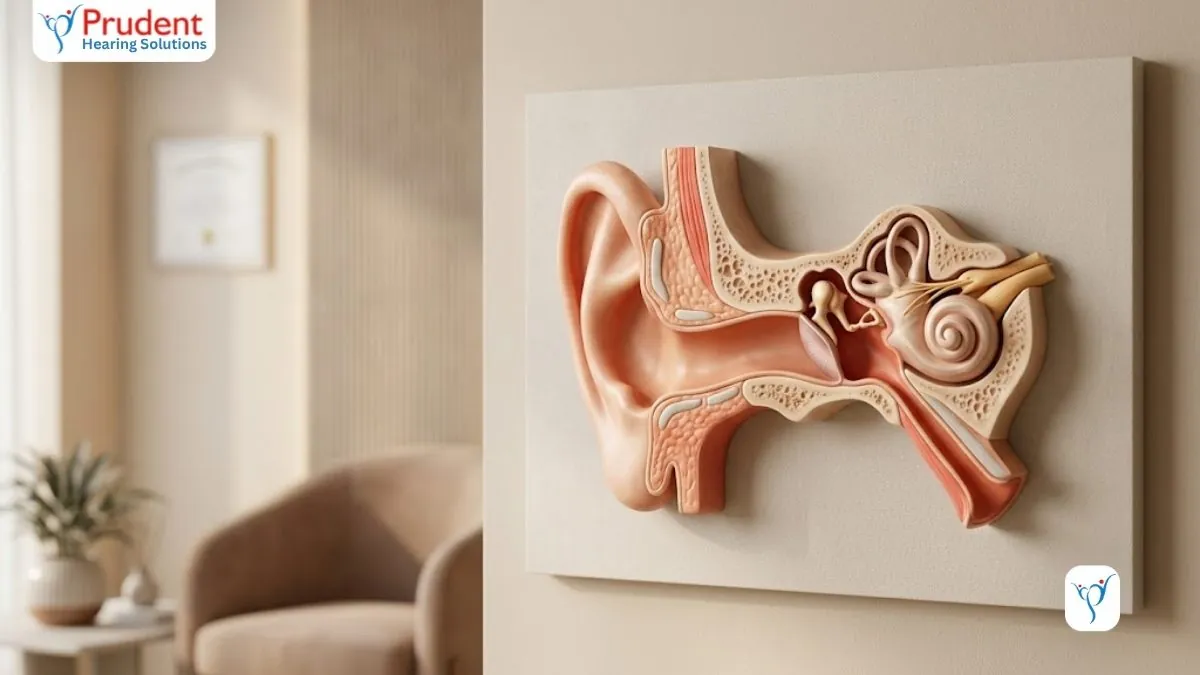
Some people report dizziness or vertigo around a COVID illness. Reviews describe vertigo in roughly 7% of cases studied, again as an emerging association rather than proven cause. The inner ear houses the balance organs as well as the hearing organ, so viral illness, dehydration and inflammation can all upset balance temporarily. Persistent spinning, unsteadiness or dizziness that keeps returning warrants a balance and inner-ear assessment, which can include VEMP and other vestibular tests, alongside a review by your doctor to rule out other causes.
Ear symptoms after COVID: what to do
- Mild ringing during illness. Typical picture: Often eases within days to weeks; What to do: Rest, protect ears from loud noise, monitor
- Ringing lasting over a few weeks. Typical picture: May reflect an underlying hearing change; What to do: Book a hearing + tinnitus assessment
- Gradual muffled hearing. Typical picture: Could be wax, fluid or a true loss; What to do: Get an audiogram to measure it
- Sudden hearing loss in one ear, Typical picture: Possible SSNHL, time-critical; What to do: Same-day ENT/urgent care, then audiology
- Persistent dizziness or vertigo. Typical picture: Possible inner-ear or balance issue; What to do: Balance (VEMP) assessment + see your doctor
What a hearing and tinnitus assessment involves
An assessment is straightforward and painless. Our RCI-registered audiologists take your history (including recent illness and medications), examine your ears, and run a pure-tone audiogram to map your hearing across frequencies. Where relevant we add tympanometry to check the middle ear, and tinnitus-specific questionnaires and pitch/loudness matching to understand your ringing. From there we explain the findings in plain language and set out realistic options, from watchful monitoring to sound therapy, tinnitus counselling, or hearing devices if a loss is present. The aim is clarity and a plan, not pressure.
Talk to an audiologist
If ringing, muffled hearing or dizziness has stayed with you after a COVID or viral illness, a proper assessment turns uncertainty into a clear plan. Prudent Hearing Solutions provides hearing and tinnitus assessments with RCI-registered audiologists at our Pune and PCMC clinics. Book a free hearing test, explore tinnitus help, or contact us on +91 9429690093. Home-visit hearing tests are available if travelling is difficult.
This article is general information, not medical advice: consult a qualified audiologist or doctor about your situation.
- /hearing-test: tinnitus assessment and management (anchor: "tinnitus help", "hearing and tinnitus assessment")
- /hearing-test: free hearing test / baseline audiogram (anchor: "free hearing test", "get an audiogram")
- /contact: VEMP and balance testing (anchor: "balance and inner-ear assessment", "balance (VEMP) assessment")
- /contact: book an appointment (anchor: "contact us")
- /home-visit: hearing test at home (anchor: "home-visit hearing tests")
Continue reading
Frequently asked questions
Does COVID cause permanent hearing loss?
Usually not, but it can in rare cases. Evidence is mixed: some reviews report hearing loss in about 8% of people studied, while others find no lasting threshold change. The only way to know your own hearing status is a test. Sudden one-sided loss is an emergency and needs same-day care.
Do COVID vaccines cause tinnitus?
There is no reliable evidence that COVID vaccines cause tinnitus. Ear symptoms have many possible causes. If you develop persistent ringing after any illness or medical event, get it assessed rather than assuming a single cause.
Is post-COVID tinnitus curable?
There is no guaranteed cure for tinnitus, but it is very manageable. Sound therapy, structured counselling, treating any underlying hearing loss, and better sleep and stress control can substantially reduce how intrusive it feels.
When should I worry about ringing in my ears?
See a professional if ringing lasts beyond a few weeks, is only in one ear, comes with reduced hearing or dizziness, or is severe. Any sudden hearing loss needs same-day emergency care.
Can long COVID cause ongoing ear ringing?
Tinnitus is reported as a long-COVID symptom in some studies, though the evidence is inconsistent. If ringing has persisted for weeks after infection, an assessment can identify contributing factors and start a management plan.
Should I get a hearing test if my symptoms are mild?
A baseline audiogram is worthwhile if you have any new or lingering ear symptom. It measures whether your hearing has actually changed and gives you a reference point for the future.
Sources & further reading
We cross-checked this article against the following authoritative sources. Guidance and figures reflect the most recent public guidance available at the time of last review (September 2026). Clinical review by the Prudent Hearing clinical team.
- Tinnitus (NIDCD)
- Balance Disorders (NIDCD)
- systematic review of audiovestibular symptoms in COVID-19 (Frontiers in Public Health (2024))
- tinnitus burden and long COVID (Tinnitus Functional Index) (PMC)
- COVID-19 and audiovestibular symptoms review (PMC)
- hearing loss and COVID-19 review (PMC)
Free consultation
Ready to hear the difference?
Book a free 45-minute hearing test at any Prudent Hearing clinic: no obligation, honest advice, expert audiologists.