Educational information, not medical advice. This article is written to help you understand common ear and hearing issues. It is not a substitute for professional diagnosis or treatment. If your symptoms are severe, sudden, or persistent, please consult a qualified doctor or audiologist. For urgent symptoms (sudden hearing loss, bleeding from the ear, severe pain with dizziness, or a head injury), seek medical care the same day.
How ear infections and glue ear muffle a child's hearing, red-flag signs, and when middle-ear fluid needs a hearing test. A parent's back-to-school guide.
Quick answer
Ear infections commonly cause temporary hearing loss in children. Fluid trapped behind the eardrum blocks sound, muffling what your child hears. Most cases clear within weeks as the fluid drains. But lingering fluid, or repeated infections during early language years, can affect speech and learning, so get a hearing test if concerns persist.
Key takeaways
- Ear infections are almost universal. About five out of six children have at least one ear infection by age three, per the US National Institute on Deafness and Other Communication Disorders (NIDCD).
- The hearing loss is usually temporary and conductive: fluid in the middle ear blocks sound conduction. Hearing typically returns once the fluid clears.
- Persistent fluid ("glue ear") is the concern. Fluid that lingers for weeks or months can muffle hearing during the years a child is learning to talk.
- Watch for red flags (high fever, severe ear pain, symptoms lasting more than 2–3 days, or ongoing hearing and speech concerns) and see a doctor.
- A simple, painless hearing test and tympanometry can measure how much fluid is affecting your child's hearing. Book a free hearing test if you are worried.
Ear infections commonly cause temporary hearing loss in children. Fluid trapped behind the eardrum blocks sound, muffling what your child hears. Most cases clear within weeks as the fluid drains. But lingering fluid, or repeated infections during early language years, can affect speech and learning, so get a hearing test if concerns persist.
Why do children get so many ear infections?
Children get ear infections far more often than adults because of anatomy. The Eustachian tube, which drains fluid from the middle ear to the back of the nose, is shorter, narrower and more horizontal in young children, so it clogs easily after a cold.
Autumn and winter respiratory viruses (colds, flu, RSV) are the biggest trigger, which is why cases spike once schools reopen. The NIDCD notes that five of six children have at least one ear infection by age three. In our clinics we see this pattern every year as the season turns.
What is the difference between AOM and OME (glue ear)?
Doctors distinguish two related conditions. Acute otitis media (AOM) is an active infection: the middle ear is inflamed and often painful, sometimes with fever. Otitis media with effusion (OME), also called glue ear, is fluid sitting behind the eardrum without an active infection, often lingering after a cold or after an AOM settles.
Both can muffle a child's hearing, but OME is the one that tends to persist and quietly affect learning. Understanding which one your child has guides whether watchful waiting or a hearing test is the right next step (NIDCD; CDC).
- What it is: Acute otitis media (AOM): Active middle-ear infection; Otitis media with effusion (OME / glue ear): Fluid behind the eardrum, no active infection
- Pain: Acute otitis media (AOM): Common, sometimes severe; Otitis media with effusion (OME / glue ear): Usually little or no pain
- Fever: Acute otitis media (AOM): Often; Otitis media with effusion (OME / glue ear): Uncommon
- Effect on hearing: Acute otitis media (AOM): Temporary muffling; Otitis media with effusion (OME / glue ear): Temporary muffling, can persist for weeks/months
- Typical course: Acute otitis media (AOM): Often improves in a few days; Otitis media with effusion (OME / glue ear): May clear on its own; can linger
- When a hearing test helps: Acute otitis media (AOM): If symptoms persist; Otitis media with effusion (OME / glue ear): If fluid or hearing concerns last (often reviewed around 3 months)
How does otitis media cause hearing loss?
The hearing loss from an ear infection is conductive: it happens because sound cannot travel efficiently through the ear, not because the inner ear or hearing nerve is damaged. The middle ear normally holds air, letting the eardrum and the tiny middle-ear bones vibrate freely.
When infection or glue ear fills that space with fluid, the eardrum cannot move as it should, so sound is blocked or dampened before it reaches the inner ear. Your child hears as if underwater or through a pillow. Because it is mechanical, this loss usually reverses once the fluid drains (NIDCD; MedlinePlus).
Can fluid in the ear (glue ear) affect my child's hearing after the cold is gone?
Yes. It is common for the infection to settle but the fluid to stay behind for weeks. This lingering fluid, glue ear (OME), keeps muffling hearing even though your child no longer seems "sick." Many cases still clear on their own, so doctors often recommend a period of watchful waiting, with review typically around the three-month mark.
If fluid persists that long, or if you notice hearing or speech concerns sooner, a hearing test and tympanometry (a quick middle-ear pressure check) are recommended to measure the effect and guide next steps (MedlinePlus glue ear).
Can repeated ear infections cause a speech delay in toddlers?
They can contribute. The first few years of life are when children learn language by listening, and clear hearing matters most in that window. When repeated infections or long-standing glue ear muffle sound during these key months, a child hears speech less clearly and may be slower to pick up words and sounds.
This does not happen to every child, and hearing usually recovers with the fluid, but for a child with recurrent ear infections or a suspected speech delay, a pediatric hearing test is worthwhile to rule out hearing as a factor (NIDCD; CDC).
What signs of hearing trouble should parents watch for?
In our clinics, parents often notice the hearing change before anything else. Common signs include:
- Turning the TV or tablet volume up, or sitting very close to it
- Saying "what?" often, or not responding when called from another room
- Seeming inattentive, especially in noise or at school
- Speech that is delayed, unclear, or has stalled
- Pulling or tugging at the ears, or balance clumsiness
- Trouble following instructions after a recent cold
One muffled ear after a cold is common. A pattern that lasts, or a child falling behind peers in speech, deserves a hearing test.
When should I take my child to a doctor?
Most ear infections settle on their own, but some signs need medical attention. See a doctor if your child has a high fever, severe ear pain, fluid or discharge draining from the ear, symptoms lasting more than 2–3 days, or symptoms in a baby under six months. Also seek review for hearing or speech concerns that persist, or repeated infections. We do not advise antibiotic dosing: that is your doctor's decision. Our role is measuring how your child's hearing is affected and monitoring it over time (CDC; MedlinePlus).
How can I help prevent ear infections in my child?
You cannot prevent every infection, but you can lower the risk. The CDC and NIDCD recommend:
- Keep your child away from tobacco smoke. Secondhand smoke raises ear-infection risk.
- Stay up to date on vaccinations, including flu and pneumococcal vaccines where advised by your doctor.
- Practise good hand hygiene to cut down on the colds that lead to ear infections.
- Feed babies upright, and where possible breastfeed, which is linked to lower risk. Avoid bottle-feeding a baby lying flat.
- Reduce group-childcare exposure during peak cold season if your child gets frequent infections.
Fewer colds and less trapped fluid means fewer chances for hearing to be muffled during the years it matters most.
Book a hearing test for your child
If your child keeps getting ear infections, still sounds "blocked" weeks after a cold, or seems to be mishearing or slow to talk, a simple hearing test can tell you where things stand.
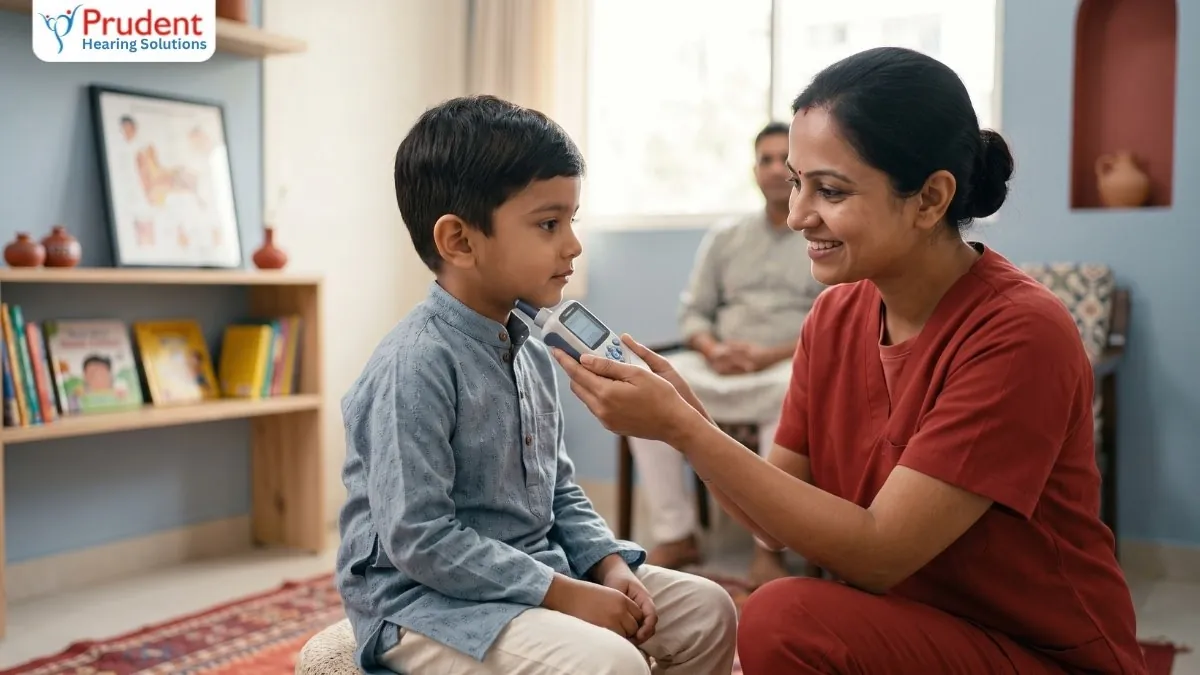
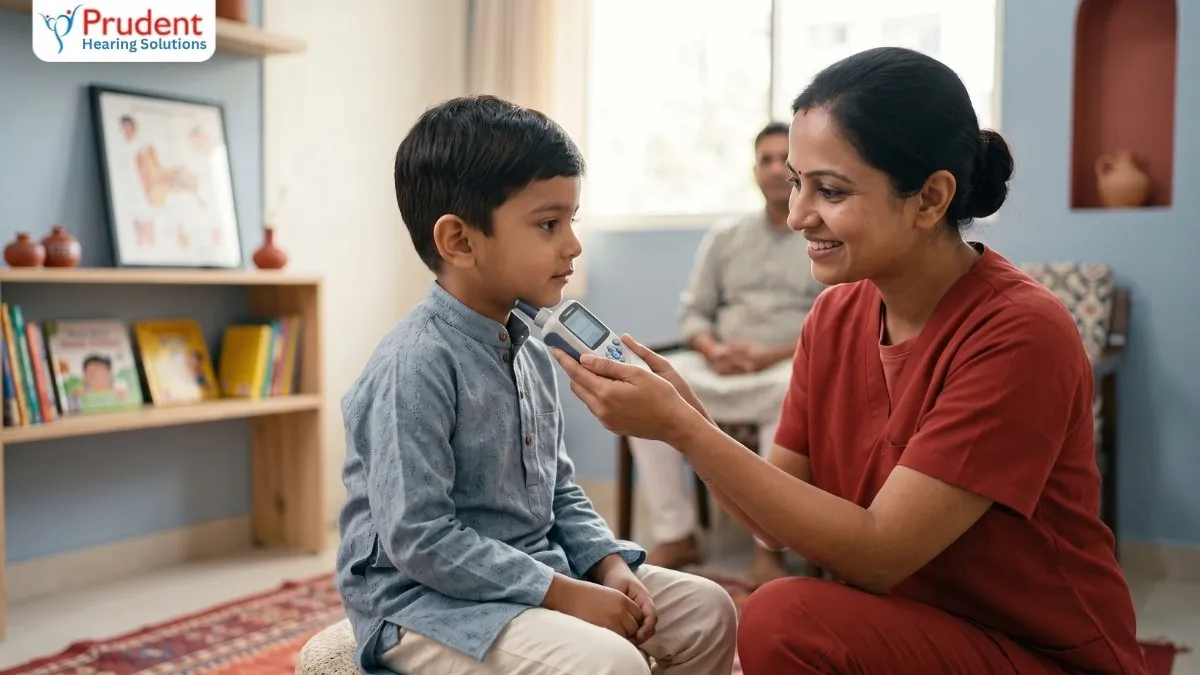
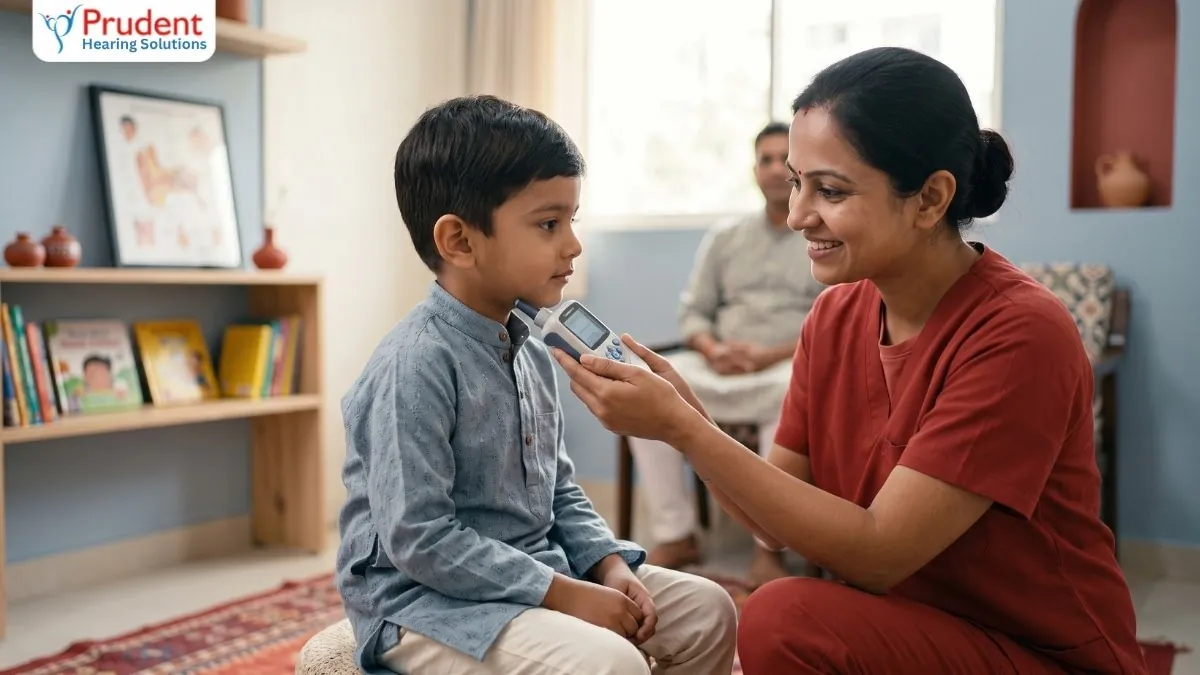
At Prudent Hearing Solutions (part of Prudent International Health Clinic, with RCI-registered audiologists in Pune and PCMC (Pimpri-Chinchwad)) we offer painless pediatric hearing tests and middle-ear testing. Book a free hearing test, or contact us on +91 9429690093. If travelling with a young child is difficult, ask about our home-visit hearing test. No pressure, just clarity on your child's hearing.
Continue reading
Frequently asked questions
Does my child need a hearing test after every ear infection?
No. A single infection that clears usually needs no test. Consider a hearing test if fluid or hearing concerns last several weeks, if infections keep recurring, or if you notice a speech delay (NIDCD).
Is the hearing loss from an ear infection permanent?
Almost always no. It is a temporary conductive loss that resolves once the middle-ear fluid clears. The concern is fluid that lingers for months during early language development (MedlinePlus).
What is tympanometry and does it hurt?
Tympanometry is a quick, painless test that measures how your child's eardrum moves and detects fluid behind it. It takes seconds per ear and is a standard part of a pediatric middle-ear and hearing test.
How long does glue ear usually last?
Glue ear often clears on its own within a few weeks to about three months. Doctors typically watch and re-check; if fluid and hearing effects persist beyond that, they recommend a hearing test and follow-up (MedlinePlus glue ear).
Can I test my child's hearing at home?
Home observation (does your child respond to soft sounds, follow speech, react to their name?) is useful for spotting concerns, but it cannot measure hearing accurately. A proper audiogram and tympanometry are needed to confirm how much fluid is affecting hearing.
My toddler had many ear infections and isn't talking much: should I worry?
It is worth checking. Repeated hearing muffling during language-learning years can slow speech. A pediatric hearing test can rule out hearing as the cause and guide early support if needed (CDC).
Sources & further reading
We cross-checked this article against the following authoritative sources. Guidance and figures reflect the most recent public guidance available at the time of last review (September 2026). Clinical review by the Prudent Hearing clinical team.
- Ear Infections in Children (NIDCD)
- About Ear Infections (CDC)
- Ear Infections (MedlinePlus)
- Otitis media with effusion (glue ear) (MedlinePlus)
Free consultation
Ready to hear the difference?
Book a free 45-minute hearing test at any Prudent Hearing clinic: no obligation, honest advice, expert audiologists.