Educational information, not medical advice. This article is written to help you understand common ear and hearing issues. It is not a substitute for professional diagnosis or treatment. If your symptoms are severe, sudden, or persistent, please consult a qualified doctor or audiologist. For urgent symptoms (sudden hearing loss, bleeding from the ear, severe pain with dizziness, or a head injury), seek medical care the same day.
Repeated ear infections can cause temporary hearing loss that affects toddler speech. Learn the signs, timelines and when to book a pediatric hearing test.
Quick answer
Repeated ear infections can contribute to speech delay in some toddlers, but not directly. The link is fluid behind the eardrum, which muffles hearing during the years a child learns to talk. Most children catch up once hearing is restored. If infections keep recurring, a pediatric hearing test is the sensible next step.
Key takeaways
- Ear infections do not damage speech directly; the concern is the temporary hearing loss they cause during key language-learning years.
- A single, well-treated infection rarely affects speech. The risk rises with repeated or long-lasting fluid (otitis media with effusion, or "glue ear").
- Muffled hearing means your toddler hears fewer clear words, which can slow how quickly they learn to speak.
- Most children recover normal hearing and speech once the fluid clears.
- Recurrent infections, unclear speech, or a child who seems not to respond warrant a hearing test.
Repeated ear infections can contribute to speech delay in some toddlers, but not directly. The link is fluid behind the eardrum, which muffles hearing during the years a child learns to talk. Most children catch up once hearing is restored. If infections keep recurring, a pediatric hearing test is the sensible next step.
How can an ear infection affect a toddler's speech?
Speech develops by listening. In the first three years, toddlers absorb thousands of spoken words and copy the sounds they hear. That process depends on clear hearing.
An ear infection, medically called otitis media, often leaves fluid trapped in the middle ear. This fluid can stay for weeks even after pain and fever settle. While it is there, sound is muffled, a bit like listening underwater. According to the NIDCD, this fluid buildup can cause temporary hearing loss.
If a toddler hears speech softly or unclearly during these months, they take in fewer clear sound patterns. This is an association, not a guaranteed outcome. Many children with occasional infections speak on time. The worry is greater when hearing is reduced repeatedly or for long stretches.
Does every ear infection cause speech delay?
No. Most single infections are treated and clear without lasting effect on speech.
The pattern that raises concern is repeated infections or persistent fluid that does not drain. MedlinePlus notes that fluid can remain in the ear for some time after an infection. When one infection follows another through a child's second and third year, the periods of reduced hearing add up during a critical window for language.
So the question is less "did my child have an ear infection?" and more "how often, and for how long, has my child had muffled hearing?"
What signs should parents watch for?
Some signs point to a hearing problem behind slower speech. Watch for a toddler who:
- Turns up the TV volume or sits very close to it
- Does not respond when called from another room
- Says fewer words than other children the same age
- Speaks unclearly or leaves off sounds
- Seems inattentive or frustrated in noisy settings
- Has frequent ear infections, ear-tugging, or fluid discharge
The CDC lists tugging at the ear, trouble hearing, and balance problems among signs of ear infection in young children. Trust your instinct. Parents usually notice these patterns first.
What should I do if infections keep coming back?
Book a pediatric hearing test. This is the clearest way to know whether your child's hearing is being affected.
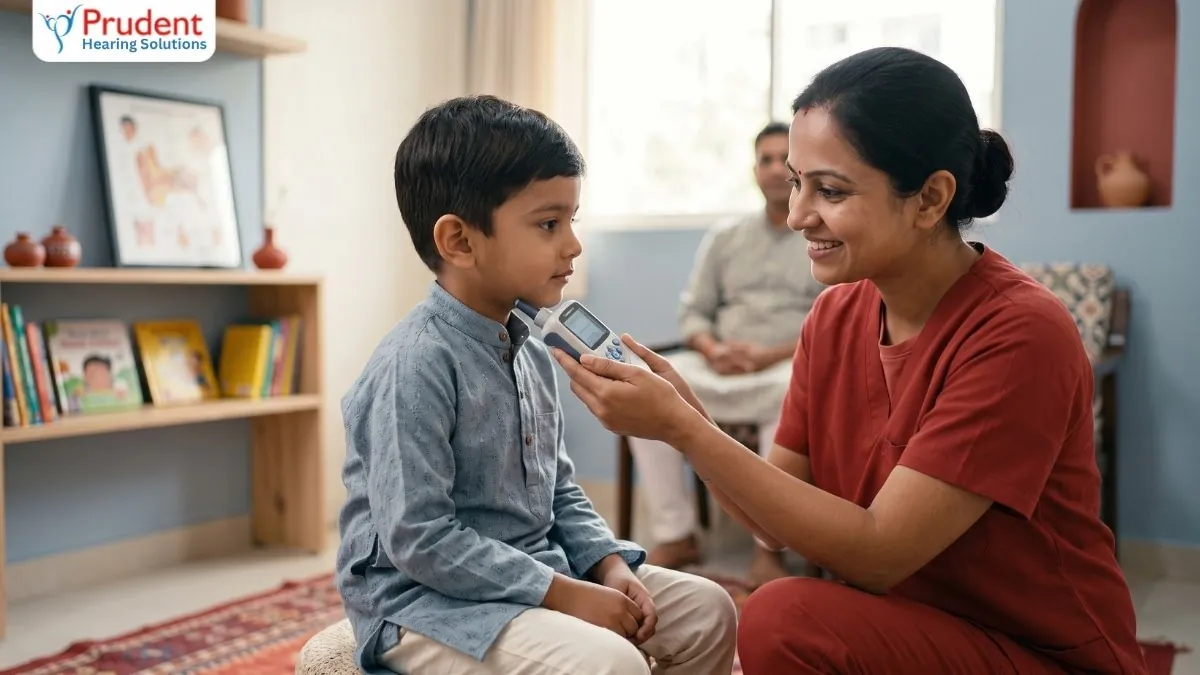
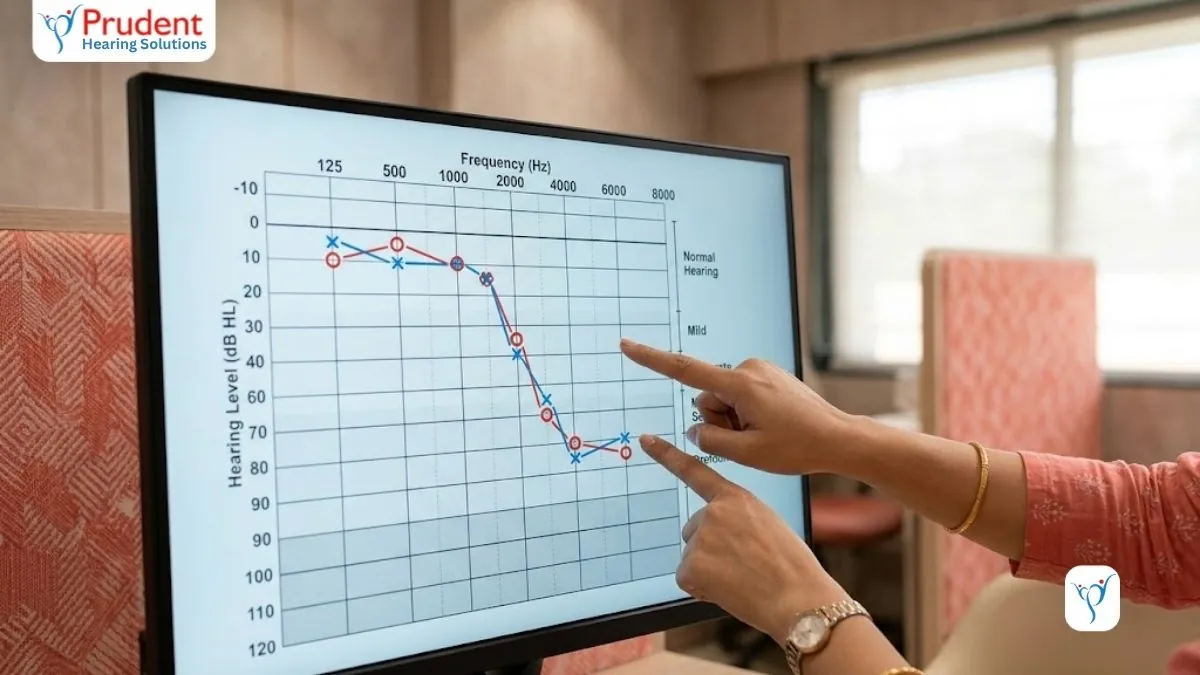
An audiologist can measure how well your toddler hears across speech frequencies and check for middle-ear fluid using a quick, painless test called tympanometry. If glue ear is present, the results guide whether to watch, treat, or refer to an ENT specialist. Our team offers a hearing test suited to young children, and a home visit if a clinic setting is difficult for your toddler.
Recurrent ear infections and their impact on hearing are covered in depth in our parent guide, Ear Infections and Your Child's Hearing: A Parent's Back-to-School Guide. It explains prevention, treatment options, and what to expect at each stage.
How quickly do children catch up after treatment?
Once fluid clears and hearing returns to normal, most toddlers make rapid progress. Some catch up on their own within a few months. Others benefit from speech-language therapy to bridge the gap, especially if the delay was noticeable.
The important point: acting early gives your child the best chance to catch up quickly. If you are unsure, an evaluation removes the guesswork. You can contact us to arrange one.
Seek urgent medical care if your child has a high fever, severe ear pain, stiff neck, swelling behind the ear, or sudden hearing loss. These need same-day attention from a doctor.
Continue reading
Frequently asked questions
Can one ear infection cause permanent speech delay?
A single, treated infection rarely causes lasting speech delay. The concern is repeated infections or long-lasting fluid that reduces hearing over months during the language-learning years.
How long does fluid stay in the ear after an infection?
Fluid can linger for weeks after the infection itself has cleared. If it stays for three months or more, or keeps returning, ask for a hearing test.
At what age should I worry about speech delay?
By around age two, many toddlers use two-word phrases and a growing vocabulary. If speech seems well behind peers, or your child had frequent ear infections, a hearing test is a reasonable step.
Will my toddler need hearing aids?
Usually not. Hearing loss from ear fluid is typically temporary and improves once the fluid clears. Treatment focuses on managing the infections and fluid, not on hearing aids.
Does a hearing test hurt a young child?
No. Pediatric hearing tests and tympanometry are quick and painless. They are designed to be gentle and toddler-friendly.
Sources & further reading
We cross-checked this article against the following authoritative sources. Guidance and figures reflect the most recent public guidance available at the time of last review (September 2026). Clinical review by the Prudent Hearing clinical team.
- NIDCD (Ear Infections in Children)
- CDC (About Ear Infections)
- MedlinePlus (Ear Infections)
- MedlinePlus (Otitis media with effusion (glue ear))
Free consultation
Ready to hear the difference?
Book a free 45-minute hearing test at any Prudent Hearing clinic: no obligation, honest advice, expert audiologists.