Educational information, not medical advice. This article is written to help you understand common ear and hearing issues. It is not a substitute for professional diagnosis or treatment. If your symptoms are severe, sudden, or persistent, please consult a qualified doctor or audiologist. For urgent symptoms (sudden hearing loss, bleeding from the ear, severe pain with dizziness, or a head injury), seek medical care the same day.
The 60/60 rule means 60% volume for 60 minutes, then a break. Learn why it works, how to set volume limits, and when to get a hearing test.
Quick answer
The 60/60 rule is a simple listening habit: keep your headphones or earbuds at no more than 60% of maximum volume for no longer than 60 minutes at a stretch, then take a break. It lowers the total sound "dose" your ears absorb and helps protect the delicate inner-ear hair cells that noise can damage permanently.
Key takeaways
- The 60/60 rule caps both loudness (60% volume) and time (60 minutes), because hearing damage depends on both together.
- Breaks matter because noise exposure is cumulative: your daily dose is intensity multiplied by duration.
- Noise-induced hearing loss (NIHL) is permanent but almost entirely preventable, according to the NIDCD.
- Pair the rule with your phone's volume-limit and headphone-safety settings, and parental controls for children.
- The 60/60 rule is a helpful guide, not a substitute for a professional hearing test.
The 60/60 rule is a simple listening habit: keep your headphones or earbuds at no more than 60% of maximum volume for no longer than 60 minutes at a stretch, then take a break. It lowers the total sound "dose" your ears absorb and helps protect the delicate inner-ear hair cells that noise can damage permanently.
What exactly is the 60/60 rule?
The rule has two parts that work together. First, keep the volume at or below 60% of the device's maximum. Second, limit continuous listening to about 60 minutes, then rest your ears before the next session.
Volume controls how intense the sound is. Time controls how long your ears are exposed. Damage risk climbs when either goes up, so the rule pulls both levers at once. Think of it as an easy, no-app version of the "safe listening" idea that public-health bodies promote.
Why does taking a break matter so much?
Your hearing risk is not just about how loud something is. It is about dose: intensity combined with duration. The CDC/NIOSH explains that both how loud a sound is and how long you are around it determine whether it can harm your hearing.
That is why breaks are not optional extras. A moderate volume over many unbroken hours can add up to a harmful daily dose, while the same volume in shorter, spaced-out sessions gives your ears recovery time. The louder you go, the shorter the safe listening time becomes: loud sound simply uses up your daily "budget" faster.
How does loud sound actually damage hearing?
Inside your cochlea are thousands of tiny sensory hair cells that convert sound into signals your brain understands. Very loud or prolonged noise can overwork and destroy these cells. The NIDCD notes that in humans these hair cells do not grow back, so the resulting hearing loss is permanent.
Damage can happen two ways: a single very loud burst, or repeated exposure to moderately loud sound over months and years. Earbud listening usually falls in the second category, which is exactly where a daily habit like the 60/60 rule helps.
The World Health Organization estimates that over a billion young people are at risk of hearing loss from unsafe listening practices, including personal audio devices. That scale is why simple, repeatable rules are worth adopting.
Is 60% the same on every device?
Not exactly. "60% of maximum" varies because different phones, players and headphones have different maximum output levels. On some devices, even the top end is fairly safe; on others, high settings can be genuinely loud.
A more reliable check is how it feels: if you cannot hear someone speaking at arm's length, or if others can hear your audio leaking out, you are likely too loud. Treat 60% as a sensible starting point and adjust downward in noisy places, where people tend to crank the volume to drown out background sound.
How do I set volume limits and safety features?
Most modern phones let you cap output so the 60/60 rule enforces itself. Practical steps:
- Turn on your phone's headphone safety or volume limit setting so audio cannot exceed a chosen level.
- Use built-in listening reports if your device tracks headphone levels over time.
- Set parental controls on children's devices: young ears are especially worth protecting.
- Choose good-fitting or noise-isolating headphones so you are not raising the volume to beat background noise.
These align with the WHO–ITU safe-listening standard for personal audio devices, described in the WHO's Make Listening Safe work, which recommends volume-limiting features and sound-exposure tracking on devices. The NIDCD's safe-listening guidance similarly recommends lowering the volume and taking listening breaks.
Does the 60/60 rule replace a hearing test?
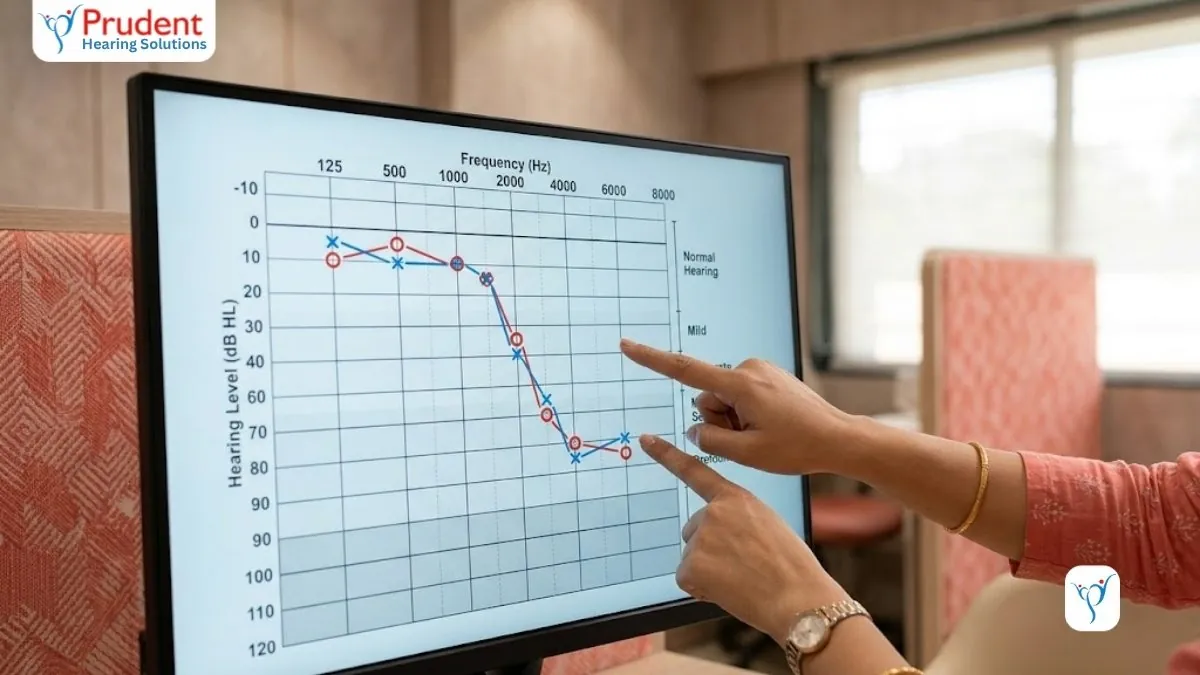
No. The rule is prevention, not diagnosis. It reduces risk, but it cannot tell you whether damage has already started: early NIHL is often silent and painless, showing up first in the high frequencies you may not consciously notice.
If you have ringing in your ears (tinnitus), trouble following conversation in noise, or a sense that sounds are muffled, book a professional check. You can arrange a hearing test or a home visit with our audiologists, and contact us with any questions.
For the bigger picture on safe volume, earbud risk and WHO guidance, read our pillar guide: Can Earbuds Cause Hearing Loss? What WHO Says About Safe Volume for Your Ears.
Continue reading
Frequently asked questions
Is the 60/60 rule scientifically proven?
The 60/60 rule is a practical guideline rather than a precise medical threshold. It reflects a well-established principle, that hearing risk depends on both volume and duration, supported by the CDC/NIOSH and NIDCD. It is a sensible habit, not a guarantee against all damage.
Can I listen longer if I keep the volume very low?
Generally yes. Lower volume means a smaller dose per minute, so quiet listening is far safer for longer periods. Even so, giving your ears periodic breaks remains a good idea.
Are noise-cancelling headphones safer?
They can help, because they reduce background noise so you do not raise the volume to compensate. The headphones themselves do not cure hearing loss, but they support safer listening levels.
Does the 60/60 rule apply to children?
Yes, and arguably more strictly. Set device volume limits and parental controls, and encourage breaks. If you have any concern about a child's hearing, seek a professional assessment.
How do I know if I have already damaged my hearing?
Warning signs include tinnitus, muffled sound, and difficulty hearing speech in noise. The only way to know for sure is an audiological evaluation: the 60/60 rule cannot detect existing loss. You can book a hearing test with our audiologists.
Sources & further reading
We cross-checked this article against the following authoritative sources. Guidance and figures reflect the most recent public guidance available at the time of last review (September 2026). Clinical review by the Prudent Hearing clinical team.
- NIDCD (Noise-Induced Hearing Loss)
- NIDCD (Safe Listening infographic)
- World Health Organization (Deafness and hearing loss fact sheet)
- World Health Organization (Make Listening Safe)
- CDC / NIOSH (About Noise and Hearing Loss)
Free consultation
Ready to hear the difference?
Book a free 45-minute hearing test at any Prudent Hearing clinic: no obligation, honest advice, expert audiologists.