Educational information, not medical advice. This article is written to help you understand common ear and hearing issues. It is not a substitute for professional diagnosis or treatment. If your symptoms are severe, sudden, or persistent, please consult a qualified doctor or audiologist. For urgent symptoms (sudden hearing loss, bleeding from the ear, severe pain with dizziness, or a head injury), seek medical care the same day.
Ringing, muffled hearing, or straining in noise after loud music? Learn the early signs of noise damage, when it turns permanent, and when to get tested.
Quick answer
Ringing in your ears, muffled or "underwater" hearing, or having to strain to follow conversation after a concert, club night, or long headphone session are the classic early signs of noise-induced hearing stress. These often fade within a day, but repeated episodes can turn permanent. Sudden loss in one ear is a medical emergency: see a doctor the same day.
Key takeaways
- Ringing (tinnitus) and temporarily dull, muffled hearing after loud music signal that inner-ear hair cells are stressed.
- This "temporary threshold shift" usually recovers in hours to a day, but repeated hits can build into permanent noise-induced hearing loss.
- Struggling to hear speech in background noise, or steadily turning the volume up, are quieter warning signs worth taking seriously.
- Noise damage cannot be reversed once it becomes permanent, but it is almost entirely preventable.
- Sudden hearing loss in one ear is urgent; seek medical care the same day, as soon as you can.
Part of our pillar guide: Can Earbuds Cause Hearing Loss? What WHO Says About Safe Volume for Your Ears.
Ringing in your ears, muffled or "underwater" hearing, or having to strain to follow conversation after a concert, club night, or long headphone session are the classic early signs of noise-induced hearing stress. These often fade within a day, but repeated episodes can turn permanent. Sudden loss in one ear is a medical emergency: see a doctor the same day.
What does early hearing damage from music feel like?
The most common signal is a ringing, buzzing, or hissing in your ears, tinnitus, during or right after exposure to loud sound. Alongside it, your hearing may feel muffled, blocked, or "wrapped in cotton," and voices can sound distant.
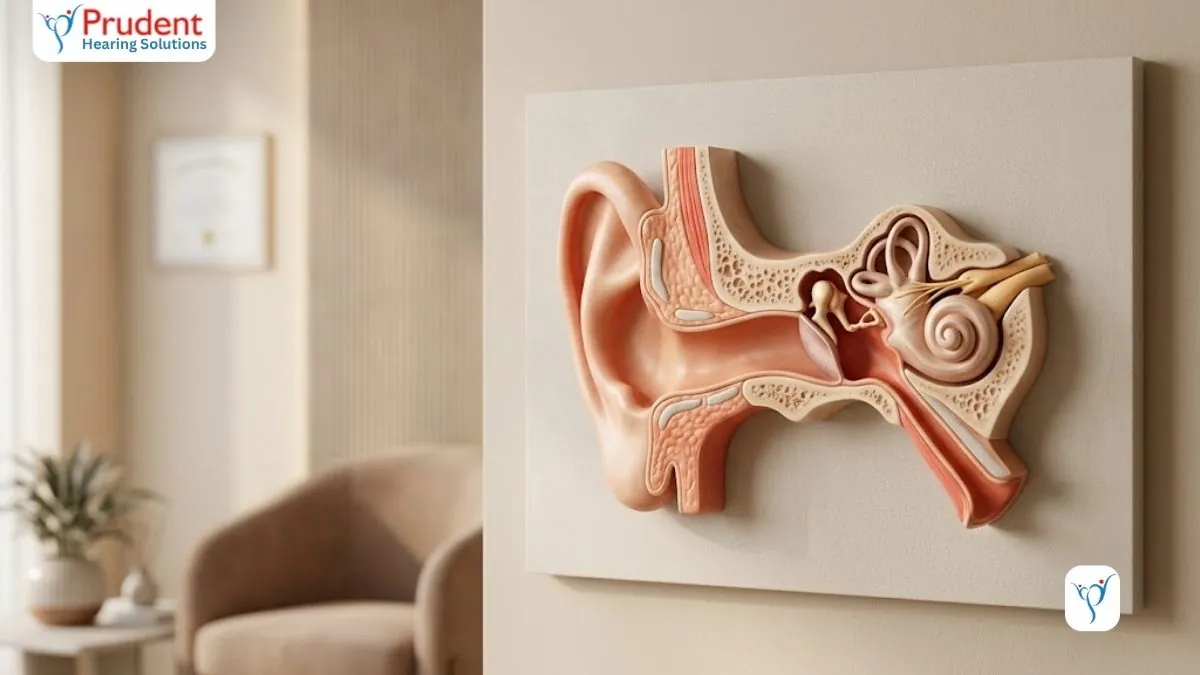
This is called a temporary threshold shift. Loud sound overworks the delicate hair cells in your inner ear, and they briefly stop responding at their normal sensitivity. According to the NIDCD, these effects often ease within a day as the hair cells recover. The problem is that "recovery" is not always complete. Each loud exposure adds a little wear, and over months and years the losses stack up.
When does temporary damage become permanent?
A single very loud event (standing beside a speaker stack, for example) can permanently injure hearing. More often, damage is gradual: repeated loud music, day after day, kills hair cells that the body cannot regrow. Once they are gone, the hearing loss is permanent and cannot be restored, as the World Health Organization notes.
Both how loud and how long matter. The CDC/NIOSH explains that sound above roughly 85 decibels can cause damage with enough exposure, and the safe listening time drops sharply as volume rises. Concerts and clubs routinely run well past 100 decibels, where damage can begin in minutes. That is why the same night out affects a casual listener differently from a regular gig-goer.
To understand the volume-and-time trade-off in more depth, see our pillar guide, Can Earbuds Cause Hearing Loss? What WHO Says About Safe Volume for Your Ears.
What are the quieter warning signs people miss?
Not every sign is dramatic. Watch for these subtler patterns:
- Difficulty hearing in noise. You follow one-on-one talk fine, but restaurants, parties, and markets become hard work. Speech-in-noise trouble is often the earliest real-world sign of noise damage.
- Creeping volume. You keep nudging the TV, phone, or earphones louder than you used to, or family says it is too loud for them.
- Asking people to repeat themselves, especially higher-pitched voices and consonants like s, f, and th.
- Tinnitus that lingers longer after each loud session, or starts appearing when a room is quiet.
If you notice several of these, treat them as a nudge to act rather than wait. The NIDCD's safe listening guidance offers simple habits that lower your risk from here on. Keep the volume down, limit how long you listen loud, and move away from the source of the sound. Pairing those habits with a hearing test is a sensible next step.
When should I get my hearing tested?
Get a hearing test if any of the following apply:
- Ringing or muffled hearing after music keeps coming back, or lasts more than a day.
- You are straining to hear speech in noisy places.
- You spend a lot of time in loud environments: musicians, DJs, sound engineers, bar and venue staff, and frequent concert-goers all benefit from monitoring.
The most useful step is a baseline audiogram: a simple, painless test that maps your hearing across pitches. It gives you a reference point, so future changes are easy to spot early. You can book a hearing test at our clinic, and if travelling is difficult, we also offer a home visit. If you have questions first, contact us.
When is loud-music hearing loss an emergency?
Sudden hearing loss in one ear (a rapid drop over hours or a few days, sometimes with a feeling of fullness or strong tinnitus) is a medical emergency, not ordinary "concert ear." It is treated most effectively when addressed quickly, so do not wait to see if it clears. See a doctor or audiologist the same day, as soon as you can.
Continue reading
Frequently asked questions
Is ringing in my ears after a concert a sign of damage?
Yes. Post-exposure tinnitus means your inner-ear hair cells have been stressed. It often settles within a day, but repeated episodes raise the risk of permanent noise-induced hearing loss, according to the NIDCD. Recurrent or lasting ringing is worth a check.
Can hearing damage from loud music heal on its own?
A temporary threshold shift can recover in hours to a day. But permanent noise-induced hearing loss cannot be reversed: the WHO confirms lost hair cells do not regrow. Prevention is the only reliable protection.
How loud is too loud?
The CDC/NIOSH notes damage risk rises above about 85 decibels, and safe listening time falls fast as volume climbs. Concerts often exceed 100 decibels, where minutes can be enough.
Should I get tested if I have no symptoms but attend a lot of gigs?
Yes. A baseline hearing test is valuable even without symptoms, because early noise damage is often silent at first and only shows on an audiogram.
What should I do if one ear suddenly goes muffled or deaf?
Treat it as urgent. Sudden one-sided hearing loss needs same-day medical attention: see a doctor or audiologist as soon as you can, rather than waiting to see if it clears.
Sources & further reading
We cross-checked this article against the following authoritative sources. Guidance and figures reflect the most recent public guidance available at the time of last review (September 2026). Clinical review by the Prudent Hearing clinical team.
- NIDCD (Noise-Induced Hearing Loss)
- NIDCD (It's a Noisy Planet: Safe Listening infographic)
- World Health Organization (Deafness and hearing loss fact sheet)
- World Health Organization (Make Listening Safe)
- CDC / NIOSH (About Noise and Hearing Loss)
Free consultation
Ready to hear the difference?
Book a free 45-minute hearing test at any Prudent Hearing clinic: no obligation, honest advice, expert audiologists.