Educational information, not medical advice. This article is written to help you understand common ear and hearing issues. It is not a substitute for professional diagnosis or treatment. If your symptoms are severe, sudden, or persistent, please consult a qualified doctor or audiologist. For urgent symptoms (sudden hearing loss, bleeding from the ear, severe pain with dizziness, or a head injury), seek medical care the same day.
Most post-cold ear muffling is harmless middle-ear fluid, but sudden severe loss can be an emergency. Here is how to tell the difference fast.
Quick answer
Most muffled hearing in one ear after a cold is harmless middle-ear fluid that clears in days to weeks. But a small number of cases are sudden sensorineural hearing loss, which is a medical emergency: seek care the same day. The warning signs: a sudden, severe drop, spinning vertigo, or hearing that does not "pop" back.
Key takeaways
- Post-cold ear fullness is usually fluid behind the eardrum, which typically settles on its own over days to a few weeks.
- A sudden, marked drop in one ear, especially with vertigo or persistent ringing, can be sudden sensorineural hearing loss and is a medical emergency.
- The safe rule: if hearing does not clearly improve within a couple of days, or drops sharply at any point, get a hearing test rather than waiting.
- Sudden sensorineural hearing loss is time-sensitive: get seen as soon as possible, ideally the same day, because earlier treatment gives the best chance of recovery.
- Do not attempt to "unblock" the ear with cotton buds, oils, or ear candles.
Part of our pillar guide: Sudden Hearing Loss Is a Medical Emergency: Why the First 72 Hours Decide Your Recovery.
Most muffled hearing in one ear after a cold is harmless middle-ear fluid that clears in days to weeks. But a small number of cases are sudden sensorineural hearing loss, which is a medical emergency: seek care the same day. The warning signs: a sudden, severe drop, spinning vertigo, or hearing that does not "pop" back.
Why does one ear feel muffled after a cold?
A cold inflames the lining of your nose, throat, and the Eustachian tube: the narrow channel that ventilates the middle ear. When that tube swells shut, the middle ear cannot equalise pressure, and fluid can collect behind the eardrum. This is called otitis media with effusion. Sound then travels less efficiently, so the ear feels blocked, full, or muffled, and your own voice may sound louder inside your head.
This type of muffling is a conductive problem: the inner ear is fine, but sound is being blocked on its way in. It commonly follows upper respiratory infections and often clears as the cold resolves (MedlinePlus).
How long should post-cold muffling last?
Fluid-related muffling usually improves gradually as the Eustachian tube reopens. Many people notice their hearing "pop" back over several days, and most middle-ear fluid resolves within a few weeks. Yawning, swallowing, and gentle jaw movement can help the tube open.
What matters is the trend. Muffling that is slowly getting better is reassuring. Muffling that suddenly worsens, or that has not budged at all after a couple of weeks, should be checked with a proper hearing test.
When is muffled hearing after a cold an emergency?
Here is the part people miss. Not every post-cold hearing change is fluid. Sudden sensorineural hearing loss (SSNHL) is a rapid loss of inner-ear or nerve function, often in one ear, and it sometimes follows a viral illness. It is defined as a hearing drop of at least 30 decibels across three connected frequencies that develops within a 72-hour period (NIDCD). That 72-hour figure describes how quickly the loss comes on: it is not a treatment deadline.
SSNHL is treated as an emergency because prompt treatment gives the best chance of recovery. Clinical guidelines recommend prompt evaluation and offering corticosteroids as initial treatment within about two weeks of onset, with earlier treatment giving the better outcome (AAO-HNS Clinical Practice Guideline). Because earlier is better, do not wait, even if it has been more than a few days, evaluation and treatment can still help (review, PMC).
Treat it as urgent and seek same-day care if you notice any of these:
- A sudden, severe drop in one ear, rather than a gradual fullness.
- Spinning dizziness (vertigo) along with the hearing change.
- Loud, persistent ringing (tinnitus) in the affected ear (NIDCD on tinnitus).
- Hearing that does not improve at all, or keeps getting worse.
If in doubt, act as if it could be sudden hearing loss. It is far better to be tested and reassured than to delay care.
How can I tell fluid from something serious?
You cannot always tell for certain at home, which is exactly why the timeline and severity matter. Use these signals as a guide, not a diagnosis.
Points toward harmless fluid: gradual fullness during or after the cold, a sense of pressure, muffling that eases when you swallow or yawn, and slow improvement day by day.
Points toward an emergency: a sudden and obvious loss, vertigo, strong new tinnitus, or no improvement over a couple of days. When these appear, do not wait for the cold to finish.
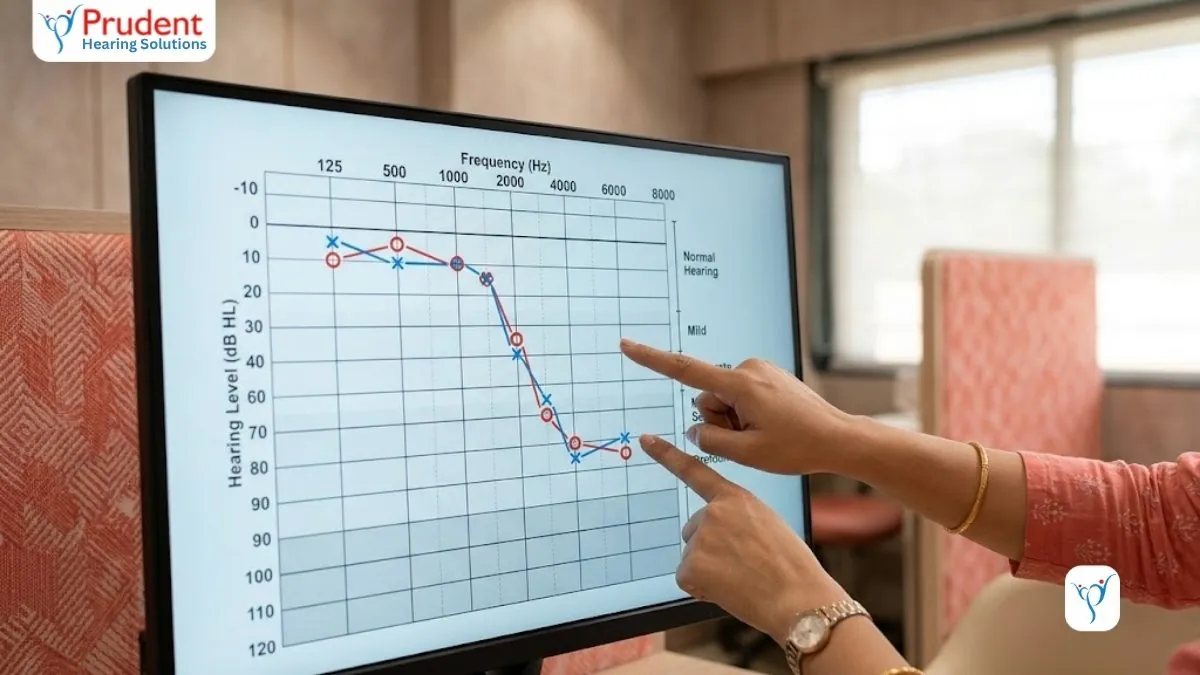
An audiologist can separate the two quickly. A hearing test shows whether the problem is conductive (a fluid or blockage pattern) or sensorineural (an inner-ear pattern), which directly changes what happens next. Book a hearing test or contact us if you are unsure, and if leaving home is difficult, ask about a home visit.
For the full picture of why acting fast matters so much, read our pillar guide, Sudden Hearing Loss Is a Medical Emergency: Why the First 72 Hours Decide Your Recovery.
What should I not do while I wait?
Avoid poking cotton buds into the ear, instilling oils, or using ear candles: none of these drain middle-ear fluid, and they can cause harm. Do not fly or dive while the ear is blocked if you can avoid it. And do not assume time alone will fix a sudden, severe drop; that assumption is what causes people to delay care that could still help.
Continue reading
Frequently asked questions
Is muffled hearing after a cold normal?
Often, yes. Temporary fullness from middle-ear fluid is common after a cold and usually clears within days to a few weeks. What is not normal is a sudden, severe drop, vertigo, or no improvement: those warrant urgent assessment.
How quickly should I see someone if my hearing suddenly drops?
As soon as possible, ideally the same day. Sudden sensorineural hearing loss is time-sensitive, and earlier treatment offers the better chance of recovering hearing (AAO-HNS guideline). If it has already been several days, still get seen: do not assume you have missed the chance to help.
Can a cold cause permanent hearing loss?
Usually not. Most post-cold changes are temporary fluid. Rarely, a post-viral sudden sensorineural loss can become permanent if untreated, which is why prompt evaluation matters (NIDCD).
Will decongestants clear the fluid faster?
Evidence that decongestants reliably clear middle-ear fluid is limited. They may ease nasal congestion, but they are not a proven cure for the fluid itself. If muffling persists, get your hearing checked rather than relying on them.
Is sudden sensorineural hearing loss treatable?
Yes, and treatment is time-sensitive: the sooner it starts, the better. For how it is treated and what recovery looks like, see our full guide, Sudden Hearing Loss Is a Medical Emergency: Why the First 72 Hours Decide Your Recovery.
Sources & further reading
We cross-checked this article against the following authoritative sources. Guidance and figures reflect the most recent public guidance available at the time of last review (September 2026). Clinical review by the Prudent Hearing clinical team.
- NIDCD (Sudden Deafness (Sudden Sensorineural Hearing Loss))
- AAO-HNS Clinical Practice Guideline: Sudden Hearing Loss (Update) (aao-hnsfjournals.onlinelibrary.wiley.com)
- PMC (Sudden Sensorineural Hearing Loss review)
- NIDCD (Tinnitus)
- MedlinePlus (Ear Infections)
Free consultation
Ready to hear the difference?
Book a free 45-minute hearing test at any Prudent Hearing clinic: no obligation, honest advice, expert audiologists.