Educational information, not medical advice. This article is written to help you understand common ear and hearing issues. It is not a substitute for professional diagnosis or treatment. If your symptoms are severe, sudden, or persistent, please consult a qualified doctor or audiologist. For urgent symptoms (sudden hearing loss, bleeding from the ear, severe pain with dizziness, or a head injury), seek medical care the same day.
A plain-language map of the common causes of ear pain and ear trouble in adults — infection, wax, water, pressure, itching, lumps and referred pain from the teeth or throat — with what safely helps, what to never do, and the red flags that mean see a doctor.
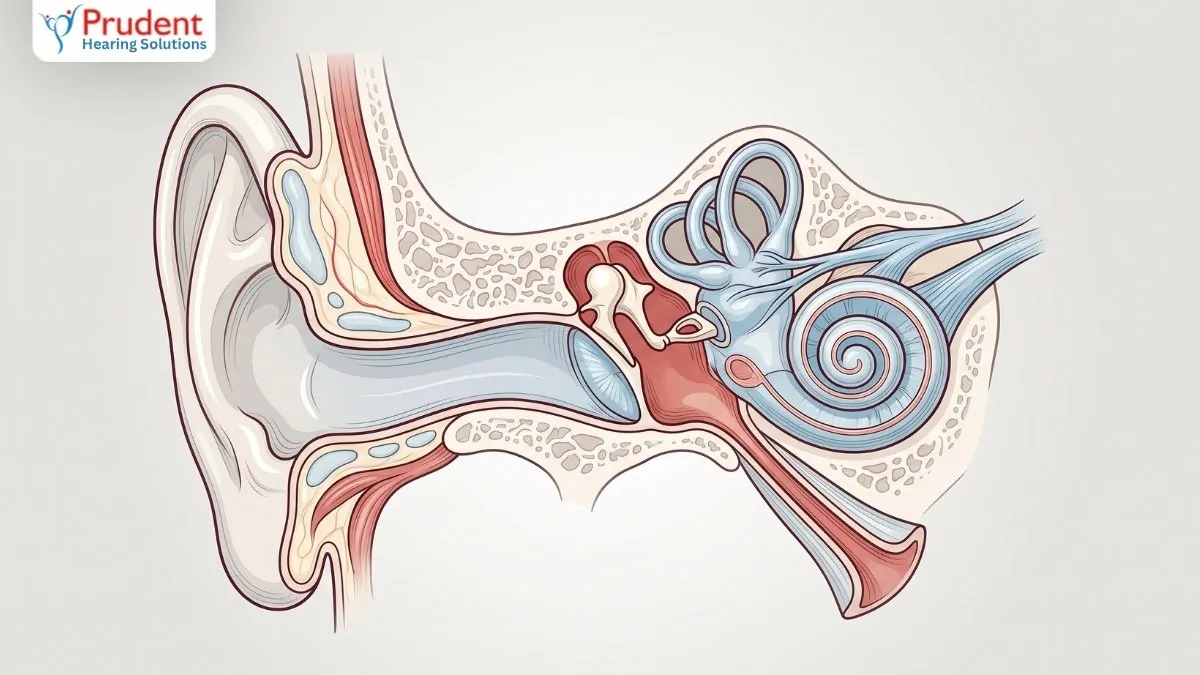
Most ear pain in adults comes from a short list of common, treatable causes: an outer-ear or middle-ear infection, a plug of wax, trapped water, pressure behind the eardrum from a cold or a flight, an itchy or inflamed canal, a pimple or boil, or pain that is actually referred from a tooth, jaw or throat.
Safe home care settles many of these, and the golden rule is simple: never push anything — cotton bud, finger, pin, key or oil — into a painful ear. See a doctor or ENT the same day if the pain is severe, there is pus or blood coming from the ear, a high fever, sudden or fast-worsening hearing loss, spreading redness or swelling around the ear, severe dizziness with vomiting, or weakness of the face on that side.
Below, each common cause is matched to what helps and when to get checked, with a detailed guide linked for every one.
What are the most common causes of ear pain in adults?
Ear pain (doctors call it otalgia) is either primary — coming from the ear itself — or referred, meaning the real problem is nearby, such as a tooth, the jaw joint or the throat, and the shared nerves make your brain read it as ear pain. Use this table as a quick triage: find your main symptom, then read the full guide for that cause.
| Main symptom | Likely cause | What usually helps | See a doctor if |
|---|---|---|---|
| Pain with a cold or after a flight; ear feels full | Eustachian tube / pressure | Decongestant, yawning, gentle swallowing; time | Pain lasts beyond a few days or hearing drops |
| Pain after swimming or a bath; tender to touch | Swimmer's ear (outer-ear infection) | Keep the ear dry; prescribed ear drops | Discharge, swelling or spreading redness |
| Deep throbbing pain, often with fever | Middle-ear infection | Pain relief; a doctor decides on antibiotics | Fever, pain over 2-3 days, or any discharge |
| Blocked, muffled, itchy; dull ache | Ear wax plug | Softening drops; professional removal | Pain, discharge, or it does not clear |
| A tender spot or lump in the canal | Pimple or boil (furuncle) | Warm compress; let it settle | It grows, throbs badly, or fever starts |
| Pain with chewing; jaw or tooth sore | Referred pain (teeth, jaw, throat) | Treat the real source; see a dentist/ENT | A persistent sore throat or a neck lump |
My ear hurts right now — what can I safely do?
For most everyday ear pain, simple measures are enough while you work out the cause or wait to be seen. A warm (not hot) compress held against the ear for ten minutes eases a dull ache. An ordinary over-the-counter painkiller such as paracetamol or ibuprofen, taken as directed, settles most ear pain. Keep the ear dry, and sleep with the sore ear facing up so you are not pressing on it.
What matters just as much is what not to do. Do not put cotton buds, your finger, a hairpin or a key into the ear — it pushes wax and infection deeper and can tear the eardrum.
Skip home 'flushes' with hydrogen peroxide or a jet of water, avoid ear candling (it does nothing useful and can burn you), and do not pour oil into an ear that is painful or discharging. If you are reaching for drops, read our honest guide to the best ear drops for ear pain and infection first — the right drop depends on the cause, and the wrong one can make things worse.
Ear infections: outer ear, middle ear and discharge
Infection is the most common reason an adult ear genuinely hurts. An outer-ear infection (otitis externa, often 'swimmer's ear') makes the canal itchy then painful, and the ear is tender when you tug the lobe; it usually follows water getting trapped. A middle-ear infection (otitis media) sits behind the eardrum, causes a deeper throbbing pain often with fever, and is more common after a cold.
Read swimmer's ear (otitis externa) for the outer-ear version, and middle-ear infection (otitis media) for the deeper kind. If an ear has been discharging on and off for weeks or months, that is not an ordinary infection — see chronic ear discharge (CSOM), which needs proper ENT treatment because it can affect hearing.
A blocked or full ear: wax, water, colds and pressure
A great deal of ear discomfort is not infection at all but a blocked or pressurised ear. The usual culprits are wax, water, a cold, or the Eustachian tube not equalising pressure.
- Wax: a plug makes the ear feel blocked, muffled and mildly achy. See why you get so much ear wax and the safe ways to clear it in microsuction vs syringing.
- Water: trapped after swimming or a bath, it feels blocked and sloshy. Clear it safely with the steps in water stuck in your ear.
- Colds and pressure: a blocked nose stops the ear equalising. See ear pain and a blocked ear from a cold, an ear that feels full and won't pop, and Eustachian tube dysfunction and airplane ear.
- Allergies and sinus: these can block the ears too — see allergies, sinus and blocked ears.
- Still muffled after a cold clears: read muffled hearing in one ear after a cold, which also covers when it needs checking.
Itching, a pimple or a boil in the ear
An itchy canal that turns sore is common and usually down to dry skin, eczema or over-cleaning; our guide to itchy ears and how to stop them covers what helps and what to avoid. A sharp, tender, localised pain can be a pimple or a boil (furuncle) in the canal — painful because the skin there is tight over bone. Learn how to tell a pimple or boil inside the ear apart and what safely settles it. In both cases, the rule holds: do not squeeze, dig or poke.
Ear pain that is really coming from your teeth, jaw or throat
If your ear looks and feels normal inside but still hurts, the pain is often referred from somewhere close by. A back molar problem, grinding or a jaw-joint (TMJ) issue, or a throat infection can all send pain to one ear because they share nerve pathways.
A clue is pain that flares with chewing, yawning or swallowing rather than with touching the ear. Our guide to one-sided ear, throat and neck pain and the jaw connection explains how to tell these apart — and why a sore throat or a neck lump on one side with ear pain is worth getting checked.
Ringing, muffled hearing or dizziness alongside the pain
When ear pain comes with ringing, muffled hearing or dizziness, pay closer attention. Ringing (tinnitus) often settles once an infection or wax plug is treated; our overview of tinnitus causes, myths and help explains the common triggers. But ringing or hearing loss in one ear only deserves a prompt check — read one-sided tinnitus and hearing loss: when to worry.
One thing cannot wait: sudden hearing loss in one ear is a medical emergency. Started early — ideally within 48-72 hours — treatment gives the best chance of recovery; left for weeks it often becomes permanent. If your hearing drops suddenly, see an ENT the same day. Once any infection or blockage has cleared, a free hearing test tells you whether your hearing has actually been affected.
When should ear pain make you see a doctor or ENT?
Most ear pain is minor and settles within a few days. See a doctor promptly if any of the following apply — these point to an infection that is spreading, a damaged eardrum, or a problem beyond the ear.
- Severe pain, or pain that is getting worse rather than better after 2-3 days
- Pus, fluid or blood coming from the ear
- A high fever, or feeling generally unwell with the ear pain
- Sudden or fast-worsening hearing loss, or ringing in one ear only
- Redness, heat or swelling spreading over the bone behind or around the ear
- Severe dizziness or vertigo, especially with vomiting
- Weakness or drooping of the face on the same side
- Ear pain in someone with diabetes or a weakened immune system, which needs earlier review
"A hearing aid, a scheme or a home remedy can wait a week. Several ear symptoms cannot — when in doubt, get the ear looked at the same day."
How Prudent Hearing Solutions can help
Not every ear problem needs a hearing clinic — a GP or ENT treats most infections and pressure problems, and a dentist sorts referred pain. But when ear trouble leaves you with blocked, muffled or reduced hearing, or persistent ringing, that is exactly what we check. Prudent Hearing Solutions is an RCI-registered audiology network with clinics in Pune (Viman Nagar), Mumbai (Malabar Hill), Navi Mumbai (Seawoods), Delhi (Rohini and Green Park) and Bengaluru (Jayanagar), plus home visits in other cities.
Our audiologists do safe professional wax removal, check your eardrum, and run a full 45-minute hearing test if your hearing has been affected — all with honest advice and no pressure to buy. Book a hearing test or contact us if an ear problem has left your hearing not quite right.
Continue reading
Frequently asked questions
Why does my ear hurt?
Most adult ear pain comes from a short list of causes: an outer-ear infection (swimmer's ear), a middle-ear infection, a wax plug, trapped water, pressure behind the eardrum from a cold or a flight, an itchy or inflamed canal, a pimple or boil, or pain referred from a tooth, jaw or throat. If your ear looks and feels normal inside but still hurts, especially when you chew or swallow, the cause is often referred from nearby rather than the ear itself.
How can I relieve ear pain at home?
A warm (not hot) compress held against the ear for about ten minutes eases a dull ache, and an ordinary painkiller such as paracetamol or ibuprofen, taken as directed, settles most ear pain. Keep the ear dry and sleep with the sore ear facing up. Do not put cotton buds, fingers, pins or oil into the ear, and avoid hydrogen-peroxide flushes and ear candling — these commonly make things worse.
When should I see a doctor for ear pain?
See a doctor or ENT the same day if the pain is severe or worsening after 2-3 days, there is pus or blood from the ear, a high fever, sudden or fast-worsening hearing loss, ringing in one ear only, spreading redness or swelling around the ear, severe dizziness with vomiting, or weakness of the face on that side. People with diabetes or a weakened immune system should be reviewed earlier.
Can a tooth, jaw or throat problem cause ear pain?
Yes. Because the ear shares nerve pathways with the teeth, jaw joint (TMJ) and throat, problems there are often felt as ear pain. A clue is pain that flares with chewing, yawning or swallowing rather than when you touch the ear, and an ear that looks normal on examination. Treating the real source — a dentist for teeth, an ENT for the throat — resolves the ear pain.
Is it safe to put oil or cotton buds in a sore ear?
No. Cotton buds, fingers, pins and keys push wax and infection deeper and can tear the eardrum. Oil should never go into an ear that is painful or discharging, because if the eardrum is perforated it can enter the middle ear. If you want to use drops, choose them based on the cause, or have an audiologist or doctor look first.
Can ear pain affect my hearing?
It can, temporarily. Wax, water, infection and pressure all muffle hearing while they last, and hearing usually returns once the cause is treated. But hearing that stays reduced after the pain settles, or hearing that drops suddenly, should be checked — sudden hearing loss in one ear is a medical emergency best treated within 48-72 hours. A free hearing test confirms whether your hearing has been affected.
Free consultation
Ready to hear the difference?
Book a free 45-minute hearing test at any Prudent Hearing clinic: no obligation, honest advice, expert audiologists.