Educational information, not medical advice. This article is written to help you understand common ear and hearing issues. It is not a substitute for professional diagnosis or treatment. If your symptoms are severe, sudden, or persistent, please consult a qualified doctor or audiologist. For urgent symptoms (sudden hearing loss, bleeding from the ear, severe pain with dizziness, or a head injury), seek medical care the same day.
Water trapped in your ear usually drains on its own, but the wrong fix can cause an infection. Here are the safe ways to clear it, what to never do, and the red flags that signal swimmer's ear or an ENT visit.
Most water trapped in your ear drains on its own within a few hours. To help it along safely, tilt your head so the blocked ear faces the ground, gently tug and wiggle your earlobe, work your jaw by yawning or chewing, or lie on that side for a few minutes and let gravity pull it out.
Never dig inside with a cotton bud, finger, hairpin or key — that only pushes the water and wax deeper and scratches the canal. See a doctor or ENT if the ear stays blocked for more than a day, becomes painful, leaks pus or blood, or you develop fever, spreading swelling around the ear, severe dizziness with vomiting, facial weakness, or sudden hearing loss.
Why does water get stuck in your ear in the first place?
Your ear canal is not a straight tube. It curves and narrows as it goes in, and it ends at the eardrum. Water that gets past the opening can sit in that bend, held in place by surface tension — the same reason a drop clings to the inside of a glass.
Ear wax makes it worse. Wax is water-repellent, so a plug of it can trap a pocket of water behind it, giving you that blocked, muffled, sloshing feeling. People with naturally narrow or hairy canals, or a lot of ear wax buildup, are more prone to it.
In India the usual triggers are swimming pools, the sea, monsoon rain, bucket baths and head showers, and the habit of pouring oil or water into the ear. Any of these can leave a little water sitting against the eardrum.
How do I get water out of my ear safely at home?
Start with the gentlest methods. These work for most people within a few minutes and carry no risk to the eardrum.
- Tilt and drain: tip your head sideways so the blocked ear points straight down, then stay there for 30 seconds. Gravity does most of the work.
- Earlobe tug and shake: while tilted, gently pull the earlobe down and back and give your head a light shake to break the seal.
- Jaw movements: yawn widely, or chew gum. Moving the jaw flexes the canal and often releases trapped water with a soft pop.
- Lie down on that side: rest the blocked ear flat on a towel for a few minutes. Water slowly tracks out as you relax.
- Warm compress: hold a warm (not hot) cloth against the ear for a minute, then tilt and drain again. Warmth can loosen water held by wax.
- Gentle Valsalva: pinch your nose, close your mouth, and blow softly until you feel a light pressure — never force it. Stop if it hurts.
- Cool hair dryer: on the lowest heat and speed, held at least a hand's width away and aimed across the ear opening, the moving air can evaporate the last of the moisture.
Over-the-counter swim-drying drops (isopropyl alcohol with a little acetic acid) can help evaporate stubborn water, and are inexpensive at most Indian pharmacies. Use them only if your eardrum is intact — never if the ear is painful or discharging, or if you have a grommet, ear tube, or a known hole (perforation) in the eardrum. If you are unsure, skip the drops and see a doctor.
| Your goal | Safe approach | Avoid |
|---|---|---|
| Drain the water | Tilt head, tug the earlobe, lie on that side | Poking with cotton buds, fingers or hairpins |
| Dry the canal | Hair dryer on cool and low, held at arm's length | A hot dryer held close to the ear |
| Break the seal | Gentle yawning, chewing, a soft Valsalva | Blowing your nose hard with both nostrils pinched |
| OTC help | Isopropyl and acetic acid swim drops, if the eardrum is intact | Any drops when the ear is painful, discharging, or has a tube or perforation |
| Water that won't clear | An ear exam by an ENT or audiologist | Home 'syringing' with a jet of water or hydrogen peroxide |
What should I never do to remove trapped water?
The wrong move is what turns a harmless nuisance into an injury or infection. Avoid all of these, even if the ear feels desperate to clear.
- Do not push cotton buds, your finger, a key, a hairpin or a matchstick into the canal. They push water and wax onto the eardrum and can scratch or tear the delicate skin.
- Do not pour hydrogen peroxide in to 'flush out' water. It fizzes, can irritate an already-wet canal, and is unsafe if the eardrum is not intact.
- Do not try ear candling. It does not create suction, drips hot wax, and has caused burns and perforated eardrums.
- Do not blast a hot hair dryer close to the ear — you can burn the thin canal skin.
- Do not keep digging if it hurts. Pain is a signal to stop and get it looked at, not to try harder.
How long before trapped water turns into swimmer's ear?
Water sitting in the canal softens and waterlogs the skin, washes away its protective wax, and creates a warm, damp pocket where bacteria such as Pseudomonas and Staph multiply. This can tip into infection — swimmer's ear, or otitis externa — within a day or two if the water does not clear. Humid monsoon weather and repeat swimming speed it up. That is why the single best prevention is simply getting the water out and the canal dry the same day.
What are the signs it has become swimmer's ear (otitis externa)?
Swimmer's ear usually announces itself in a predictable order. Catching it early means simpler treatment, often just prescription ear drops.
- Itching inside the ear canal, which is often the first sign.
- Pain that gets noticeably worse when you tug the outer ear or press the little flap in front of it (the tragus).
- Redness and swelling of the canal, and a feeling of fullness or blockage.
- Muffled or reduced hearing on that side.
- A watery, then thicker or pus-like, discharge — sometimes with an odour.
If this sounds like you, read our detailed guide to swimmer's ear (otitis externa) and have it checked rather than waiting it out. Pain with discharge is not something to self-treat with leftover antibiotics.
When should I see a doctor or ENT?
Trapped water is rarely serious, but a few signs mean you should stop home measures and get professional care — the same day if the symptoms are severe.
- Water or a blocked feeling that lasts more than one to two days.
- Moderate or severe ear pain, or pain that worsens when you touch the ear.
- Any discharge of pus or blood, or a foul smell.
- Fever, or swelling and redness spreading onto the outer ear, face or neck.
- Sudden or worsening hearing loss, loud ringing, or a spinning dizziness with vomiting.
- Facial weakness or drooping on the affected side.
- You have diabetes or a weakened immune system and develop ear pain — this raises the risk of a serious infection and needs prompt review.
- You have a grommet, ear tube, or a known perforated eardrum — do not use home drops; see a doctor.
Is it trapped water, ear wax, or something else?
Sometimes the water drains but the blocked, muffled feeling stays. That is often a wax plug that the water pushed against, not water at all. Wax that stays stuck can be removed properly by microsuction or professional irrigation — not by poking at it, which packs it tighter.
A blocked ear after a cold can also be fluid behind the eardrum rather than water in the canal; our guide to middle ear infection (otitis media) explains the difference. And if you are left with a persistent ringing after the episode, see ringing in the ear (tinnitus): causes and help. The point is simple: if the fullness or muffled hearing does not clear within a day or two of the water leaving, get the ear looked at rather than guessing.
How can I stop water getting stuck in my ear again?
- Dry your ears after swimming or a head bath: tilt and drain each side, then dry the outer ear with a towel.
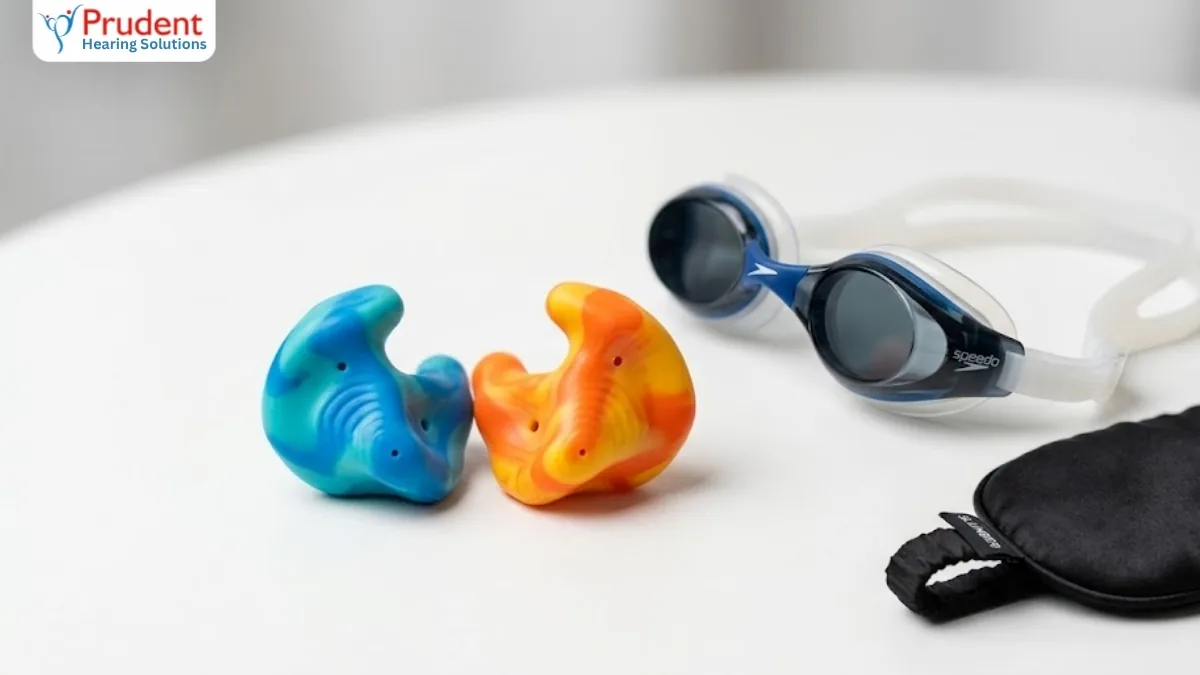
- Use swim moulds or soft silicone earplugs if you swim often or are prone to this.
- Keep cotton buds out of your ears — they strip the wax that normally sheds water.
- If you get a lot of wax, have it cleared professionally before the swim season or monsoon rather than letting it trap water.
- Dry the canal with a hair dryer on cool and low after exposure if you are especially prone.
Still feel blocked after the water is gone? Get your ears checked
Water in the ear is almost always harmless and clears with the gentle steps above. But if the fullness, muffled hearing or ringing hangs around, it is worth finding out whether it is wax, an infection, or something affecting your hearing — before it is left too long.
At Prudent Hearing Solutions our audiologists do a proper ear-canal exam and a free 45-minute hearing test, with clinics in Pune (Viman Nagar), Delhi (Rohini and Green Park) and Bengaluru (Jayanagar), plus home visits in Mumbai, Navi Mumbai, Thane and other cities. If you are not sure whether a check is needed, these are the signs you need a hearing test. We will tell you honestly if your ears are simply fine.
Continue reading
Frequently asked questions
How long does it take for water to drain out of your ear naturally?
Usually a few hours at most. Tilting the blocked ear downward, tugging the earlobe and working your jaw often releases it within minutes. If water or a blocked feeling lasts more than a day or two, or the ear becomes painful, have it checked.
Can water trapped in my ear cause an infection?
Yes. Water that sits in the canal softens the skin and washes away protective wax, letting bacteria grow. This can lead to swimmer's ear (otitis externa) within a day or two, which is why drying the ear the same day matters. Early signs are itching, then pain when you tug the ear.
Is it safe to use a hair dryer to dry my ear?
Yes, if you use it correctly: set it to the lowest heat and speed, hold it at least a hand's width away, and aim the air across the ear opening rather than straight in. Never use a hot setting held close, as it can burn the thin canal skin.
Does water in the ear cause temporary hearing loss?
It can make hearing feel muffled or blocked on that side while the water is there, but this clears once the ear drains. If the muffled feeling stays after the water is gone, it is more likely a wax plug or fluid behind the eardrum, and an ear exam will sort out which.
Can I use hydrogen peroxide or ear drops to remove trapped water?
Over-the-counter swim-drying drops (isopropyl alcohol with acetic acid) can help evaporate stubborn water, but only if your eardrum is intact and the ear is not painful or discharging. Avoid hydrogen peroxide for trapped water, and never use any drops if you have a grommet, ear tube or a known perforation. If unsure, see a doctor.
Free consultation
Ready to hear the difference?
Book a free 45-minute hearing test at any Prudent Hearing clinic: no obligation, honest advice, expert audiologists.