Educational information, not medical advice. This article is written to help you understand common ear and hearing issues. It is not a substitute for professional diagnosis or treatment. If your symptoms are severe, sudden, or persistent, please consult a qualified doctor or audiologist. For urgent symptoms (sudden hearing loss, bleeding from the ear, severe pain with dizziness, or a head injury), seek medical care the same day.
A full, blocked or muffled ear that won't pop is usually Eustachian tube dysfunction after a cold, allergy or flight. Here's why it happens, how to pop your ears safely, the red flags that mean see an ENT, and when a blocked ear is actually a hearing problem.
A full, blocked or muffled ear that won't pop is most often Eustachian tube dysfunction (ETD) — the narrow tube linking your middle ear to the back of your nose is not opening properly to equalise pressure, usually after a cold, allergy flare, sinus congestion or a flight.
Most cases settle on their own within a few days to two weeks. See a doctor or ENT urgently if you have sudden hearing loss in one ear, severe ear pain, high fever, fluid or blood draining from the ear, spinning dizziness with vomiting, or weakness on one side of the face — those are red flags that need same-day care, not watchful waiting.
What is Eustachian tube dysfunction?
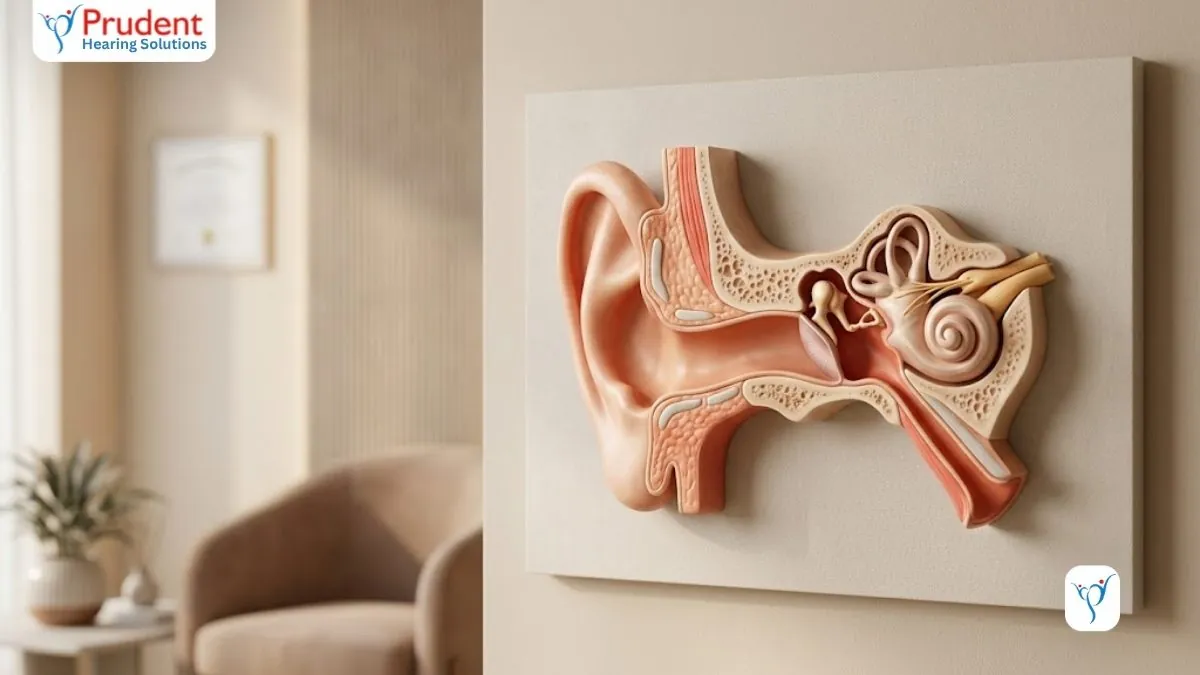
Behind each eardrum is an air-filled middle ear. A thin channel called the Eustachian tube runs from that space to the back of your nose and throat. Every time you swallow, yawn or chew, it flicks open for a fraction of a second to let fresh air in and balance the pressure on both sides of the eardrum.
When that tube gets swollen, clogged or sluggish, the pressure stops equalising. The eardrum can't move freely, so your ear feels full, plugged or underwater, sounds turn muffled, and the usual 'pop' never comes. That is Eustachian tube dysfunction. It is common, usually harmless, and rarely a sign of anything serious on its own.
Why does my ear feel full and blocked but won't pop?
The tube is lined with the same tissue as your nose. Anything that swells your nasal lining swells the tube too, and a swollen tube can't open to release the trapped pressure. The most common triggers are:
- A recent cold, flu or throat infection — the number one cause of a blocked ear that won't pop.
- Allergies and sinusitis — dust, pollen, pet dander or a flare of allergic rhinitis.
- A flight, a fast lift, a dive or a drive down a ghat — rapid altitude change the tube can't keep up with.
- Sinus congestion and post-nasal drip, often worse lying down at night.
- Smoking or second-hand smoke, and acid reflux reaching the throat.
- In children, enlarged adenoids blocking the tube's opening.
Note that fullness is not always the tube. A plug of hardened ear wax or a touch of swimmer's ear can feel almost identical. If your ear hurts, itches or has discharge, it is more likely wax or an infection than simple ETD.
How do I pop my ear safely?
The goal is to coax the tube open gently, never to force it. Try these in order and stop if anything hurts:
- Swallow, yawn widely, or chew gum — the simplest way to trigger the tube open.
- Gentle Valsalva: pinch your nose, close your mouth and blow softly until you feel a mild pressure shift. Blow gently, not hard, and only a couple of times.
- Toynbee manoeuvre: pinch your nose and swallow at the same time — safer than Valsalva for many people.
- Rinse with saline nasal spray or a saline rinse to settle a swollen nasal lining.
- A warm compress over the ear and staying well hydrated to thin mucus.
- A short course (2-3 days only) of an over-the-counter decongestant or antihistamine if allergies or a cold are driving it — check with a pharmacist first.
If the block started on a plane or you fly often, our guide to blocked ears and airplane ear covers equalising before the pressure builds, which works far better than fighting it after landing.
Is it ETD, wax, or something that needs a doctor?
A blocked ear has several possible causes, and the fix for one is the wrong move for another. Use this at-a-glance table to tell them apart — but treat it as a guide, not a diagnosis.
| Cause | How the ear feels | Other clues | Sensible first step |
|---|---|---|---|
| Eustachian tube dysfunction | Full, blocked, muffled, won't pop; comes and goes | Follows a cold, allergy or flight; little or no pain | Saline, gentle equalising, give it time |
| Ear wax blockage | Blocked and gradually muffled | Itch and fullness; worse after water or cotton buds | Professional wax removal — not cotton buds |
| Swimmer's ear (otitis externa) | Blocked with pain, tender when you tug the ear | Itchy, swollen canal after swimming or water | See a doctor for medicated ear drops |
| Middle ear infection (otitis media) | Full with throbbing pain and pressure | Fever, sometimes discharge; often after a cold | See a doctor; may need antibiotics |
| Sudden sensorineural hearing loss | Sudden muffling, usually in one ear | No cold; may have ringing or dizziness | Emergency — ENT within 24-72 hours |
How long does a blocked ear from ETD last?
Most ETD after a cold clears within a few days to two weeks as the congestion settles. A blockage that comes and goes with allergy season can linger longer but eases once the trigger is controlled. If your ear has felt full or muffled for more than two to three weeks, or keeps coming back, that is your cue to get it checked rather than keep waiting it out.
What makes Eustachian tube dysfunction worse in India?
If you live in a city like Pune, Mumbai, Delhi or Bengaluru, a few local realities keep the tube irritated. High dust and vehicle pollution inflame the nasal lining year-round. Allergic rhinitis is extremely common and often undertreated. The monsoon brings damp and mould that set off allergies, while the dry winter months do the same with dust. Add widespread smoking and second-hand smoke, and the tube rarely gets a clean break. Controlling the nasal trigger — allergies, sinus, reflux — usually matters more than treating the ear itself.
What should I not do?
Trying too hard to clear a blocked ear is how people turn a minor nuisance into an injury. Avoid these:
- Don't push cotton buds, hairpins, keys or any object into the ear canal — you pack wax deeper or scratch the canal.
- Don't blow the Valsalva hard or repeatedly; a forceful blow can injure the eardrum.
- Skip ear candling — it does not clear the tube and can burn you or drop wax on the eardrum.
- Don't pour hydrogen peroxide, oils or home concoctions into an ear that might have a perforation or infection.
- Don't self-prescribe antibiotics; most ETD is not a bacterial infection and won't respond to them.
When should I see a doctor or ENT?
See a GP or ENT soon if the fullness lasts beyond two to three weeks, keeps returning, or affects only one ear for no clear reason. Seek same-day or emergency care if you have any of these red flags:
- Sudden hearing loss or a sharp drop in hearing, especially in one ear
- Severe or worsening ear pain, or a high fever
- Fluid, pus or blood draining from the ear
- Spinning dizziness (vertigo) with nausea or vomiting, or loss of balance
- Weakness or drooping on one side of the face
- Symptoms in only one ear in an adult that just won't clear — this always deserves a proper look
"A blocked ear on both sides after a cold is almost always ETD. A muffled, blocked ear in one ear only, with no cold to explain it, is the one you should not sit on."
Could it be a hearing problem?
While the tube is blocked, trapped middle-ear pressure stops the eardrum moving freely, so sound is dampened — a temporary, conductive hearing dip that usually recovers once the tube opens. That is normal with ETD. What is not normal is muffled hearing that drags on for weeks, or hearing that drops suddenly.
If the fullness and muffling have lasted more than a couple of weeks, a simple check tells you whether the tube is the whole story. Prudent Hearing Solutions offers a free 45-minute hearing test at our clinics in Pune, Mumbai, Navi Mumbai, Delhi and Bengaluru, with home visits in other cities.
The test includes an ear examination and, where useful, tympanometry — a quick, painless measure of how your eardrum and middle-ear pressure are behaving. If the picture points to infection or a structural problem, we refer you to an ENT; we don't sell you something you don't need. See the signs that warrant a hearing test if you're unsure.
How is ETD diagnosed and treated?
An ENT or audiologist looks in the ear with an otoscope and often runs tympanometry to confirm negative middle-ear pressure or trapped fluid. Treatment is conservative and aimed at the cause: time, a nasal steroid spray to shrink the tube's lining, antihistamines or allergy control, managing reflux, and autoinflation devices (such as an Otovent balloon) to gently re-open the tube. Only stubborn, long-standing cases are considered for grommets or balloon dilation, and that is an ENT's call.
ETD almost never needs a hearing aid — the hearing dip lifts once the tube clears. A hearing aid only enters the picture if testing shows a lasting hearing loss from a separate cause. If that ever applies to you, hearing aids at Prudent are GST-exempt and priced 20-30% below MRP with 0% EMI options, and you can review our transparent pricing — but for a simple blocked ear, the honest answer is that time and the right nasal treatment do the work.
Bottom line: an ear that feels full and won't pop is usually your Eustachian tube reacting to a cold or allergy, and it tends to clear itself. Keep the equalising gentle, treat the nose, avoid poking the ear, and get it checked if it lasts beyond two to three weeks or carries any red flag.
Continue reading
Frequently asked questions
Why won't my ear pop no matter what I do?
The Eustachian tube is probably too swollen to open — usually from a cold, allergy or sinus congestion. Treat the nose with saline and give it time, and use gentle swallowing or a soft Valsalva rather than blowing harder. If it hasn't cleared in two to three weeks, get it checked.
Is it bad to force my ear to pop?
Forcing it is risky. A hard, repeated Valsalva (pinching your nose and blowing forcefully) can injure the eardrum or the inner ear. Blow gently and only a couple of times, or use the Toynbee manoeuvre — pinch your nose and swallow — which is safer for most people.
Can Eustachian tube dysfunction cause permanent hearing loss?
Rarely on its own. The hearing dip with ETD is temporary and lifts once the tube opens. Long-standing untreated problems can lead to persistent middle-ear fluid that needs ENT treatment, which is why fullness lasting beyond two to three weeks should be assessed rather than ignored.
How long should I wait before seeing a doctor for a blocked ear?
If it follows a cold and there are no red flags, two to three weeks of self-care is reasonable. See a doctor sooner for one-sided blockage with no cold, or straight away for sudden hearing loss, severe pain, fever, discharge, spinning dizziness or facial weakness.
Does a blocked ear from ETD mean I need a hearing aid?
Almost never. The muffled hearing with ETD clears once the tube opens, so no aid is needed. A hearing aid only applies if a test shows a lasting hearing loss from a separate cause. A free hearing test can confirm whether your hearing has actually returned to normal.
Free consultation
Ready to hear the difference?
Book a free 45-minute hearing test at any Prudent Hearing clinic: no obligation, honest advice, expert audiologists.