RIC suits most people with mild to moderately severe loss, BTE suits severe loss and children, and ITE or CIC suit people who want a discreet custom fit and have good dexterity. The right style depends on your audiogram, your ear, your hands and how you live.
The quick answer
Receiver-in-canal (RIC) is the best all-round style for most adults with mild to moderately severe loss. Behind-the-ear (BTE) is best for severe or profound loss, for children, and for anyone who wants a large, easy-to-handle device. In-the-ear (ITE, ITC, CIC) styles are custom-made for discreet, mostly mild to moderate loss, and work best if your fingers are nimble and your ear canals are a suitable shape.
Style matters less than the fitting and the prescription programmed into the aid, but it decides comfort, visibility, battery choice and which features you can have. Here is how the three groups compare.
RIC (receiver-in-canal): the popular all-rounder
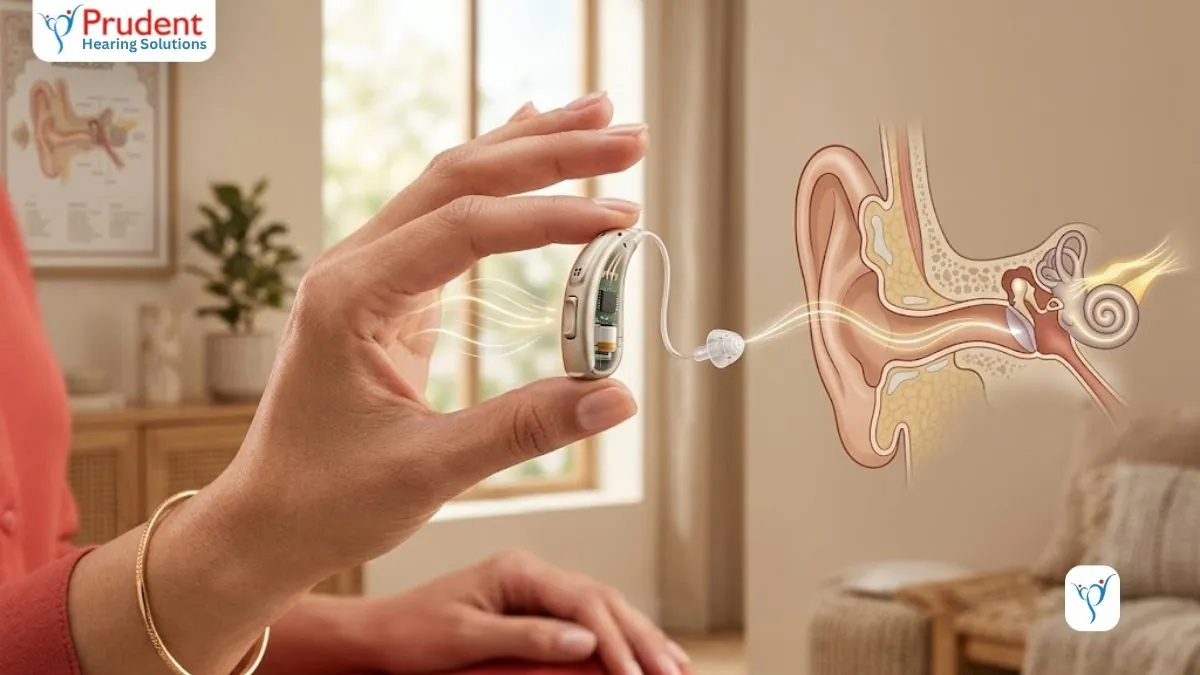
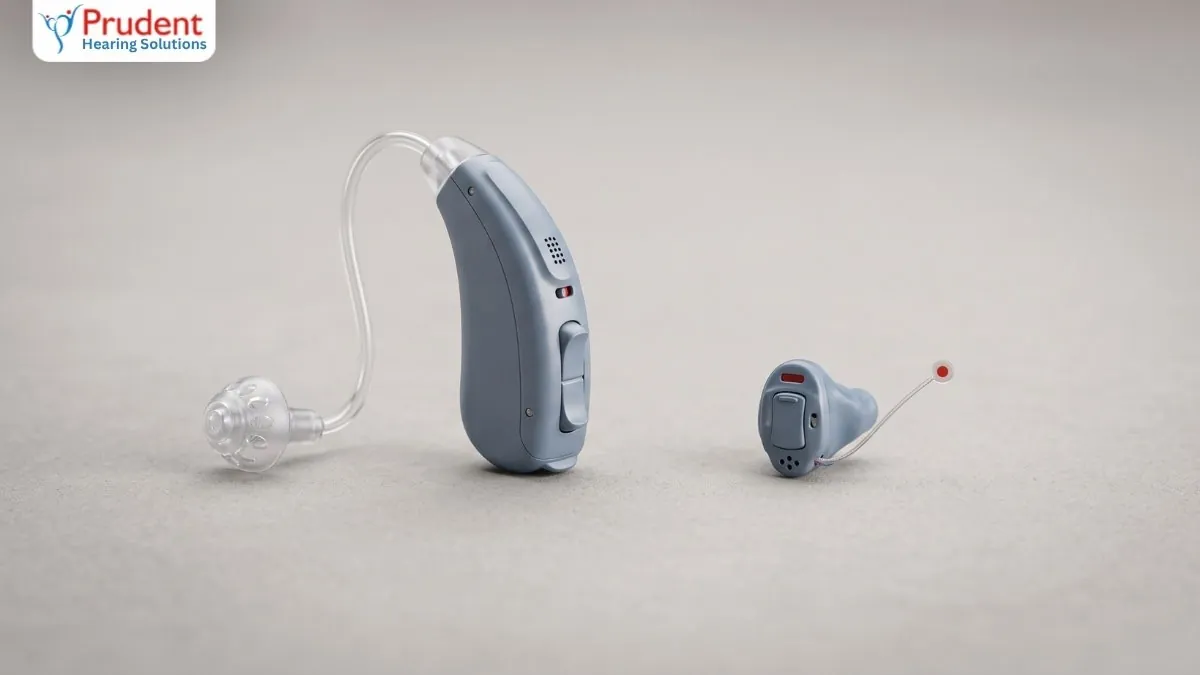
A small body sits behind the ear and a thin wire carries sound to a tiny speaker in the ear canal. Because the speaker sits in the canal and the microphones sit outside, sound is clear and feedback is easy to control.
- Best for: mild to moderately severe loss, first-time users, people who want a slim, discreet device with modern features.
- Strengths: discreet, natural sound, open fitting suits high-frequency loss, most rechargeable and Bluetooth options, easy to service since the speaker part can be swapped.
- Limits: the thin wire and speaker can be affected by wax and moisture; very severe loss may need a stronger power receiver or a BTE.
For more, see our RIC hearing aids guide.
BTE (behind-the-ear): the powerful and practical choice
The whole device sits behind the ear and connects to an earmould or dome by a tube. It has room for a larger battery, stronger amplification and extra controls.
- Best for: severe to profound loss, children (the earmould is simply remade as they grow), people with limited dexterity, and anyone who wants long battery life and simple buttons.
- Strengths: most power, most durable, largest controls, works well with classroom and telecoil systems.
- Limits: more visible than RIC, though modern models are slim and come in many colours; earmoulds need periodic remaking.
See our guide to BTE hearing aids in India and ear moulds vs domes.
ITE, ITC and CIC (custom in-ear): the discreet option
These are moulded from an impression of your ear and sit in the bowl or canal of the ear. ITE fills the outer ear, ITC is smaller, and CIC sits deep in the canal and is barely visible.
- Best for: mild to moderate loss, people who prioritise discretion and use a phone a lot, since the aid sits where the phone speaker sits.
- Strengths: discreet, no wire or tube, comfortable with glasses and masks.
- Limits: small controls and batteries are fiddly, more exposed to wax and moisture, fewer features in the smallest sizes, and not suitable for very narrow or unusually shaped canals or for severe loss.
Read more in our guides to in-the-ear hearing aids and invisible CIC and IIC aids.
Side-by-side comparison
- Hearing loss range: RIC mild to moderately severe; BTE mild to profound; ITE/CIC mild to moderate.
- Visibility: RIC low; BTE medium; CIC lowest.
- Handling: RIC and BTE are easier than tiny in-ear devices.
- Battery and charging: RIC and BTE have the widest rechargeable choice; the smallest in-ear styles use small disposable batteries.
- Repair: RIC receivers and BTE tubes are quick to replace; custom shells may need to be remade.
How we choose at the clinic
We look at your audiogram, the shape of your ear canal, your dexterity and vision, your work and lifestyle, and your budget. Then you try options on in the clinic. To see how the styles map to loss, browse our hearing aid types page, and read how to choose the right hearing aid.
Not sure which style suits you? Book a free hearing test. We will recommend a style based on your results, not the one with the highest margin.
Frequently asked questions
Which hearing aid style is best for most people?
Receiver-in-canal (RIC) is the best all-round style for most adults with mild to moderately severe loss. It is discreet, sounds natural and has the widest choice of rechargeable and Bluetooth models.
Who should choose a BTE hearing aid?
People with severe or profound loss, children, and anyone who wants a larger, easy-to-handle device. BTE aids give the most power, last well and work well with classroom and telecoil systems.
Who is an in-the-ear (ITE, ITC or CIC) aid right for?
People with mild to moderate loss who want a discreet custom fit and have nimble fingers and suitably shaped ear canals. They are comfortable with glasses and masks but have small controls and are more exposed to wax and moisture.
Which hearing aid style is the least visible?
CIC, which sits deep in the canal and is barely visible. RIC is the next least visible, while BTE is more noticeable, although modern BTE models are slim and come in many colours.
How does the clinic decide which style suits me?
We look at your audiogram, the shape of your ear canal, your dexterity and eyesight, your work and lifestyle and your budget, and then you try the options on in the clinic.
Free consultation
Ready to hear the difference?
Book a free 45-minute hearing test at any Prudent Hearing clinic: no obligation, honest advice, expert audiologists.