CGHS reimburses a digital hearing aid up to ₹30,000 per ear (inclusive of GST) under the September 2026 revision, and up to ₹60,000 for a both-ear fitting. Here is who qualifies, the prior-permission steps, the documents you need, and the 5-year replacement rule, with the exact Office Memorandum that sets the rate.
Quick answer
CGHS reimburses a digital hearing aid up to ₹30,000 per ear, inclusive of GST, under Office Memorandum S.11030/76/2026-EHS dated 9 September 2026, and up to ₹60,000 for a clinically justified both-ear fitting, for a programmable, rechargeable aid sold with its charger and a three-year comprehensive warranty. Serving central-government employees and pensioners with a valid CGHS card qualify, once every five years per ear, after obtaining prior permission on an ENT's recommendation.
Key takeaways
- The 2026 ceiling is ₹30,000 per ear (incl. GST) for a standard digital BTE or ITC/CIC aid, and up to ₹60,000 for both ears: OM S.11030/76/2026-EHS, 9 September 2026.
- Get prior permission BEFORE you buy; purchasing first is the top reason claims are rejected.
- You can claim one aid per ear every five years, and no condemnation certificate is needed after the five-year period.
- Body-worn and analogue aids are excluded; only digital aids that are programmable and rechargeable, with at least 8 channels and a three-year comprehensive warranty, qualify, and you pay any amount above the ceiling.
- Armed Forces (ECHS) and Railways (RELHS) beneficiaries follow their own schemes, not CGHS.
Yes, CGHS reimburses digital hearing aids. Under the latest revision, Office Memorandum S.11030/76/2026-EHS dated 9 September 2026, the ceiling is ₹30,000 per ear, inclusive of GST, for a standard digital hearing aid that is both programmable and rechargeable (BTE or ITC/CIC), sold as a complete package with its charger and a three-year comprehensive warranty. A clinically justified both-ear fitting is reimbursed up to ₹60,000. You can claim once every five years per ear, after obtaining prior permission on an ENT's recommendation. This replaced the much lower ceilings set in 2020.
Ceiling rates are revised periodically, so before you buy, confirm the current figure at your CGHS Wellness Centre or on the official portal, cghs.gov.in. The rest of this guide explains eligibility, exactly what is covered, the step-by-step claim process, and the documents that get a claim approved the first time.
What is CGHS hearing aid reimbursement?
The Central Government Health Scheme (CGHS) provides healthcare to serving central-government employees, pensioners and their dependents. It is run by the Directorate General of Health Services (DGHS) under the Ministry of Health and Family Welfare. A hearing aid is treated as an aid or appliance: it is not bought over the counter and claimed freely, but prescribed by an ENT specialist, approved in advance, and then reimbursed up to a fixed ceiling.
The DGHS issues the Office Memorandums (OMs) that set the ceiling rate and the rules. The same entitlement extends to beneficiaries covered under the CS(MA) Rules, 1944. So whether you are a serving officer or a pensioner, the amount and the process below apply to you.
How much does CGHS reimburse for a hearing aid in 2026?
As per OM S.11030/76/2026-EHS (9 September 2026), the ceiling is a single ₹30,000 per ear for a standard digital aid, inclusive of GST, covering a complete package with the charger and a three-year comprehensive warranty on the device and charger:
| Hearing aid type | CGHS ceiling (per ear, incl. GST) | Notes |
|---|---|---|
| Digital programmable & rechargeable BTE | ₹30,000 | Charger in the package; 3-year comprehensive warranty |
| Digital programmable & rechargeable ITC / CIC | ₹30,000 | Same ceiling and conditions; the ENT prescribes the type |
| Battery-powered (non-rechargeable) digital aid | Does not meet the 2026 spec | Annexure-I requires a rechargeable aid with a standard charger |
| Both ears (bilateral), clinically justified | Up to ₹60,000 | Subject to actual expenditure and prior approval |
| Body-worn / pocket type | Not covered | Excluded in the 2026 revision |
| Analogue BTE | Not covered | Excluded in the 2026 revision |
The ceiling is a maximum, not a fixed payout. If the prescribed aid costs less than ₹30,000, you are reimbursed the actual cost. If it costs more, you pay the difference yourself. The September 2026 revision replaced the much lower 2020 ceilings (OM S.11011/37/2019-EHS), so most beneficiaries can now claim substantially more than before.
What the hearing aid must meet to qualify in 2026
The headline number is only half the rule. Annexure-I of the 2026 OM sets a minimum specification, and at the claim stage you sign a declaration (Annexure-II) that your aid meets it. In short, the aid must be:
- Fully digital and computer-programmable, and a current model, not a discontinued one.
- Rechargeable, with a standard charger included in the package.
- At least 8 independent frequency channels, with multichannel wide-dynamic-range compression.
- Equipped with the core features: an automatic mode plus at least three listening programmes, directional microphones with digital noise reduction, and adaptive feedback cancellation.
- Covered by a three-year comprehensive warranty on both the aid and the charger.
- A BTE or ITC/CIC style as prescribed by your ENT, priced at or under ₹30,000 per ear including GST.
This rules out many aids sold as 'CGHS hearing aids'. A battery-powered digital aid can cost well under ₹30,000 and still fail, because it is not rechargeable. So can an aid that carries only the manufacturer's standard two-year warranty. Ask for the specification sheet and the warranty terms in writing before you apply for permission. See why battery hearing aids don't qualify under CGHS.
The ceiling applies to your invoice price, not the MRP. Entry rechargeable ranges, such as Signia's Orion Charge&Go or ReSound's rechargeable Key and Savi kits, list above ₹30,000 but can come within the ceiling after a dealer discount. Check that the charger and the three-year comprehensive warranty are included in that price. See the 2026 price list, or bring your prescription to a free hearing test and we will check which models meet the specification at a price within your ceiling.
Who is eligible for CGHS hearing aid reimbursement?
- Serving central-government employees who are CGHS beneficiaries, and their dependent family members.
- Central-government pensioners holding a valid CGHS card, and their dependents.
- Beneficiaries of autonomous bodies and organisations that have formally adopted CGHS or the CS(MA) Rules, per their own terms.
Some large groups are not under CGHS because they run their own health schemes: the Armed Forces (through ECHS), the Railways (through RELHS), and certain public-sector bodies. If that is you, the ceiling and process are set by your own scheme, not by the CGHS OM above.
Which hearing aids are covered, and which are not?
CGHS covers a modern digital hearing aid, prescribed by type rather than by brand. Your ENT specifies whether a behind-the-ear (BTE) or an in-the-canal (ITC/CIC) aid suits your loss, and you choose any make that meets the specification within the ceiling.
- Covered: digital aids that are both programmable and rechargeable (BTE or ITC/CIC), with the charger in the package and a three-year comprehensive warranty.
- Not covered: battery-powered (non-rechargeable) aids, because the 2026 specification requires a rechargeable aid.
- Not covered: body-worn or pocket-type aids, and analogue BTE aids, which were excluded in the 2026 revision.
- Not covered: simple sound amplifiers or 'ear machines' that are not prescription hearing aids. See hearing aid vs 'ear machine' amplifier.
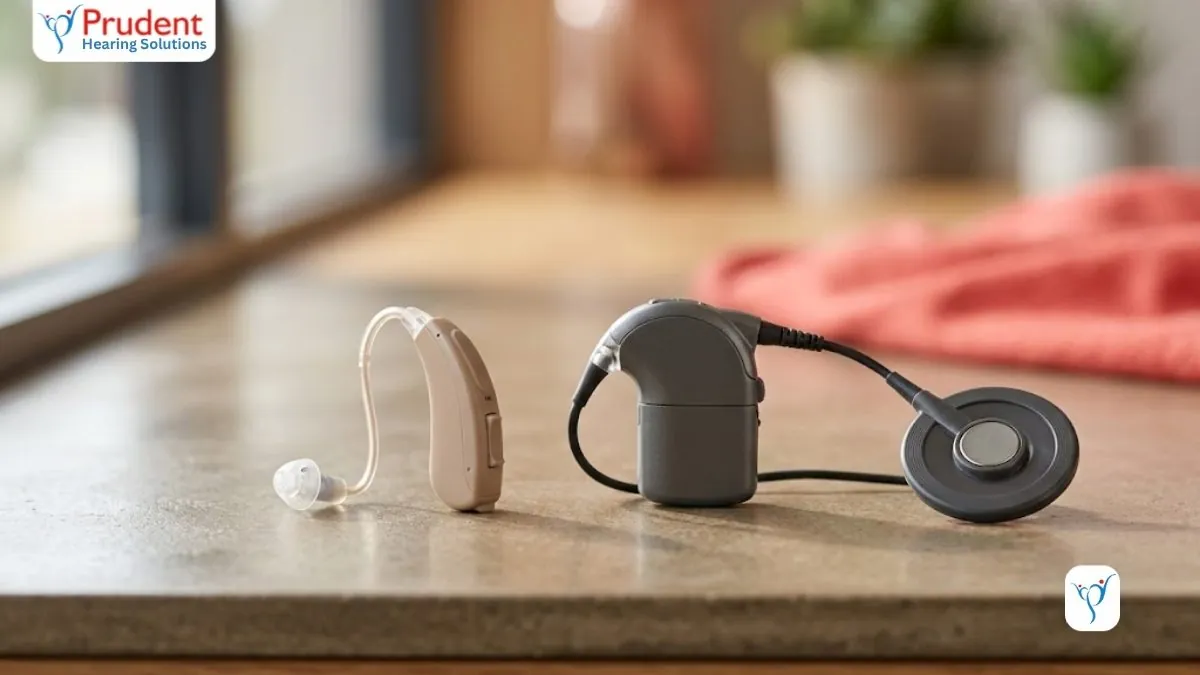
- Separate route: cochlear implants are handled under a different, higher CGHS entitlement, not this hearing-aid ceiling. See hearing aid vs cochlear implant.
How to claim CGHS hearing aid reimbursement, step by step
Step 1: Get referred by your CGHS Medical Officer
Visit your CGHS Wellness Centre. The Medical Officer refers you to a government or empanelled ENT specialist. Carry your CGHS card.
Step 2: Have an audiogram and get a brand-neutral prescription
The ENT arranges a hearing test (audiogram) and, based on the result, prescribes the type of aid you need. The prescription must be brand-neutral, that is, it names the type and specification, not a particular company.
Step 3: Apply for prior permission BEFORE you buy
This is the step people get wrong. Permission must be granted before purchase. For pensioners, the approving authority is usually the Additional Director (Zonal) of CGHS; for serving employees, it is the Head of Department or Office. Buying the aid first and asking for approval later is the most common reason a claim is rejected.
Step 4: Buy the approved aid and collect the paperwork
Once permission is granted, buy an aid that meets the Annexure-I specification (rechargeable, at least 8 channels, a current model) within the ₹30,000 ceiling. Insist on a proper GST invoice, a three-year comprehensive warranty card covering the aid and charger, and the written specifications. Keep the box and label intact.
Step 5: Submit the reimbursement claim
Submit your claim within the stipulated window (commonly around three months of purchase) with all documents. Pensioners route the claim through their Wellness Centre to the Zonal Office; serving employees submit through their office. Reimbursement is paid to your bank account.
Documents you need for a CGHS hearing aid claim
- CGHS card copy (and pensioner card, if applicable).
- ENT prescription and the audiogram report.
- Prior permission or approval letter.
- Original GST invoice or bill for the aid.
- Warranty card showing the three-year comprehensive warranty on the aid and charger.
- Undertaking (Annexure-II) declaring you have not claimed a hearing-aid reimbursement in the previous five years.
- Bank details or a cancelled cheque for the reimbursement.
How often can you claim? The 5-year replacement rule
CGHS allows one hearing aid per ear every five years. After five years from the date of purchase or reimbursement, you can apply again, and under the 2026 revision a condemnation certificate for the old aid is no longer required once that period has passed. A replacement inside five years is allowed only in exceptional, well-documented cases, such as a device that is genuinely beyond economical repair.
What CGHS does not cover
- Any amount above the ceiling: if your aid costs more than ₹30,000 per ear, you pay the balance.
- Excluded types: body-worn, pocket and analogue aids.
- Most accessories beyond the standard package, such as extra chargers or remote microphones.
- Repairs and servicing outside the warranty period, in most cases.
CGHS vs ADIP vs tax relief: which route is best?
CGHS is the right route if you are a central-government employee or pensioner. If you are not, or if your budget is very tight, other routes may help, and they can sometimes be combined with buying privately:
- ADIP scheme: free or heavily subsidised aids for eligible low-income applicants, run by the government through ALIMCO. See ADIP: free and subsidised hearing aids.
- Income-tax relief: Sections 80DD and 80U can reduce your tax if there is a certified disability. See hearing aid tax deduction (80DD & 80U).
- Health insurance: most Indian health policies still exclude hearing aids; check before you rely on it. See does insurance cover hearing aids?.
- Other government schemes: a broader overview is in government schemes for hearing aids.
How Prudent helps CGHS beneficiaries
We are not a CGHS office and we do not process your claim, but we make the medical and paperwork side straightforward. At Prudent Hearing Solutions our RCI-registered audiologists give you a free hearing test and a clear audiogram you can take to your ENT, help you find a model that meets the 2026 specification within the ₹30,000 ceiling, and provide a proper itemised GST invoice listing the model's specifications and warranty terms. Our advice is brand-neutral, so you are never pushed above your entitlement.
We have clinics in Pune (Viman Nagar), Delhi (Rohini and Green Park) and Bengaluru (Jayanagar), which are convenient for central-government staff and pensioners. If you are a CGHS beneficiary, tell us at your appointment and we will make sure your audiogram and invoice match what the claim requires. Contact us or call +91 9429690093 to book. This article is general guidance, not official CGHS advice: always confirm the current rules and ceiling with your Wellness Centre.
This guide is also available in Hindi and Marathi: CGHS हियरिंग एड के नियम (हिन्दी) · CGHS hearing aid चे नियम (मराठी).
Continue reading
Frequently asked questions
How much does CGHS pay for a hearing aid in 2026?
Up to ₹30,000 per ear, inclusive of GST, for a standard digital aid that is both programmable and rechargeable, under Office Memorandum S.11030/76/2026-EHS dated 9 September 2026. A clinically justified both-ear fitting is reimbursed up to ₹60,000. The price must cover the charger and a three-year comprehensive warranty. Ceilings are revised periodically, so confirm the current figure at your CGHS Wellness Centre.
Can CGHS pensioners claim hearing aid reimbursement?
Yes. A central-government pensioner with a valid CGHS card can claim, on an ENT's recommendation and after prior permission. For pensioners the approving authority is usually the Additional Director (Zonal) of CGHS, and the claim is routed through the Wellness Centre to the Zonal Office.
Do I need permission before buying the hearing aid?
Yes, and this is the step people get wrong. Prior permission must be granted before you purchase. Buying the aid first and seeking approval afterwards is the most common reason a CGHS hearing-aid claim is rejected.
How often can I get a new hearing aid under CGHS?
Once every five years per ear. After five years you can apply again, and under the 2026 revision a condemnation certificate for the old aid is no longer required once that period has passed. Replacement within five years is allowed only in exceptional, documented cases.
Which hearing aids are not covered by CGHS?
Body-worn or pocket-type aids and analogue BTE aids are excluded in the 2026 revision, as are simple sound amplifiers that are not prescription hearing aids. Battery-powered digital aids also fall short, because the 2026 specification requires a rechargeable aid. You also pay any amount above the ₹30,000 ceiling yourself. Cochlear implants are handled under a separate, higher entitlement.
Are Armed Forces and Railways staff covered by CGHS?
No. The Armed Forces (through ECHS) and the Railways (through RELHS) run their own health schemes, so their hearing-aid rules and ceilings are set separately, not by the CGHS Office Memorandum.
Is there GST on a hearing aid bought under CGHS?
Hearing aids are GST-exempt in India, and the CGHS ceiling is stated inclusive of any applicable taxes. Accessories such as chargers and remote microphones are taxed and are generally not covered beyond the standard package.
Which hearing aids qualify for the ₹30,000 CGHS ceiling?
The 2026 rules decide this by specification, not brand. The aid must be rechargeable with its charger in the package, have at least 8 channels, be a current model, and carry a three-year comprehensive warranty, all within ₹30,000 per ear including GST. A cheap battery-powered aid does not qualify even if it costs less.
Because the ceiling applies to the invoice price, entry rechargeable ranges with a higher MRP, such as Signia Orion Charge&Go or ReSound's rechargeable Key and Savi kits, can come within it after a dealer discount. Confirm the invoice price and the warranty in writing before applying for permission.
Sources & further reading
We cross-checked this article against the following authoritative sources. Guidance and figures reflect the most recent public guidance available at the time of last review (September 2026). Clinical review by the Prudent Hearing clinical team.
- Hearing aid reimbursement guidelines and ceiling rates (OM S.11030/76/2026-EHS) (CGHS, Directorate General of Health Services, Ministry of Health & Family Welfare)
- ADIP Scheme: aids & appliances for persons with disabilities (Dept. of Empowerment of Persons with Disabilities, Govt. of India)
Free consultation
Ready to hear the difference?
Book a free 45-minute hearing test at any Prudent Hearing clinic: no obligation, honest advice, expert audiologists.