Under the CGHS rules issued on 9 September 2026, only rechargeable hearing aids qualify for the ₹30,000-per-ear ceiling. The aid also needs at least 8 channels, its charger in the box and a three-year comprehensive warranty. Here are the five checks to make before you pay.
Quick answer
Under CGHS OM S.11030/76/2026-EHS (9 September 2026), only a hearing aid that is programmable and rechargeable qualifies for the ₹30,000-per-ear ceiling. It also needs at least 8 channels, a standard charger in the package, a current model and a three-year comprehensive warranty on the aid and charger. A battery-powered aid fails the specification even if it costs less.
Key takeaways
- The 2026 OM covers only programmable and rechargeable aids; battery-powered aids fail Annexure-I.
- The aid needs at least 8 channels, a current model, the charger in the box and a three-year comprehensive warranty.
- The ₹30,000 ceiling applies to the invoice, not the MRP, and the charger is not reimbursed separately.
- On Prudent's 2026 price lists, all 32 aids at or under ₹30,000 MRP are battery models, and stated warranties under ₹60,000 are two years.
- Get the specification sheet and the three-year warranty in writing before you apply for permission.
A battery-powered hearing aid no longer qualifies for CGHS reimbursement, even if it costs well under ₹30,000. Office Memorandum S.11030/76/2026-EHS, dated 9 September 2026, covers only aids that are both programmable and rechargeable. The aid must also have at least 8 channels, come with its charger and carry a three-year comprehensive warranty.
The price ceiling is the part everyone reports. The specification is the part that decides whether your claim is paid. And the second catch, the warranty, is the one most shops never mention.
What the 9 September 2026 rules actually say
The OM raised the ceiling to ₹30,000 per ear, inclusive of GST, or up to ₹60,000 for a clinically justified both-ear fitting. You are reimbursed the actual cost or the ceiling, whichever is lower. Annexure-I then sets a minimum specification, and at the claim stage you sign a declaration (Annexure-II) that your aid meets it.
| Requirement | What it means | How to check at the shop |
|---|---|---|
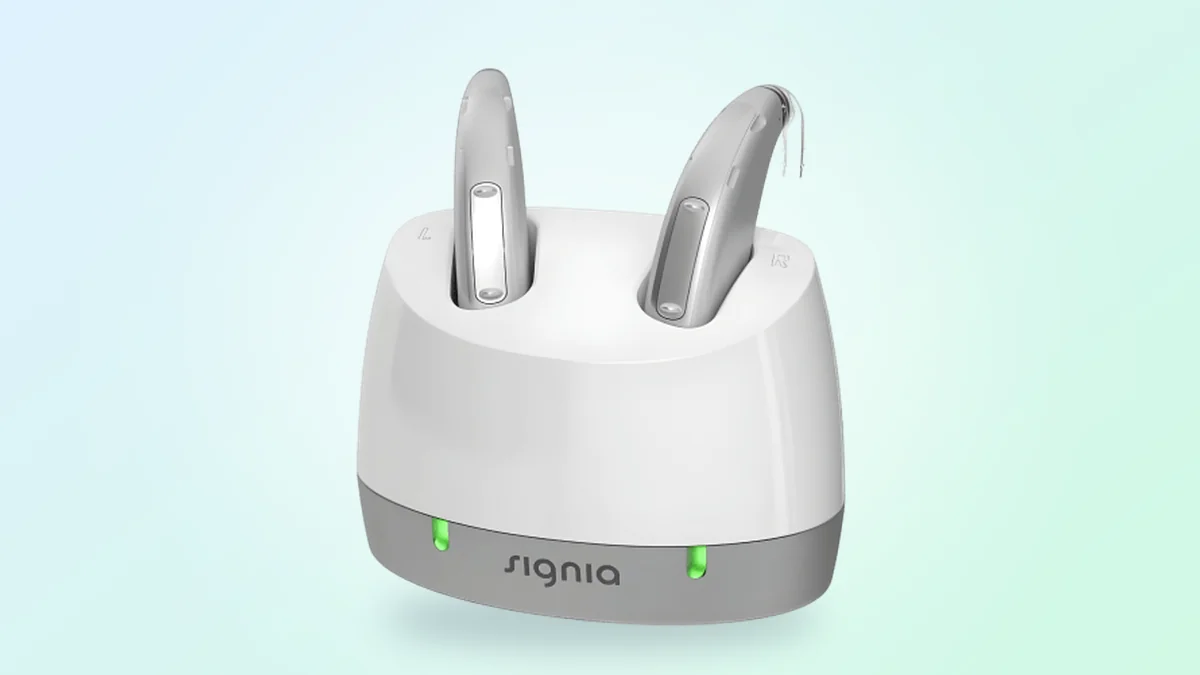
| Programmable and rechargeable | A digital aid set up on a computer and charged overnight | Look for the charger in the box. A rechargeable aid does not take disposable batteries. |
| At least 8 channels | Sound is split into 8 or more bands that are tuned separately | Ask for the product specification sheet, not the brochure. |
| Core features | Automatic mode plus 3 or more programmes, directional microphones, noise reduction and feedback cancellation | Listed on the specification sheet of most current models. |
| A current model | Not a discontinued product | Check that the model appears on the manufacturer's current price list. |
| 3-year comprehensive warranty | Covers both the aid and the charger for three years | Get it written on the warranty card or the invoice. |
| ₹30,000 per ear, all-inclusive | The charger, fitting and programming are not reimbursed separately | The invoice total per ear, charger included, is what counts. |
Body-worn, pocket-type and analogue aids stay excluded. Prior permission before purchase is still mandatory.
Why the cheapest 'CGHS hearing aid' is often the one that fails
We checked this against the four manufacturer price lists we sell from in 2026: Signia, Phonak, ReSound and Unitron. All 32 hearing aids listed at or under ₹30,000 MRP are battery models. Not one of them is rechargeable.
The warranty gap is wider. Every model under ₹60,000 MRP whose list states a warranty carries two years, not three. That covers 76 models from Signia, Phonak and ReSound; the Unitron list does not state warranty terms.
So a shop can honestly sell you a genuine digital aid for about ₹20,000. It can still fail the CGHS specification twice: it runs on batteries, and its standard warranty is two years.
The five checks before you pay
- Is it rechargeable, with the charger in the box? If it takes disposable batteries, it does not meet the 2026 specification.
- Does the specification sheet show at least 8 channels? Some entry models have only 4.
- Is it a current model? Ask whether it appears on the manufacturer's current price list.
- Is the three-year comprehensive warranty in writing? It must cover the aid and the charger. A verbal promise will not help your claim.
- Is the invoice at or under ₹30,000 per ear, charger included? Anything above the ceiling is yours to pay.
Ask for the specification sheet and the warranty terms before you apply for permission. Your permission letter, the invoice and the aid all need to match.
MRP versus invoice: how the ₹30,000 works
The ceiling applies to what you actually pay, not to the printed MRP. That matters, because most hearing aids in India sell below MRP.
Take an illustration, not a quote. A rechargeable aid with a ₹45,000 MRP, sold for ₹29,500 per ear including its charger, sits inside the ceiling. If the same aid were sold for ₹32,000, CGHS would pay ₹30,000 and you would pay ₹2,000.
Entry rechargeable ranges, such as Signia's Orion Charge&Go or ReSound's rechargeable Key and Savi kits, list above ₹30,000. They can come within the ceiling after a dealer discount. Check that the charger and the three-year warranty are part of that price. Our 2026 price list shows the MRPs.
The warranty question to ask
The standard manufacturer warranty on entry and mid-range aids is often two years. CGHS asks for three, and it must be comprehensive, covering the aid and the charger.
Ask the seller one direct question: 'Will you write a three-year comprehensive warranty for the aid and charger on the invoice or warranty card?' If the answer is no, that aid may not meet the rules, however good the price.
Already bought, or been quoted, since the new rules?
- Compare the aid against the five checks above.
- If your claim is questioned, ask your Wellness Centre or office for the reason in writing.
- Keep the box, the charger, the specification sheet and the warranty card with your invoice.
- If you have only been quoted so far, ask for a rechargeable model before you apply for permission.
Who these rules apply to
The OM covers CGHS beneficiaries and those under the CS(MA) Rules, 1944: serving central-government employees, pensioners and their dependants. Armed Forces veterans (ECHS) and Railway staff (RELHS) follow their own schemes, so their rules and ceilings differ.
For eligibility, documents and the claim process, see CGHS hearing aid reimbursement (2026) and how to get a hearing aid under CGHS, step by step.
How Prudent helps
We are not CGHS-empanelled and we do not process claims. We handle the medical and paperwork groundwork. Our RCI-registered audiologists give you a free hearing test and an audiogram for your ENT, and check any model against the 2026 specification.
You get a proper GST invoice listing the model's specifications and warranty terms. Visit our clinics in Pune, Delhi or Bengaluru, or book a home visit in Mumbai, Navi Mumbai, Thane and other cities. Call +91 9429690093, or WhatsApp +91 8485096505 with a model name for a quick spec check.
This article is general guidance, not official CGHS advice. Rules and ceilings are revised from time to time, so confirm the current position with your Wellness Centre or at cghs.gov.in before you buy.
Continue reading
Frequently asked questions
Does CGHS cover battery-operated hearing aids in 2026?
No. Under OM S.11030/76/2026-EHS of 9 September 2026, the aid must be programmable and rechargeable, with a standard charger in the package. A battery-powered aid does not meet the Annexure-I specification, even if it costs under ₹30,000.
How many channels does a hearing aid need for CGHS?
At least 8 independent frequency channels, with multichannel wide-dynamic-range compression, under Annexure-I of the 2026 OM. Check the product specification sheet rather than the brochure; some entry models have only 4 channels.
Is the ₹30,000 CGHS limit on the MRP or the bill?
On the bill. CGHS reimburses the actual cost or ₹30,000 per ear, whichever is lower. The invoice must include the charger and the three-year comprehensive warranty, because neither is reimbursed separately.
What warranty does CGHS require for a hearing aid?
A minimum three-year comprehensive warranty covering both the aid and the charger. The standard manufacturer warranty on many entry and mid-range aids is two years, so ask for the three-year terms in writing before you apply for permission.
Can I claim the hearing aid charger separately under CGHS?
No. The 2026 OM treats the ₹30,000 as a complete package. The standard charger, GST, fitting and programming are not reimbursed separately.
Sources & further reading
We cross-checked this article against the following authoritative sources. Guidance and figures reflect the most recent public guidance available at the time of last review (September 2026). Clinical review by the Prudent Hearing clinical team.
- Hearing aid reimbursement guidelines and ceiling rates (OM S.11030/76/2026-EHS) (CGHS, Directorate General of Health Services, Ministry of Health & Family Welfare)
- OM S.11030/76/2026-EHS: revision of ceiling rate and guidelines for hearing aids (scanned copy) (SNPWA circular archive)
Free consultation
Ready to hear the difference?
Book a free 45-minute hearing test at any Prudent Hearing clinic: no obligation, honest advice, expert audiologists.